Times table reinforcement Grade 3 Times Tables Worksheets
4 filtered results
-
From - To
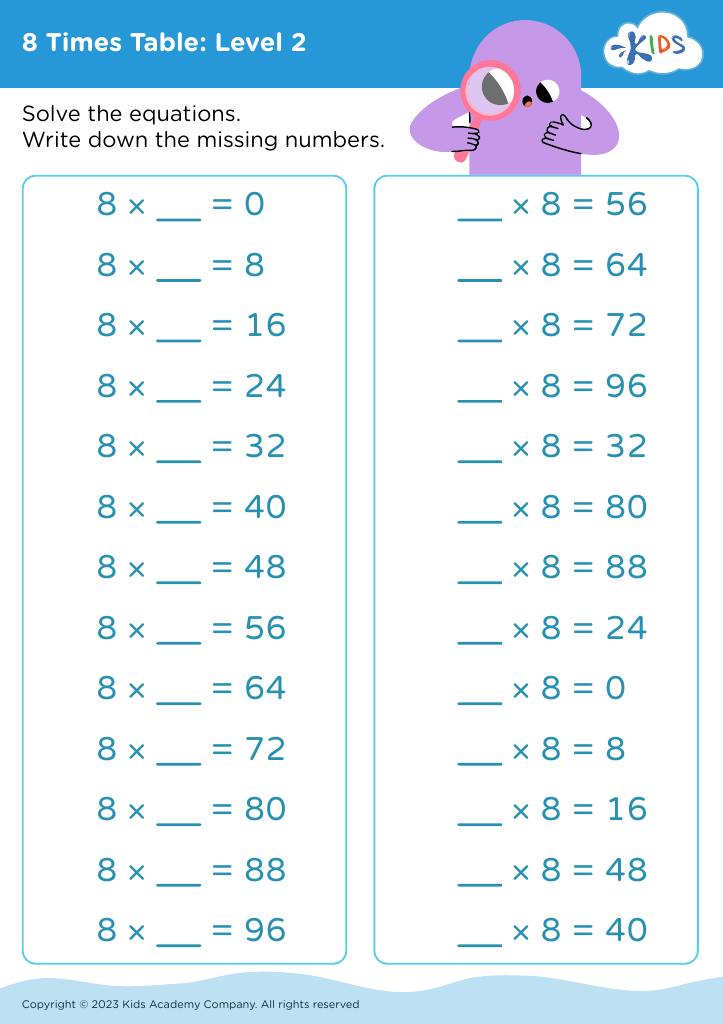
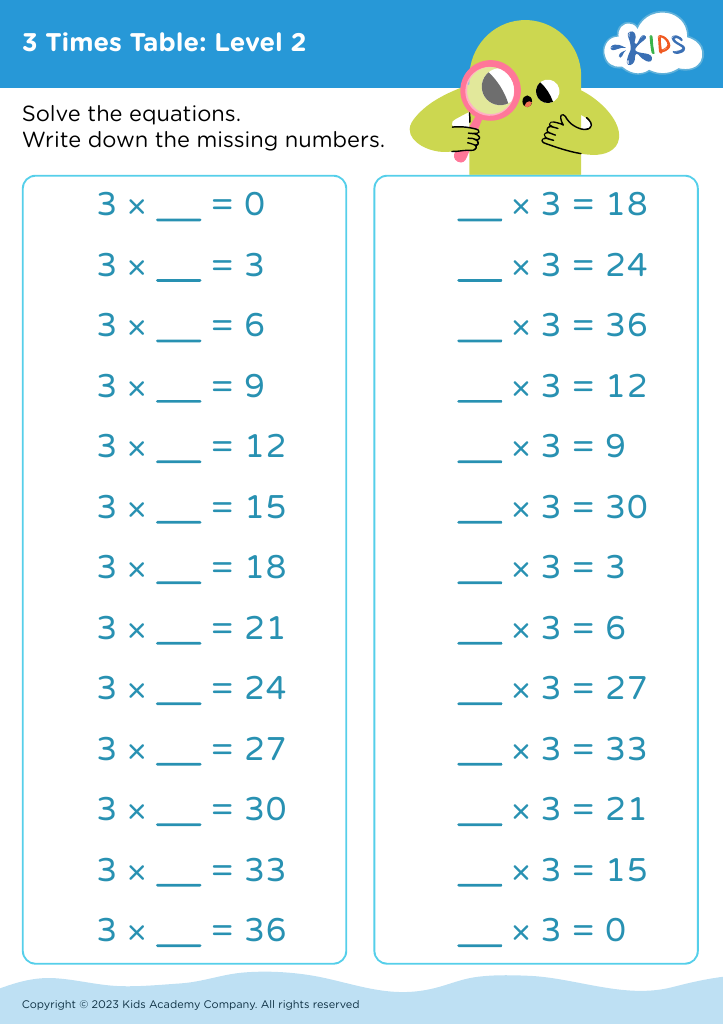
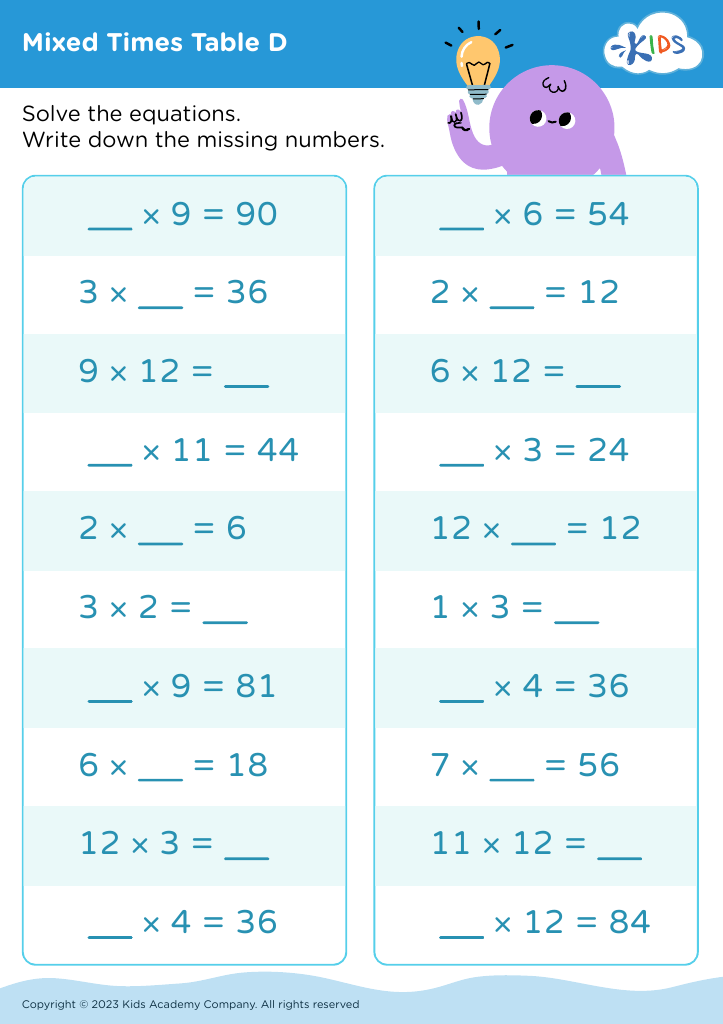
Welcome to our Grade 3 Times Tables Worksheets! Designed to strengthen your child's understanding of multiplication, these engaging worksheets offer a variety of reinforcement activities tailored for third graders. With a focus on key times tables, students will enjoy fun exercises that enhance their multiplication skills, boost confidence, and improve overall math fluency. Our resources are perfect for both classroom use and at-home practice, encouraging independent learning while making math enjoyable. Explore our interactive and printable options to help your child master their times tables and build a solid foundation for future mathematical success. Get started today!
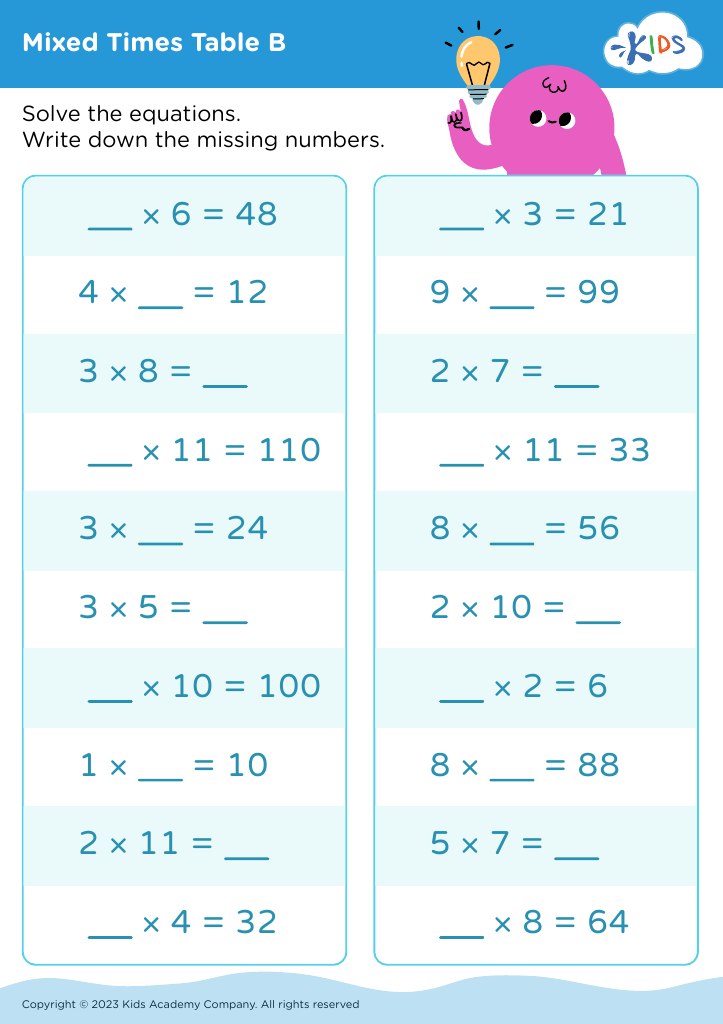



Reinforcing times tables in Grade 3 is crucial for several reasons. First, it lays a solid foundation for understanding multiplication, which is a core component of mathematics. Mastery of times tables enables students to solve problems more quickly and accurately, thereby boosting their confidence in math. This is significant as self-efficacy in mathematics often parallels overall academic success.
Additionally, multiplication serves as a building block for more advanced mathematical concepts such as fractions, decimals, and algebra. Early proficiency in times tables can simplify these later topics, making them more accessible and understandable for students.
Furthermore, times tables foster critical thinking and problem-solving skills. When students are comfortable with multiplication facts, they can focus on developing strategies for more complex equations instead of struggling with basic calculations.
Finally, engaging with times tables can also be a collaborative effort involving both parents and teachers. This shared responsibility creates a supportive learning environment, reinforcing the idea that education is a partnership. Promoting rhythmic recall through games, songs, or digital tools can make learning fun, transforming times tables from a chore into an enjoyable challenge. Ultimately, understanding these fundamentals is essential for students’ ongoing academic journeys.