Basic Arithmetic Grade 3 Word Problems Worksheets
5 filtered results
-
From - To
Enhance your third grader's math skills with our "Basic Arithmetic Grade 3 Word Problems Worksheets." Perfectly tailored to capture the curiosity of young minds, these engaging worksheets help students develop critical problem-solving abilities. Designed to reinforce addition, subtraction, multiplication, and division concepts. Each worksheet offers real-life scenarios to make learning relatable and fun. Ideal for classroom use or extra practice at home, our collection aims to bolster your child's confidence in tackling math challenges. Discover a variety of stimulating, expertly crafted problems that cater to different learning paces and styles. Start boosting your child's arithmetic skills today!
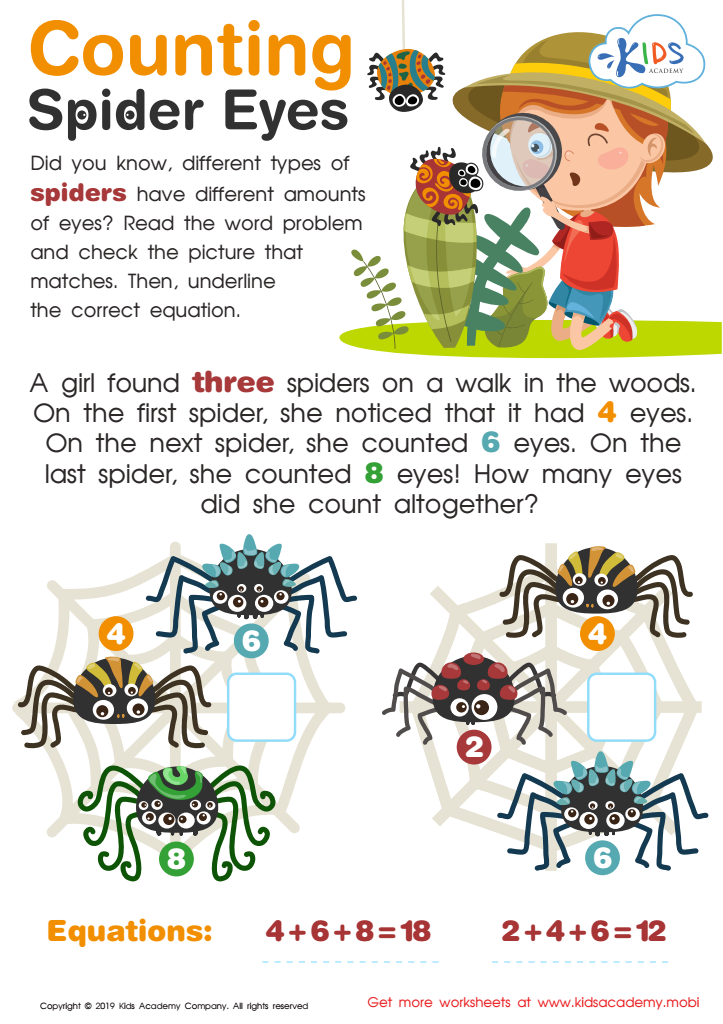
Counting Spider Eyes Worksheet
 Assign to My Students
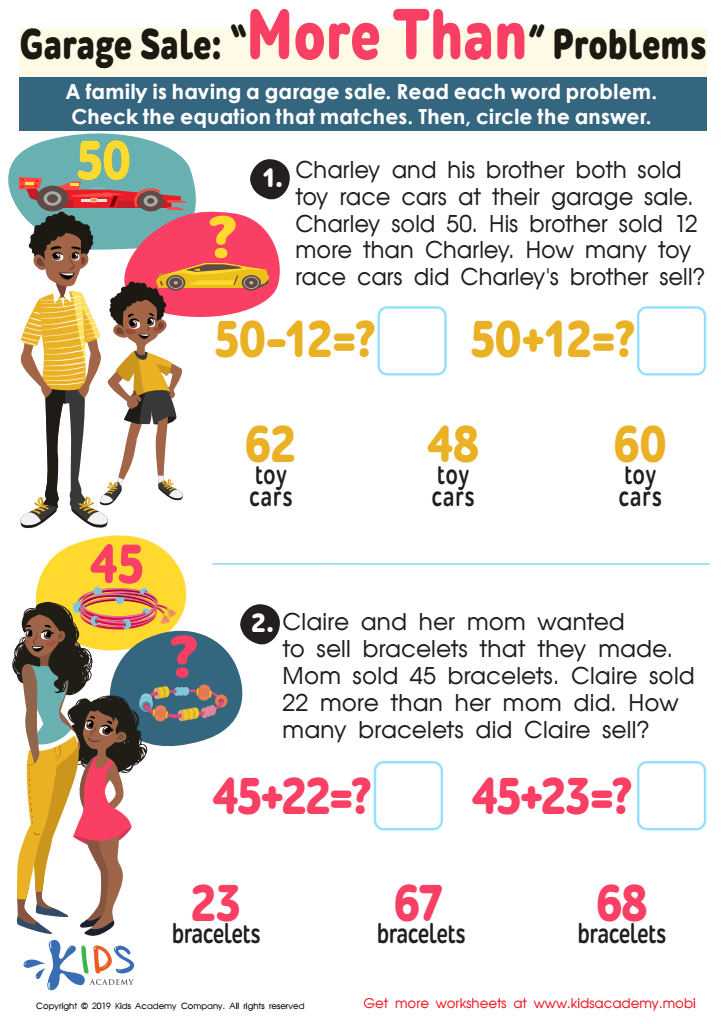
Garage Sale - More yhan Worksheet
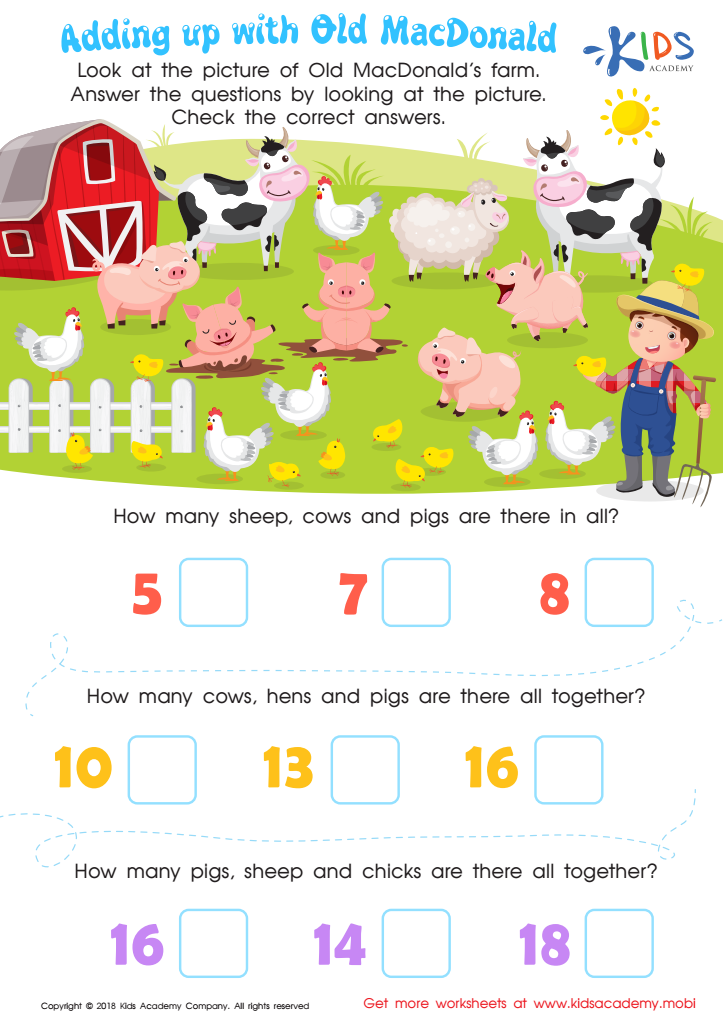
Adding Up with Old MacDonald Worksheet
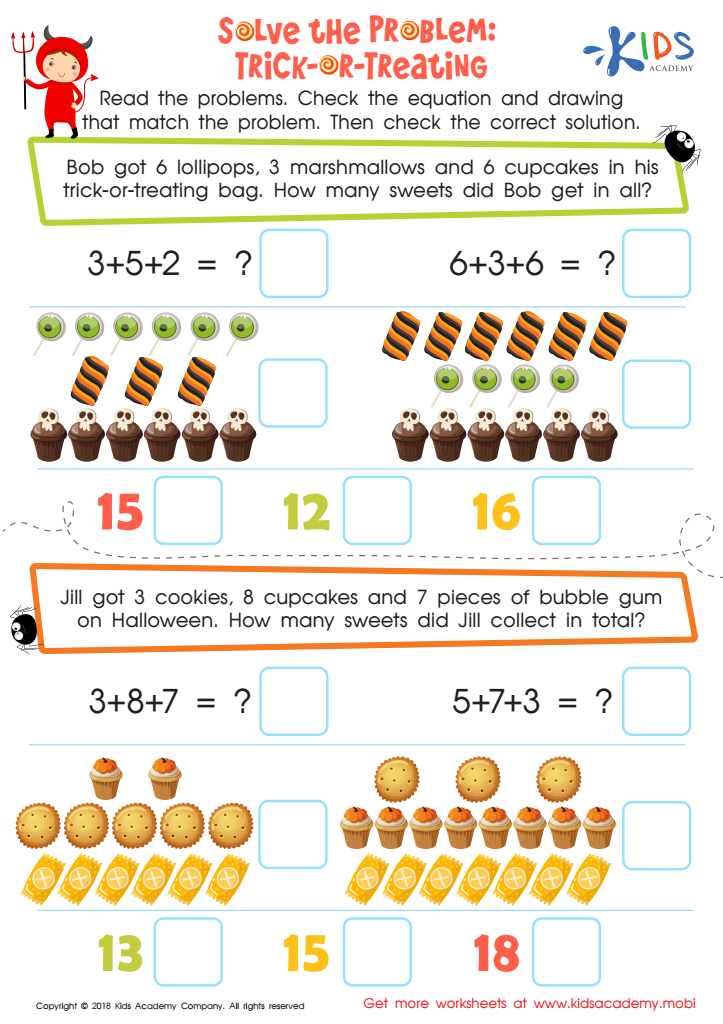
Solve the Problem: Trick–or–treating Worksheet
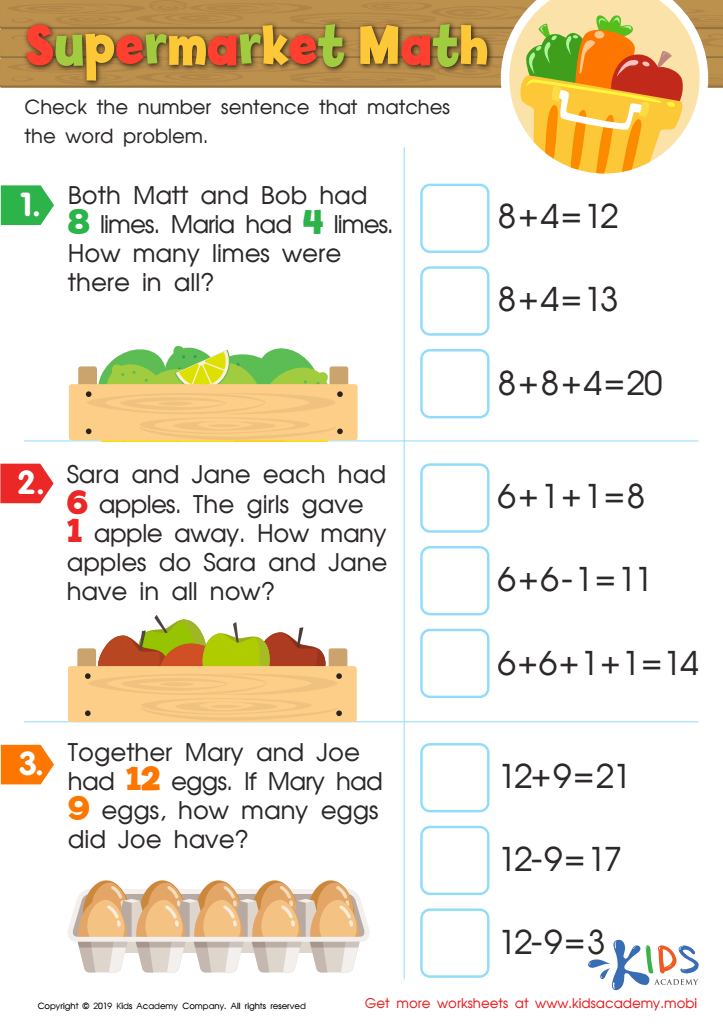
Supermarket Math Worksheet








Parents and teachers should care about Basic Arithmetic Grade 3 Word Problems because they form a cornerstone for developing essential math skills. First, mastery of these problems helps children build strong analytical and logical reasoning abilities. Solving word problems requires more than just simple arithmetic; it engages students in critical thinking by translating real-world situations into mathematical expressions.
Second, competence in word problems enhances reading comprehension and the ability to follow complex instructions. Students must read carefully, understand the context, identify the relevant information, and discard extraneous details. This multidisciplinary approach strengthens both math and literacy skills, offering a more holistic educational benefit.
Third, by practicing word problems, children learn persistence and creative problem-solving techniques. Real-life situations are seldom straightforward, and the practice of word problems prepares students to face and solve actual challenges they may encounter outside the classroom.
Additionally, cognitive skills like organizing data, pattern recognition, and mental arithmetic receive a boost. This early exposure to problem-solving strategies sets the groundwork for future academic success, easing transitions to more advanced mathematical concepts in later grades.
Parental and teacher involvement ensures that students receive encouragement and guidance. Providing support can help students overcome difficulties, fostering a positive attitude toward math and instilling a lifelong appreciation for the subject.