Math problem-solving Grade 3 Building Vocabulary Worksheets
4 filtered results
Difficulty Level
Grade
Age
-
From - To
Subject
Activity
Standards
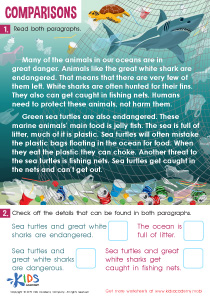
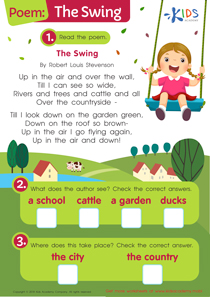
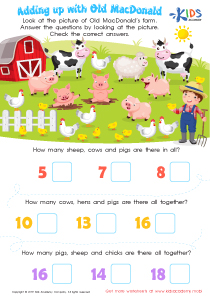
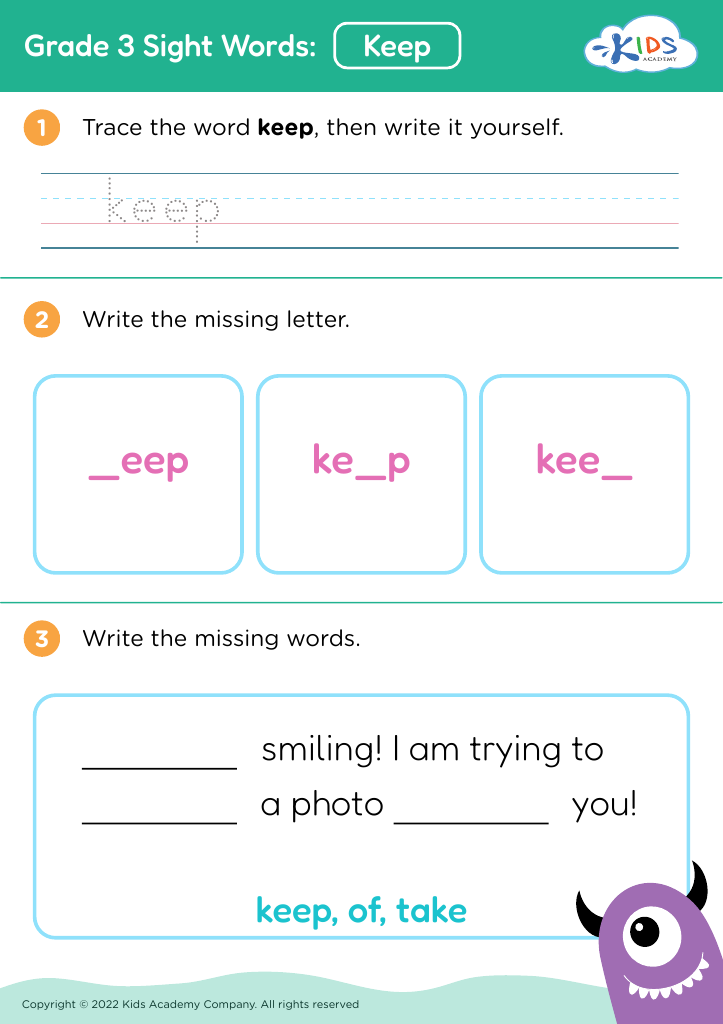
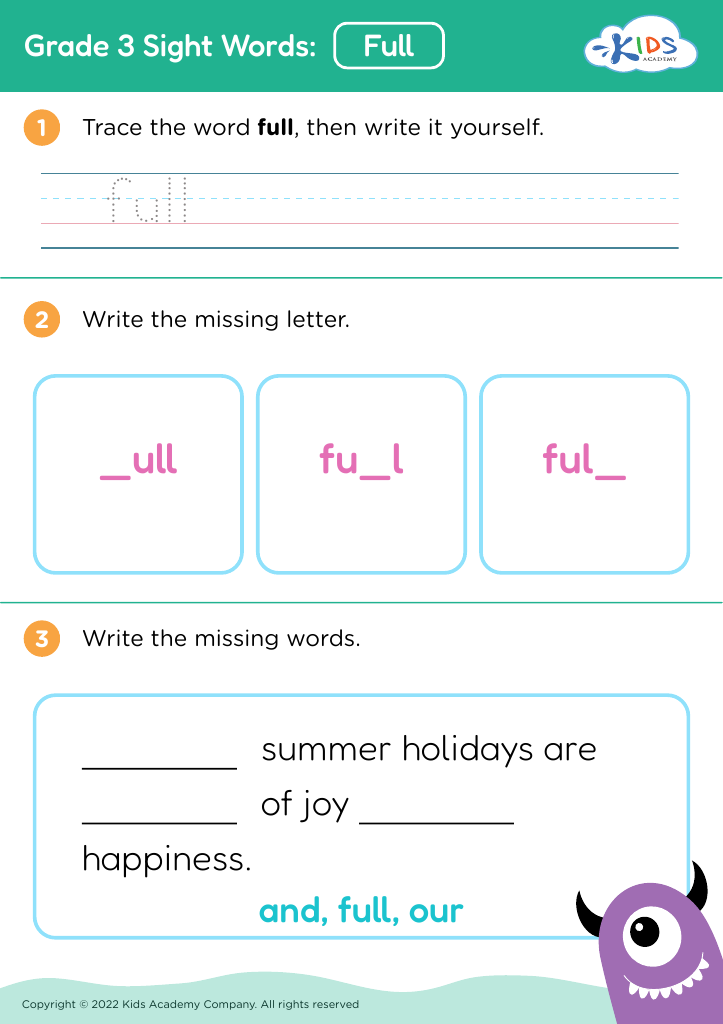
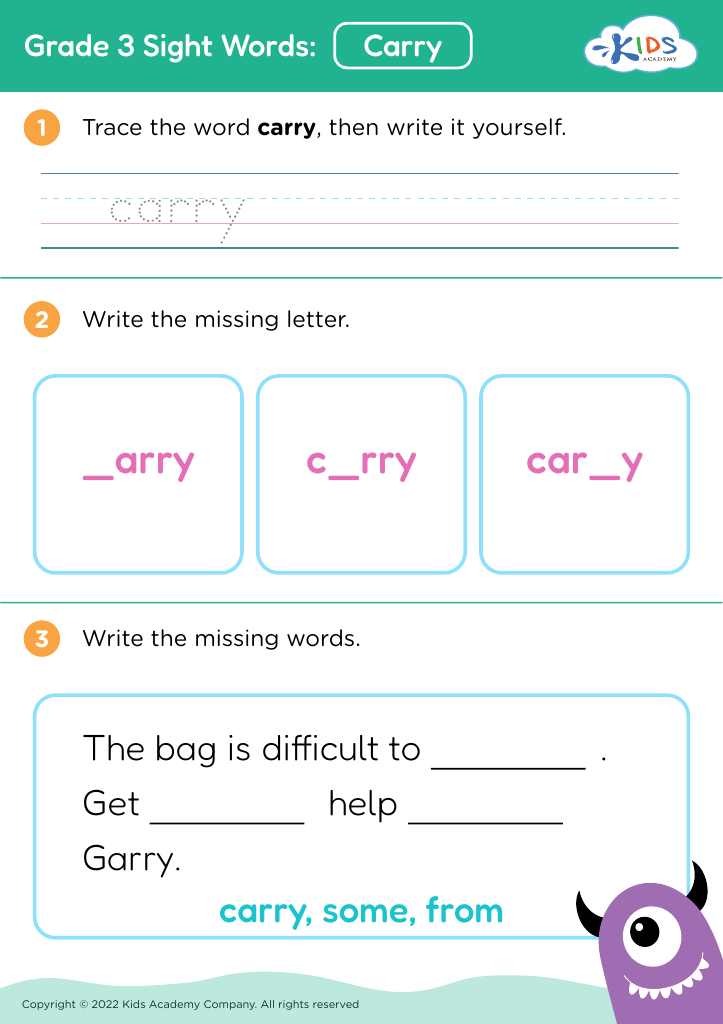
Enhance your third grader's math skills with our engaging Math Problem-Solving Vocabulary Worksheets! Designed specifically for Grade 3 students, these worksheets emphasize the importance of vocabulary in understanding and solving math problems. They provide a variety of exercises that help kids learn key math terms while applying critical thinking skills. By merging vocabulary building with mathematical problem-solving, our worksheets ensure that students not only grasp essential concepts but also gain confidence in their abilities. Perfect for classroom assignments or at-home practice, these resources make learning interactive and enjoyable. Set your child on the path to math success today!
Favorites
With answer key
Interactive
Join Kids Academy for Free
Who is primarily going to use this learning content?








Parents and teachers should prioritize math problem-solving and vocabulary building in Grade 3 because these skills are foundational for students' future academic success. At this age, children transition from concrete arithmetic operations to more abstract concepts, necessitating a solid grasp of mathematical vocabulary. When children are equipped with the correct terminology, they can better understand math problems, articulate their reasoning, and develop critical thinking skills.
Moreover, math problem-solving enhances students’ ability to analyze and tackle real-world issues, nurturing a sense of confidence and competence. As they manipulate numbers and concepts, they learn not just to find the right answer, but also to understand the underlying processes and relationships—an essential skill in today’s data-driven world.
Additionally, a strong vocabulary in math helps bridge their understanding across various disciplines, reinforcing reading and comprehension skills vital for overall academic growth. By encouraging a collaborative approach among parents and teachers, students can enjoy a rich learning environment that fosters curiosity and resilience. Ultimately, prioritizing math vocabulary and problem-solving empowers children to navigate both academic challenges and everyday situations effectively, setting a trajectory for lifelong learning and success.