Story sequencing Grade 3 Reading Fiction Worksheets
3 filtered results
-
From - To
Boost your third grader's reading comprehension with our Story Sequencing Grade 3 Reading Fiction Worksheets! Designed to enhance critical thinking and narrative skills, these worksheets help young readers understand the sequence of events in a story. With engaging and diverse fictional passages, students practice identifying the beginning, middle, and end of stories, ensuring a proper grasp of narrative structure. These interactive exercises promote logical thinking and help children improve their writing and storytelling abilities. Ideal for both classroom and at-home learning, our worksheets make reading fun and educational! Access our worksheets today to give your child the tools to excel in reading.
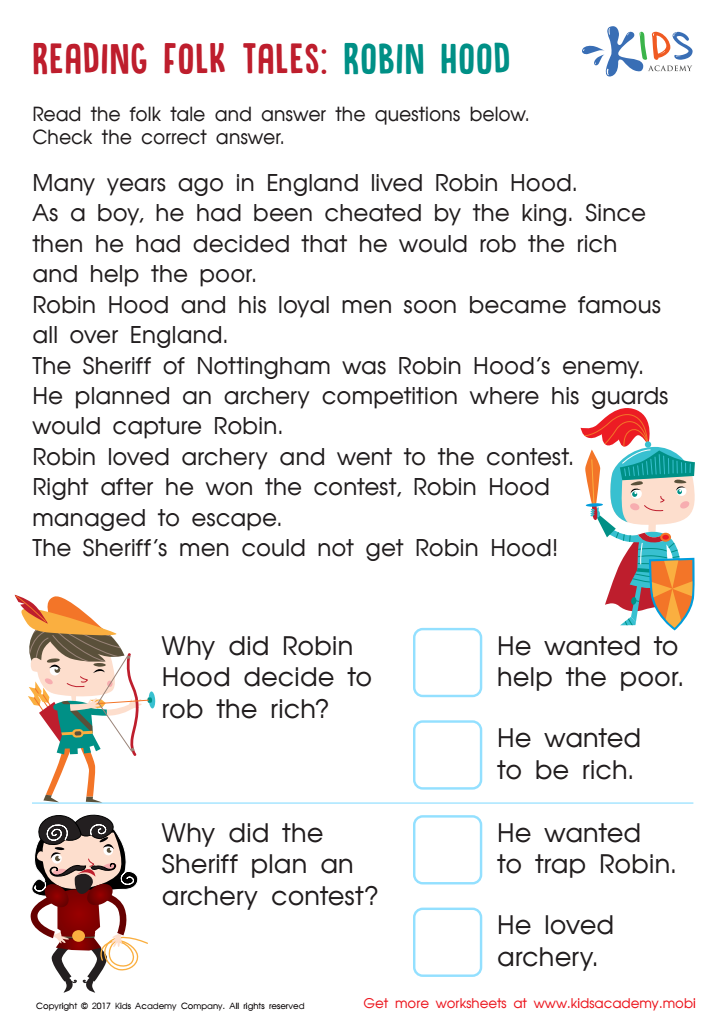
Robin Hood Folktale Worksheet
Folktales Printable PDF Worksheet: The 3 Little Pigs
 Assign to My Students
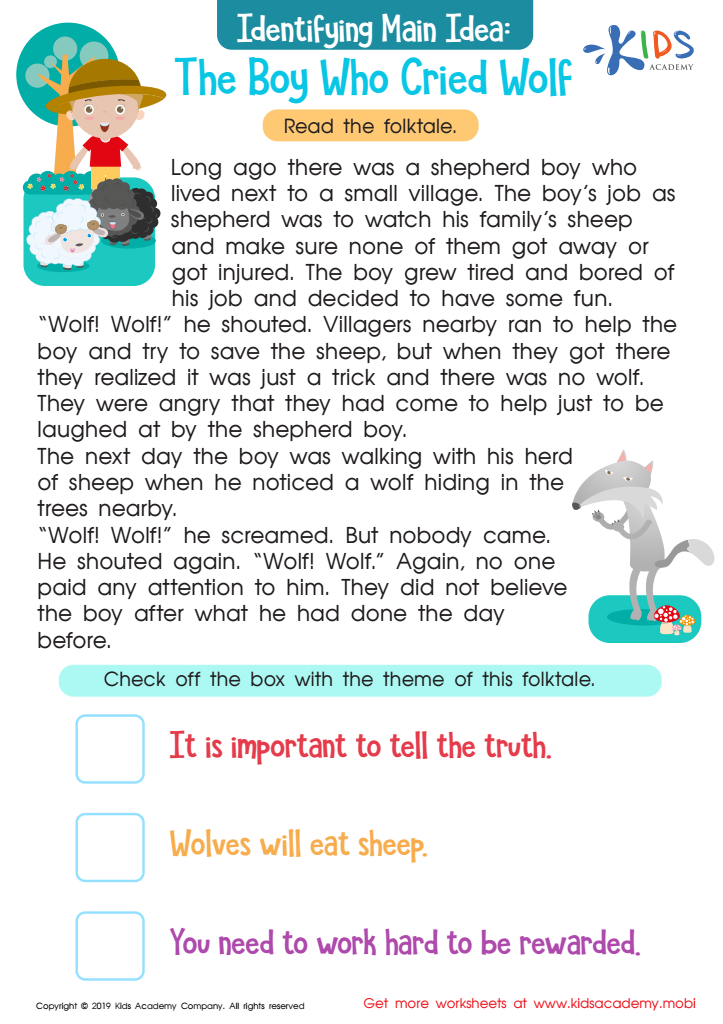
The Boy Who Cried Wolf Part 2 Worksheet







Story sequencing is a critical skill and an integral part of Grade 3 reading fiction that parents and teachers should prioritize. This skill helps young readers understand the logical order of events in a story, aiding their overall comprehension and retention of the narrative. When students practice sequencing, they learn to identify the beginning, middle, and end of a story. This not only helps them grasp the storyline but also enhances their ability to summarize and retell stories accurately, which are vital skills for effective communication.
Encouraging story sequencing also nurtures students' critical thinking abilities. They start to recognize cause-and-effect relationships and can predict what might happen next based on the sequence of events they’ve read. These skills are foundational for understanding more complex texts in higher grades and across different subjects.
Furthermore, story sequencing supports social-emotional development. When students retell stories accurately, they often gain insights into characters' perspectives and motivations, enriching their empathy and social awareness. Parents and teachers who focus on story sequencing help students develop a stronger foundation in reading and comprehension, equipping them with the essential tools needed for academic success and everyday problem-solving. Thus, emphasizing story sequencing in Grade 3 sets the stage for a lifetime of effective reading and communication skills.