Vocabulary development Grade 3 Reading Fiction Worksheets
3 filtered results
Difficulty Level
Grade
Age
-
From - To
Subject
Activity
Standards
Enhance your Grade 3 students’ reading comprehension and vocabulary skills with our engaging Fiction Worksheets! Designed specifically for third graders, these printable activities focus on enriching language through fun stories and prompts. Students will explore new words, contexts, and meanings, empowering them to become confident readers and thinkers. Interactive exercises encourage critical thinking, allowing children to connect vocabulary with narrative themes and characters. Ideal for both classroom use and at-home learning, these worksheets provide an enjoyable way for young learners to expand their linguistic abilities. Explore our vocabulary development resources and watch your students flourish in their reading journey!
Favorites
With answer key
Interactive
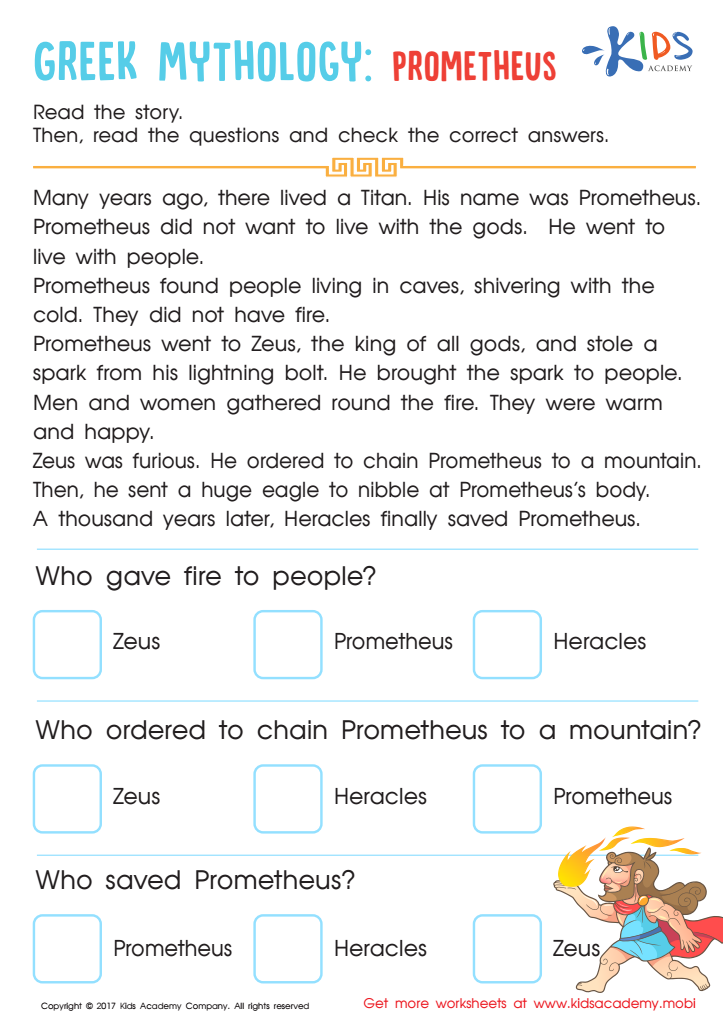
Prometheus Story Worksheet
Help kids improve reading comprehension with this Prometheus story worksheet! Learn about this classic mythological tale and break down the plot into understandable parts. By doing so, children will understand the story each step of the way.
 Assign to My Students
Prometheus Story Worksheet
Worksheet
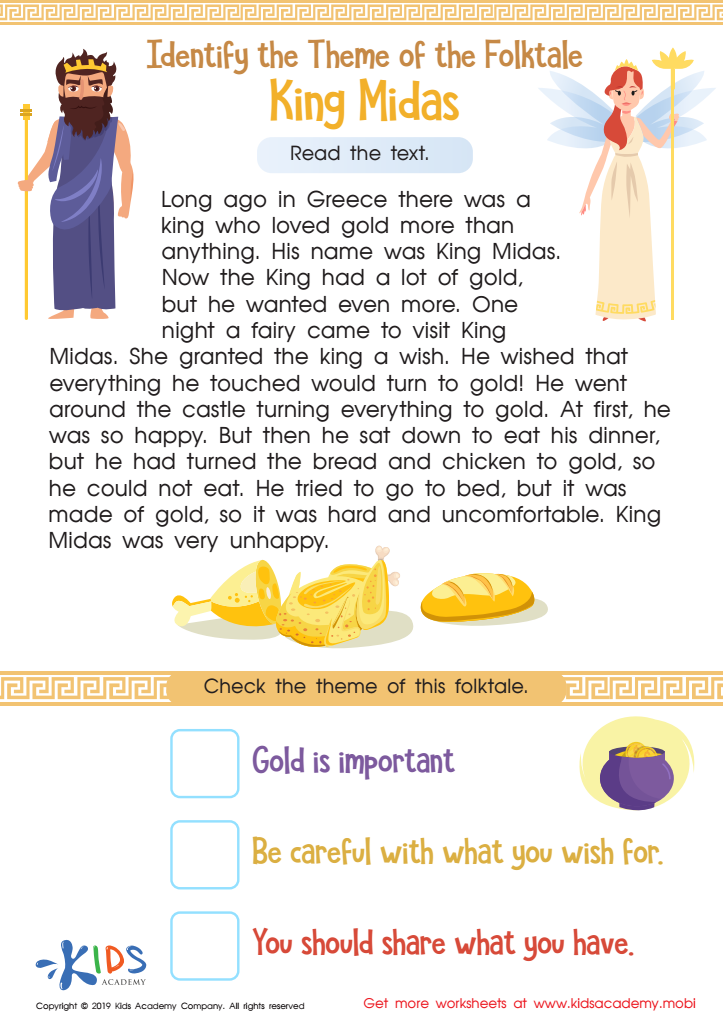
King Midas Worksheet
Read the ancient Greek history of King Midas to your kids. If they're into Greek gods and mythology, they'll be excited to complete the exercise. Read the text carefully, and if needed, twice. Help your kids locate the story's theme at the bottom of the page. 80 words.
King Midas Worksheet
Worksheet
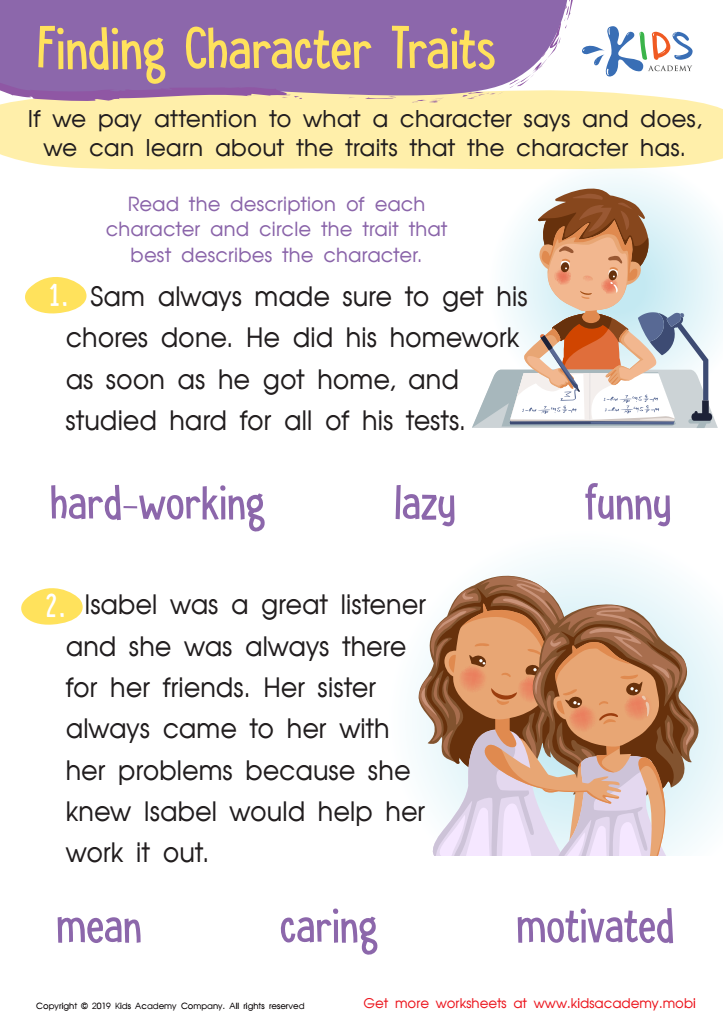
Finding Character Traits Worksheet
Before you start, make sure your kids know the difference between a character trait and a feeling. Traits are part of a character's entire personality and can be inferred from what they say and do in a story. Read the character descriptions on the worksheet and help your kids circle the best trait for each.
Finding Character Traits Worksheet
Worksheet
Join Kids Academy for Free
Who is primarily going to use this learning content?








Vocabulary development is crucial for third graders, particularly in reading fiction, as it plays a key role in their overall literacy skills and academic success. At this age, children begin to tackle more complex stories, where a rich vocabulary enhances their understanding and enjoyment of the text. When parents and teachers prioritize vocabulary development, they lay the groundwork for improved comprehension, critical thinking, and engagement with literature.
A robust vocabulary allows children to express themselves more clearly and confidently while navigating narratives. Third-grade fiction often contains themes and ideas that depend on nuanced language, and students with strong vocabularies are better prepared to grasp these concepts and connect with characters and plots. Additionally, exposure to diverse vocabulary fosters imagination and creativity, enabling children to relate to the story on a deeper level.
Moreover, strong vocabulary skills in early grades are linked to future academic achievement. Children with a rich vocabulary tend to perform better in standardized tests and other assessments.
Encouraging vocabulary growth through reading, discussions, and interactive activities empowers young learners to become enthusiastic readers, setting the stage for lifelong learning and a love for literature. Parents and teachers play a vital role in nurturing this essential skill.