Fraction simplification Grade 3 Sight Words Worksheets
4 filtered results
-
From - To
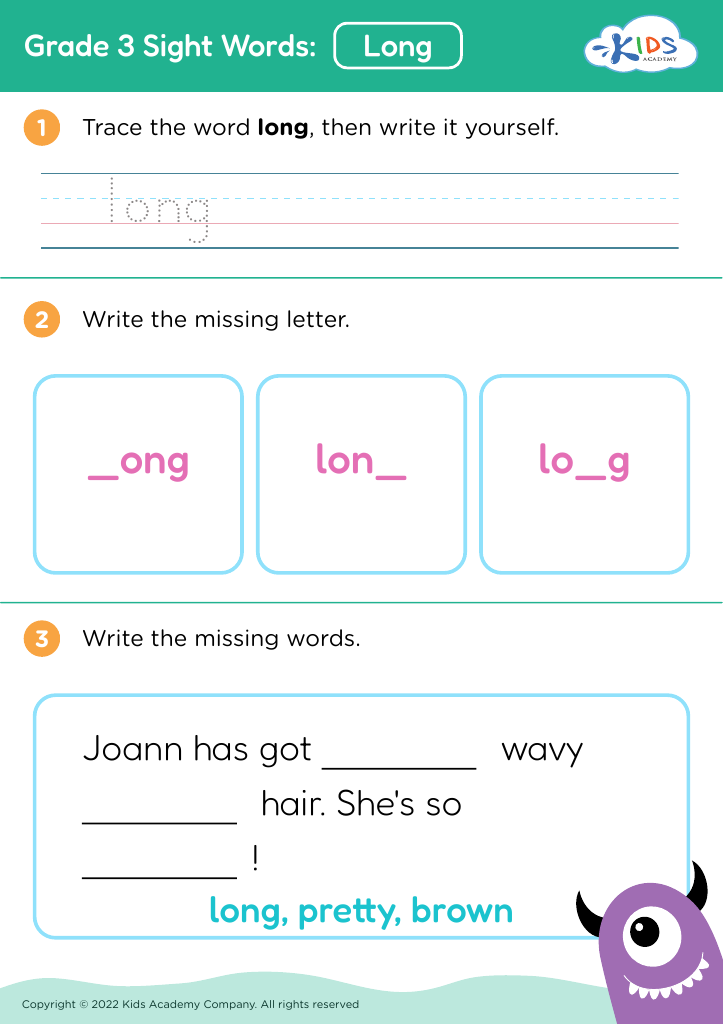
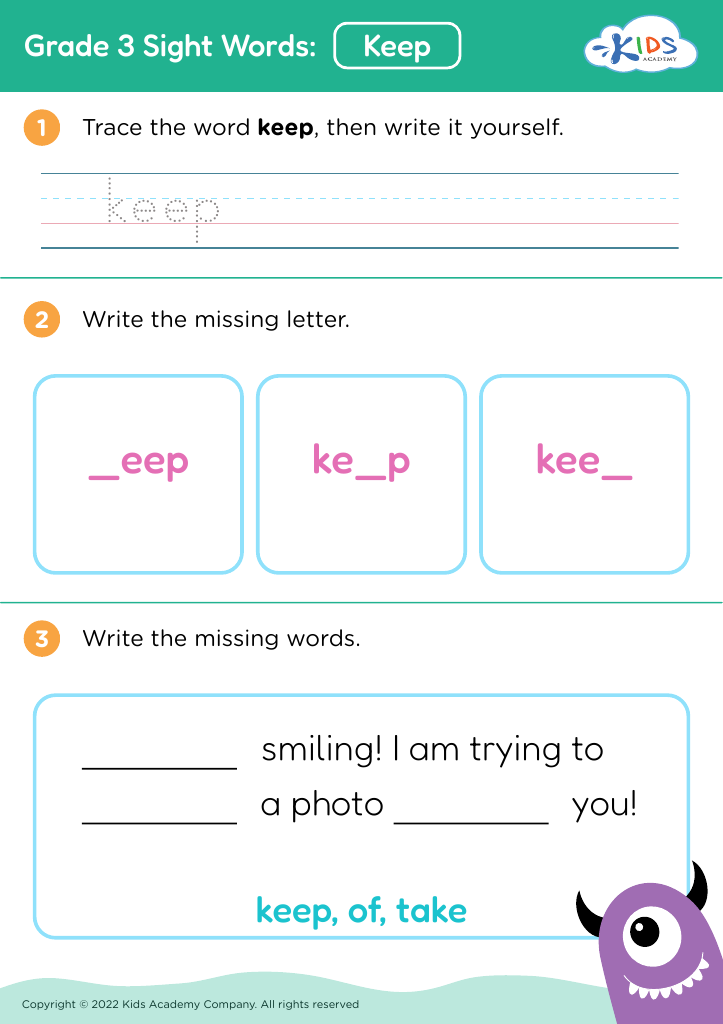
Enhance your third grader's reading and math skills with our engaging Fraction Simplification Grade 3 Sight Words Worksheets. Designed to align with grade-level standards, these worksheets seamlessly integrate sight word recognition and fraction concepts. As students simplify fractions, they also encounter essential sight words, fostering literacy and numeracy simultaneously. Fun exercises and colorful visuals keep kids motivated while nurturing their problem-solving abilities. Perfect for classroom use or home practice, these resources support a holistic approach to learning, ensuring your child builds confidence in both mathematics and reading. Download these worksheets today and watch your young learners thrive!
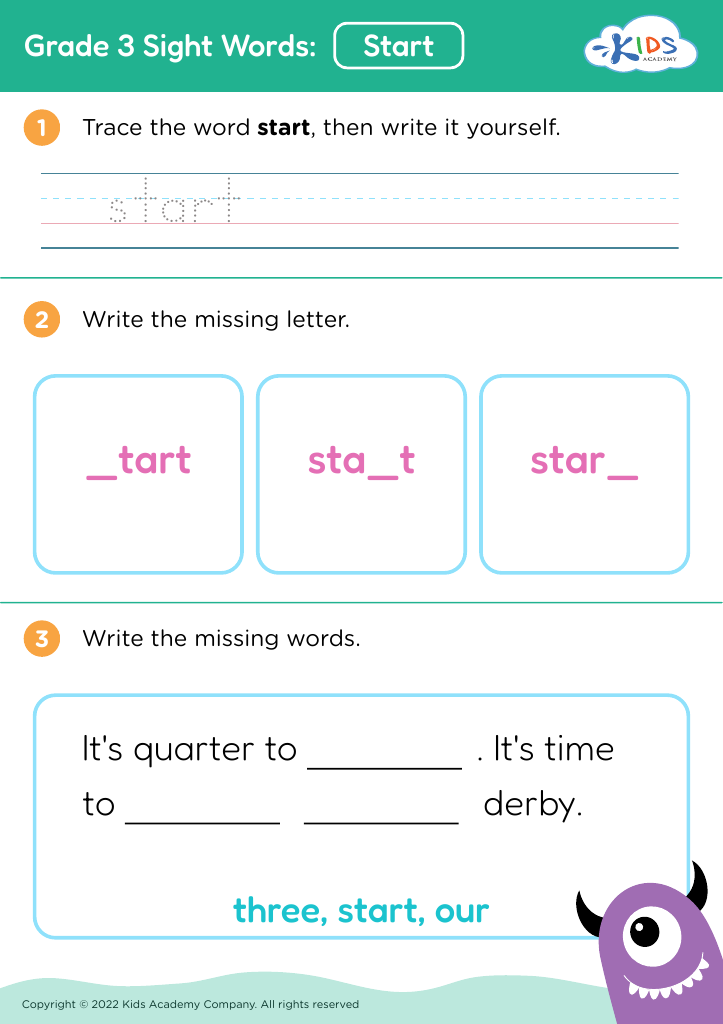
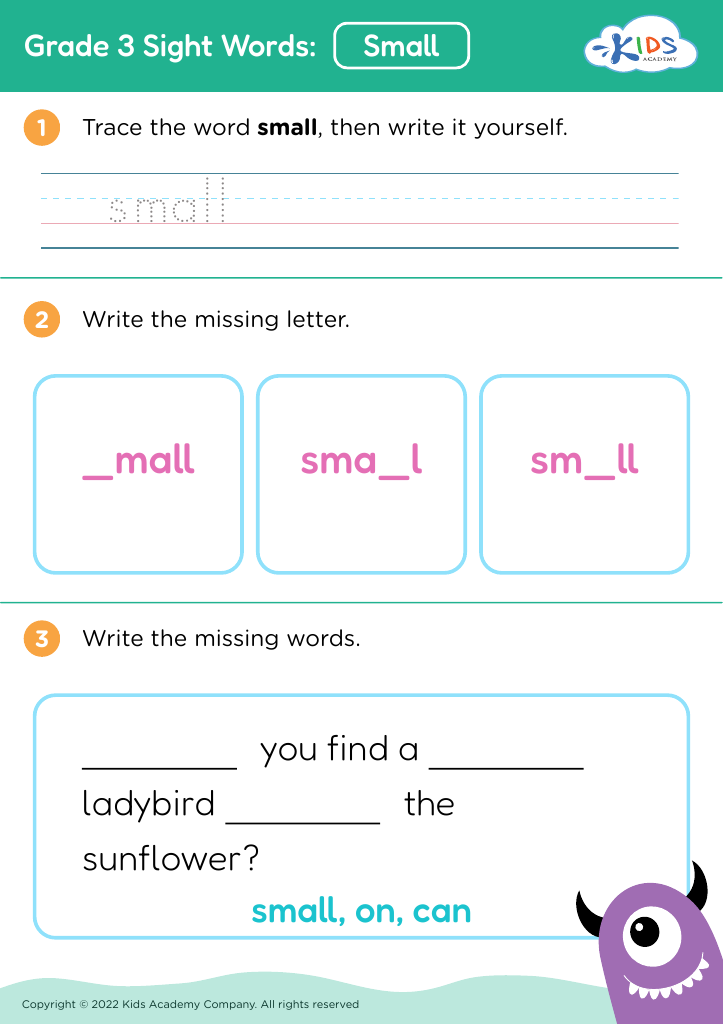








Understanding fraction simplification is crucial for students in Grade 3, as it lays the foundation for more advanced mathematical concepts. Parents and teachers should care about this topic because it helps students develop essential problem-solving and critical-thinking skills. Simplifying fractions requires children to grasp the nature of numbers, learn common factors, and engage in arithmetic operations. These foundational skills are not only applicable in mathematics but also enhance cognitive development.
Moreover, fraction simplification promotes numerical fluency, allowing students to confidently approach everyday mathematical situations, from cooking measurements to sharing resources. It fosters a deeper comprehension of how parts relate to a whole, which is essential in daily life.
Additionally, integrating this learning with Grade 3 sight words strengthens students’ literacy skills, as they practice reading and understanding mathematical terminology. When students can decode and comprehend concepts, they approach math with confidence, reducing anxiety and improving achievement.
In summary, supporting children in mastering fraction simplification coupled with sight word recognition enriches their education, instills a love for learning, and equips them with skills crucial for both academic success and practical life situations. Parents and teachers play a vital role in nurturing these abilities, guiding students toward becoming proficient learners.