Understanding fractions Grade 3 Sight Words Worksheets
11 filtered results
-
From - To
Unlock the key to understanding fractions effortlessly with our Grade 3 Sight Words Worksheets. Designed by educational experts, our engaging worksheets seamlessly blend reading and math skills, helping children master fractions while expanding their sight word vocabulary. Students will enjoy interactive exercises that make learning fractions fun and accessible. Perfect for reinforcing classroom instruction or at-home practice, these worksheets cater to various learning styles. Boost your child’s confidence and proficiency in both reading and math with our comprehensive resources. Visit us at Kids Academy to explore these exciting, user-friendly worksheets and watch your third-grader thrive academically!
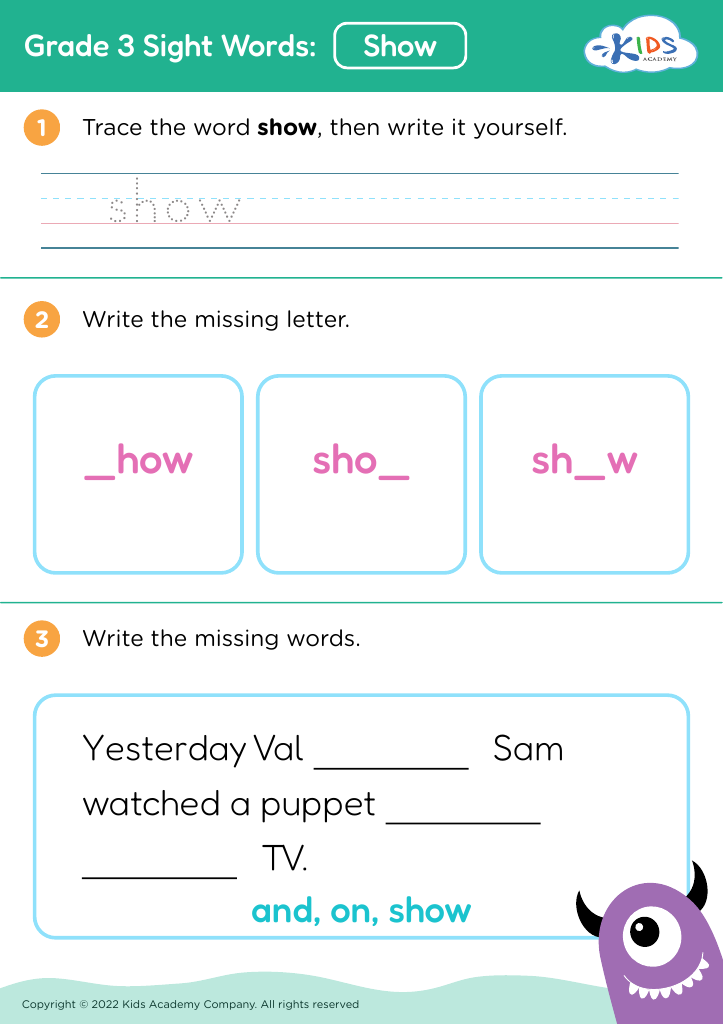
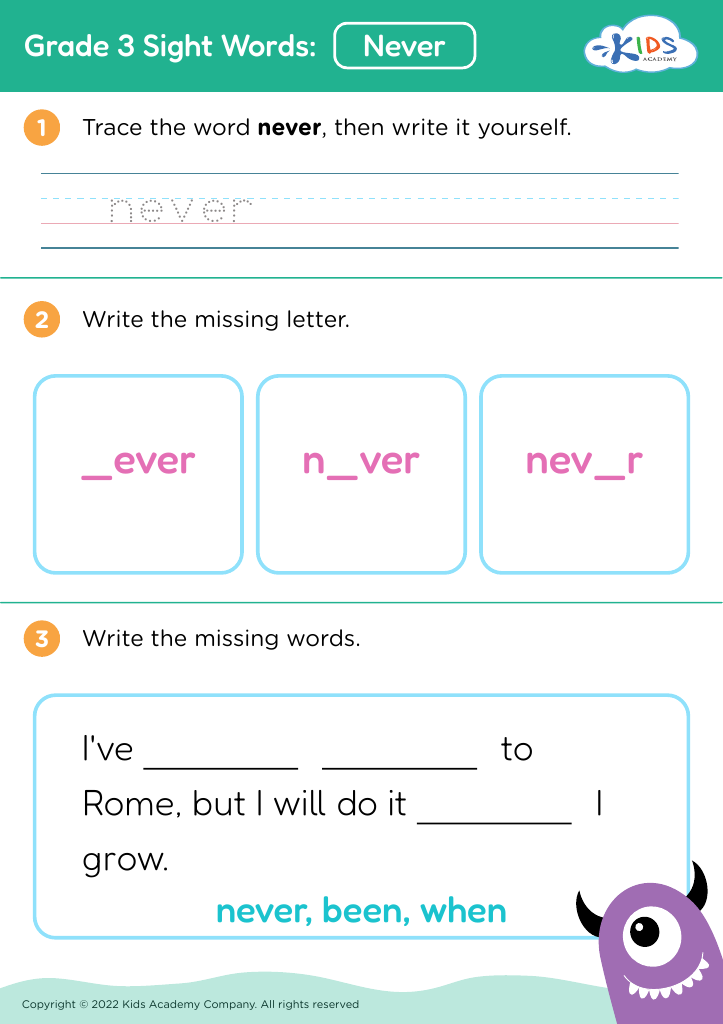
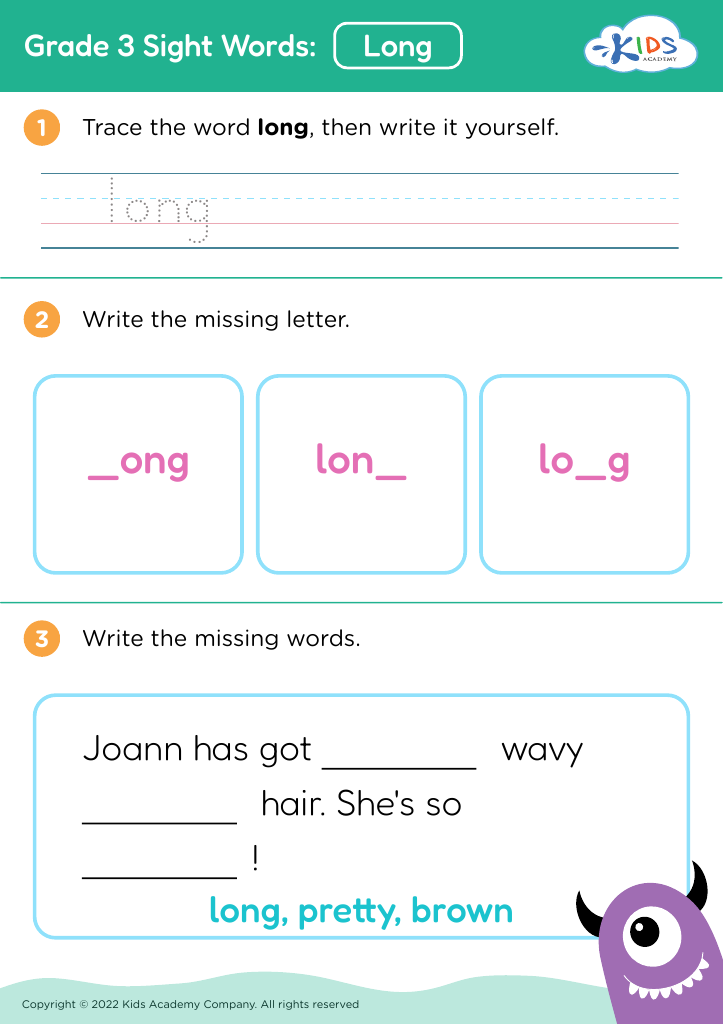
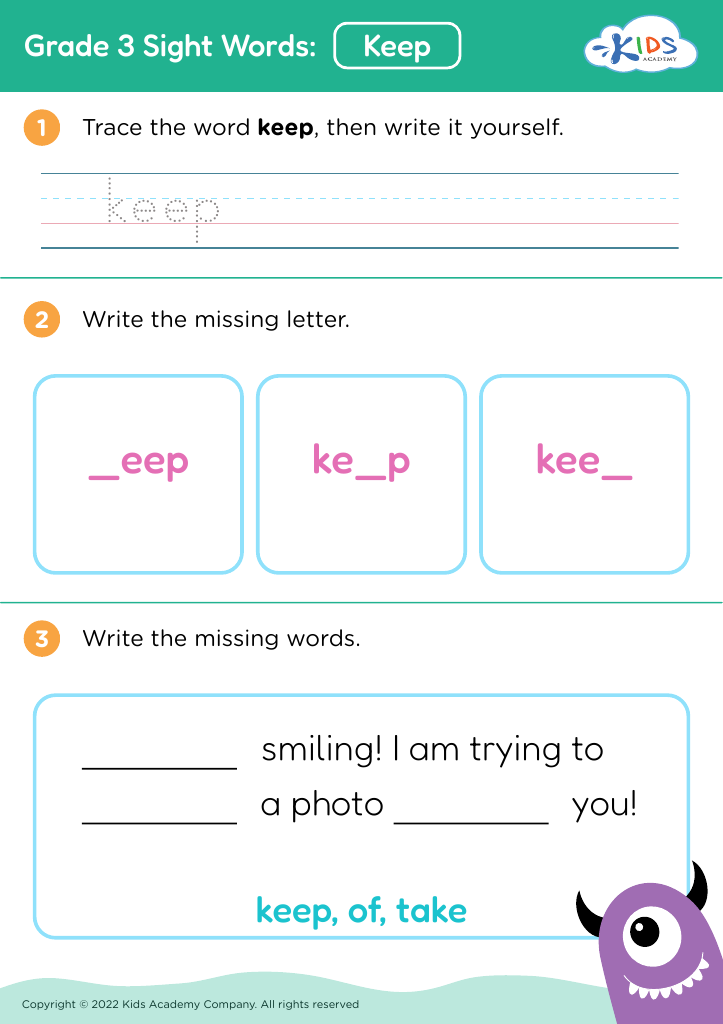
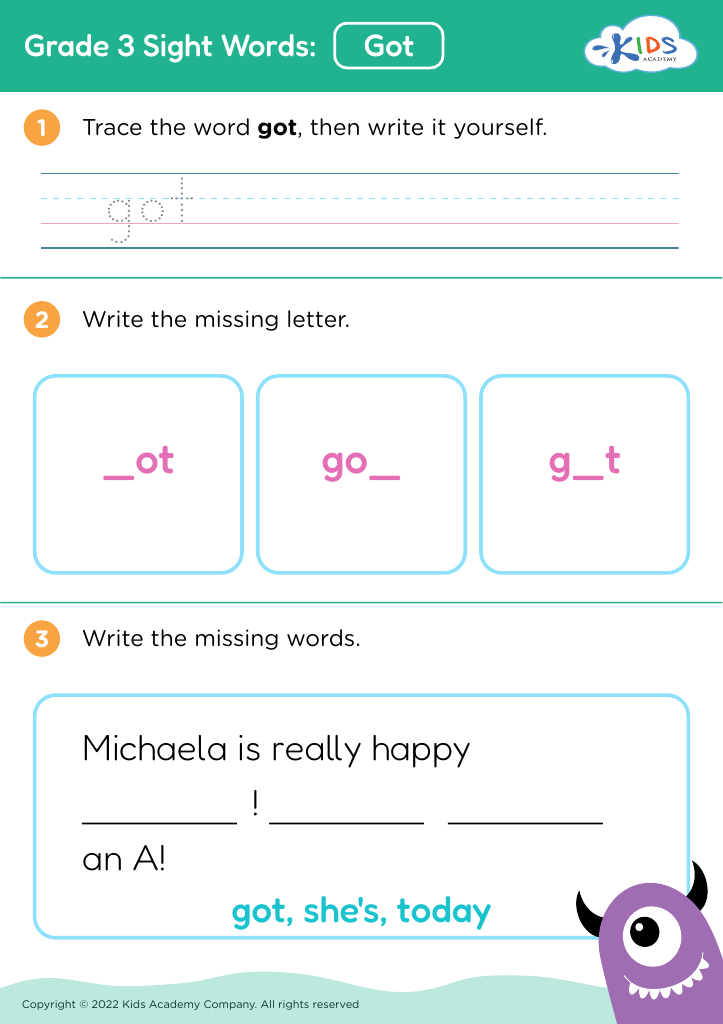
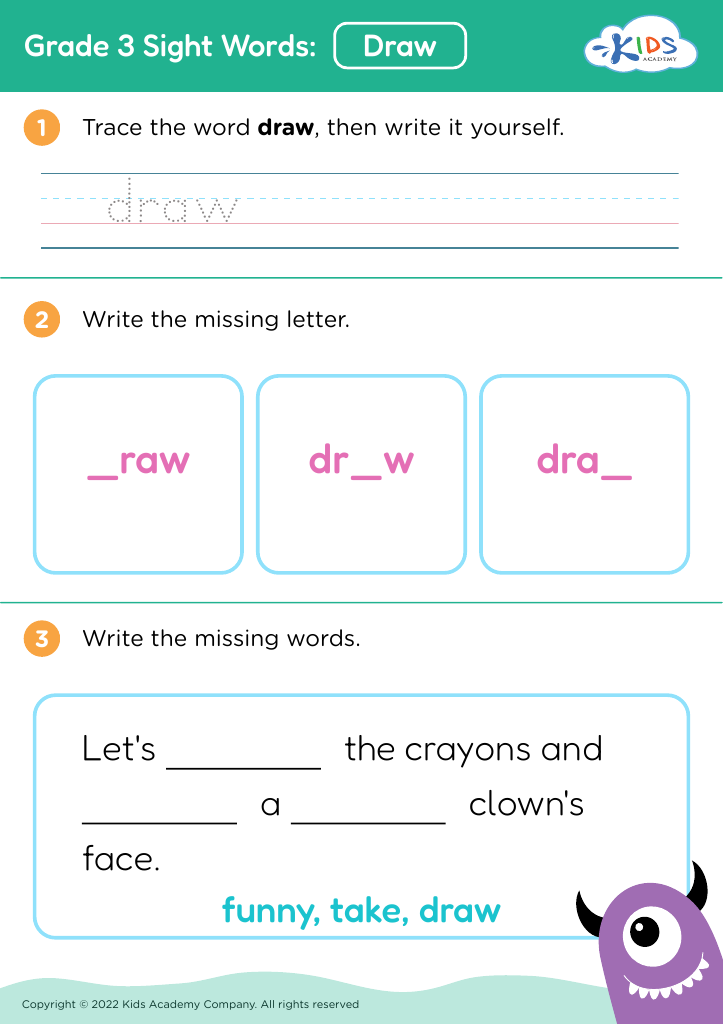
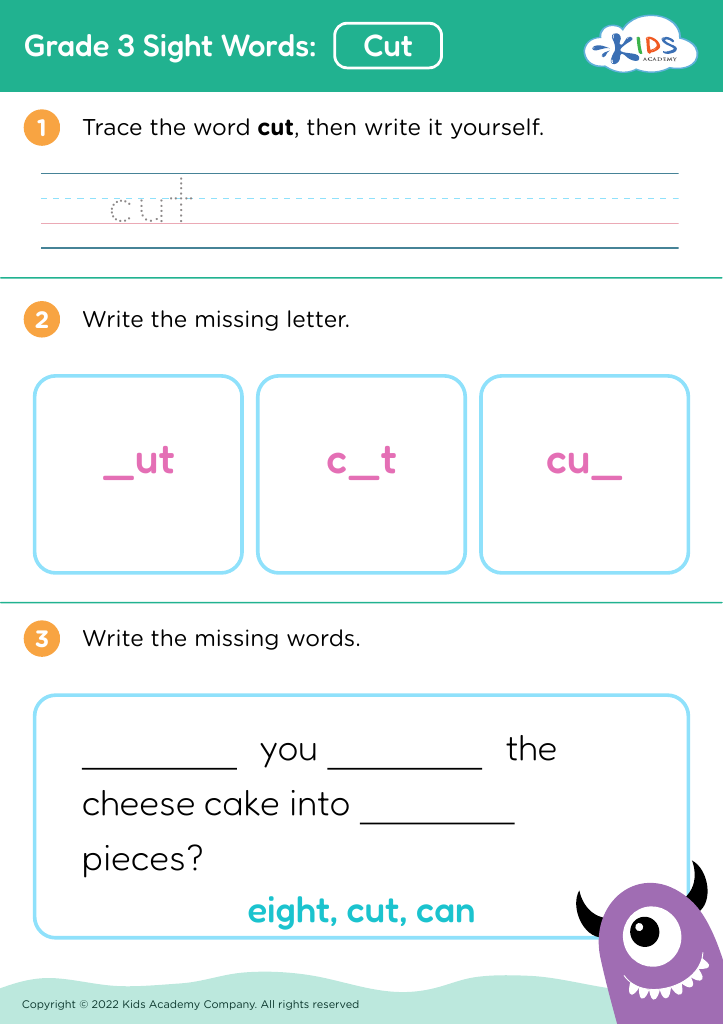
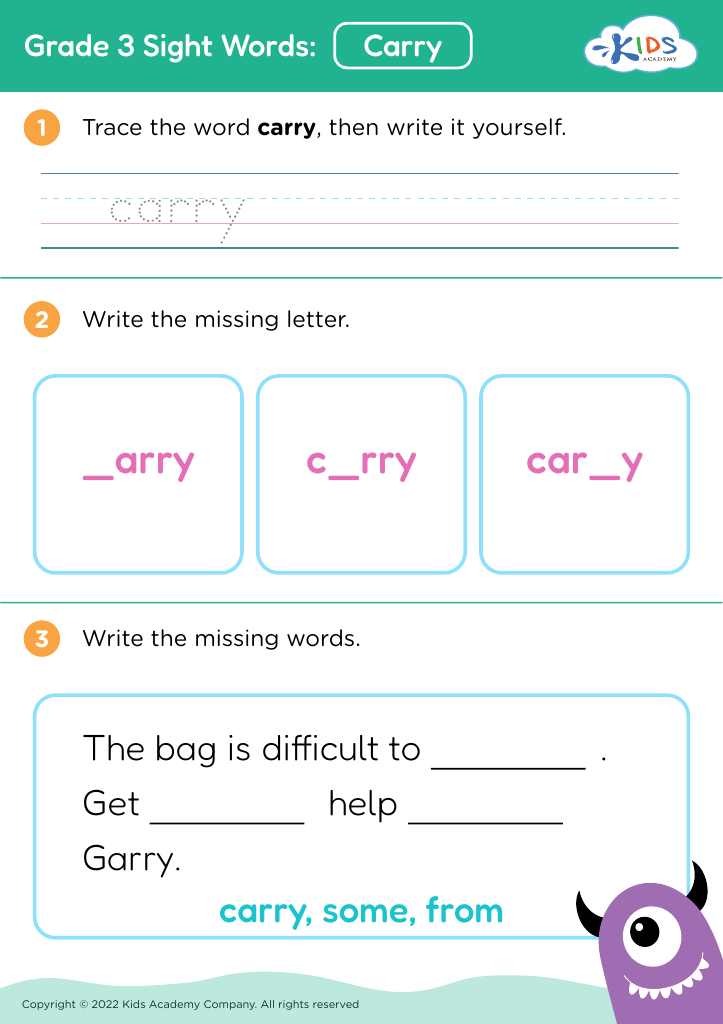
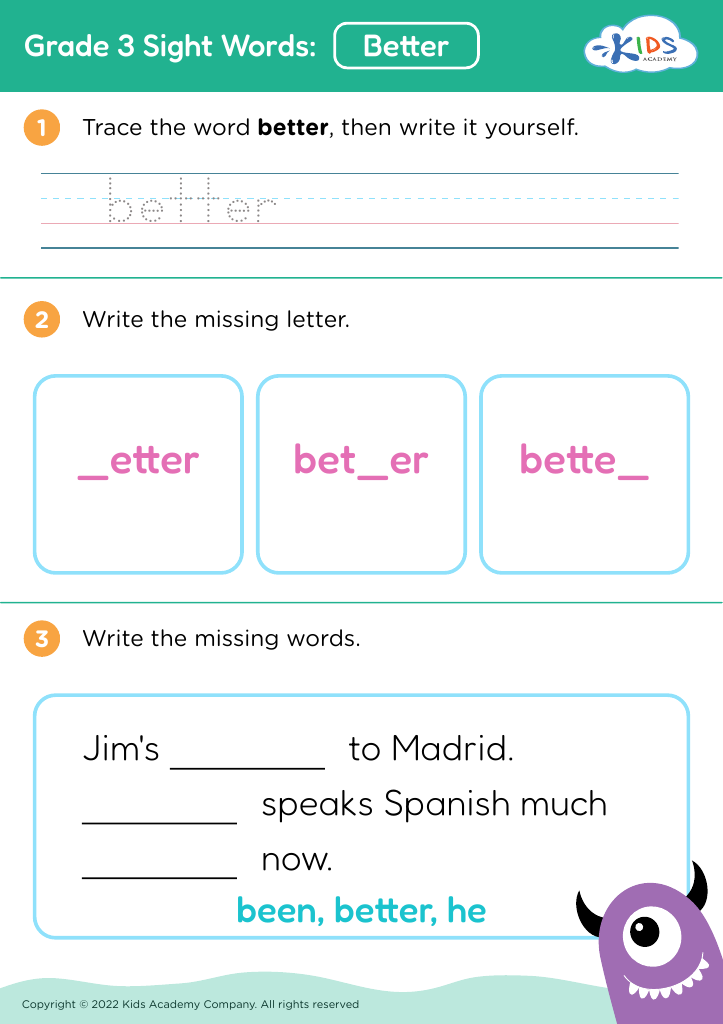








Understanding fractions and mastering grade 3 sight words are foundational skills critical for a child's educational development. Fractions are among the key mathematical concepts introduced in grade 3, laying the groundwork for more advanced topics in upper grades, such as division, ratios, and proportions. A strong understanding of fractions improves problem-solving skills and nurtures logical thinking.
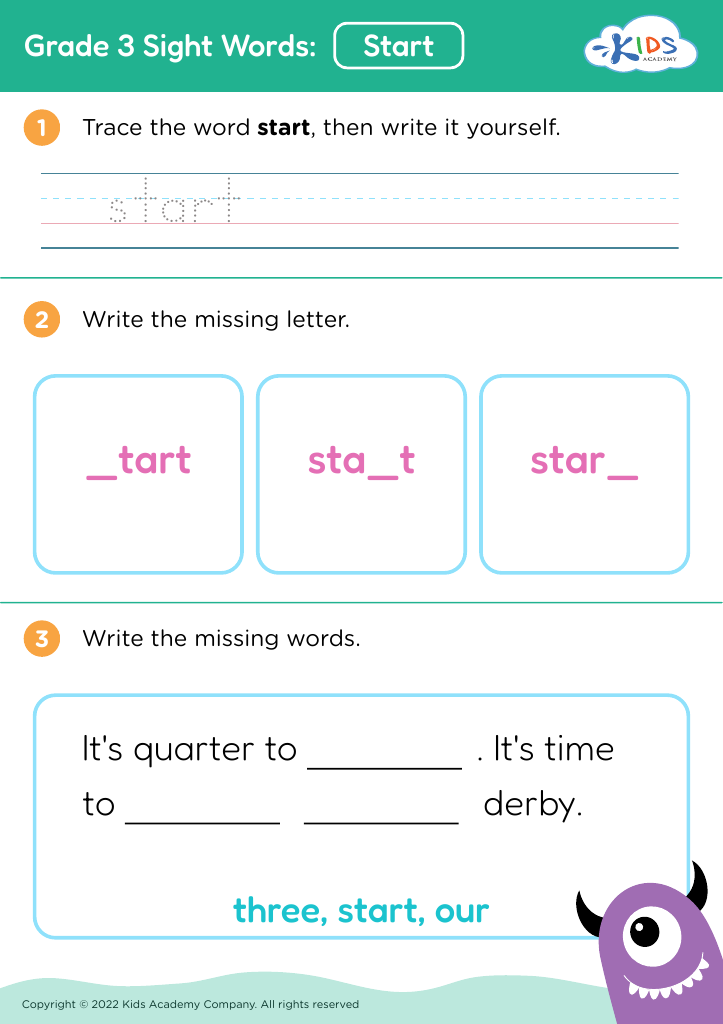
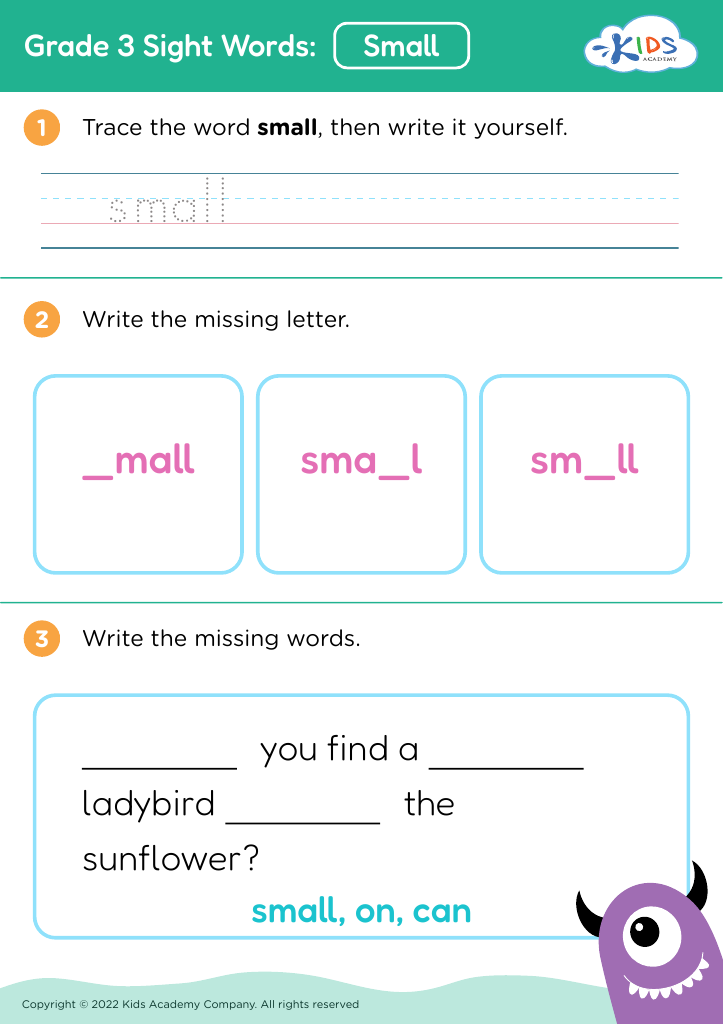
Simultaneously, sight words—common words that appear frequently in texts but may not follow standard phonetic rules—are indispensable in reading fluency. Grade 3 sight words build upon earlier vocabulary and prepare students for more complex reading material. They help children read more quickly and accurately, enhancing comprehension.
Together, proficiency in these areas fosters a well-rounded educational foundation. Fractions support mathematical literacy, crucial for everyday tasks and future STEM learning, while sight words enhance reading fluency, promoting a lifelong love for reading and learning. By prioritizing these skills, parents and teachers can provide children with the tools they need to succeed academically and better navigate their world, confident in both their numerical and verbal abilities. Encouraging mastery in these domains builds confidence, setting a positive trajectory for ongoing educational growth.