Mathematical reasoning Grade 3 Science Worksheets
3 filtered results
-
From - To
Explore our engaging "Mathematical Reasoning Grade 3 Science Worksheets" designed to enhance critical thinking in young learners. These worksheets offer fun and interactive ways to connect mathematics and science, fostering problem-solving skills and logical thought processes. Perfect for classroom use or additional practice at home, each worksheet is tailored to Grade 3 students, ensuring age-appropriate challenges that are both educational and enjoyable. With a variety of activities, from pattern recognition to data interpretation, these worksheets provide an excellent resource for developing essential skills in mathematical reasoning and science. Boost your child's learning journey with our expertly crafted worksheets!
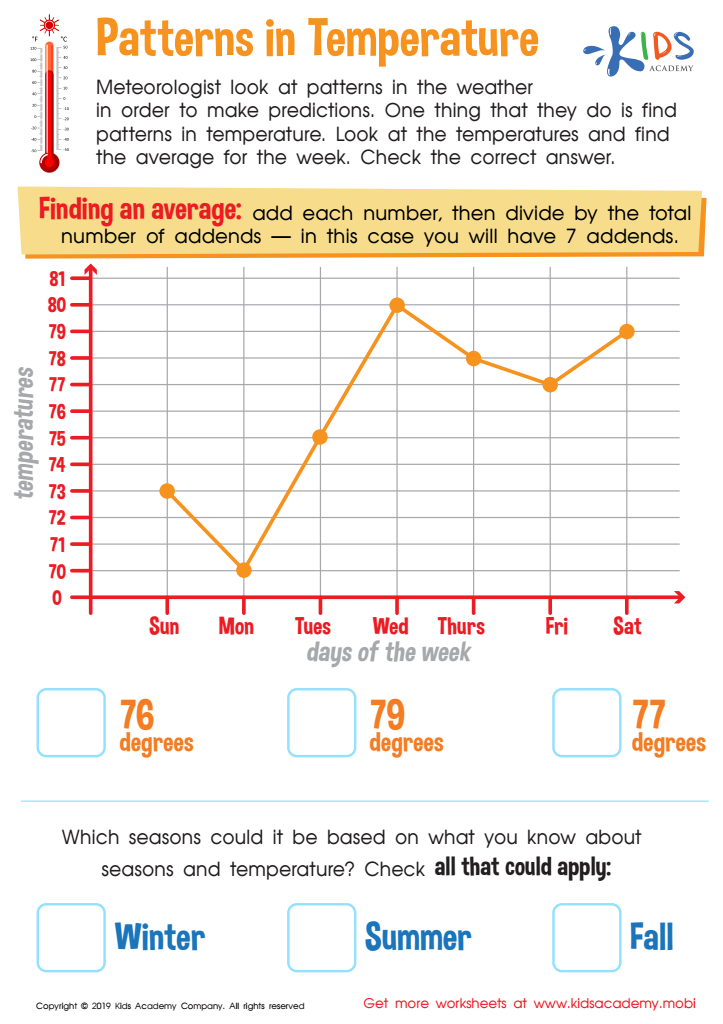
Patterns in Temperature Worksheet
 Assign to My Students
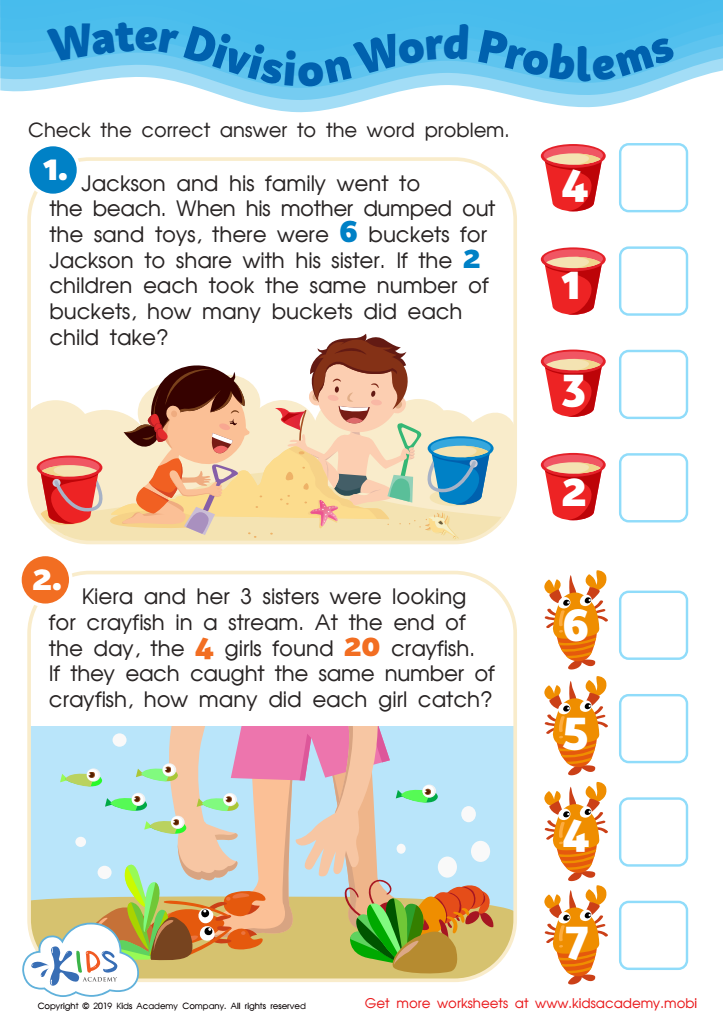
Water Division Word Problems Worksheet
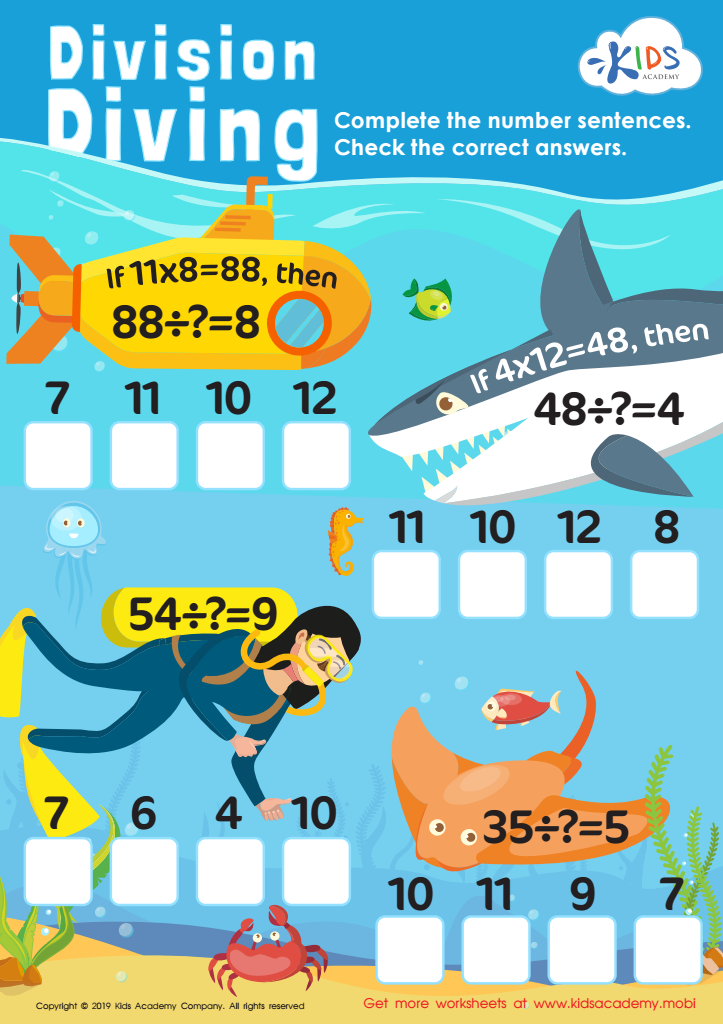
Division Diving Worksheet






Mathematical reasoning is a critical skill integral to unlocking a broader understanding of various subjects, including Grade 3 Science. For both parents and teachers, fostering mathematical reasoning at this stage serves as a cornerstone for children’s educational development and problem-solving abilities.
Grade 3 is a pivotal time when students transition from simple arithmetic to more complex mathematical concepts. These concepts are essential for understanding scientific topics such as measurements, data interpretation, graphing, and pattern recognition. By honing mathematical reasoning, children are better equipped to carry out scientific experiments, analyze results, and draw logical conclusions.
For parents, promoting mathematical reasoning helps children build confidence and instills a sense of curiosity and logical thinking that goes beyond the classroom. At home, parents can support this by engaging children in activities that incorporate measurements, counting, and solving puzzles.
For teachers, integrating mathematical reasoning in science lessons makes the content more relatable and comprehensible. It allows students to see the practical applications of math in the natural world around them. This interconnected learning can spark an enduring interest in STEM fields, making mathematical reasoning not just an academic requirement but a doorway to lifelong learning and success.
Overall, early emphasis on mathematical reasoning in science can drive academic excellence, critical thinking and positivity towards learning, both academically and in everyday life.