Learning about ecosystems Grade 3 Plants and Animals Worksheets
3 filtered results
-
From - To
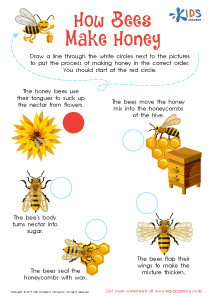
Discover the fascinating world of plants and animals with our "Learning about Ecosystems Grade 3 Plants and Animals Worksheets"! Tailored for third graders, these engaging worksheets explore the intricacies of ecosystems, highlighting how various plants and animals coexist and interact. Students will have the opportunity to dive deep into the food chains, habitats, and different types of ecosystems. These thoughtfully designed resources not only reinforce scientific concepts but also enhance critical thinking and observational skills. Perfect for the home or classroom, our worksheets make learning fun and informative for young curious minds!
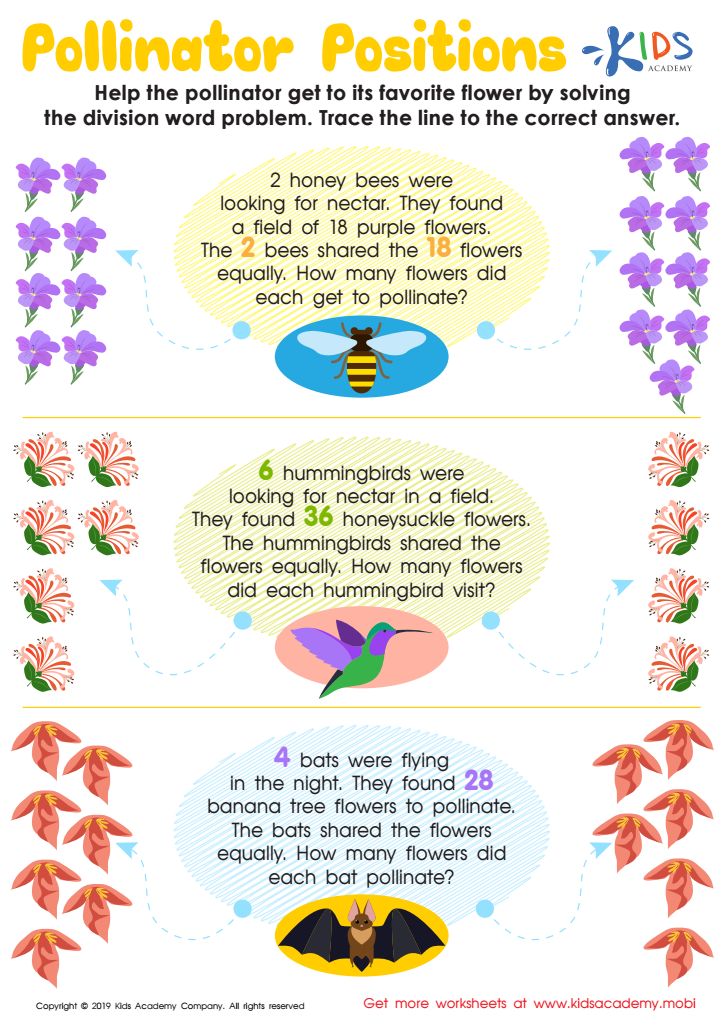
Pollinator Positions Worksheet
 Assign to My Students
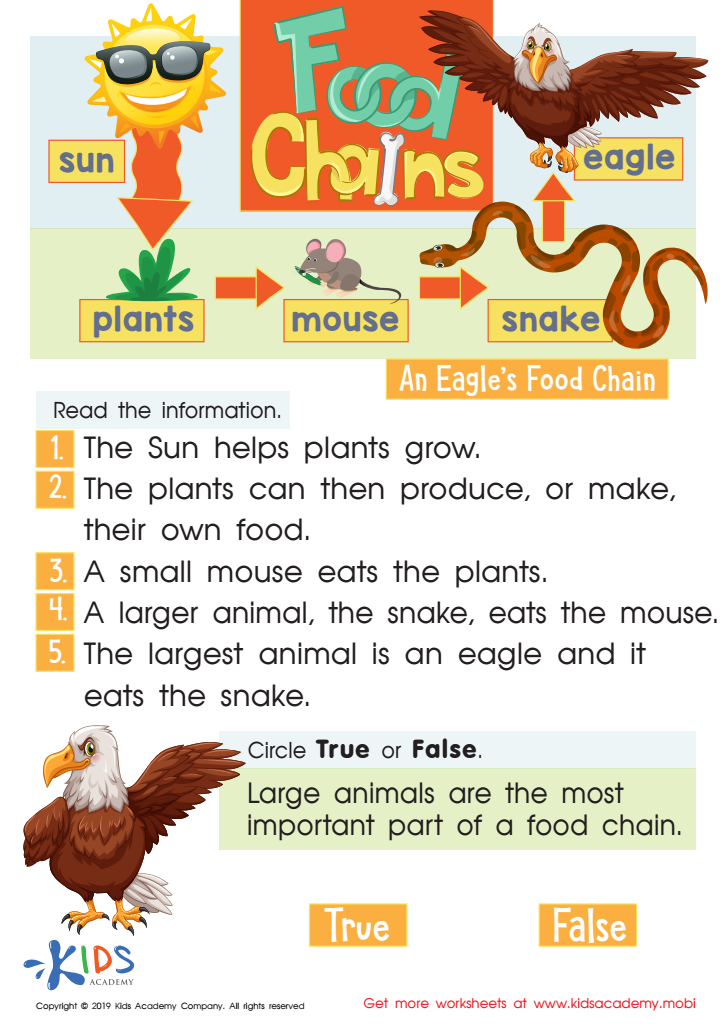
Food Chains Worksheet
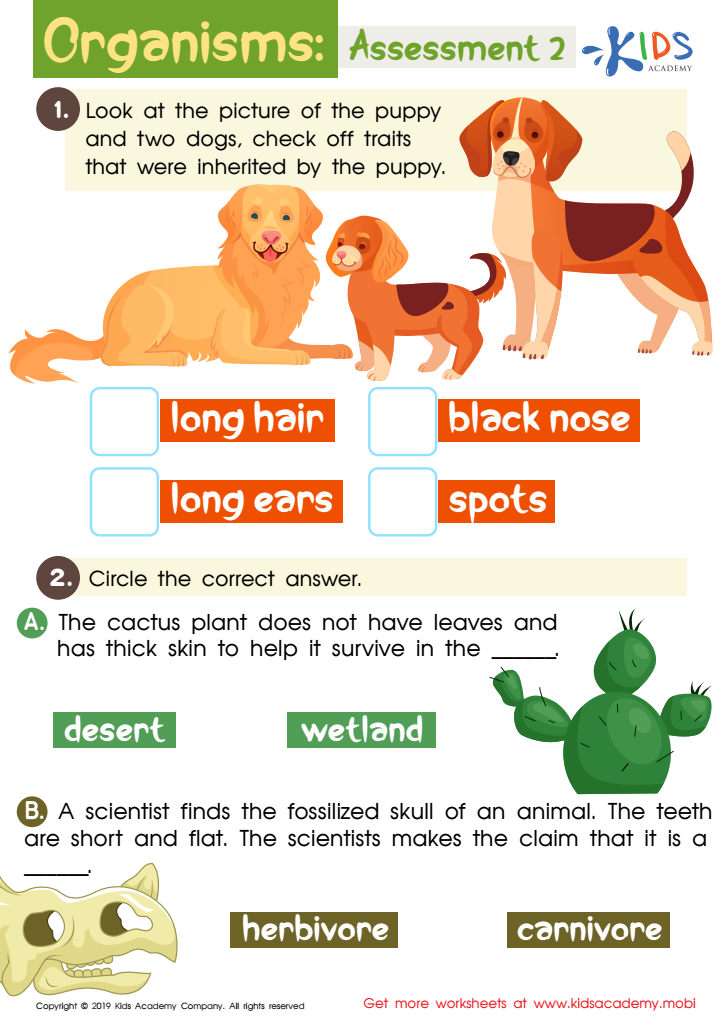
Organisms: Assessment 2 Worksheet



Learning about ecosystems in Grade 3 is essential for nurturing a child’s understanding of the natural world and their role within it. When children learn about plants and animals and how they interact within ecosystems, they gain critical scientific knowledge that sets the foundation for future environmental education. By studying these relationships at a young age, children develop an appreciation for biodiversity and the balance necessary for healthy ecosystems.
For parents and teachers, emphasizing this aspect of education encourages children to become more environmentally conscious and responsible citizens. Understanding ecosystems helps children recognize the importance of conservation and sustainable practices, fostering a sense of stewardship for the planet. Early education about ecosystems also sparks curiosity and enthusiasm for science, promoting critical thinking and observational skills. Moreover, learning about plants and animals can be deeply engaging and enjoyable for young learners, making education a positive experience.
Creating projects related to ecosystems can also teach valuable skills such as teamwork, research, and problem-solving. These interdisciplinary skills are not only useful in science but across all subjects and life situations. In essence, caring about this topic means equipping children with the knowledge and attitudes to contribute positively to the world from a young age.