Reading comprehension Grade 3 History Worksheets - Page 2
25 filtered results
-
From - To
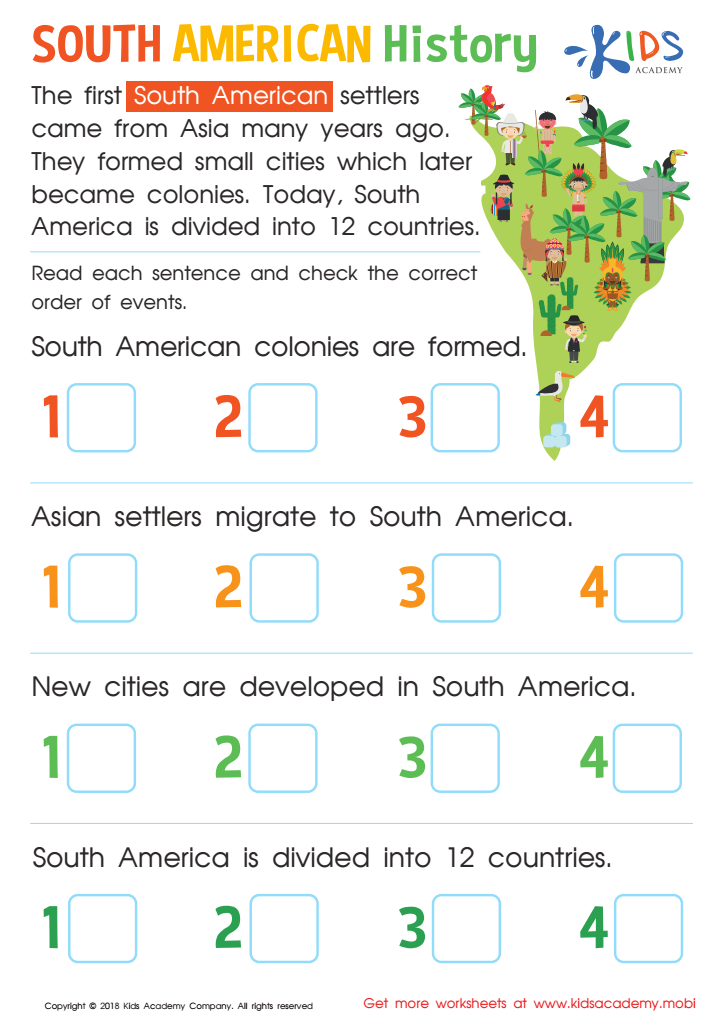
South American History Worksheet
 Assign to My Students








Reading comprehension in Grade 3 is critical for a child's academic and personal development, especially in subjects like history. At this stage, children transition from learning to read to reading to learn. Proficient reading comprehension enables students to grasp and analyze historical narratives, making sense of past events, contexts, and cultures. This groundwork cultivates a deeper understanding of cause and effect, critical thinking, and empathy by exploring diverse perspectives.
Moreover, history fosters a sense of identity and cultural awareness. When children comprehend historical texts, they are better equipped to connect with their heritage and appreciate the world’s cultural diversity. This early exposure helps instill a sense of curiosity and a lifelong love for learning.
Teachers and parents who prioritize reading comprehension are effectively setting students up for success across all subjects. Many academic disciplines, including science and social studies, rely on strong reading skills. Moreover, good comprehension affects overall academic performance and standardized test scores, providing essential opportunities later in life.
Parents and educators should embrace reading comprehension as a foundation for educational achievement and personal growth. Encouraging discussions about historical stories, analyzing texts, and connecting lessons to broader world contexts can enhance students' skills, resulting in more informed, thoughtful, and responsible future citizens.