Understanding patterns Grade 3 History Worksheets
3 filtered results
Difficulty Level
Grade
Age
-
From - To
Subject
Activity
Standards
Our "Understanding Patterns" Grade 3 History Worksheets are designed to build essential learning skills through engaging historical content. These carefully crafted worksheets help young learners identify and analyze patterns in historical events, enhancing their critical thinking and comprehension abilities. By focusing on history, students will not only grasp historical concepts but also recognize how events shape our world. Perfect for teachers and parents, these worksheets aim to provide an enjoyable learning experience that aligns with educational standards. Foster your third grader's analytical skills and historical knowledge with our innovative and informative worksheets! Explore, learn, and grow with Kids Academy.
Favorites
With answer key
Interactive
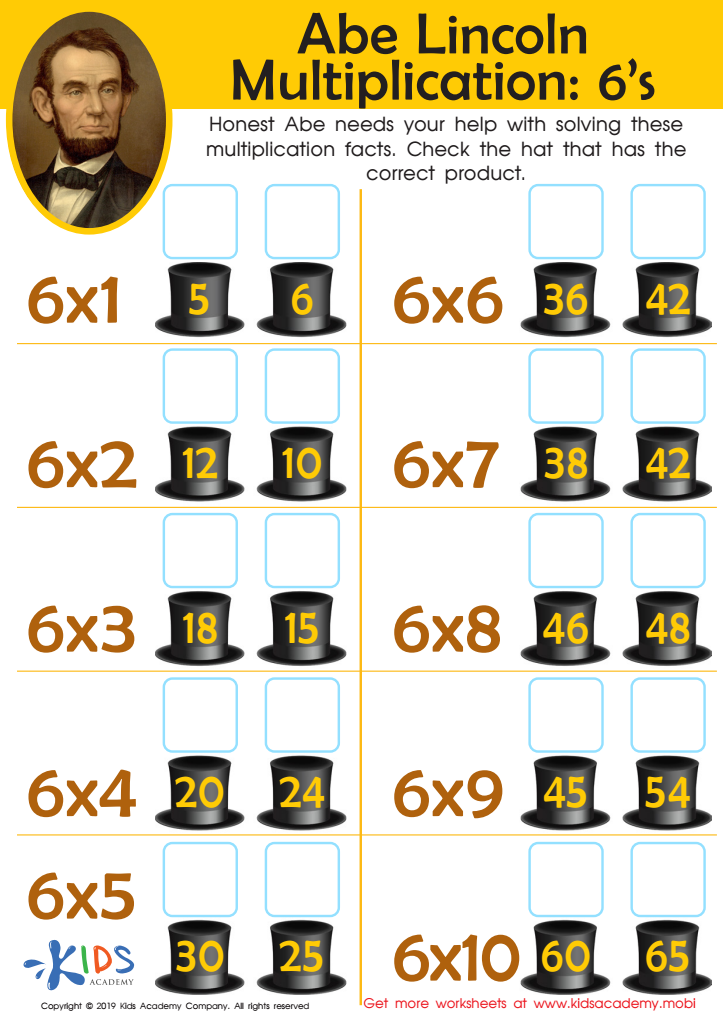
Abe Lincoln Multiplication: 6’s Worksheet
Abraham Lincoln is a key figure in US history. Remind your kids of his contributions and challenge them with this multiplication worksheet! Ask them to solve the facts in the picture and check the hat with the correct product.
 Assign to My Students
Abe Lincoln Multiplication: 6’s Worksheet
Worksheet
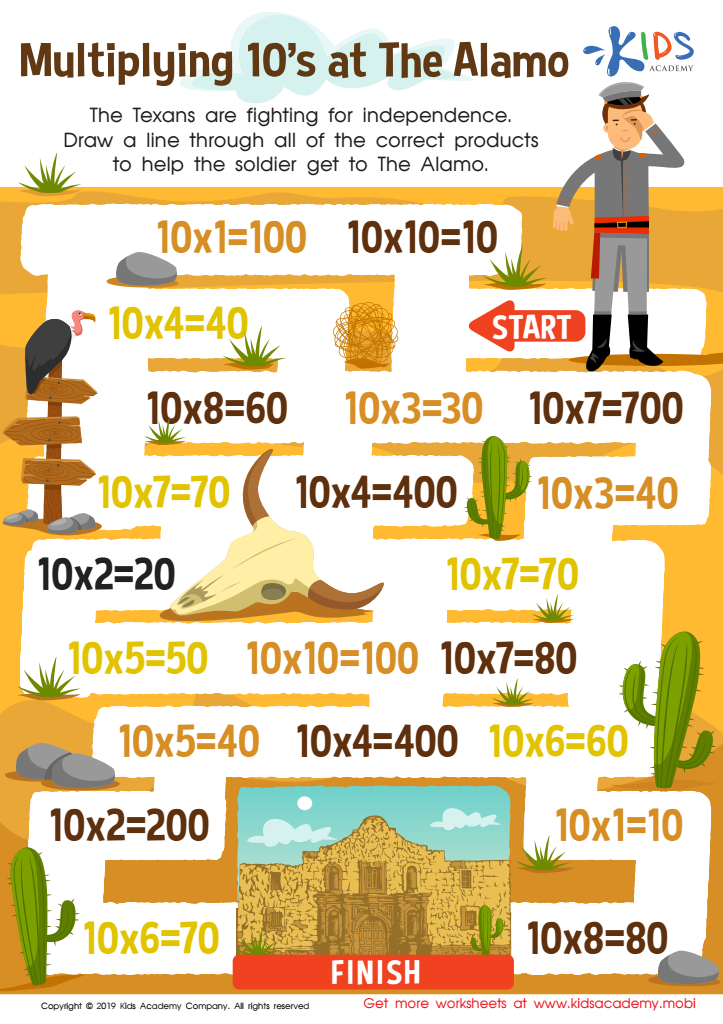
Multiplying 10’s at The Alamo Worksheet
Teach your kids easy tricks to simplify any multiplication problem. For example, when multiplying any number by 10, the result will always end in a zero. To help the Texans in this worksheet, draw a line through all of the correct products to get them to The Alamo.
Multiplying 10’s at The Alamo Worksheet
Worksheet
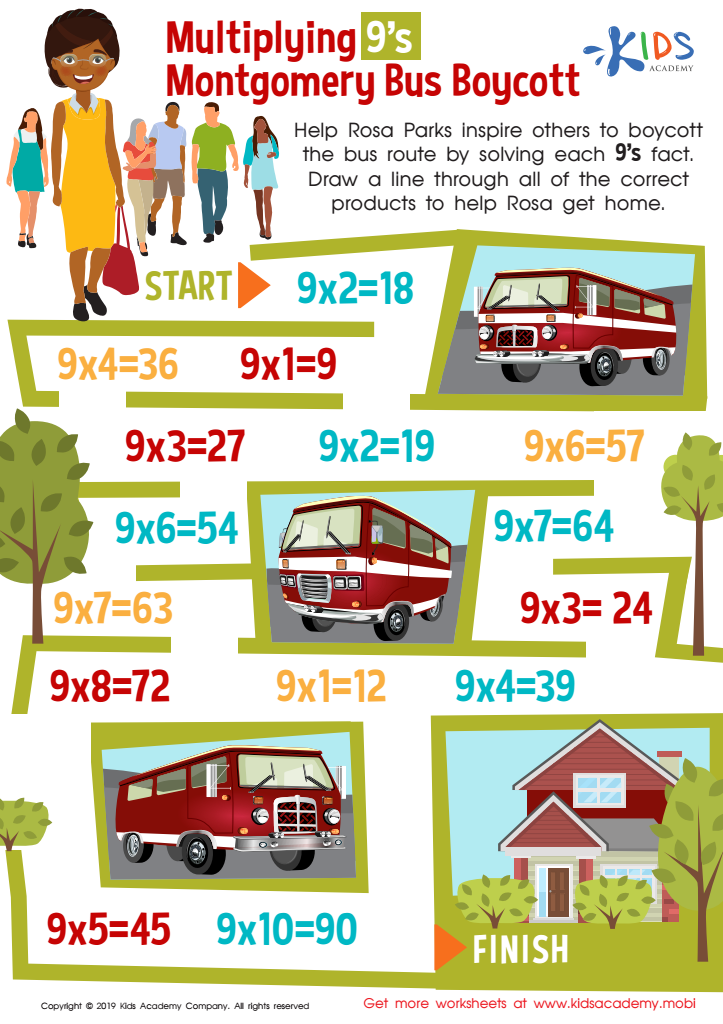
Multiplying 9’s Montgomery Bus Boycott Worksheet
As your students learn math, the numbers get bigger. This worksheet is great for learning the nine times table. Help Rosa Park get home - ask them to solve each multiplication fact, then draw a line through the correct products. Encourage your students to stand up for what's right!
Multiplying 9’s Montgomery Bus Boycott Worksheet
Worksheet
Join Kids Academy for Free
Who is primarily going to use this learning content?








Understanding patterns in Grade 3 history is fundamentally important for several reasons. Patterns teach students crucial critical thinking and analytical skills, enabling them to identify cause-and-effect relationships and understand how events are interconnected over time. For example, by recognizing patterns in historical events, such as causes of significant movements or recurring themes like immigration, conflict, and technological advancement, students can better grasp the complexities of our world.
Moreover, understanding historical patterns helps build a strong foundation of knowledge which aids in making sense of current events. When children recognize that today's happenings often reflect past occurrences, they become more informed citizens. This ability to draw parallels enables students to develop a deeper appreciation of their cultural heritage and enrich their worldview.
Patterns also serve as a memory aid. When students see that history often repeats itself, they can better remember specific events and contexts. This improves overall learning and retention, critical for young learners.
Lastly, recognizing and understanding patterns fosters curiosity and a love for learning. It engages students' innate interests in stories and mysteries, motivating them to explore further and become more engaged learners. Thus, engaging with historical patterns early unlocks a plethora of cognitive and cultural benefits essential for lifelong learning and active citizenship.