Understanding timelines Grade 3 History Worksheets
4 filtered results
-
From - To
Explore our engaging "Understanding Timelines" grade 3 history worksheets designed to enhance students' grasp of historical events and chronology. Ideal for third graders, these worksheets encourage critical thinking and help children learn how to organize and interpret events in a timeline format. Through interactive activities, students will identify important historical milestones and develop their sequencing skills. Our resources not only align with educational standards but also make learning history fun and insightful. Perfect for classroom use or independent practice, these worksheets are a great tool for teaching your young learners how to understand and create timelines effectively!
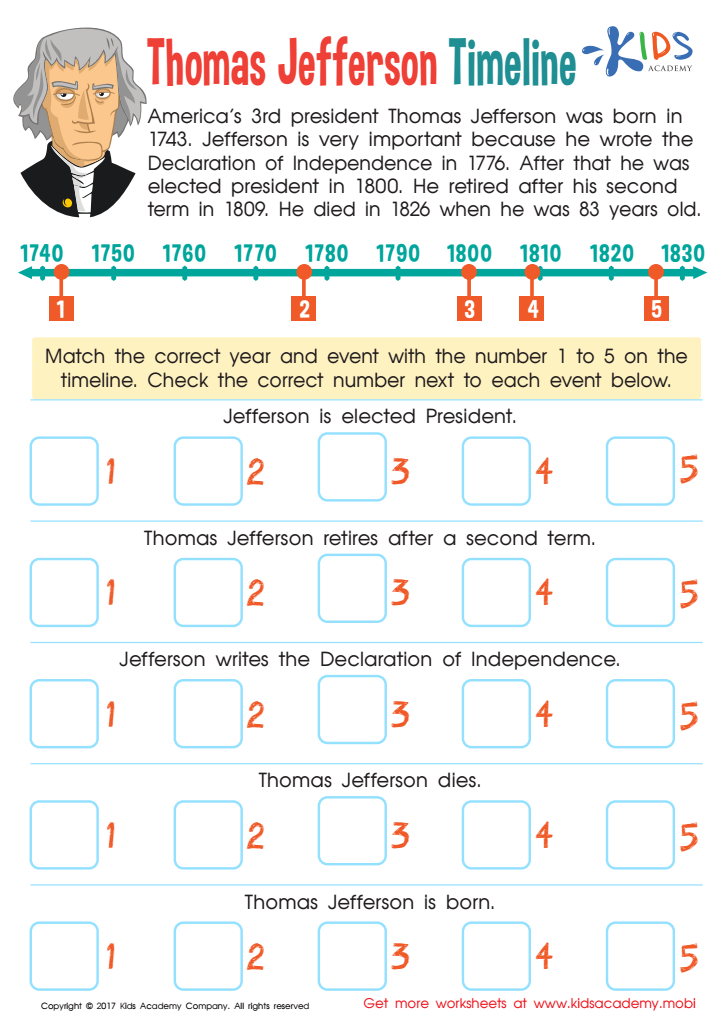
Thomas Jefferson Timeline Worksheet
 Assign to My Students
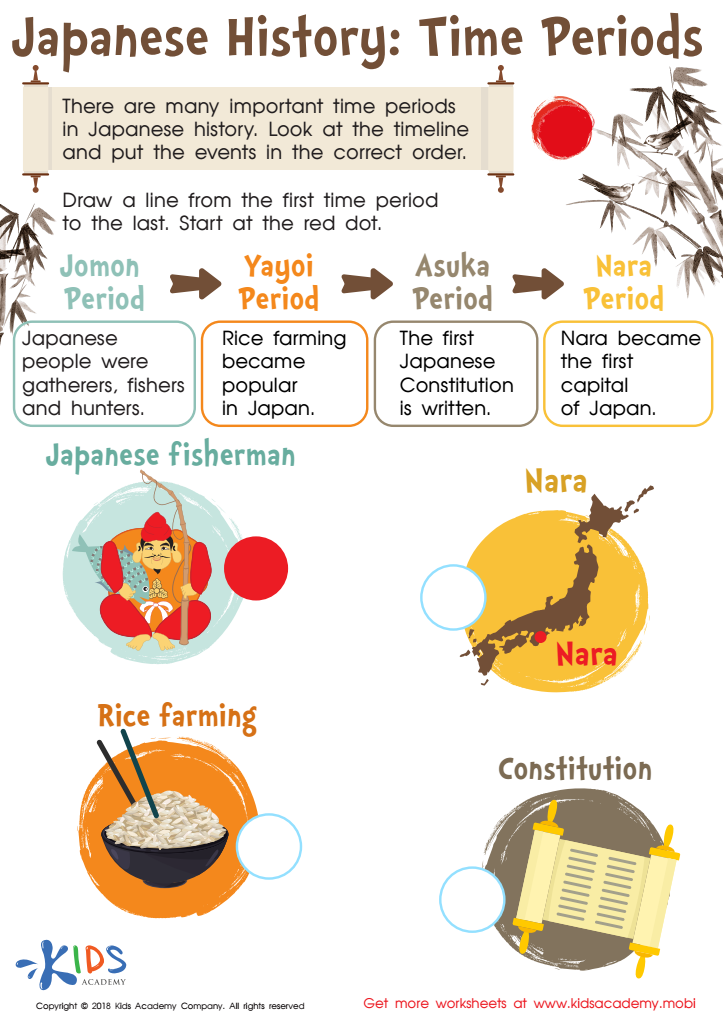
Japanese History: Time Periods Worksheet
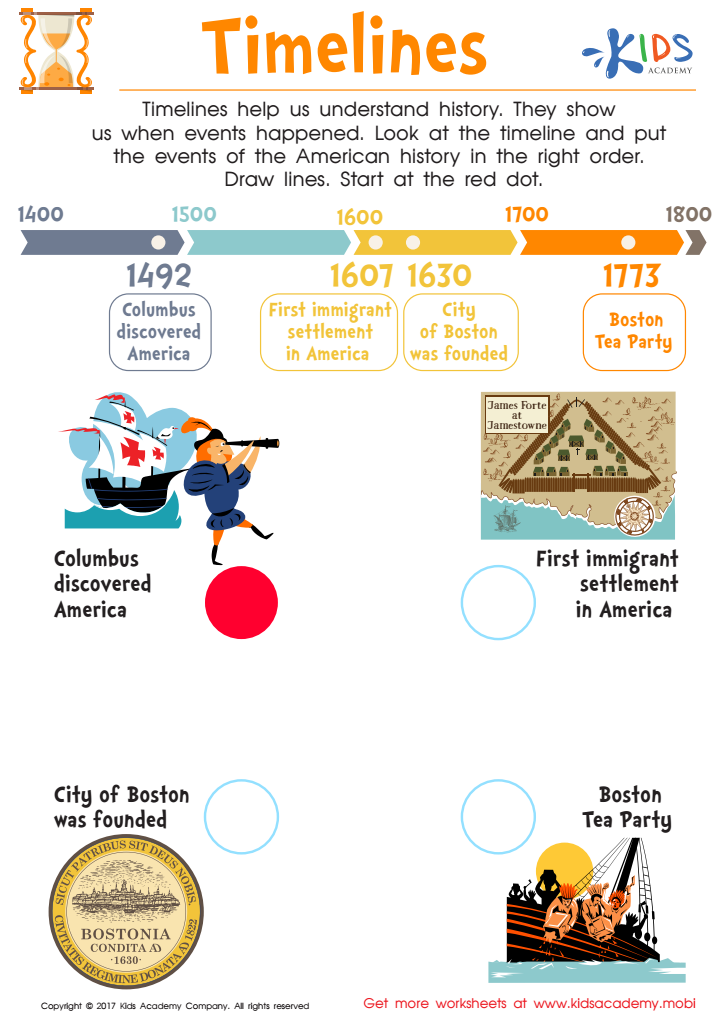
American History Timeline Worksheet
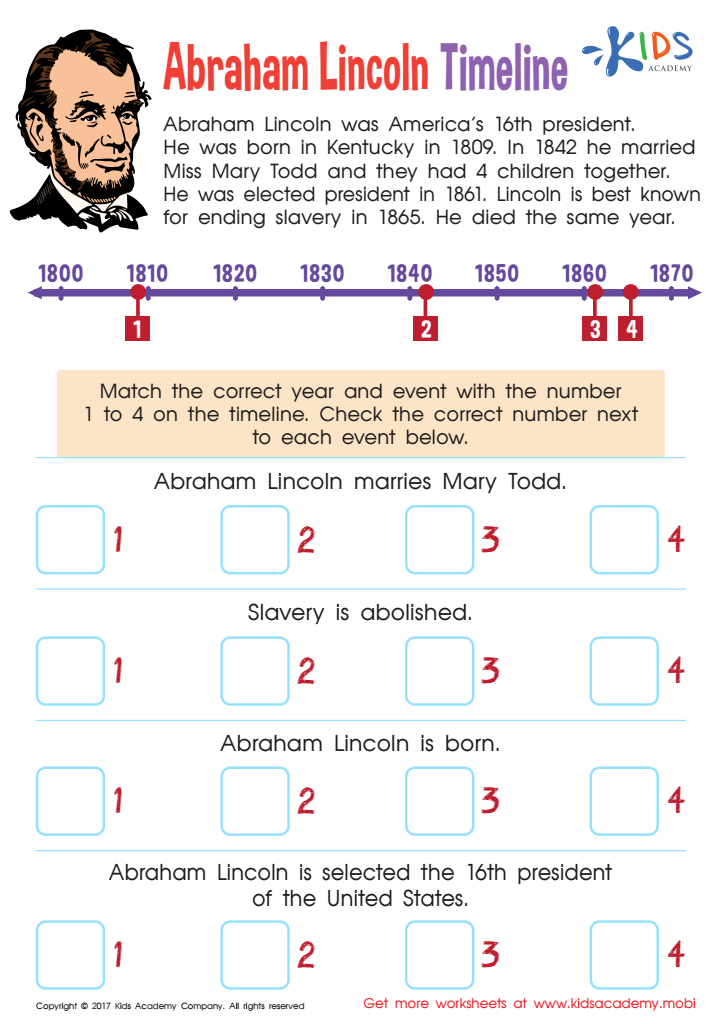
Abraham Lincoln Timeline Worksheet






Understanding timelines in Grade 3 history is crucial for both parents and teachers because it lays the foundation for students' chronological thinking and comprehension of historical events. Timelines visually showcase the sequence of occurrences, helping children grasp the concept of cause and effect, and how events are interconnected over time. By learning to create and interpret timelines, students enhance their organizational skills and critical thinking, which are essential for academic success in all subjects.
Moreover, understanding timelines encourages curiosity and promotes engagement in history. It allows students to recognize the significance of specific events and their impacts on our present day, fostering a deeper appreciation for the past. Parents can reinforce these concepts at home by discussing family histories or major historical events, making learning relatable and engaging.
For teachers, integrating timelines into lesson plans reinforces skills such as chronological order, understanding of key historical figures, and recognition of periods. Ultimately, nurturing an appreciation for history and timelines promotes well-rounded learners who can contextualize information, think critically, and engage meaningfully with the world around them—skills that are foundational for lifelong learning.