Filters

9 filtered results

Clear all filters
Favorites
With answer key
Interactive

9 filtered results

Difficulty Level

Grade


Subject

    Unleash the power of imagination and enhance comprehension skills with our Reading Fiction Worksheets Activities! Designed for eager young minds, this collection offers a diverse array of exercises tailored to explore the captivating world of stories. From understanding plot elements and character analysis to identifying themes and making predictions, our worksheets guide students through the intricate layers of fictional narratives. Perfect for classroom use or home study, these activities are crafted to boost reading proficiency, critical thinking, and a love for literature. Dive into the adventure of reading with our Reading Fiction Worksheets Activities, and watch as stories come to life like never before!

    Check out this FREE Reading Fiction Trial Lesson for age 3!

    Relationship Between Illustrations and the Story

    Favorites
    With answer key
    Interactive
    • Reading Fiction
    • 3
    Finding the Details and Connections: Assessment 2 Worksheet
    Finding the Details and Connections: Assessment 2 Worksheet

    Finding the Details and Connections: Assessment 2 Worksheet

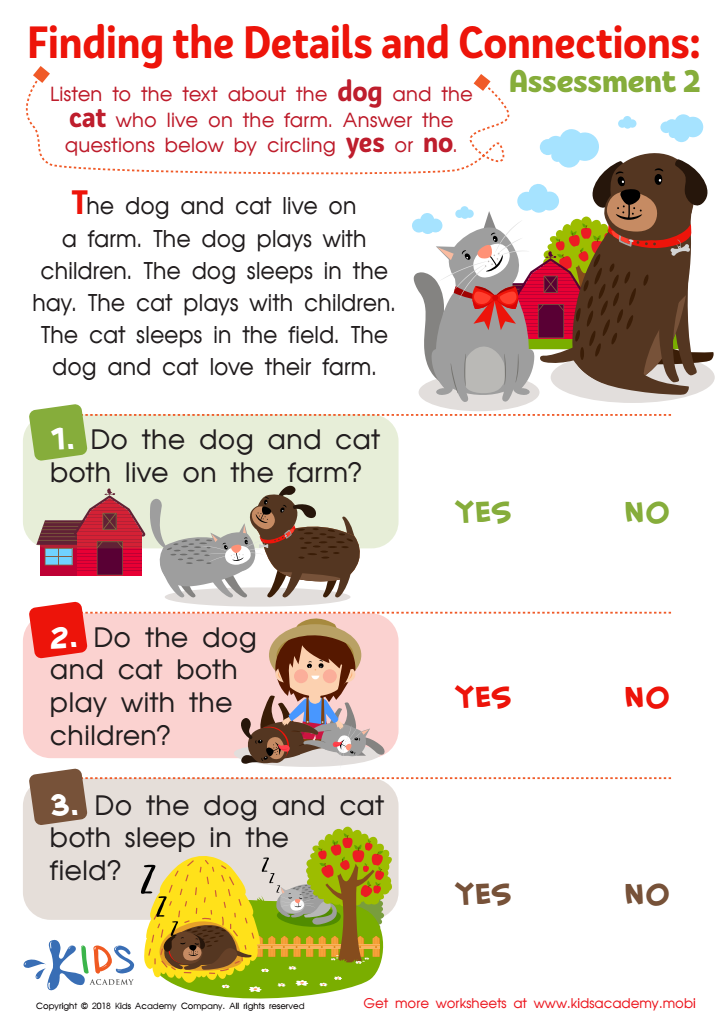
    Does your child love animals? If you have pets, they'll relate to the text in this worksheet. Read it aloud to them and help them answer the simple questions by circling yes or no. The story is about a dog and cat living on a farm. Let your child read it aloud to you if they can.
    Finding the Details and Connections: Assessment 2 Worksheet
    Worksheet
    Craft and Structure of Informational Texts: Assessment 2 Worksheet
    Craft and Structure of Informational Texts: Assessment 2 Worksheet

    Craft and Structure of Informational Texts: Assessment 2 Worksheet

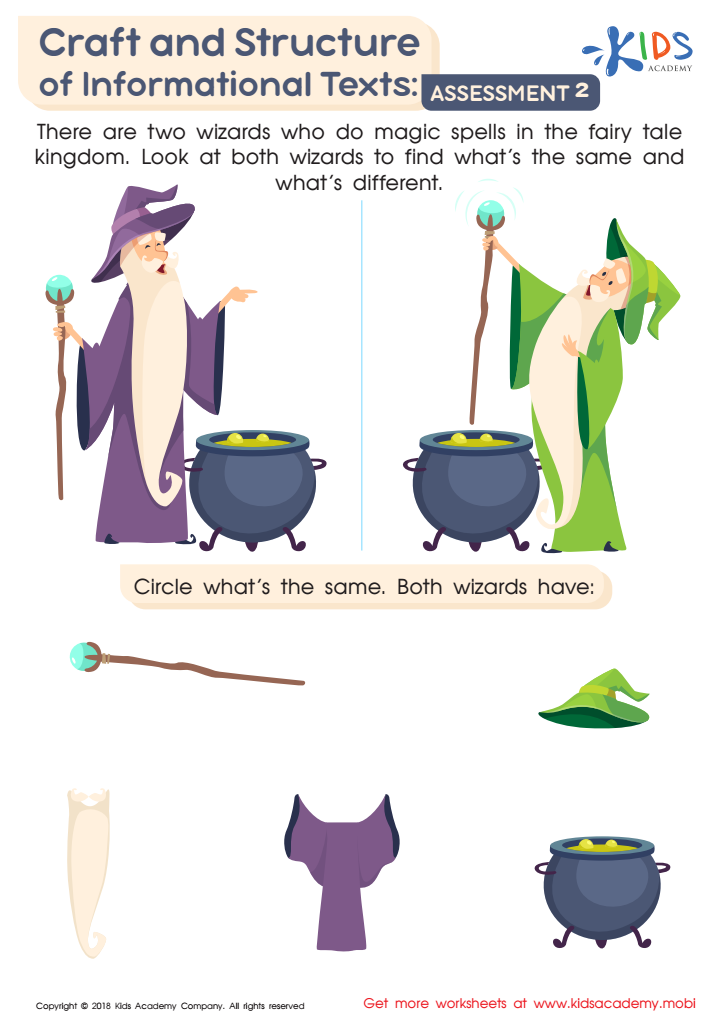
    This assessment has kids looking at two similar fairy tale wizards, focusing on their visuals to find the similarities and differences. Then, they'll circle the things they both have. It's a great way to help children hone their detail-oriented comprehension skills, which is essential when using informational texts.
    Craft and Structure of Informational Texts: Assessment 2 Worksheet
    Worksheet
    Questions About Stories: Assessment 3 Worksheet
    Questions About Stories: Assessment 3 Worksheet

    Questions About Stories: Assessment 3 Worksheet

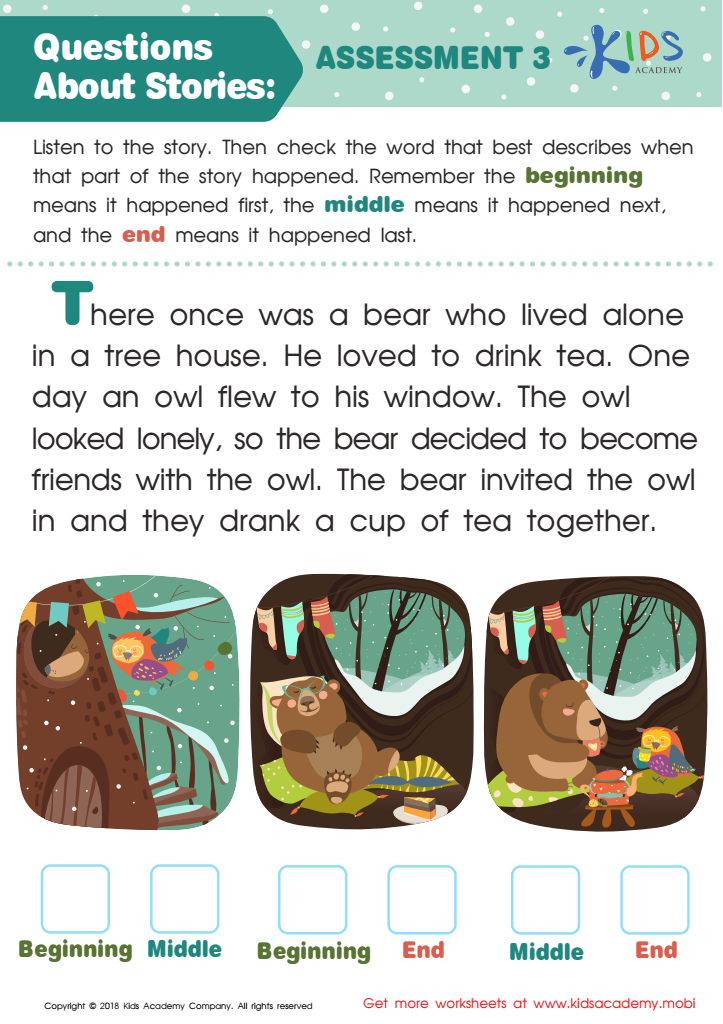
    Help kids understand stories by having them listen to a story and check boxes for the beginning, middle, and end. This worksheet makes it fun for even the youngest learners to recall story elements and sequence of events. Let them listen to the story from start to finish, then look at the pictures to check which part of the story they depict.
    Questions About Stories: Assessment 3 Worksheet
    Worksheet
    Questions About Stories: Assessment 2 Worksheet
    Questions About Stories: Assessment 2 Worksheet

    Questions About Stories: Assessment 2 Worksheet

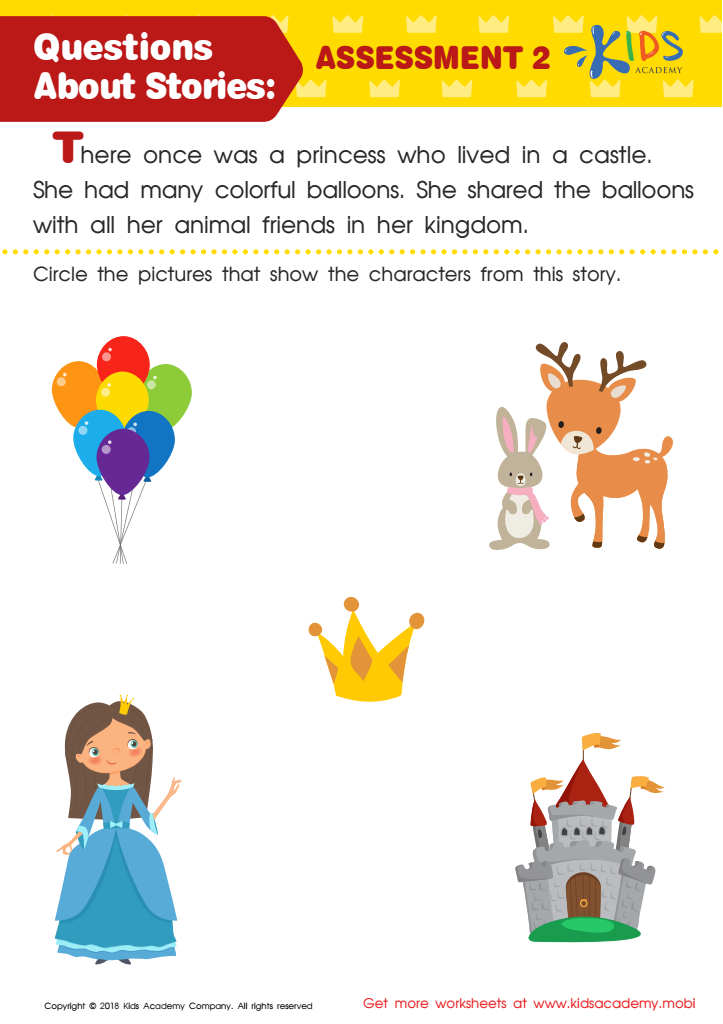
    Talk to your child about what a princess is and what activities they associate with that word. Then, read the story to them and help them identify characters in the pictures. Look out for details and ask them questions to ensure they understand.
    Questions About Stories: Assessment 2 Worksheet
    Worksheet
    Craft and Structure of Stories: Assessment 2 Worksheet
    Craft and Structure of Stories: Assessment 2 Worksheet

    Craft and Structure of Stories: Assessment 2 Worksheet

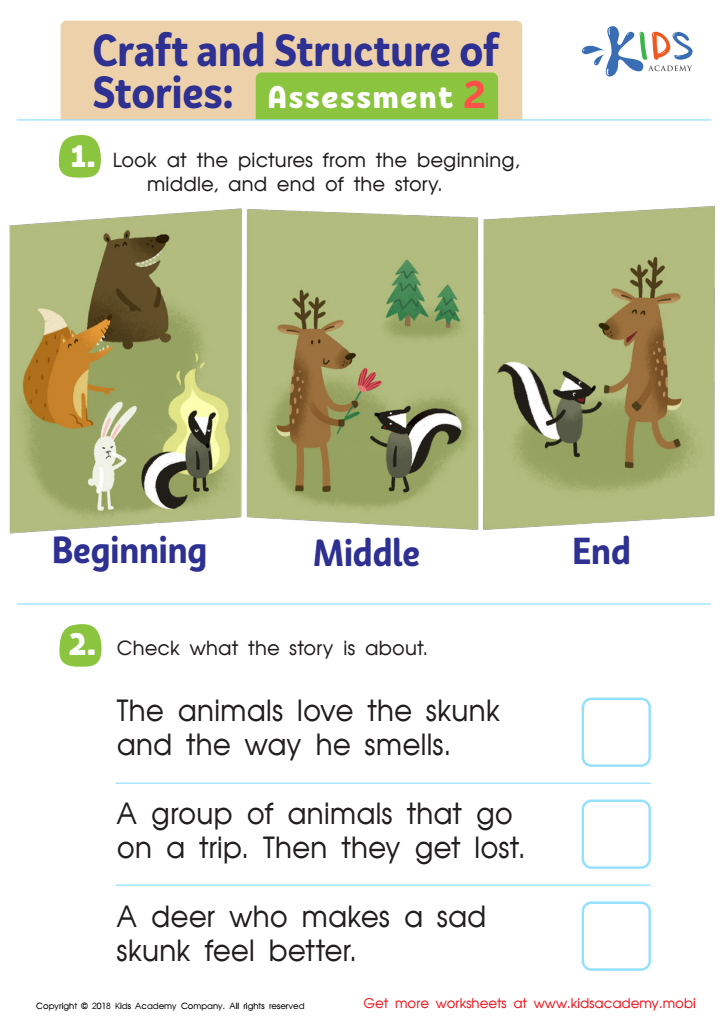
    Help your child assess their story sequencing and reading comprehension skills using this cute worksheet! It encourages them to look at the three pictures on the page, each representing a scene from the beginning, middle and end. Ask them what the story is about, then let them check the box next to the correct answer. This is a great way to ensure they understand the main events of a story.
    Craft and Structure of Stories: Assessment 2 Worksheet
    Worksheet
    Finding the Details and Connections: Assessment 1 Worksheet
    Finding the Details and Connections: Assessment 1 Worksheet

    Finding the Details and Connections: Assessment 1 Worksheet

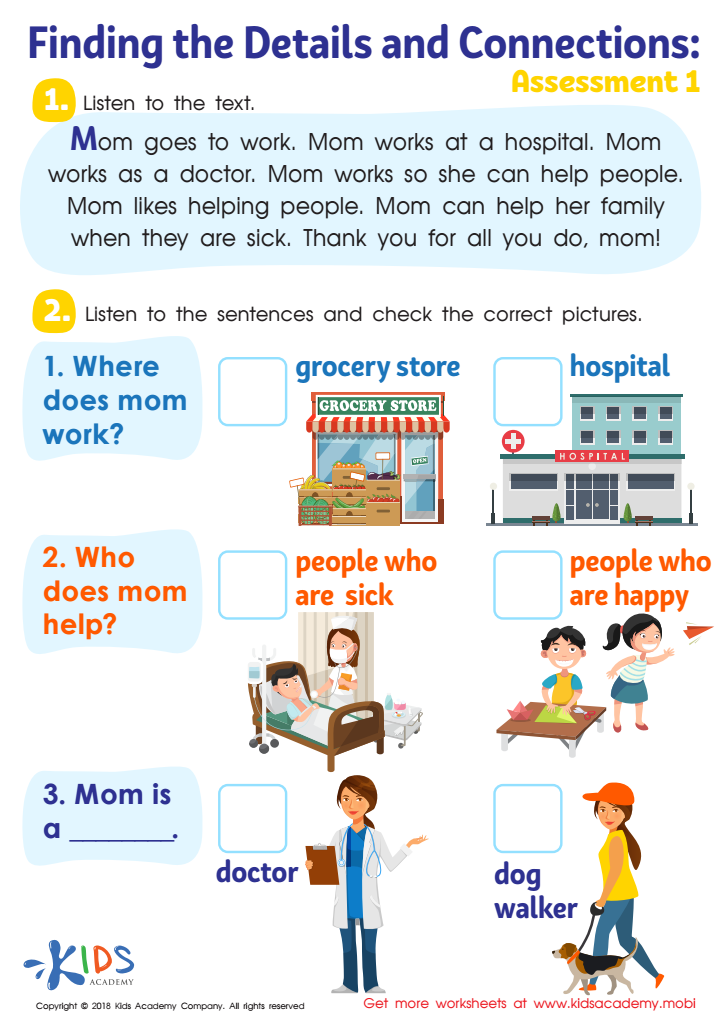
    Ask your students what their parents do for a job. Do they know what profession their mom is in and where she works? Professionals have places they go to do their job. In this task, Mom goes to a hospital and is a doctor. Read the text and help them check the right pictures.
    Finding the Details and Connections: Assessment 1 Worksheet
    Worksheet
    Questions About Stories: Assessment 1 Worksheet
    Questions About Stories: Assessment 1 Worksheet

    Questions About Stories: Assessment 1 Worksheet

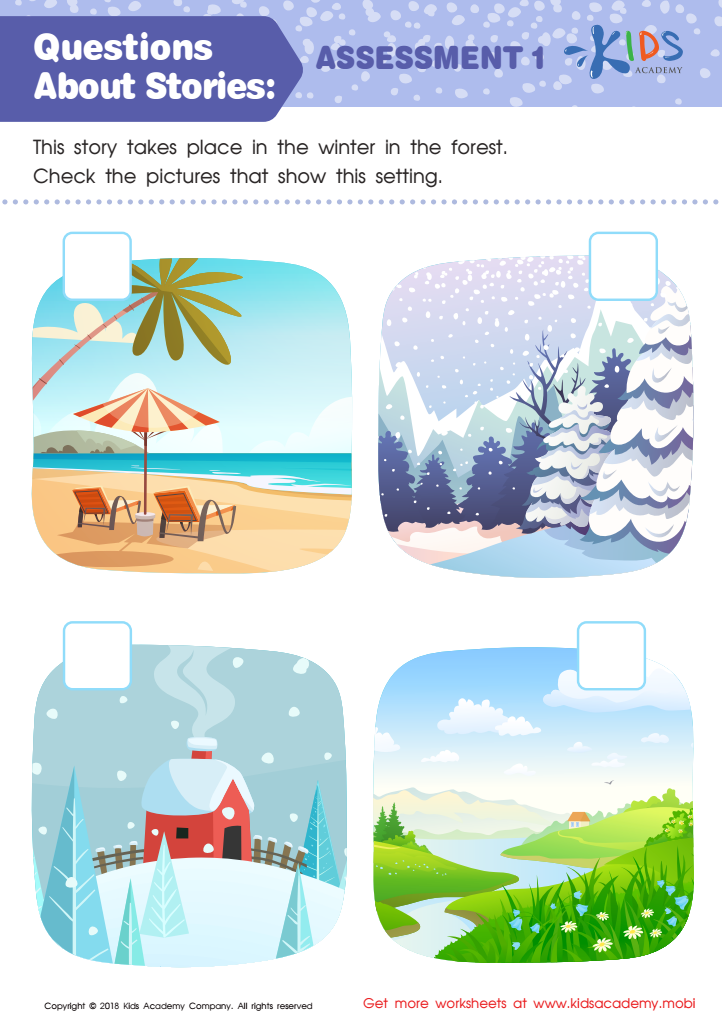
    Winter brings snow, cold, short days, and darkness. Schools can even close due to heavy snow. Ask your child what their favourite winter activities are and what color they associate with 'winter'. This worksheet takes place in a winter forest. Look at the 4 pictures with your child, and help them identify which one shows the correct setting.
    Questions About Stories: Assessment 1 Worksheet
    Worksheet
    Craft and Structure of Informational Texts: Assessment 1 Worksheet
    Craft and Structure of Informational Texts: Assessment 1 Worksheet

    Craft and Structure of Informational Texts: Assessment 1 Worksheet

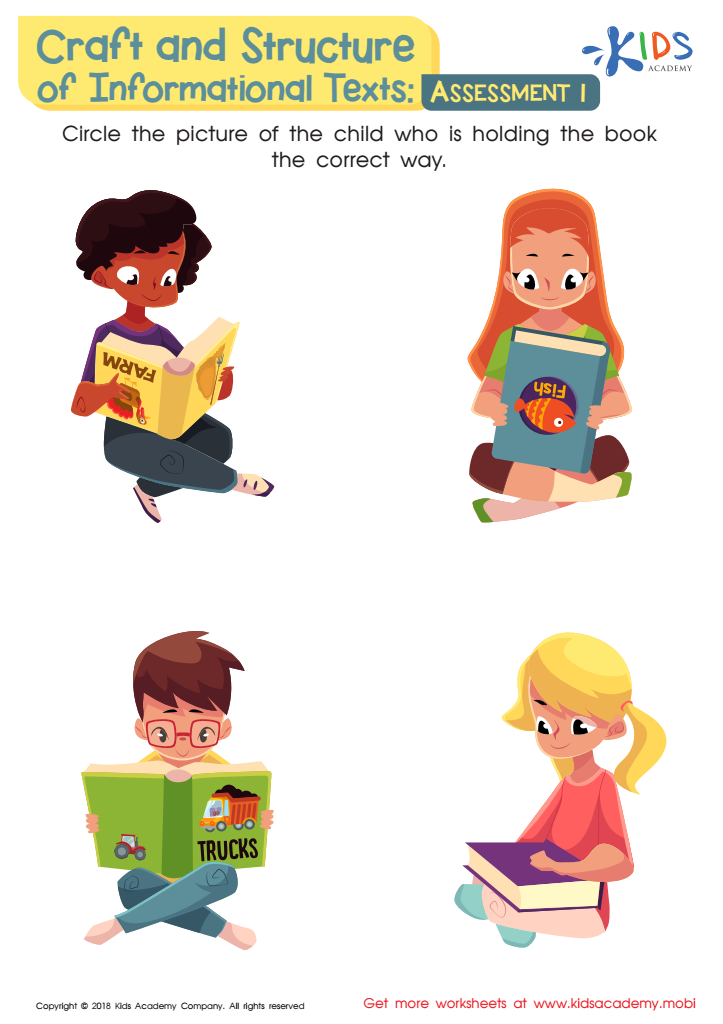
    Young children need to know how to hold books correctly when they start reading. This assessment worksheet helps them show they know what to do. They'll look at the pictures and circle the child who is holding the book correctly. It's a great way to tell they are well on their way to becoming lifetime readers!
    Craft and Structure of Informational Texts: Assessment 1 Worksheet
    Worksheet
    Craft and Structure of Informational Texts: Assessment 3 Worksheet

    Craft and Structure of Informational Texts: Assessment 3 Worksheet

    Craft and Structure of Informational Texts: Assessment 3 Worksheet
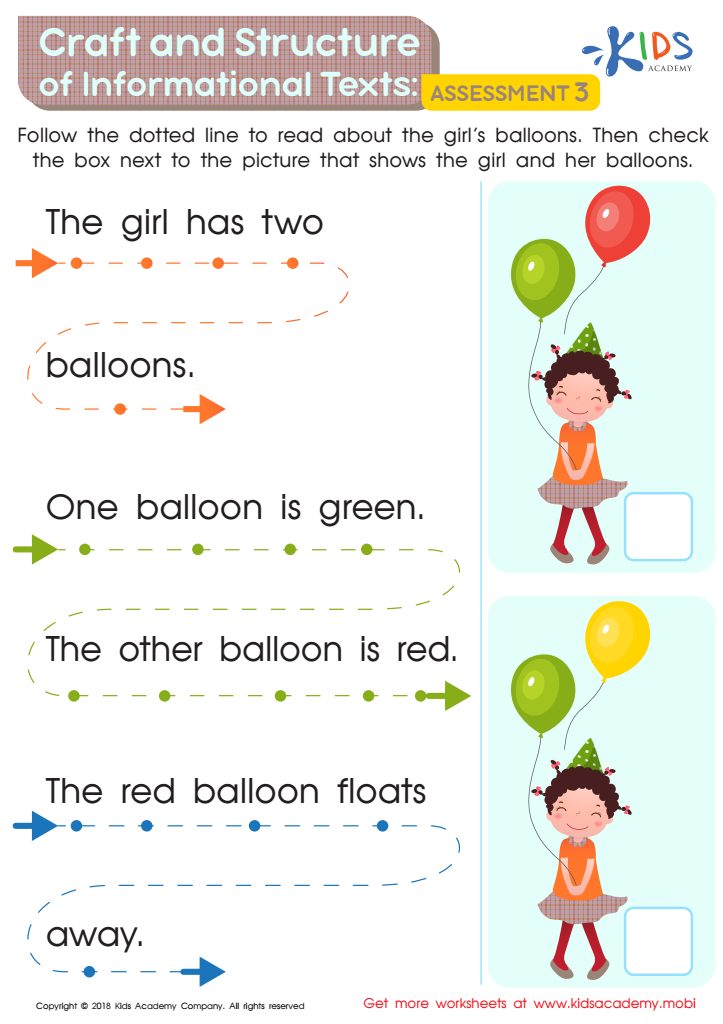
    Test your beginning reader's understanding of left-to-right directionality and use of details from informational texts with this fun worksheet. Follow the traceable paths to find the right picture for each sentence. This will help your child gain confidence and be successful as a reader.
    Craft and Structure of Informational Texts: Assessment 3 Worksheet

    Worksheet


    In the realm of educational tools, Reading Fiction worksheets activities stand out as a valuable resource for both teachers and students. These activities offer a structured approach to exploring the vast and imaginative world of fiction, making them an indispensable part of language arts curriculums. The benefits of utilizing Reading Fiction worksheets activities are multifaceted, touching on several key areas of student development.

    Firstly, these activities foster comprehension skills. Fiction, with its intricate plots and complex characters, provides an excellent backdrop for students to practice summarizing content, identifying main ideas, and understanding character motivations. Reading Fiction worksheets activities are specifically designed to challenge students to delve deeper into the text, encouraging them to engage critically with the material. This not only enhances their comprehension but also prepares them for more advanced literary analysis.

    Moreover, vocabulary expansion is another significant benefit. Reading Fiction worksheets often include vocabulary exercises related to the texts being studied. These activities require students to understand and use new words in context, thereby enriching their language skills and broadening their expressive capabilities. This is especially beneficial in an academic setting where a robust vocabulary is essential for success across all subjects.

    Additionally, Reading Fiction worksheets activities promote empathy and emotional intelligence. Fictional stories provide a unique opportunity for students to step into the shoes of characters from diverse backgrounds and experiences. Through guided reflection and discussion activities, students learn to identify with characters' emotions and situations, fostering a sense of empathy and understanding that extends beyond the classroom.

    Finally, these activities enhance engagement and motivation. Fiction, with its capacity to entertain and intrigue, naturally draws students into the learning process. Reading Fiction worksheets activities leverage this interest, providing structure and purpose to the reading experience. This not only makes learning more enjoyable but also encourages a lifelong love for reading.

    In conclusion, Reading Fiction worksheets activities are a cornerstone of effective language arts education. By improving comprehension, expanding vocabulary, fostering empathy, and enhancing engagement, these activities equip students with the critical skills and qualities needed to navigate both the academic world and life beyond.