Filters

10 filtered results

Clear all filters
Favorites
With answer key
Interactive

10 filtered results

Difficulty Level

Grade


Subject

    Dive into the imaginative world of storytelling with our Reading Fiction worksheets activities, designed to captivate and enhance the literary skills of young readers. Our collection offers a diverse range of exercises aimed at fostering a deep appreciation and understanding of fiction. From exploring character development and narrative structure to identifying themes and figurative language, our worksheets provide a comprehensive and engaging approach to reading. Perfect for classroom use or at-home learning, these activities cater to readers of all levels, ensuring a fun and enriching experience. Unlock the magic of fiction with our Reading Fiction worksheets activities and inspire a lifelong love of reading.

    Check out this FREE Reading Fiction Trial Lesson for age 5-6!

    Identify Characters in a Story

    Favorites
    With answer key
    Interactive
    • Reading Fiction
    • 5-6
    Finding the Details and Connections: Assessment 2 Worksheet
    Finding the Details and Connections: Assessment 2 Worksheet

    Finding the Details and Connections: Assessment 2 Worksheet

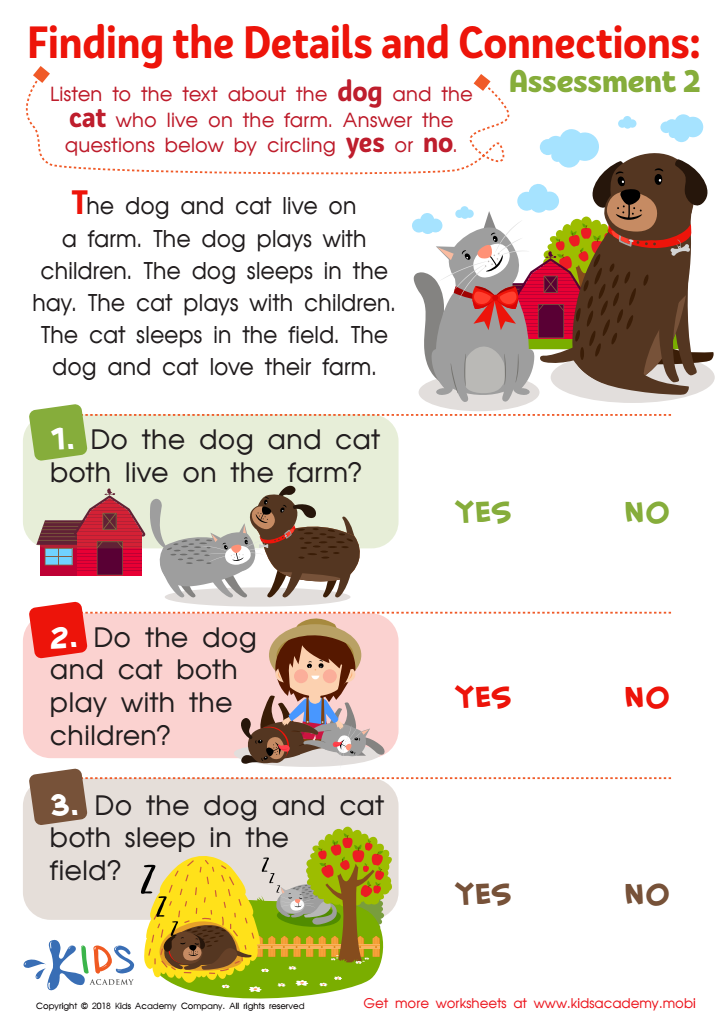
    Does your child love animals? If you have pets, they'll relate to the text in this worksheet. Read it aloud to them and help them answer the simple questions by circling yes or no. The story is about a dog and cat living on a farm. Let your child read it aloud to you if they can.
    Finding the Details and Connections: Assessment 2 Worksheet
    Worksheet
    Craft and Structure: Assessment 1 Worksheet
    Craft and Structure: Assessment 1 Worksheet

    Craft and Structure: Assessment 1 Worksheet

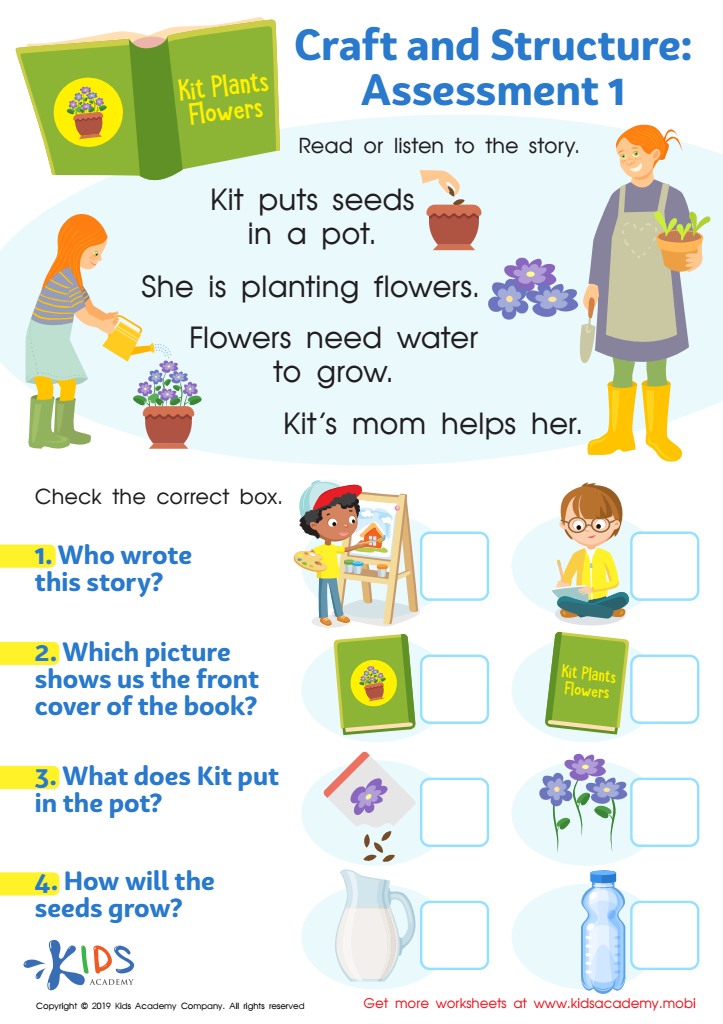
    A good reader needs more than word recognition: children must be able to identify story elements like author and main points. Test your child's craft and structure knowledge with this free PDF worksheet. They will read or listen to a story, then check off the correct answers according to what they heard or read.
    Craft and Structure: Assessment 1 Worksheet
    Worksheet
    Craft and Structure of Informational Texts: Assessment 2 Worksheet
    Craft and Structure of Informational Texts: Assessment 2 Worksheet

    Craft and Structure of Informational Texts: Assessment 2 Worksheet

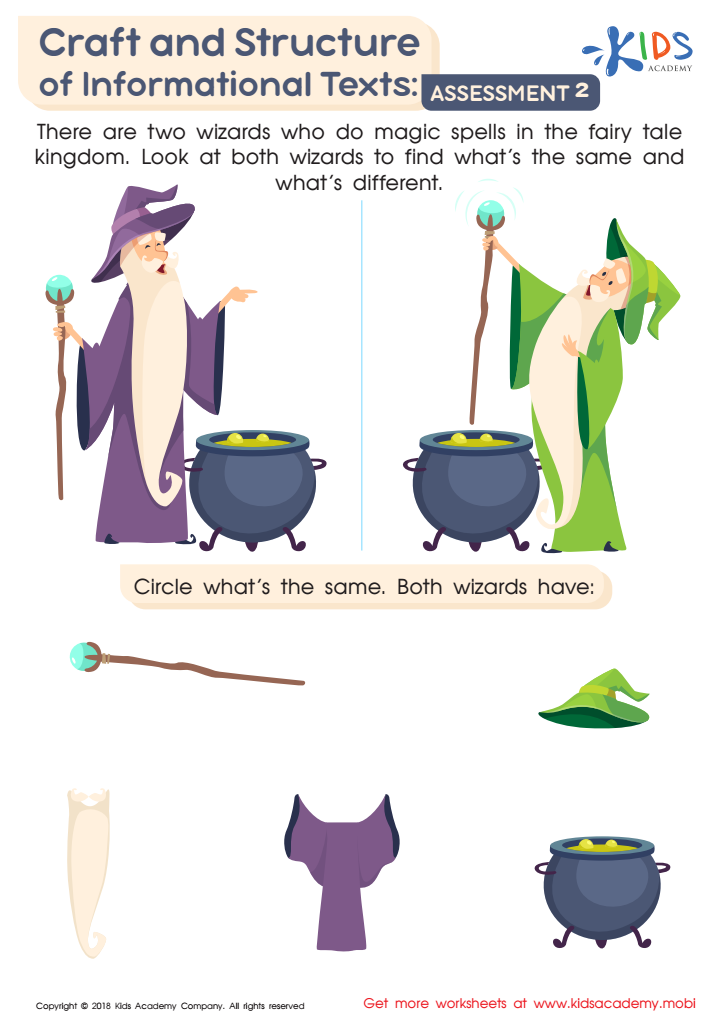
    This assessment has kids looking at two similar fairy tale wizards, focusing on their visuals to find the similarities and differences. Then, they'll circle the things they both have. It's a great way to help children hone their detail-oriented comprehension skills, which is essential when using informational texts.
    Craft and Structure of Informational Texts: Assessment 2 Worksheet
    Worksheet
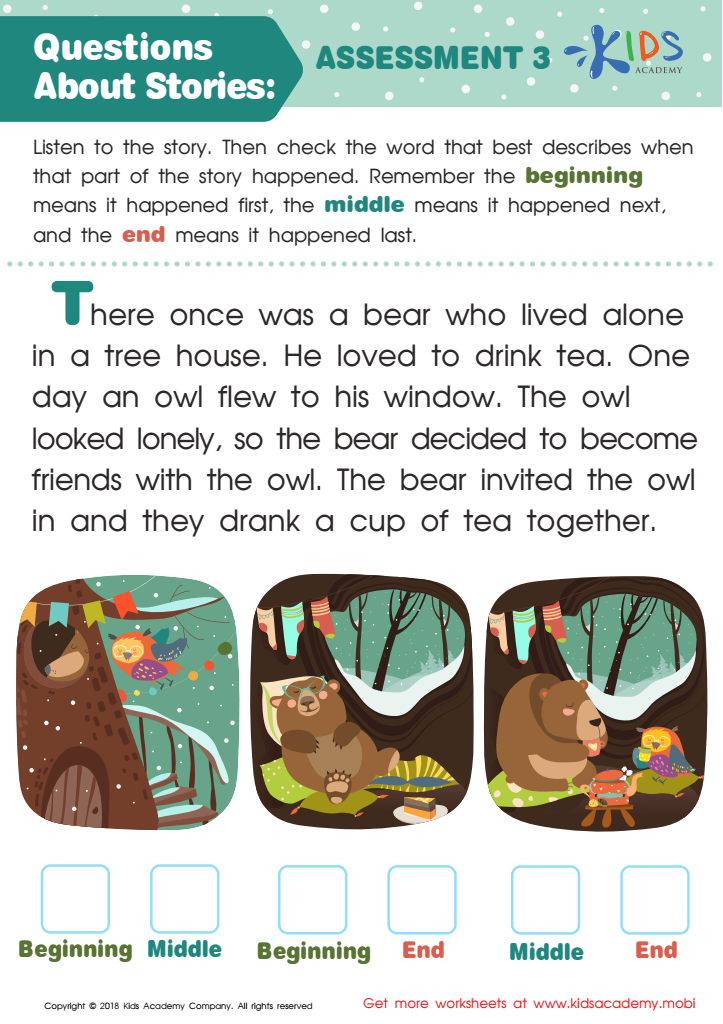
    Questions About Stories: Assessment 3 Worksheet
    Questions About Stories: Assessment 3 Worksheet

    Questions About Stories: Assessment 3 Worksheet

    Help kids understand stories by having them listen to a story and check boxes for the beginning, middle, and end. This worksheet makes it fun for even the youngest learners to recall story elements and sequence of events. Let them listen to the story from start to finish, then look at the pictures to check which part of the story they depict.
    Questions About Stories: Assessment 3 Worksheet
    Worksheet
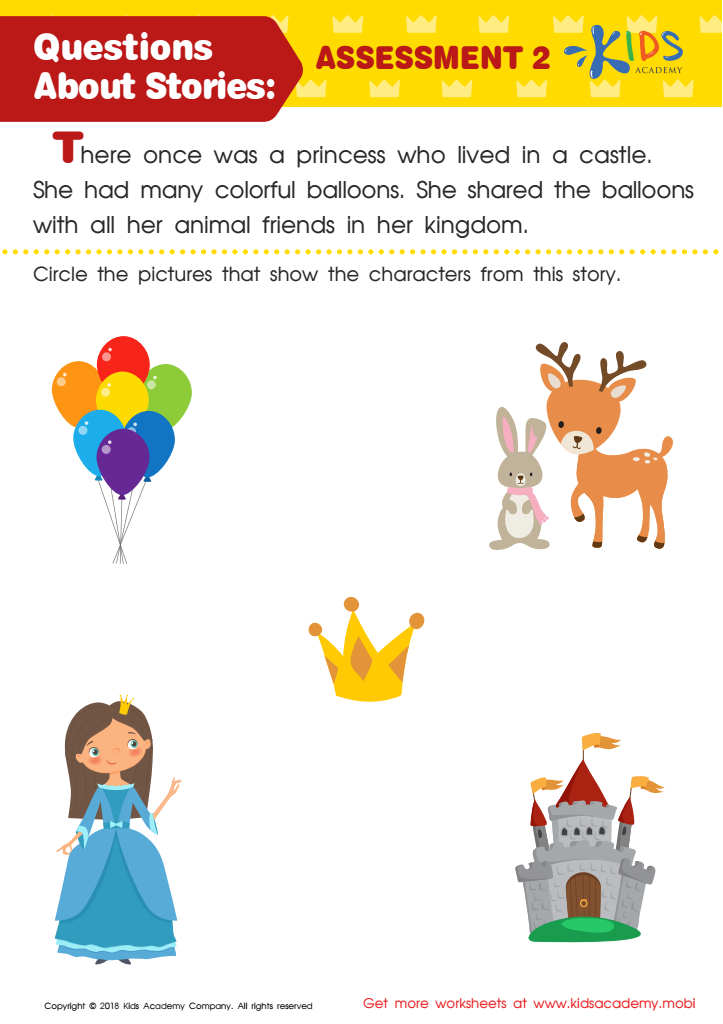
    Questions About Stories: Assessment 2 Worksheet
    Questions About Stories: Assessment 2 Worksheet

    Questions About Stories: Assessment 2 Worksheet

    Talk to your child about what a princess is and what activities they associate with that word. Then, read the story to them and help them identify characters in the pictures. Look out for details and ask them questions to ensure they understand.
    Questions About Stories: Assessment 2 Worksheet
    Worksheet
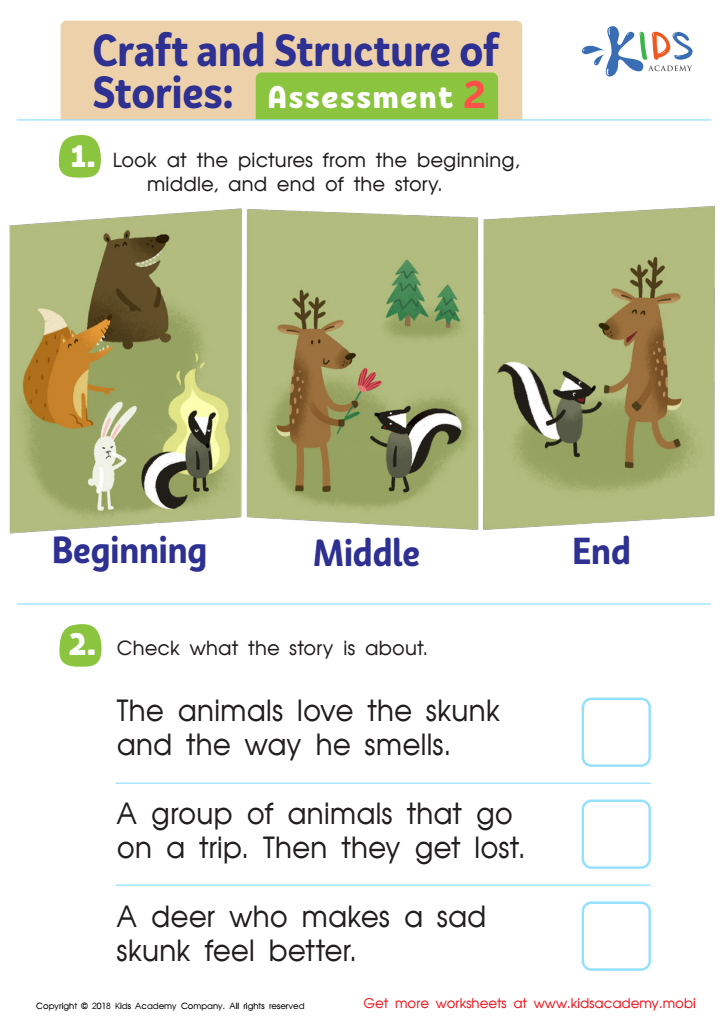
    Craft and Structure of Stories: Assessment 2 Worksheet
    Craft and Structure of Stories: Assessment 2 Worksheet

    Craft and Structure of Stories: Assessment 2 Worksheet

    Help your child assess their story sequencing and reading comprehension skills using this cute worksheet! It encourages them to look at the three pictures on the page, each representing a scene from the beginning, middle and end. Ask them what the story is about, then let them check the box next to the correct answer. This is a great way to ensure they understand the main events of a story.
    Craft and Structure of Stories: Assessment 2 Worksheet
    Worksheet
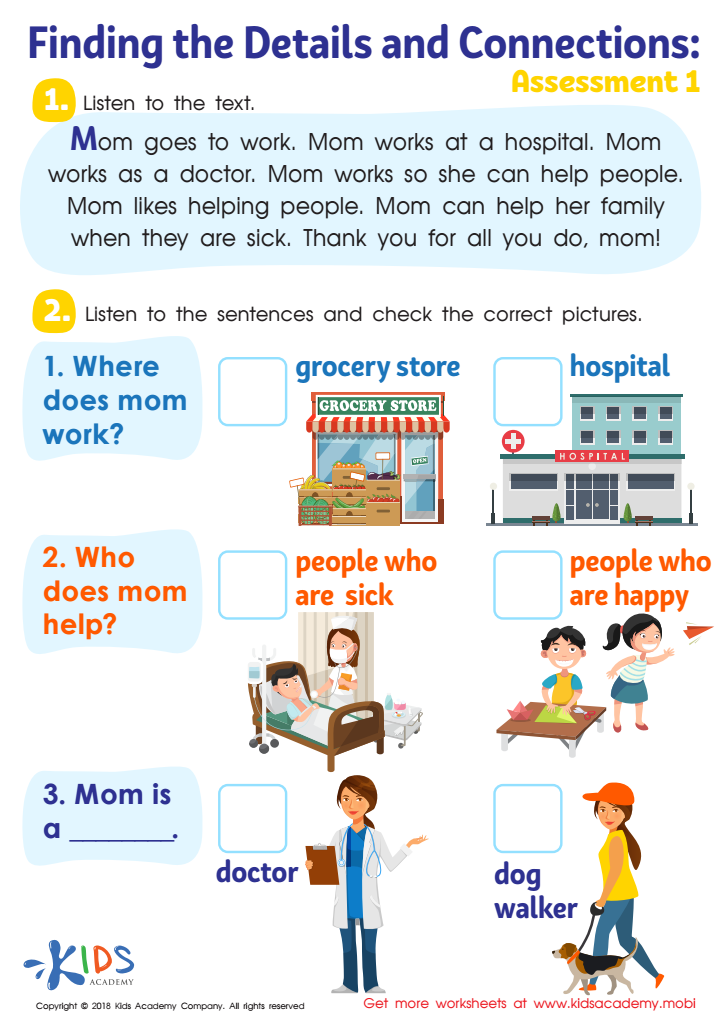
    Finding the Details and Connections: Assessment 1 Worksheet
    Finding the Details and Connections: Assessment 1 Worksheet

    Finding the Details and Connections: Assessment 1 Worksheet

    Ask your students what their parents do for a job. Do they know what profession their mom is in and where she works? Professionals have places they go to do their job. In this task, Mom goes to a hospital and is a doctor. Read the text and help them check the right pictures.
    Finding the Details and Connections: Assessment 1 Worksheet
    Worksheet
    Questions About Stories: Assessment 1 Worksheet
    Questions About Stories: Assessment 1 Worksheet

    Questions About Stories: Assessment 1 Worksheet

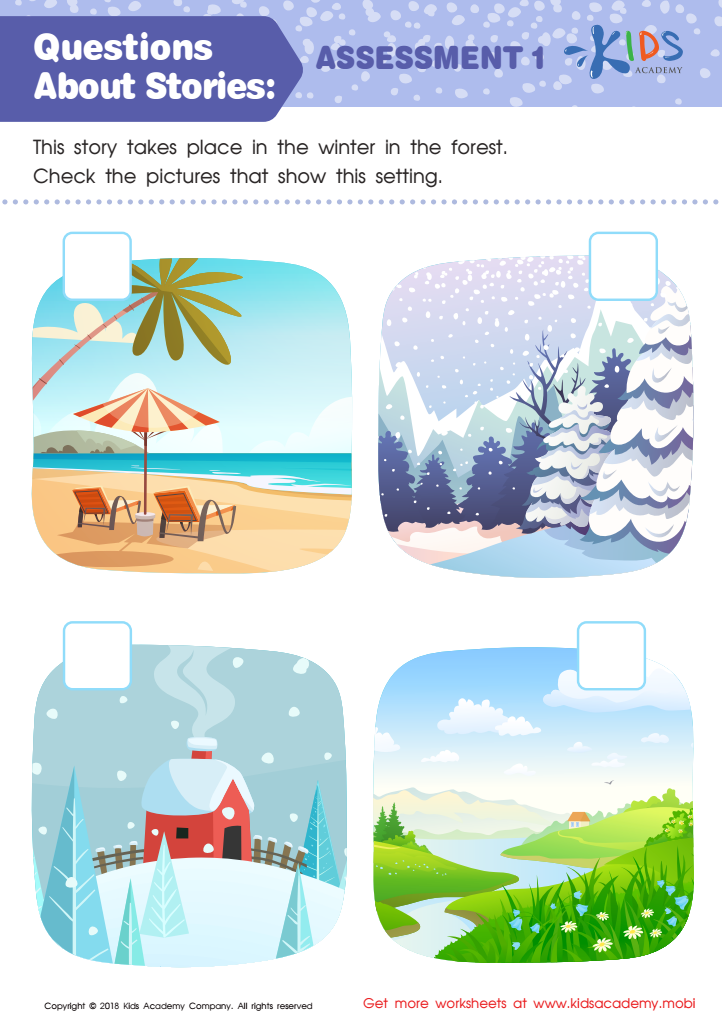
    Winter brings snow, cold, short days, and darkness. Schools can even close due to heavy snow. Ask your child what their favourite winter activities are and what color they associate with 'winter'. This worksheet takes place in a winter forest. Look at the 4 pictures with your child, and help them identify which one shows the correct setting.
    Questions About Stories: Assessment 1 Worksheet
    Worksheet
    Craft and Structure of Informational Texts: Assessment 1 Worksheet
    Craft and Structure of Informational Texts: Assessment 1 Worksheet

    Craft and Structure of Informational Texts: Assessment 1 Worksheet

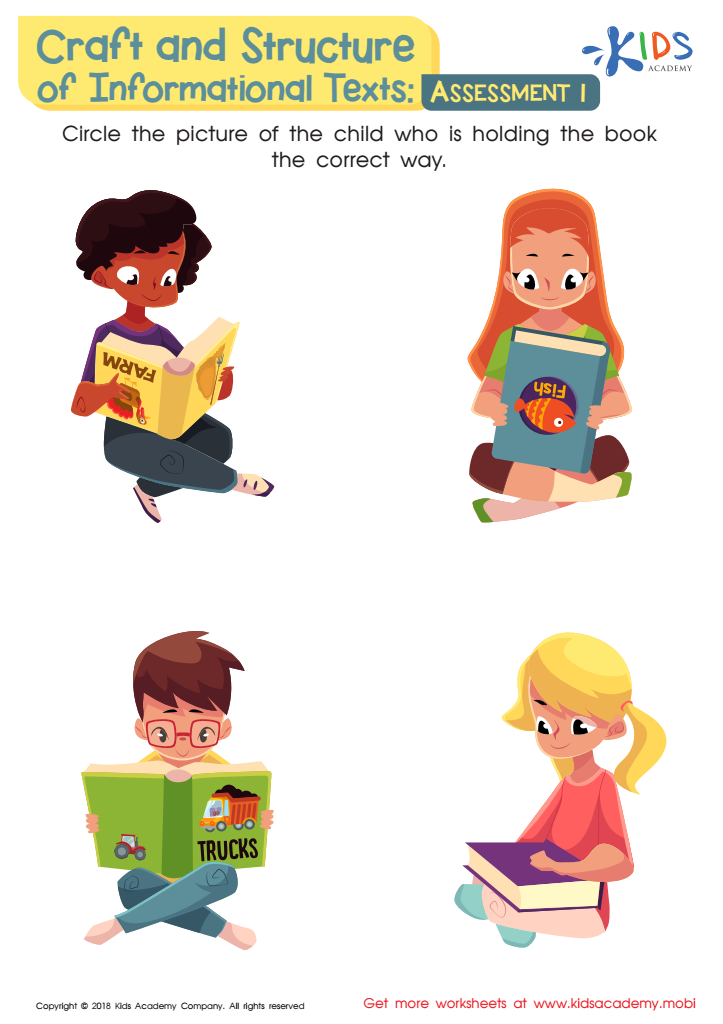
    Young children need to know how to hold books correctly when they start reading. This assessment worksheet helps them show they know what to do. They'll look at the pictures and circle the child who is holding the book correctly. It's a great way to tell they are well on their way to becoming lifetime readers!
    Craft and Structure of Informational Texts: Assessment 1 Worksheet
    Worksheet
    Craft and Structure of Informational Texts: Assessment 3 Worksheet

    Craft and Structure of Informational Texts: Assessment 3 Worksheet

    Craft and Structure of Informational Texts: Assessment 3 Worksheet

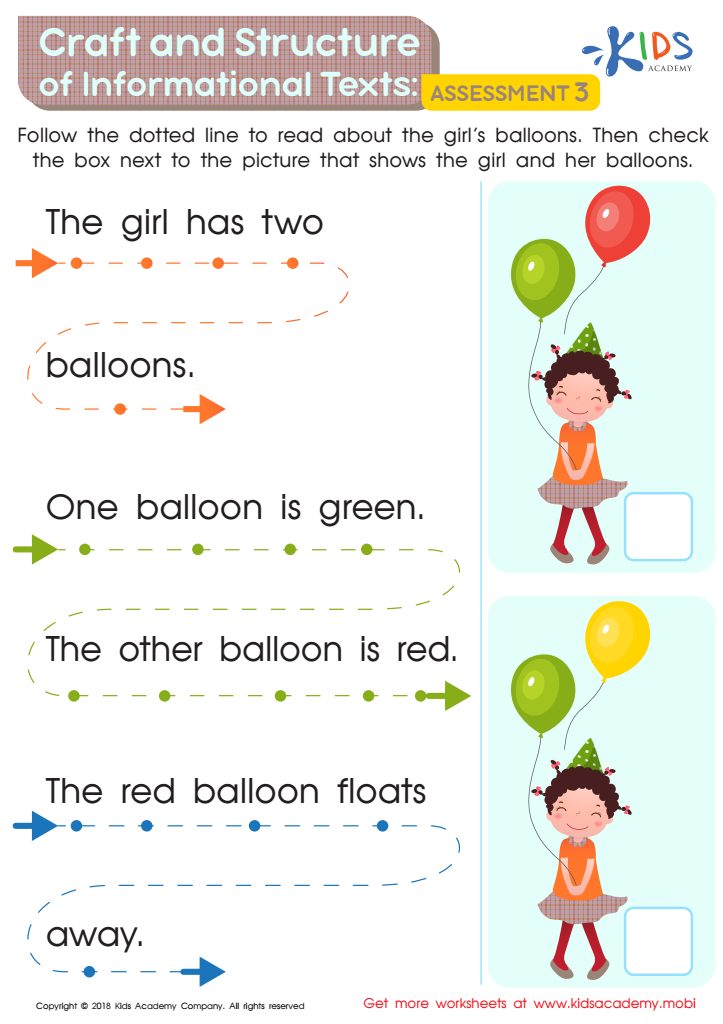
    Test your beginning reader's understanding of left-to-right directionality and use of details from informational texts with this fun worksheet. Follow the traceable paths to find the right picture for each sentence. This will help your child gain confidence and be successful as a reader.
    Craft and Structure of Informational Texts: Assessment 3 Worksheet

    Worksheet


    Reading Fiction worksheets activities serve as a valuable tool in enhancing literary skills, comprehension, and fostering a love for literature among learners of all ages. These activities are designed to engage students in the dynamic world of fiction, enabling them to explore various themes, characters, and plots in a structured and interactive manner. Here are several reasons why Reading Fiction worksheets activities are beneficial:

    1. Improved Comprehension: These activities require students to delve deep into the text, asking them to analyze and interpret what they have read. This not only enhances their understanding of the narrative but also improves their ability to infer meaning from context, a skill vital in all reading.

    2. Vocabulary Expansion: Engaging with Reading Fiction worksheets introduces learners to new words and phrases, enriching their vocabulary. As students encounter unfamiliar terms within the context of a story, they are more likely to remember and incorporate these words into their own vocabulary.

    3. Critical Thinking: Worksheets often contain questions that challenge students to think critically about the text. This might include considering a character's motivations, identifying themes, or evaluating the author's message. Such exercises develop critical thinking skills that are transferable to other academic subjects and real-life situations.

    4. Emotional Intelligence: Reading Fiction worksheets activities allow students to explore complex emotions and social situations through the safety of fictional characters and settings. This can help students develop empathy and a better understanding of human emotions and relationships.

    5. Engagement and Enjoyment: Finally, these activities can make reading more enjoyable. By breaking down the text into manageable sections with guided tasks, students may find fiction more approachable and fun. This positive experience can encourage a lifelong habit of reading for pleasure.

    In conclusion, Reading Fiction worksheets activities are an invaluable resource in the educational toolbox. They not only enhance literary skills and comprehension but also foster critical thinking, emotional intelligence, and a love for reading, making them essential for holistic educational development.