Cursive Writing worksheets activities for Ages 5-9 - Page 2
26 filtered results
-
From - To
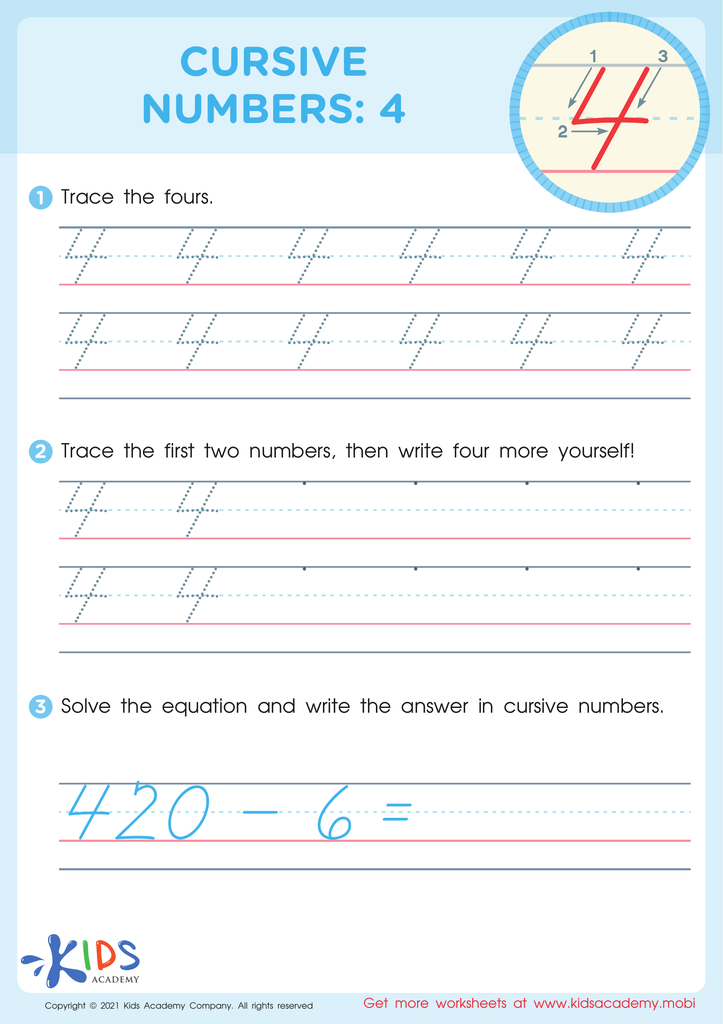
Cursive Numbers: 4 Worksheet
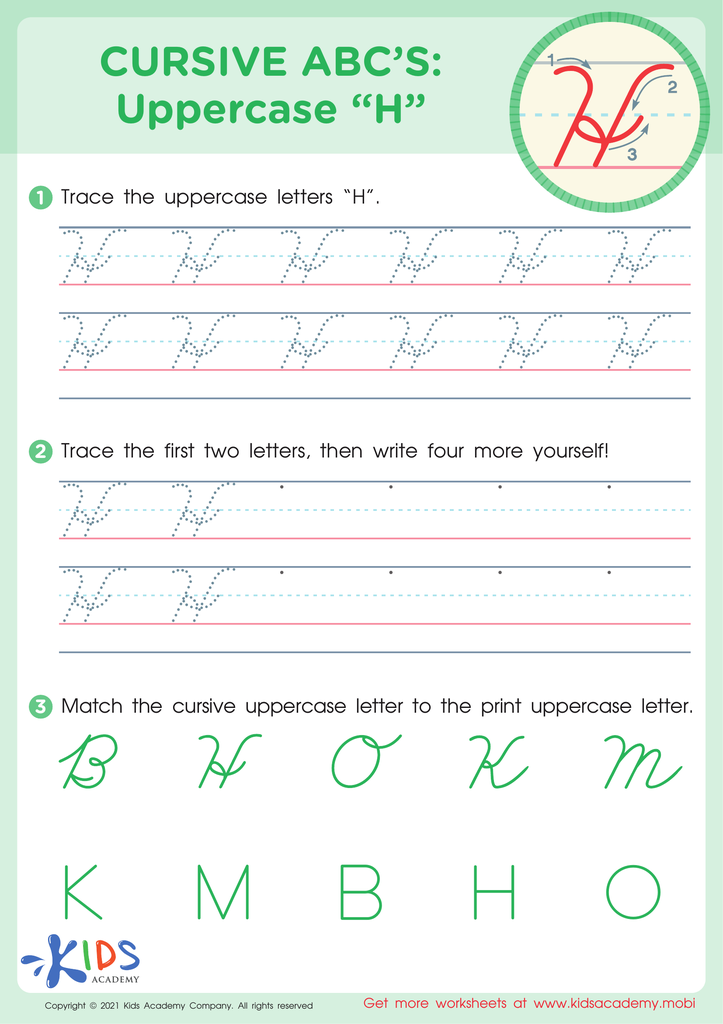
Cursive ABCs: Uppercase H








Cursive writing activities for children aged 5-9 play a crucial role in their overall development, making them a priority for both parents and teachers. Firstly, cursive writing enhances fine motor skills, as it requires coordination and control of hand movements, fostering better handwriting abilities. This early mastery can lead to increased confidence in writing tasks.
Furthermore, engaging in cursive writing cultivates cognitive skills, such as concentration and memory retention. The unique flow of cursive may aid in the development of quick and efficient writing techniques, essential for academic success. Studies suggest that writing in cursive can improve spelling and understanding by encouraging children to process words in their entirety rather than letter-by-letter.
Additionally, the aesthetic value of cursive can foster a sense of pride in students' work, motivating them to express creativity through their writing. Practicing cursive can also enhance students’ reading skills, as it involves connecting letters, which may aid in recognizing word formations.
Ultimately, incorporating cursive writing into educational activities promotes a balanced skill set in young learners, laying a strong foundation for effective communication in their academic journey and beyond. By supporting these activities, parents and teachers nurture important cognitive and motor skills in early childhood development.








