Normal Tracing Words worksheets activities for Ages 7-9 - Page 2
27 filtered results
-
From - To
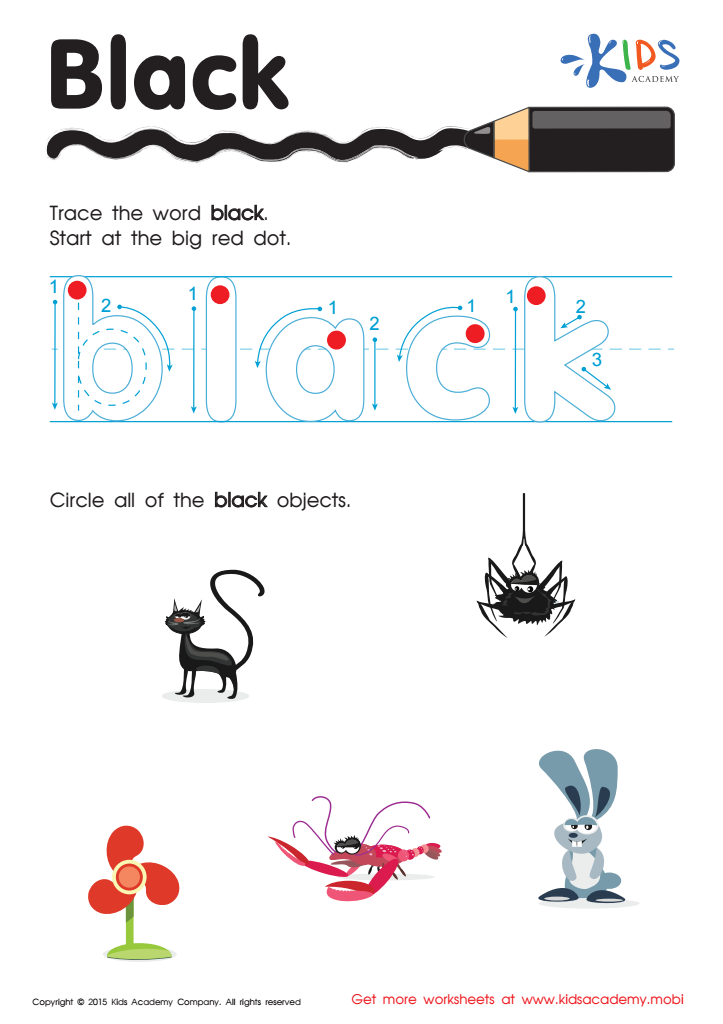
Black Tracing Color Words Printable
 Assign to My Students
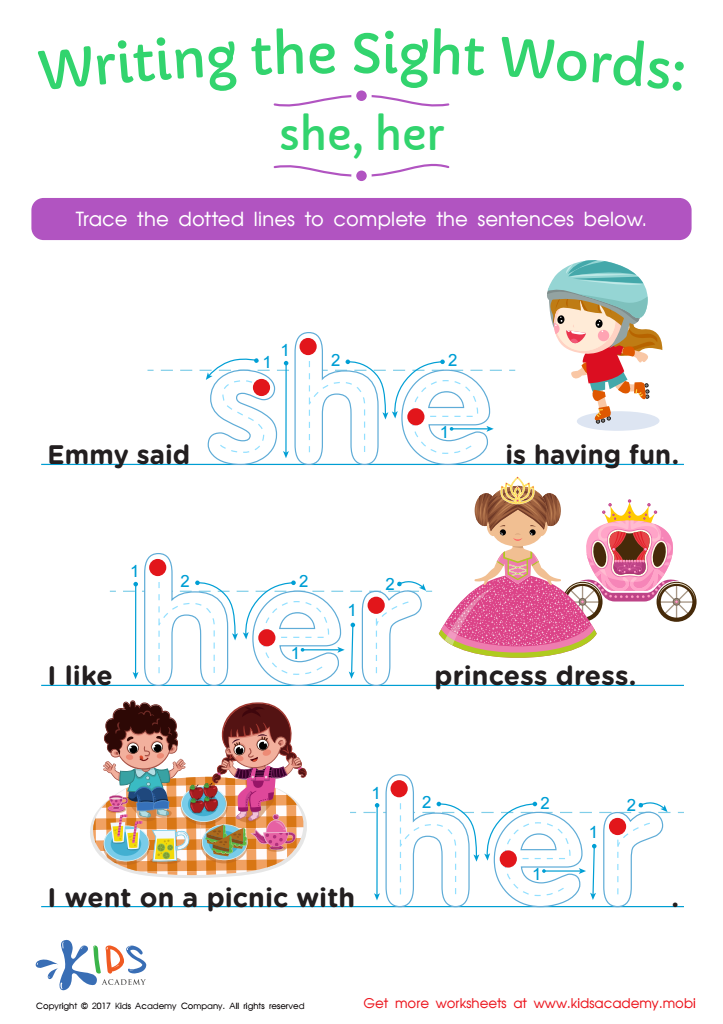
She, Her Printable Sight Words Worksheet
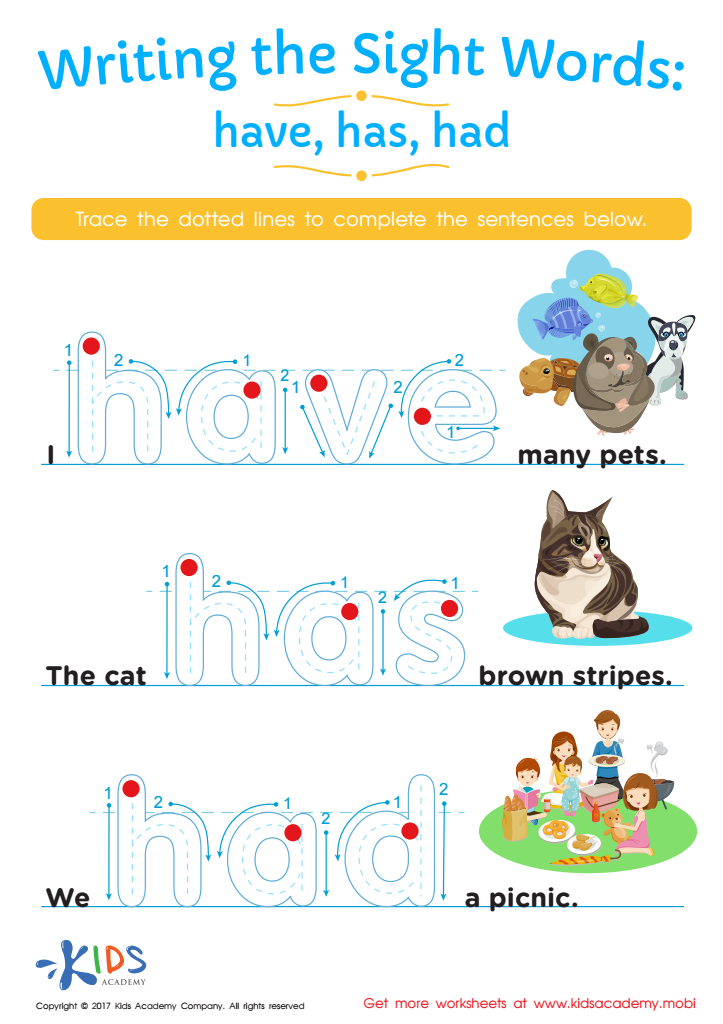
Have, Has, Had Worksheet Sight Words Worksheet






Parents and teachers should prioritize normal tracing word activities for children aged 7-9 due to their significant benefits in developing essential literacy skills. During this crucial stage of learning, children are refining their writing abilities and increasing their vocabulary. Tracing activities offer a structured approach to practice letter formation, helping children gain confidence in their handwriting. As students trace letters and words, they engage both visual and tactile learning styles, enhancing memory and retention.
These activities also foster concentration and fine motor skills, which are vital components for writing fluency. In a world filled with digital communication, encouraging traditional writing remains important for cognitive development. Furthermore, tracing familiar words allows students to strengthen their phonemic awareness, blending sounds with letters, thus supporting their reading skills.
Participating in tracing activities can also be a shared experience, fostering positive family or classroom interactions. When parents and teachers become involved, they provide a supportive environment that promotes learning, making the education process more enjoyable and effective. Ultimately, prioritizing normal tracing word activities helps build a solid foundation for literacy, setting children up for academic success and a lifelong love for reading and writing.








