Fine motor skills development ABC Letters Worksheets for Ages 3-4
3 filtered results
-
From - To
Unlock your child's potential with our Fine Motor Skills Development ABC Letters Worksheets, designed specifically for ages 3-4! These engaging, interactive worksheets help little learners strengthen their hand-eye coordination and dexterity while exploring the alphabet. Each worksheet features fun activities like tracing, cutting, and coloring, making learning both enjoyable and effective. As children practice their fine motor skills, they also gain familiarity with letter shapes and sounds. Perfect for preschool and kindergarten use, these worksheets encourage creativity and build essential skills, setting a strong foundation for future learning. Download now to brighten your child's educational journey!
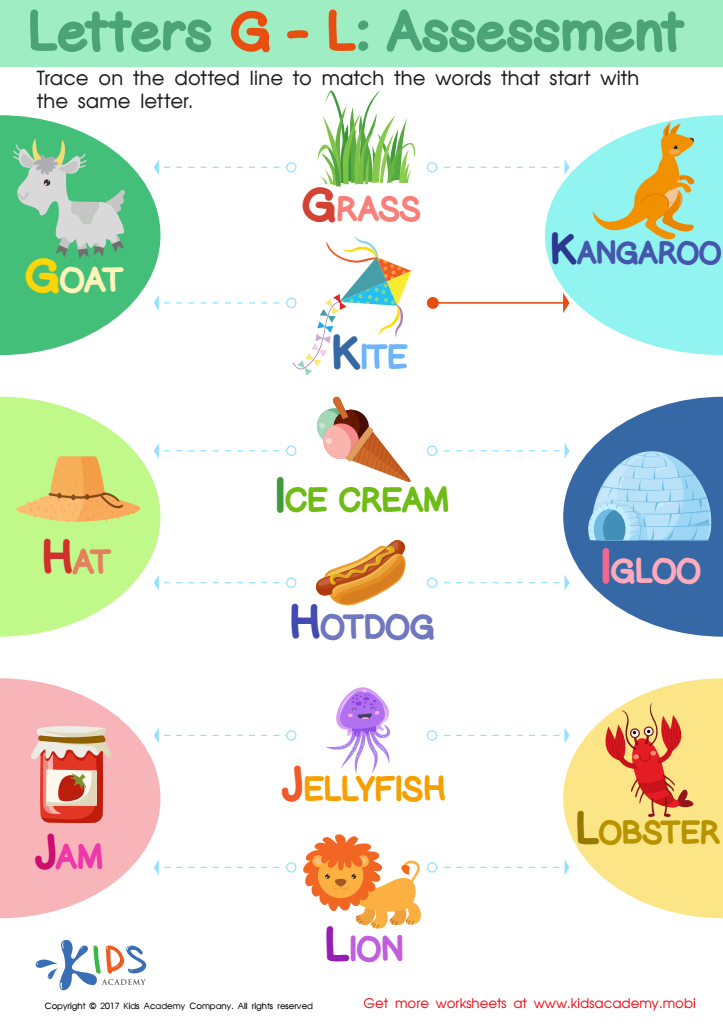
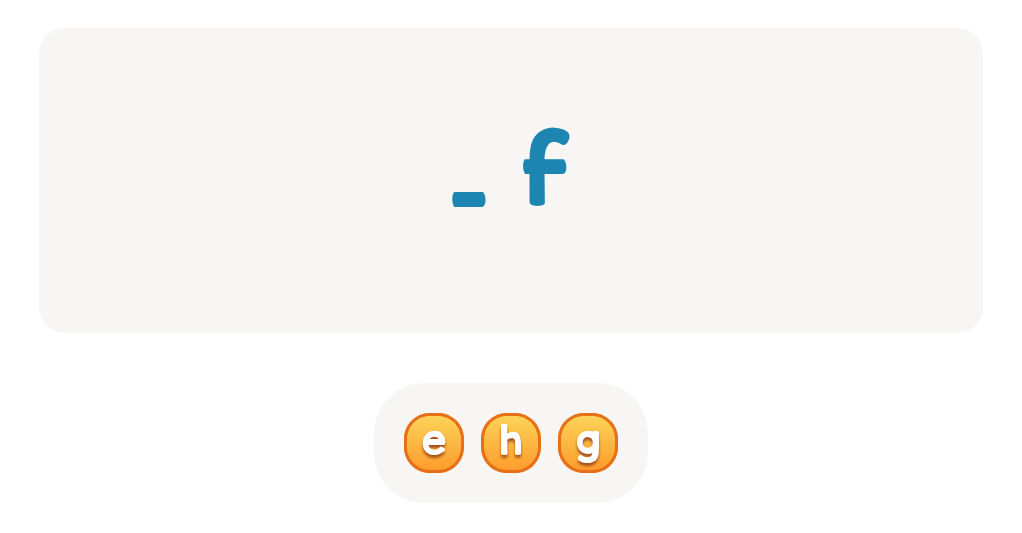
Letters G-L Worksheet







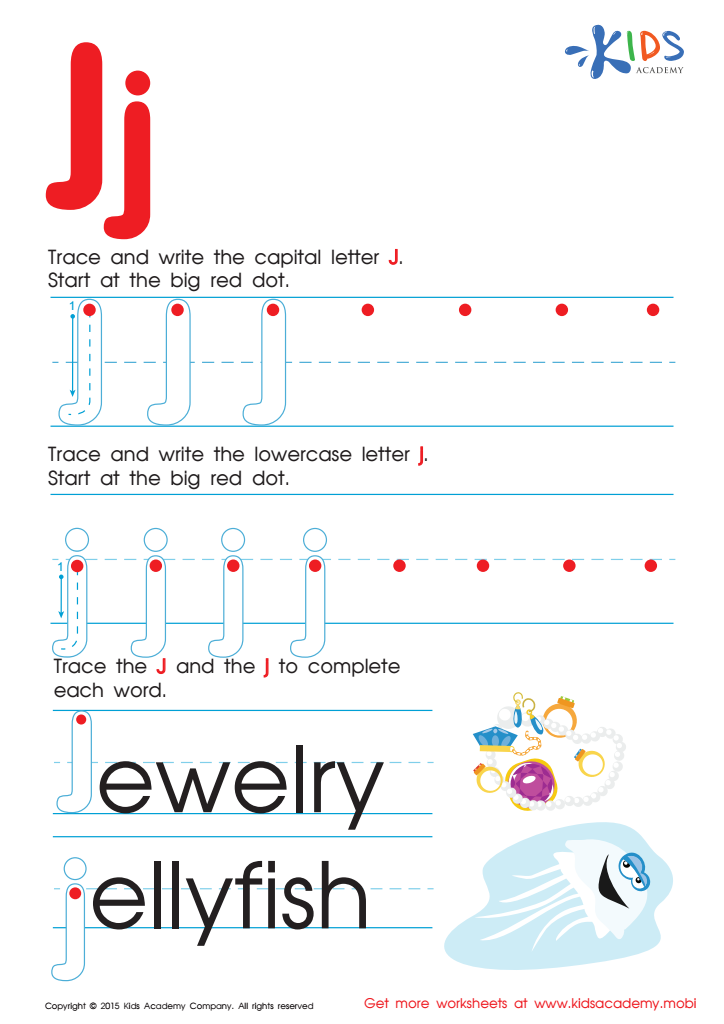
Letter J Tracing Page
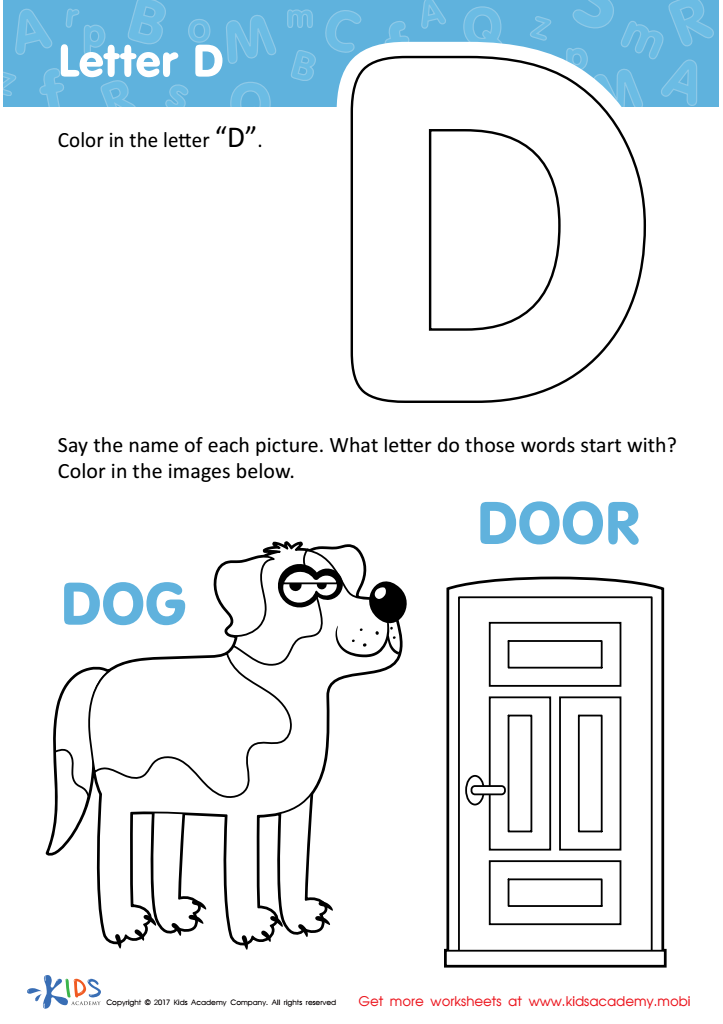
Letter D Coloring Sheet
 Assign to My Students








Fine motor skills are essential for young children's overall development and are particularly important for preschoolers aged 3-4 as they begin to explore writing. These skills involve the coordinated use of small muscles in the hands and fingers, which are crucial for tasks like holding a pencil, manipulating small objects, and even tying shoelaces. Developing fine motor skills paves the way for children to learn the alphabet effectively. Mastery of these skills enhances their ability to grip writing tools correctly, leading to better handwriting as they progress in school.
Teachers and parents should engage children in activities that promote fine motor development through fun, hands-on experiences. Tasks such as tracing letters, using playdough to form letters, or stringing beads can make learning the ABCs enjoyable while strengthening hand-eye coordination and dexterity. As children practice, they gain confidence in their abilities, which fosters a positive attitude toward learning.
Moreover, encouraging fine motor skill development can help reduce frustration as children begin to write and read. By investing time and resources into these activities, adults can promote a solid foundation for literacy that will benefit children long-term in their educational journeys.







