Sound identification Elementary Phonics Worksheets for Ages 3-4
4 filtered results
-
From - To
Unlock the joy of learning with our Sound Identification Elementary Phonics Worksheets designed for ages 3-4! These engaging worksheets introduce young learners to fundamental phonics skills through fun and interactive activities. Children will explore letter sounds, enhance their listening skills, and build a strong foundation for reading. Our thoughtfully crafted exercises cater to early learners, encouraging them to identify and match sounds with corresponding images. Perfect for at-home learning or classroom practice, these worksheets foster a love for language while developing essential cognitive skills. Begin your child’s phonics journey today and watch them thrive in their literacy skills!
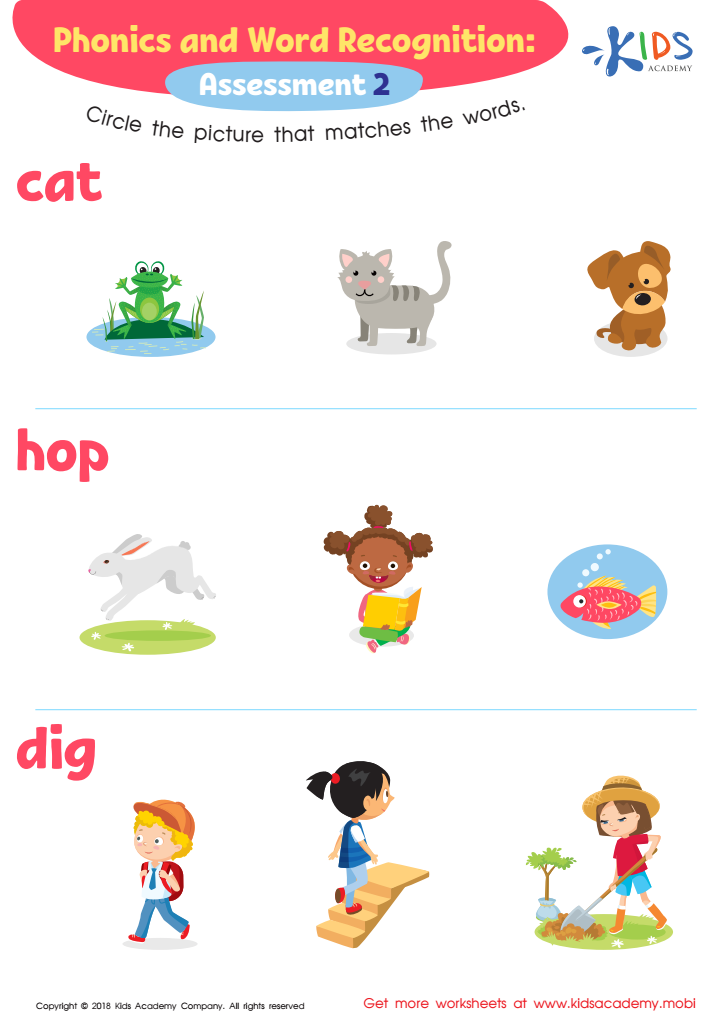
Phonological Awareness: Assessment 2 ELA Worksheet
 Assign to My Students
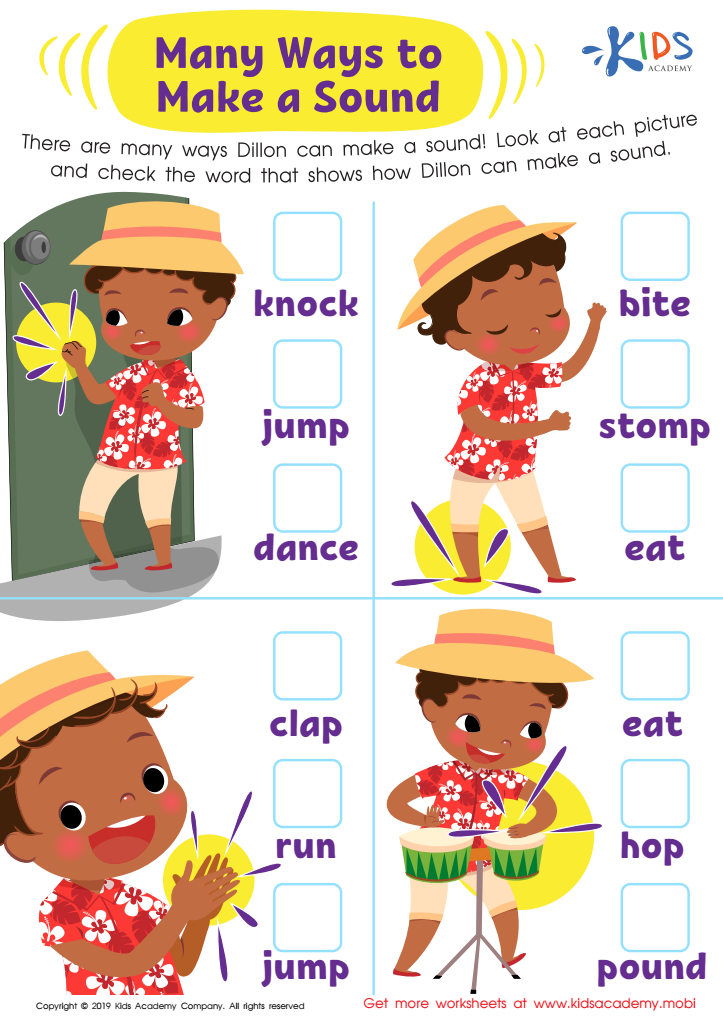
Many Ways to Make a Sound Worksheet
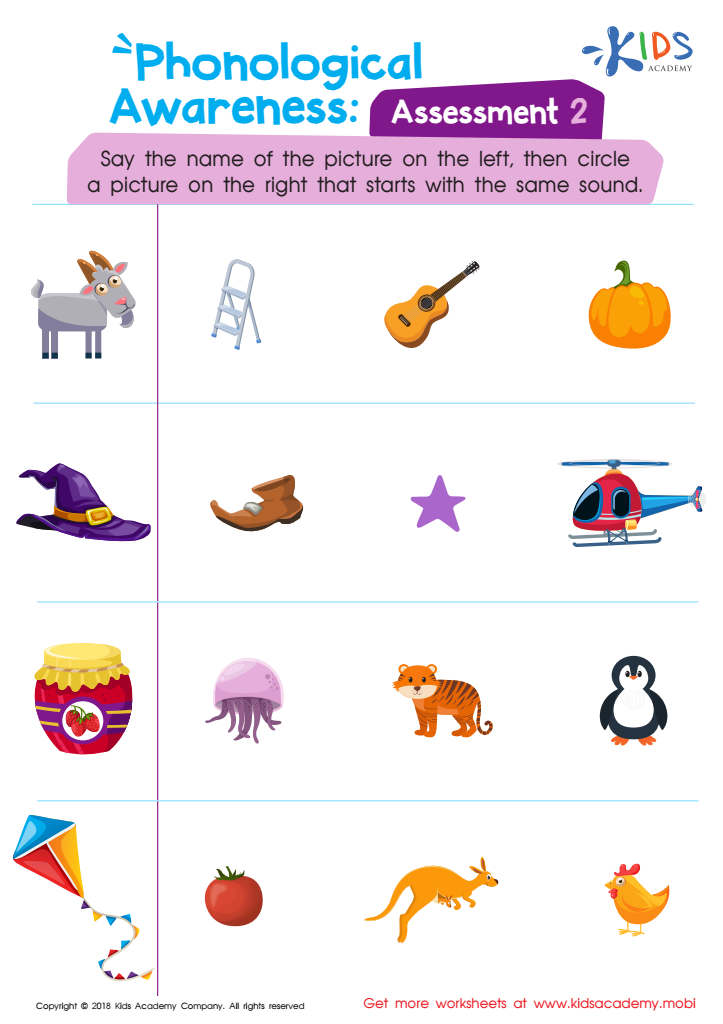
Phonological Awareness: Assessment 2 Worksheet
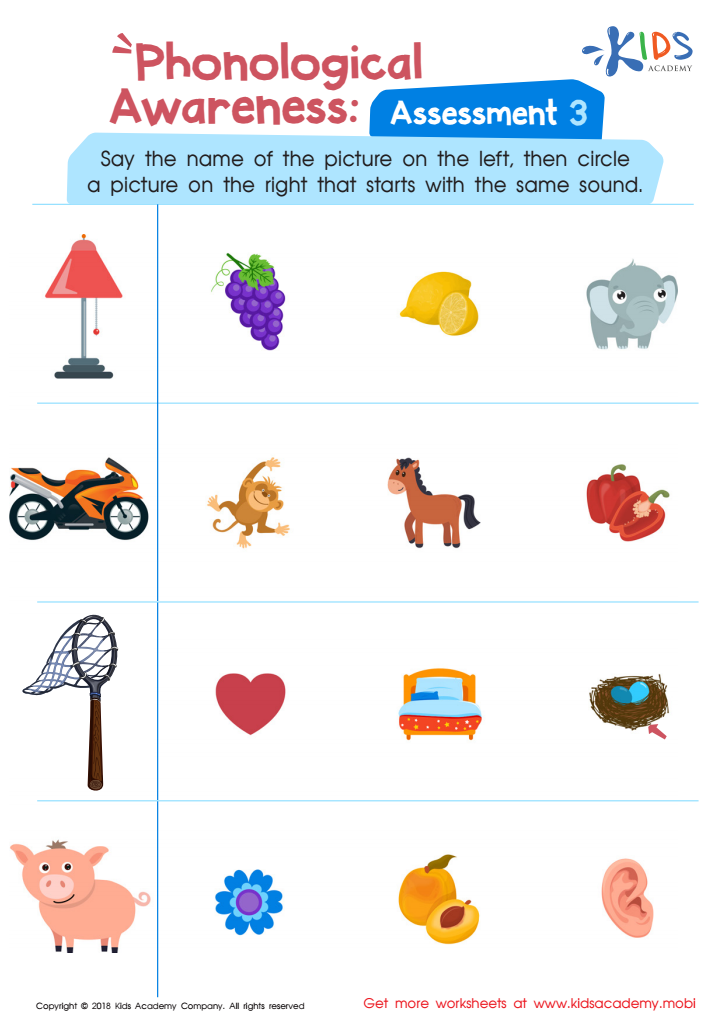
Phonological Awareness: Assessment 3 Worksheet




Sound identification is a foundational skill in early literacy, especially crucial in the development of phonics for children aged 3-4. Understanding and engaging with sounds helps children develop critical auditory discrimination abilities, which are essential for reading and language acquisition. Phonemic awareness, the ability to identify and manipulate individual sounds in words, equips young learners with the skills needed to decode words effectively as they progress.
For parents and teachers, fostering sound identification not only gives children a head start in literacy but also enhances overall language development. When children can recognize and articulate different sounds, they gain confidence in their speaking and listening abilities. This lays the groundwork for successful reading and spelling in later years.
Furthermore, engaging in sound identification activities fosters creativity and critical thinking. Songs, rhymes, and interactive games based around sounds capture the children's attention, making learning enjoyable. In addition, this foundational skill can positively impact later subjects, supporting cognitive development and improving overall academic readiness.
Investing time in sound identification activities nurtures a child’s curiosity and enjoyment of learning, making it a vital focus for parents and teachers dedicated to developing literacy skills from an early age.







