
Spelling practice Elementary Phonics Worksheets for Ages 3-4
4 filtered results
Difficulty Level
Grade
Age
-
From - To
Subject
Activity
Standards
Discover our engaging Spelling Practice Elementary Phonics Worksheets, specially designed for children aged 3-4. These vibrant and interactive worksheets help young learners build foundational spelling and phonics skills through fun and playful activities. Each page stimulates curiosity and reinforces the connection between letters and sounds, ensuring an enjoyable learning experience. Ideal for both parents and educators, our worksheets support early literacy development and pave the way for future academic success. Explore a world of letters, sounds, and opportunities with our expertly crafted educational resources! Make spelling practice a delightful adventure for your little ones today.
Favorites
With answer key
Interactive
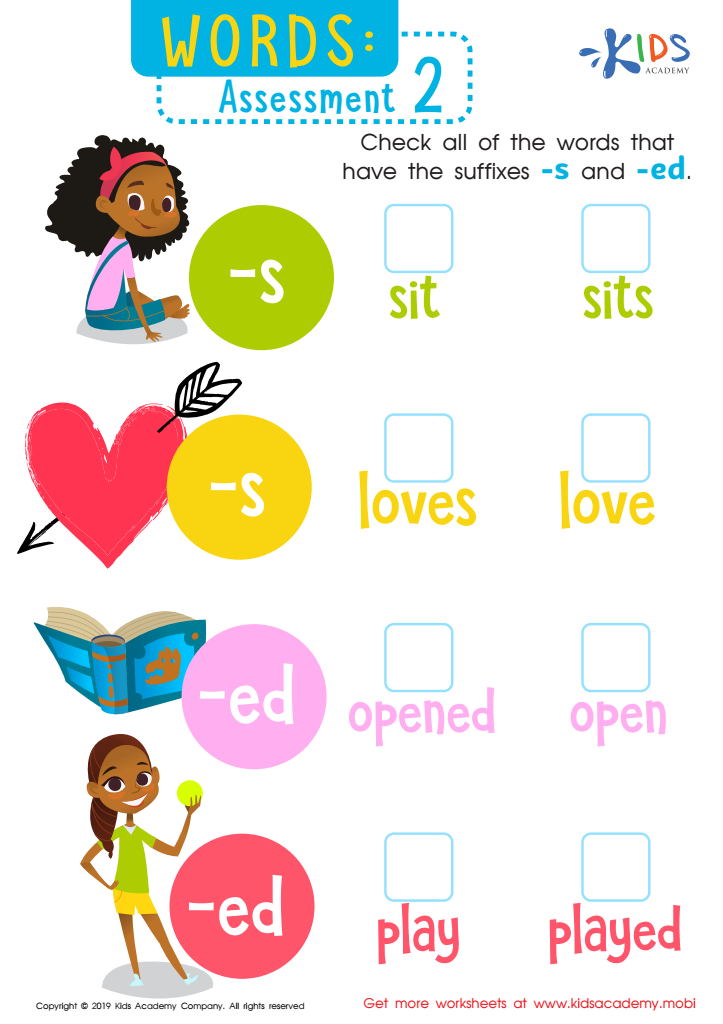
Words: Assessment 2 Worksheet
Test your child’s knowledge of -s and -ed word endings with this fun worksheet! They'll look at images and read the words, then choose the correct suffix to finish each one. Vivid illustrations make this an enjoyable learning experience!
 Assign to My Students
Words: Assessment 2 Worksheet
Worksheet
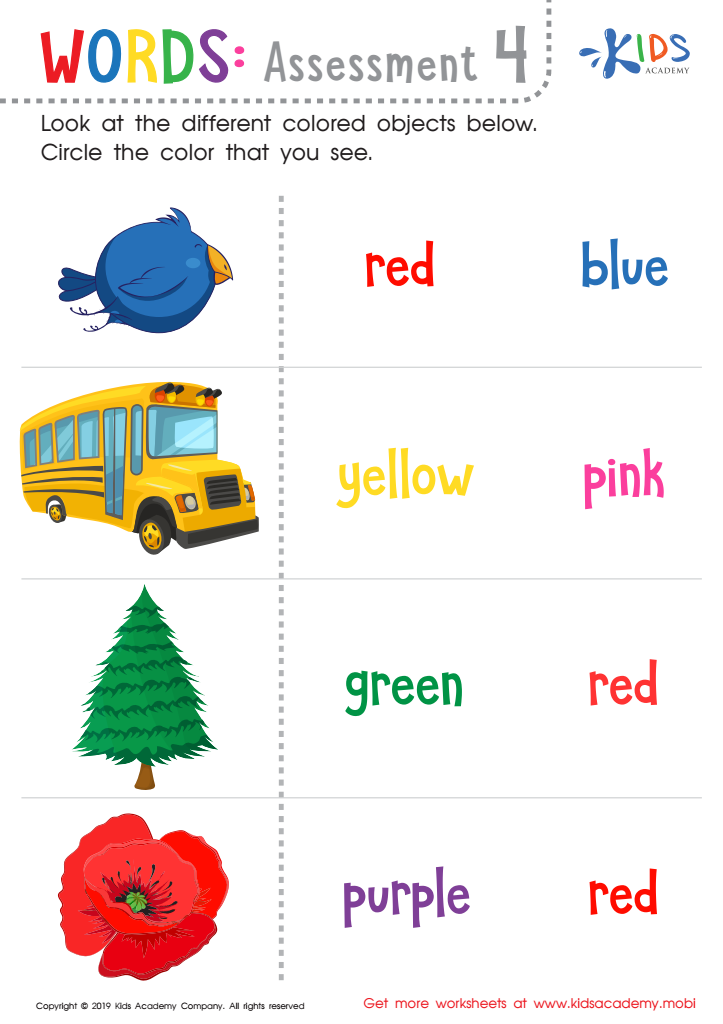
Words: Assessment 4 Worksheet
Look at the pictures and have your child circle the color they see. This free worksheet is great for assessing their knowledge of vocabulary words. It offers familiar images with words for kids to read and match with the colors. Help your child build their reading and understanding skills with this fun activity!
Words: Assessment 4 Worksheet
Worksheet
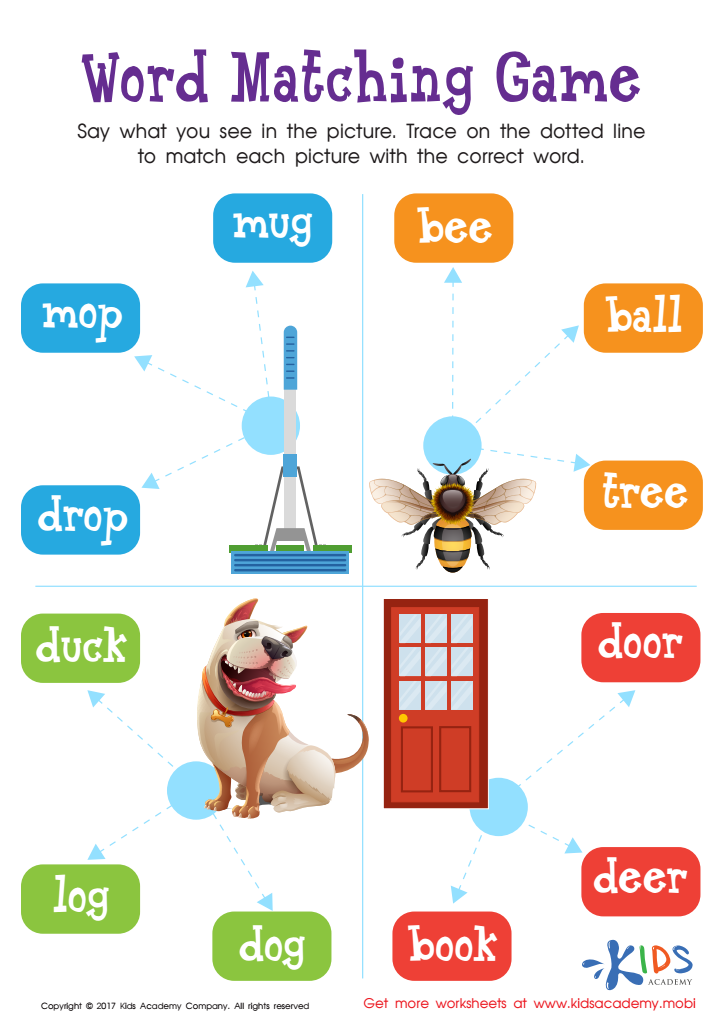
Word Matching Game Worksheet
Help your early reader develop prereading skills with this fun matching worksheet! Visual cues help them learn sight words, decode words in word families, and identify phonetic patterns. They'll practice discerning sounds past initial consonants while saying the name of the picture and finding the matching word - and reading at the same time!
Word Matching Game Worksheet
Worksheet
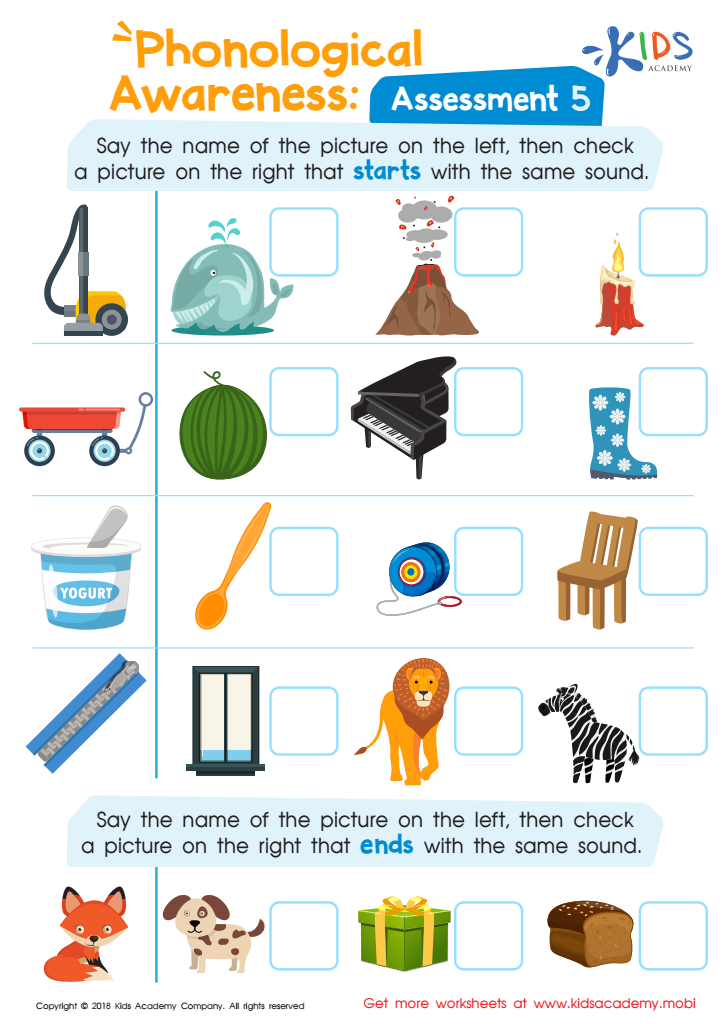
Phonological Awareness: Assessment 5 Worksheet
Repetition is key to success! This worksheet tests kids' ability to match beginning and ending sounds in words. Instruct them to say each word and listen closely to the sounds they make. Focus on the starting sounds for the first four pics, then the last one to hear ending sounds and find the right match!
Phonological Awareness: Assessment 5 Worksheet
Worksheet
Join Kids Academy for Free
Who is primarily going to use this learning content?




For parents and teachers of children ages 3-4, focusing on spelling practice and elementary phonics is incredibly important because these foundational skills are crucial for early literacy development. At this young age, children's brains are highly receptive to language acquisition. Engaging in phonics activities helps them understand the relationships between letters and sounds, which is the first essential step in learning to read and write.
Spelling practice aids in reinforcing these phonetic concepts, helping kids recognize patterns and memorize words, which eventually boosts their reading fluency and comprehension. Additionally, early exposure to spelling and phonics enhances vocabulary, enabling children to communicate more effectively. By practicing these skills at an early age, children develop confidence and a love for learning, setting the stage for future academic success.
Equally important, consistent practice helps in identifying any early signs of learning difficulties, allowing for timely intervention and support. Considering the cumulative nature of learning, early mastery in phonics and spelling acts as a building block for more complex literacy skills. Ultimately, an early focus on spelling practice and phonics lays a strong educational foundation, making it critical for the development and long-term academic achievement of young learners.







