Vocabulary development Elementary Phonics Worksheets for Ages 3-4
3 filtered results
-
From - To
Enhance your child's vocabulary with our engaging Phonics Worksheets designed specifically for ages 3-4! These carefully crafted activities promote early literacy skills through fun and interactive learning. Each worksheet focuses on phonics fundamentals, helping young learners match letters with sounds, expand their vocabulary, and develop crucial language skills. With colorful illustrations and age-appropriate challenges, kids will enjoy practicing their phonetic awareness while discovering new words. Ideal for classrooms or home learning, these worksheets are perfect for laying a solid foundation in reading and communication. Start your child's literacy journey today with our Elementary Phonics resources for joyful and effective learning!
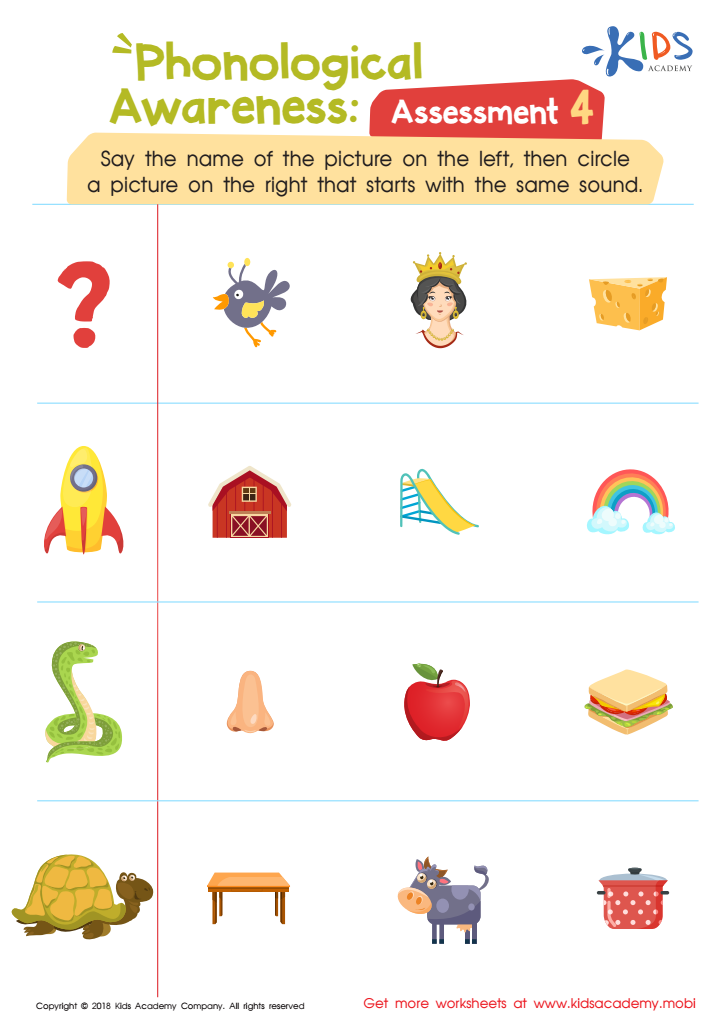
Phonological Awareness: Assessment 4 Worksheet
 Assign to My Students
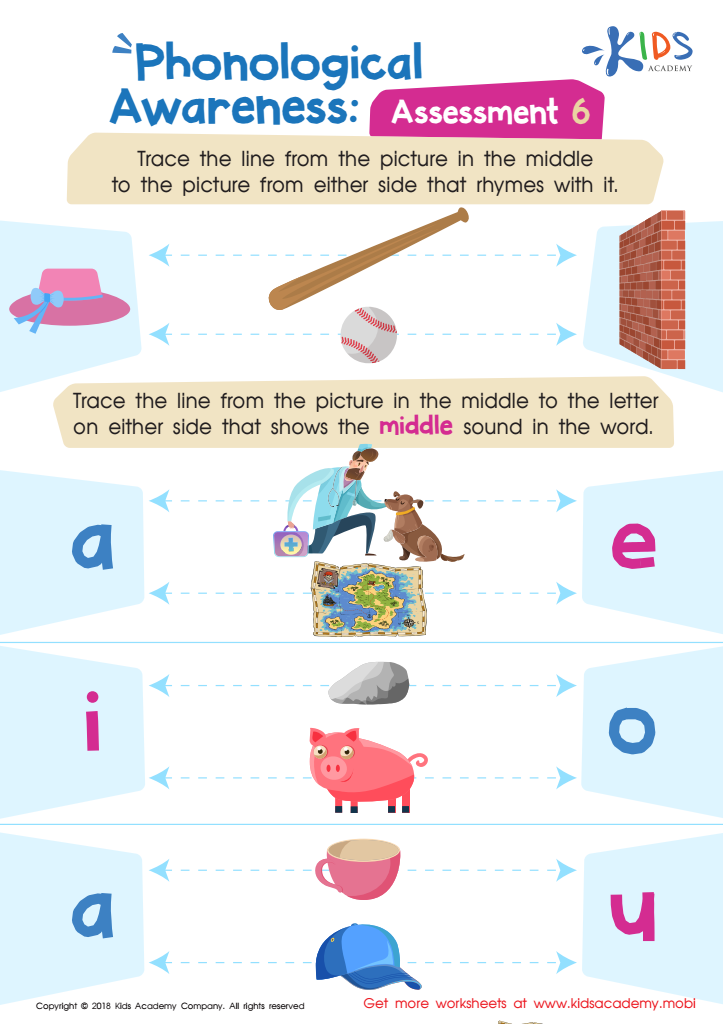
Phonological Awareness: Assessment 6 Worksheet
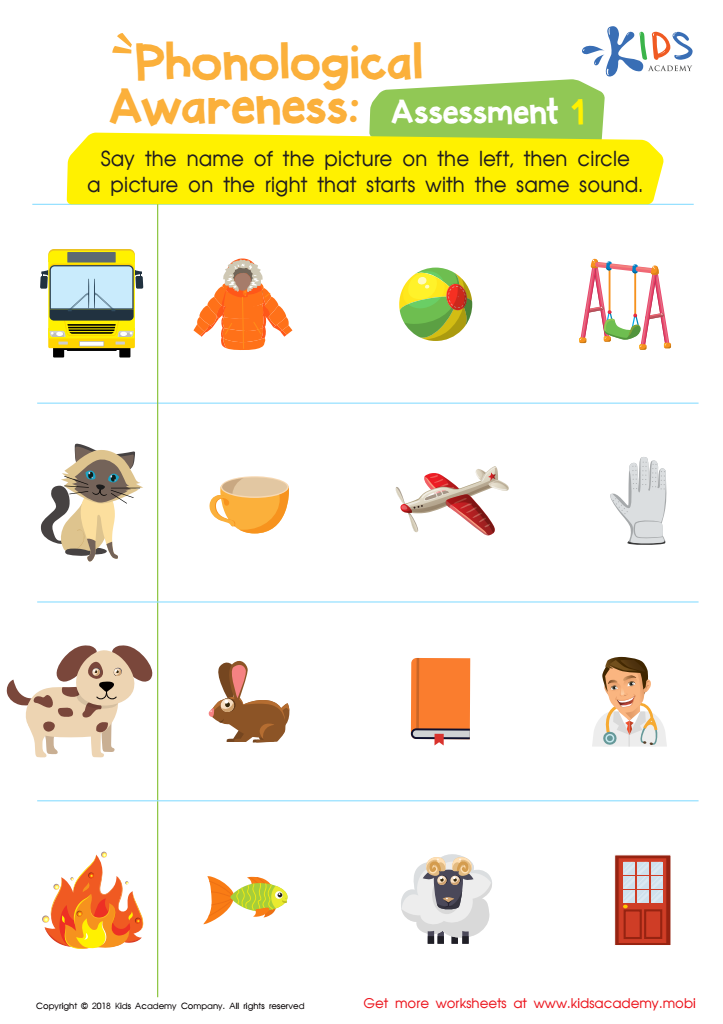
Phonological Awareness: Assessment 1 Worksheet




Vocabulary development and phonics are foundational to early literacy skills in children aged 3-4. This stage of development is crucial, as children begin to grasp the relationship between sounds and letters, which underpins reading and writing. Early vocabulary exposure not only enhances a child's ability to communicate effectively but also fosters cognitive development, enabling them to understand concepts and express their thoughts clearly.
For parents and teachers, nurturing vocabulary through engaging activities—such as singing songs, reading aloud, or playing word games—can significantly impact a child's future academic success. Effective phonics instruction helps children decode words, empowering them to be confident readers. This self-assurance lays the groundwork for a lifelong love of reading and learning.
Moreover, vocabulary plays a pivotal role in social interactions and comprehension skills. Children with rich vocabularies tend to better understand and connect with their peers and adults, leading to improved social skills and emotional intelligence. In a world where communication is essential, investing time in vocabulary development and phonics is critical for shaping children into competent, enthusiastic learners. Therefore, both parents and teachers should prioritize and actively support these skills during these formative years.







