Rhyme recognition Alphabet Worksheets for Ages 3-4
3 filtered results
-
From - To
Explore our engaging Rhyme Recognition Alphabet Worksheets designed specifically for children aged 3-4! These worksheets are perfect for introducing young learners to the fascinating world of rhymes while simultaneously strengthening their alphabet recognition skills. Each activity is creatively designed to captivate toddlers’ attention, making learning fun and interactive. As kids identify rhyming words and match them with corresponding letters, they develop critical phonemic awareness that lays a strong foundation for future reading success. These valuable resources encourage independent learning and boost confidence, ensuring that your little ones embark on their literacy journey with enthusiasm. Download our worksheets today for enjoyable learning experiences!
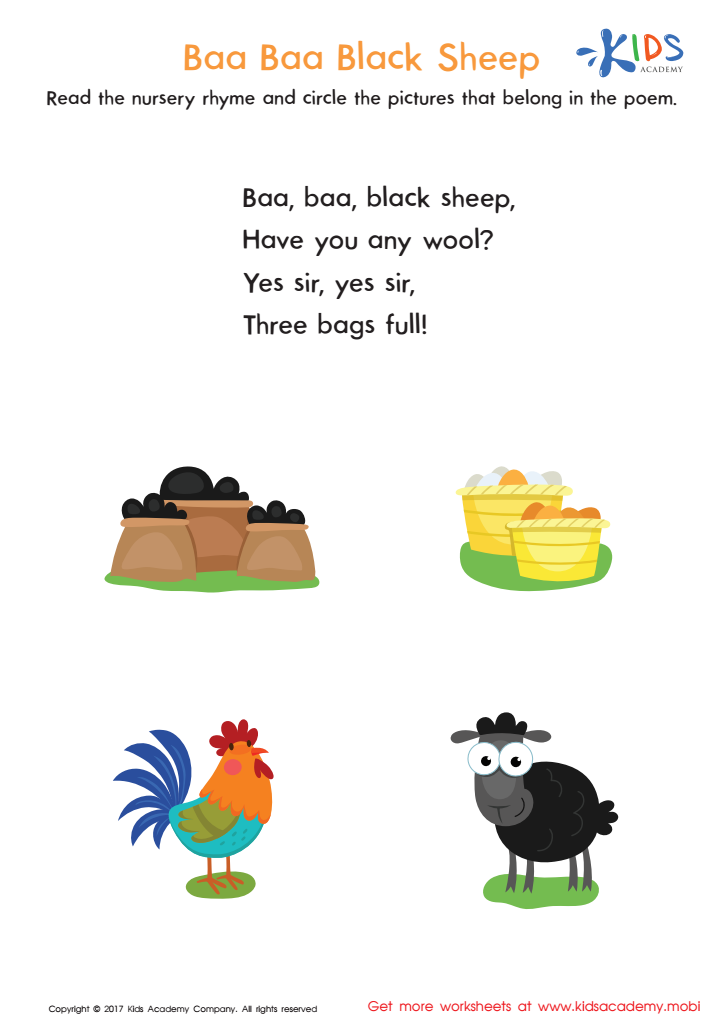
Baa Baa Black Sheep Printable
 Assign to My Students
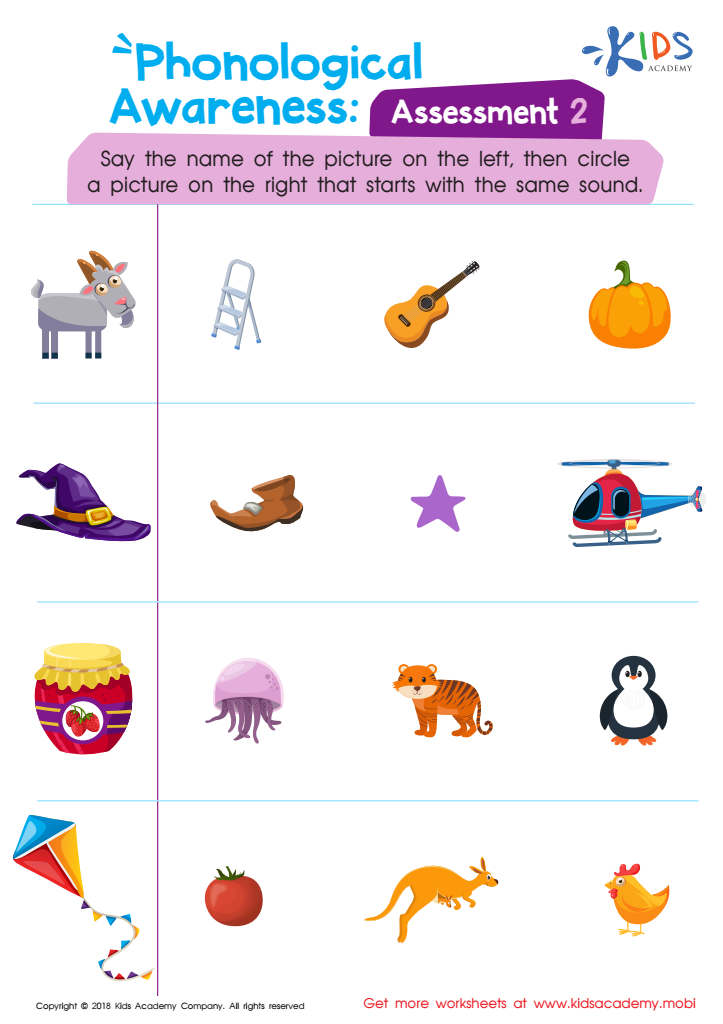
Phonological Awareness: Assessment 2 Worksheet
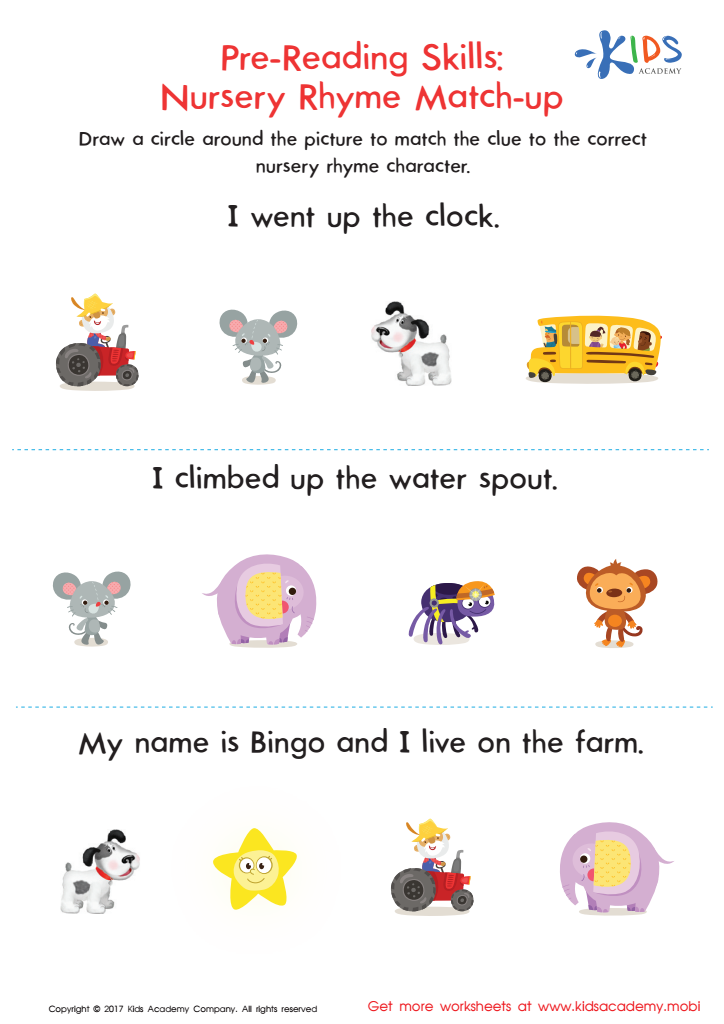
Nursery Rhyme Match–Up Worksheet








Rhyme recognition is a vital component of early literacy development, particularly for children aged 3-4. At this stage, enhancing phonemic awareness, or the ability to hear and manipulate sounds in words, is key for future reading success. When parents or teachers prioritize rhyme recognition, they are fostering essential skills that lay the groundwork for vocabulary growth, spelling, and comprehension.
Rhyme recognition aids in improving auditory discrimination, which allows children to differentiate between similar sounds. This skill is crucial when they begin to decode words in reading. Furthermore, engaging in rhyming activities promotes memory and recall, as children often rely on repetitive sound patterns in nursery rhymes and songs.
Additionally, interacting with rhymes helps to cultivate a love for language and literature. Children are naturally drawn to the playful nature of rhyming, making learning enjoyable and effective. By participating in rhyming games and reading rhyming books, adults can create interactive learning experiences that boost children’s confidence as they explore language.
Ultimately, strong rhyme recognition skills not only enhance early reading abilities but also support overall cognitive development, making it an essential focus for parents and teachers during these formative years.







