
Sight word recognition Alphabet Worksheets for Ages 3-4
3 filtered results
Difficulty Level
Grade
Age
-
From - To
Subject
Activity
Standards
Introduce your child to the magical world of words with our Sight Word Recognition Alphabet Worksheets designed for ages 3-4. These engaging, printable worksheets from Kids Academy provide a fun and interactive way for young learners to master essential early literacy skills. Each carefully crafted worksheet focuses on recognizing and remembering common sight words through captivating activities. By blending colorful illustrations and simple exercises, our resources help improve your child's confidence and reading proficiency. Optimize their learning experience and set a strong foundation for future academic success with our expertly-designed alphabet worksheets. Explore now and watch your child's skills grow!
Favorites
With answer key
Interactive
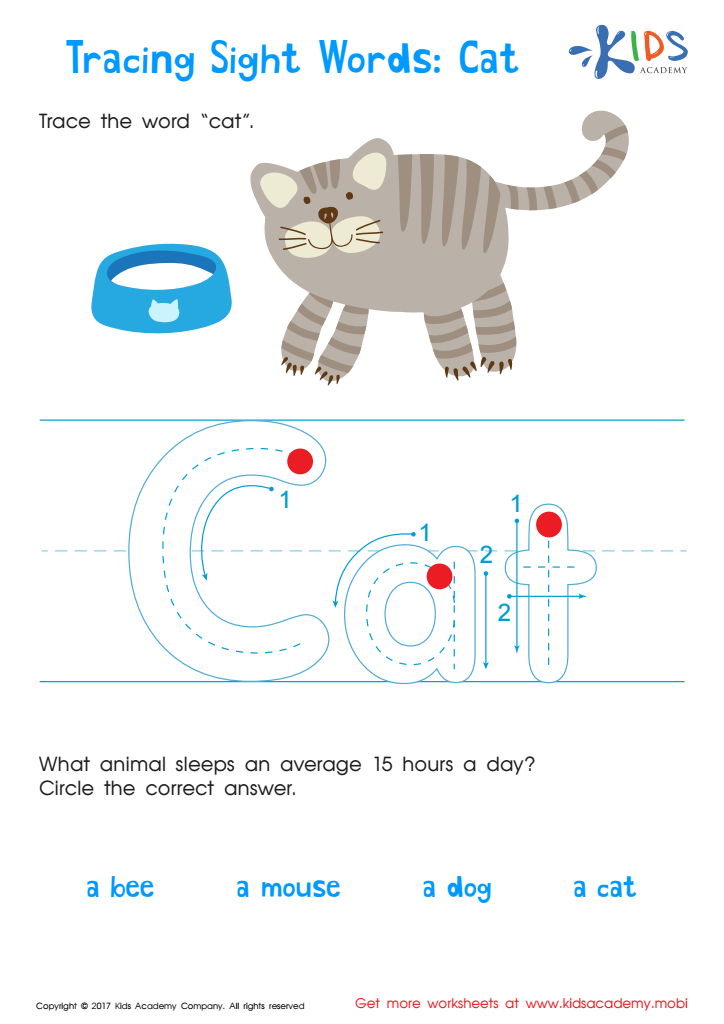
Cat Printable Sight Words Worksheet
Encourage your child's literacy with this fun sight words worksheet: cat PDF! It helps build a solid foundation for reading, featuring activities such as reading and tracing the word cat, and finding it amongst other sight words. With its cute cat, Kids Academy makes learning to read a delight!
Cat Printable Sight Words Worksheet
Worksheet
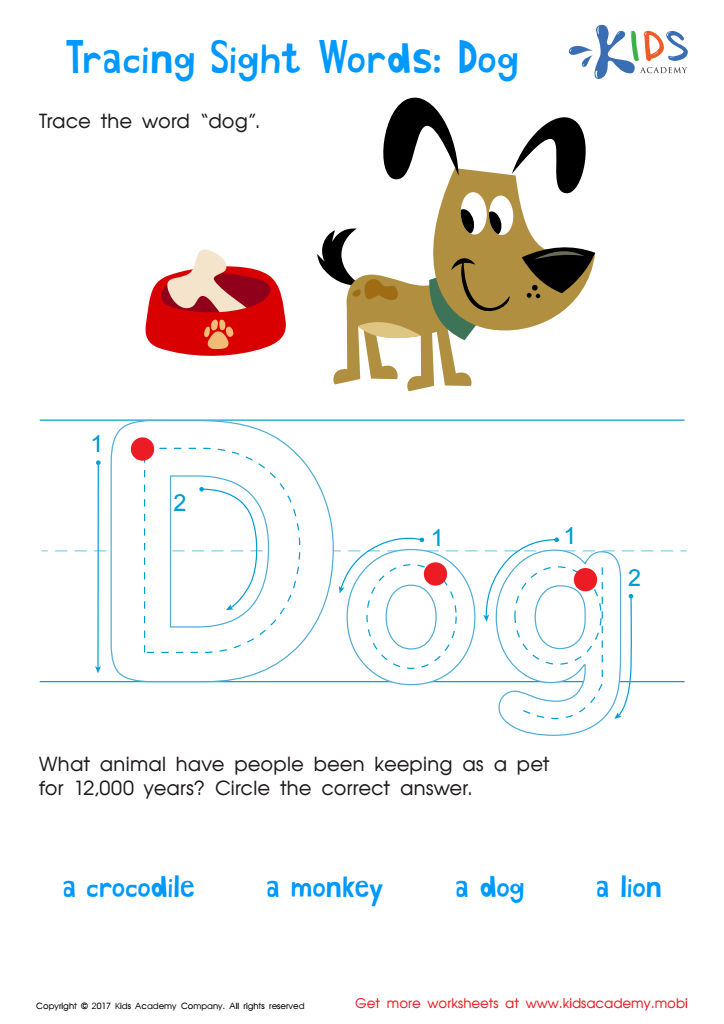
Dog Worksheet Sight Words Worksheet
Get your kids excited to read with our dog-themed sight words worksheet!
Excite your child to read with our sight words worksheet: dog edition! Featuring a lovable dog character to put a smile on any kid's face, this worksheet helps kids practice reading and writing the word "dog". Build a library of words they can read quickly and promote increasing literacy skills with early fluency! Get them ready for reading with our dog-themed sight words worksheet!
Dog Worksheet Sight Words Worksheet
Worksheet
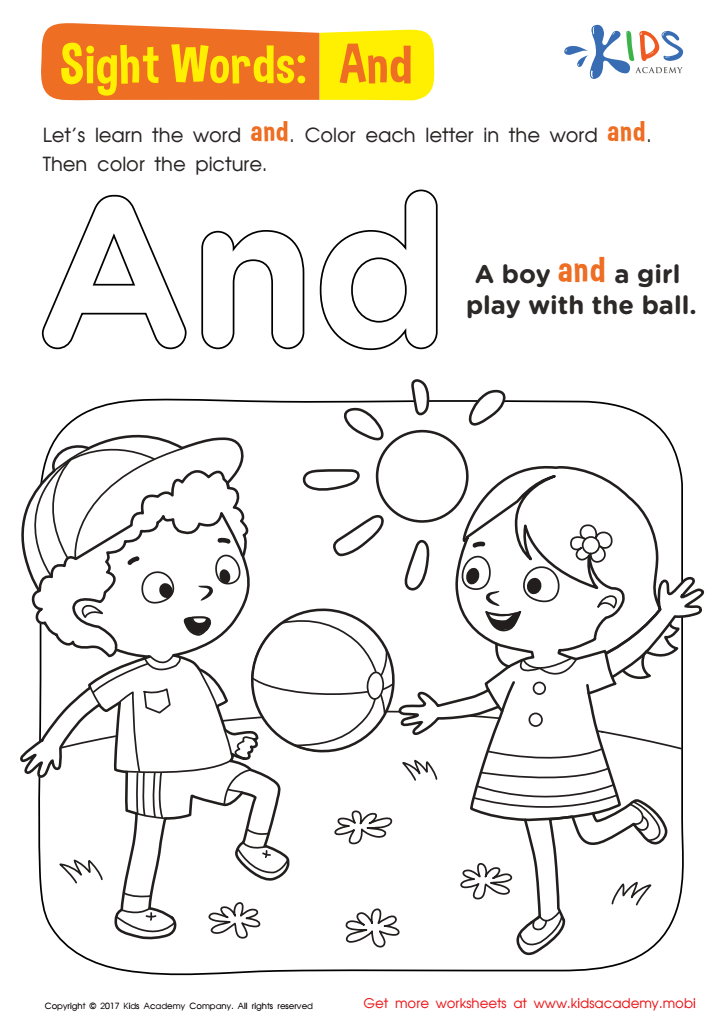
And Worksheet Sight Words Worksheet
Help your child get a jumpstart on reading with sight words! Print out this fun worksheet and get your child to read the sentence. Point out the word "and", then color the word and enjoy the rest of the scene! It's a great way to introduce sight words and get their early reading skills going!
Download (PDF)
 Assign to My Students
Assign to My Students
And Worksheet Sight Words Worksheet
Worksheet
Join Kids Academy for Free
Who is primarily going to use this learning content?







Sight word recognition and alphabet familiarity are fundamental building blocks for early literacy skills, crucial for children aged 3-4. At this developmental stage, young minds are highly receptive and can absorb new information quickly and efficiently. Here's why parents and teachers should care:
-
Foundation for Reading: Recognizing sight words and knowing the alphabet are essential steps before a child can start decoding more complex words and sentences. This early knowledge sets the groundwork for successful reading skills in later years.
-
Boosts Confidence: Mastery of sight words and the alphabet gives young children a sense of accomplishment. It enables them to recognize common words without hesitation, fostering a positive attitude toward learning and reading.
-
Language Development: Familiarity with sight words and letters enhances vocabulary and comprehension. It allows children to understand and construct sentences, promoting their overall linguistic abilities.
-
Cognitive Benefits: Engaging regularly with sight words and alphabet activities improves memory, attention span, and concentration. These cognitive skills are applicable beyond reading and are important for other areas of learning.
-
Smooth Transition to Formal Schooling: Early literacy skills help children adapt more easily when they start school. They are better prepared to follow along in class, participate in reading activities, and meet academic expectations.
Supporting their early literacy journey cultivates lifelong learning habits and a love for reading.







