
Visual discrimination skills Alphabet Worksheets for Ages 3-4
5 filtered results
Difficulty Level
Grade
Age
-
From - To
Subject
Activity
Standards
Boost your child's learning journey with our Visual Discrimination Skills Alphabet Worksheets for Ages 3-4! Designed to sharpen recognition and matching abilities, these fun and engaging worksheets aid in distinguishing between different letters and shapes. Each activity focuses on enhancing visual memory and attention to detail, crucial for early reading and writing development. Perfect for preschoolers, our expertly crafted exercises foster foundational skills in an enjoyable and educational way. Set your little one on the path to literacy success with our visually stimulating and thoughtfully designed alphabet worksheets!
Favorites
With answer key
Interactive
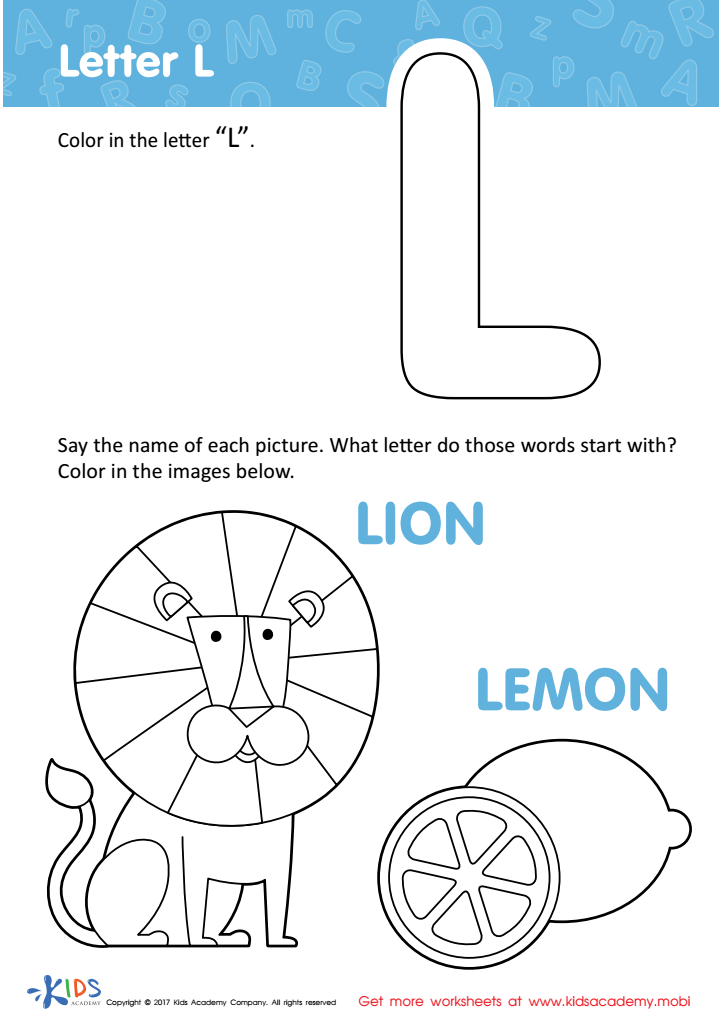
Letter L Coloring Sheet
Kids often struggle to say "L" and love it because so many things they love start with it! This coloring page combines the letter and fun images like a lemon and lion to teach and entertain!
Download (PDF)
 Assign to My Students
Assign to My Students
Letter L Coloring Sheet
Worksheet
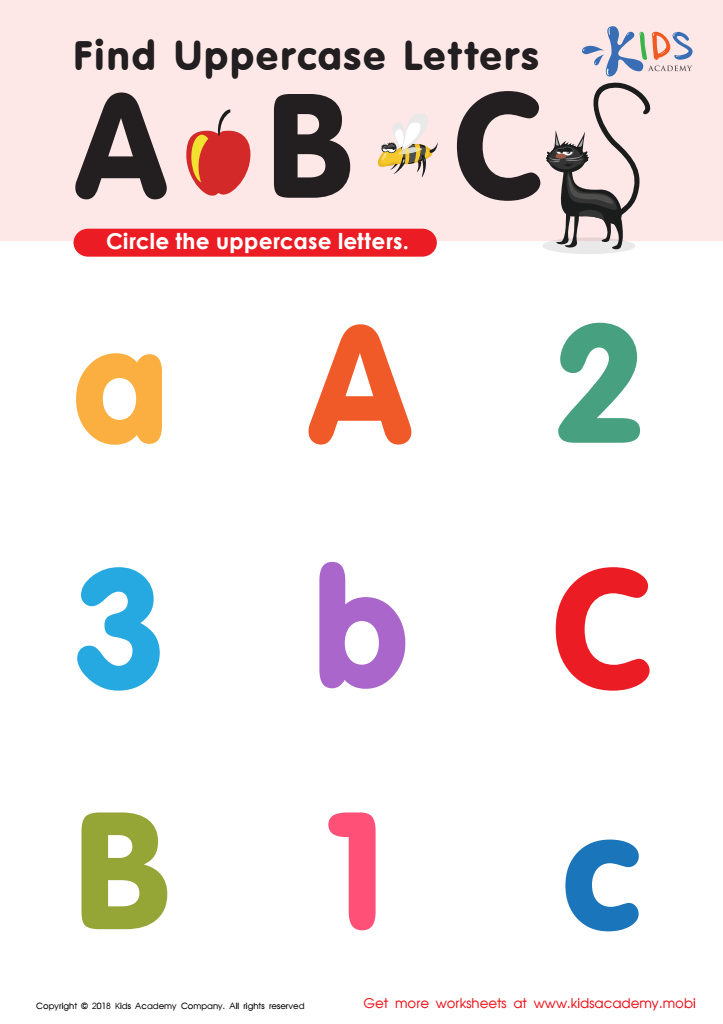
Find Uppercase Letters A, B, and C Worksheet
Check out this PDF worksheet and spot all the capital letters! Arranged as a puzzle, this exercise will test little learners to read and recognize uppercase letters and tell the difference between letters and numbers. To help them, use the pictures on top of the page to practice the sounds A, B and C make! 80 words.
Find Uppercase Letters A, B, and C Worksheet
Worksheet
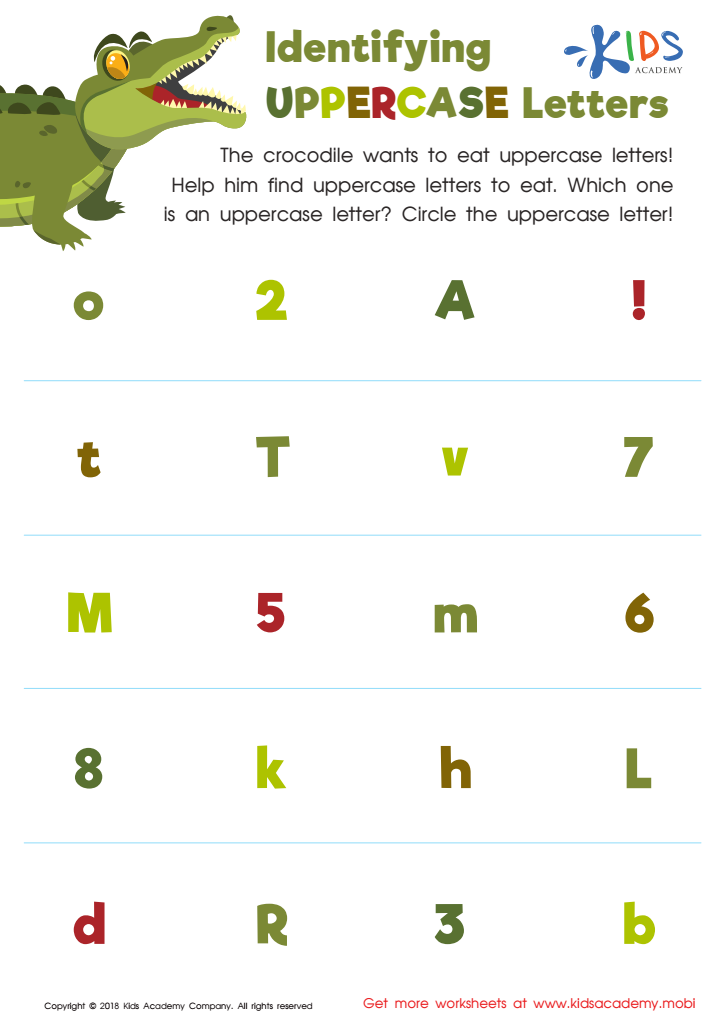
Identifying Uppercase Letters Worksheet
It's essential for kindergarteners to know the distinction between uppercase and lowercase letters. This skill will aid them when starting to write. They can practice by selecting the uppercase letters among a mix of lowercase, uppercase letters and numbers. Whatever their level of learning, give your child confidence with this PDF!
Identifying Uppercase Letters Worksheet
Worksheet
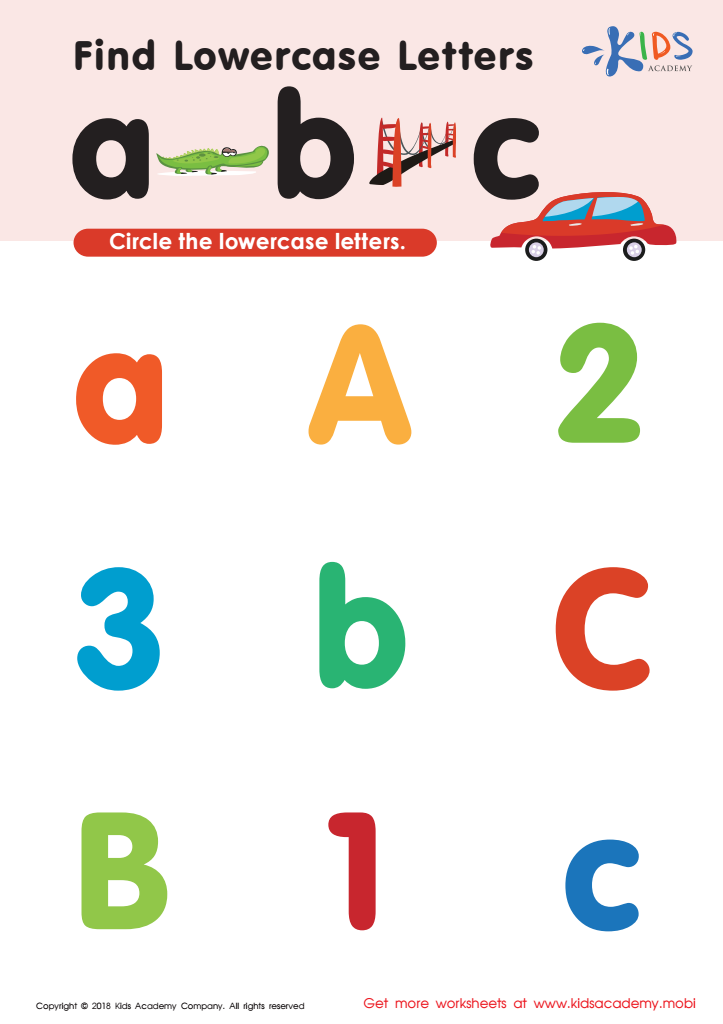
Find lowercase letters a b c Worksheet
Help your child identify lowercase letters with this worksheet. Carefully look at each letter and have your child circle the lowercase ones. This exercise is vital in helping them understand the alphabet and the difference between lower and uppercase letters.
Find lowercase letters a b c Worksheet
Worksheet
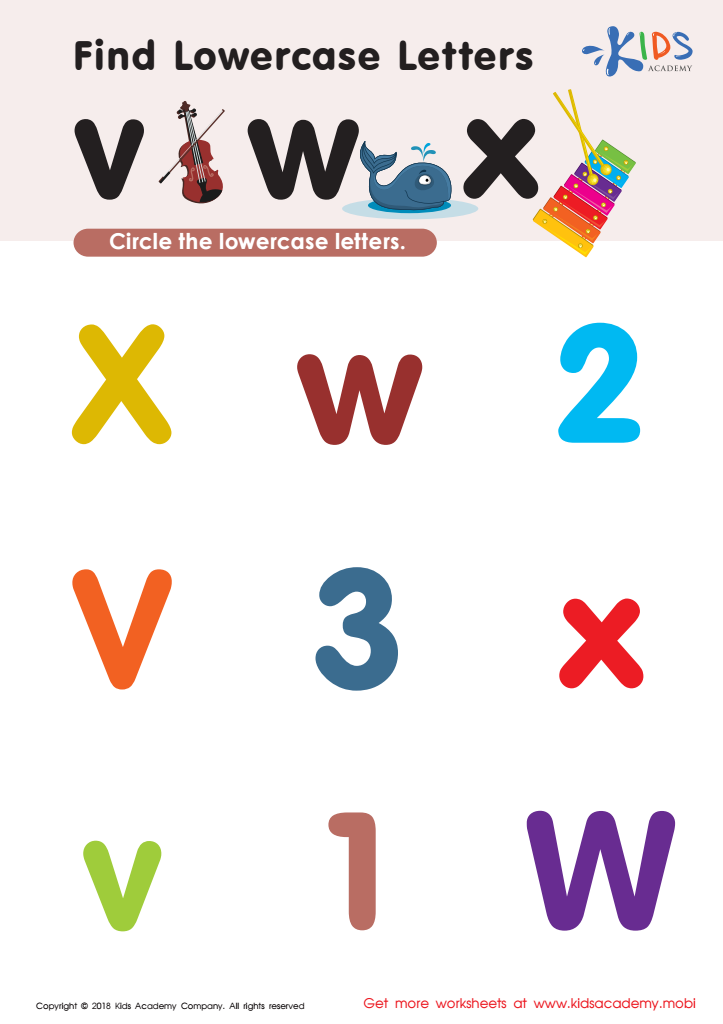
Find Lowercase Letters v w x Worksheet
If your child doesn't know the alphabet, get them this helpful worksheet. It's an easy exercise to build their understanding of the alphabet and lowercase letters. Find the letters v, w, and x among other uppercase letters and numbers in the downloadable PDF.
Find Lowercase Letters v w x Worksheet
Worksheet
Join Kids Academy for Free
Who is primarily going to use this learning content?








Visual discrimination skills are crucial for young children, especially when it comes to learning the alphabet. These skills involve the ability to notice and compare the differences and similarities among various shapes, letters, and numbers. For children aged 3-4, developing visual discrimination is foundational for literacy, making it an essential focus for both parents and teachers.
At this age, children are just beginning to recognize and differentiate letters, a fundamental step towards reading and writing. Strong visual discrimination skills allow them to identify individual letters, even those that look similar such as ‘b,’ ‘d,’ ‘p,’ and ‘q.’ This reduces confusion and builds confidence, fostering a positive attitude towards learning.
From a practical standpoint, activities that bolster visual discrimination can also improve other skills. These include fine motor skills as children practice drawing and tracing letters, and cognitive skills, as they engage in sorting and matching games that require careful attention and problem-solving.
For parents and teachers, encouraging activities that develop visual discrimination skills sets the stage for academic success. Simple games, puzzles, and interactive books focusing on letter recognition can make learning fun and engaging. By emphasizing these skills early on, you help create a strong foundation for literacy that will benefit children throughout their educational journey and beyond.







