Writing practice Letter A Worksheets for Ages 3-4
3 filtered results
Difficulty Level
Grade
Age
-
From - To
Subject
Activity
Standards
Introduce your little learners to the fundamentals of writing with our engaging "Writing Practice: Letter A" worksheets for ages 3-4. Our carefully designed, fun activities focus on tracing and recognizing the letter A, helping children develop fine motor skills and early handwriting abilities. Suitable for toddlers and preschoolers, these printable worksheets combine play and education, making alphabet practice enjoyable and effective. Support your child's learning journey with vibrant, kid-friendly worksheets that lay the foundation for literacy and a love for learning. Visit the link to download and start nurturing your child's writing skills today!
Favorites
With answer key
Interactive
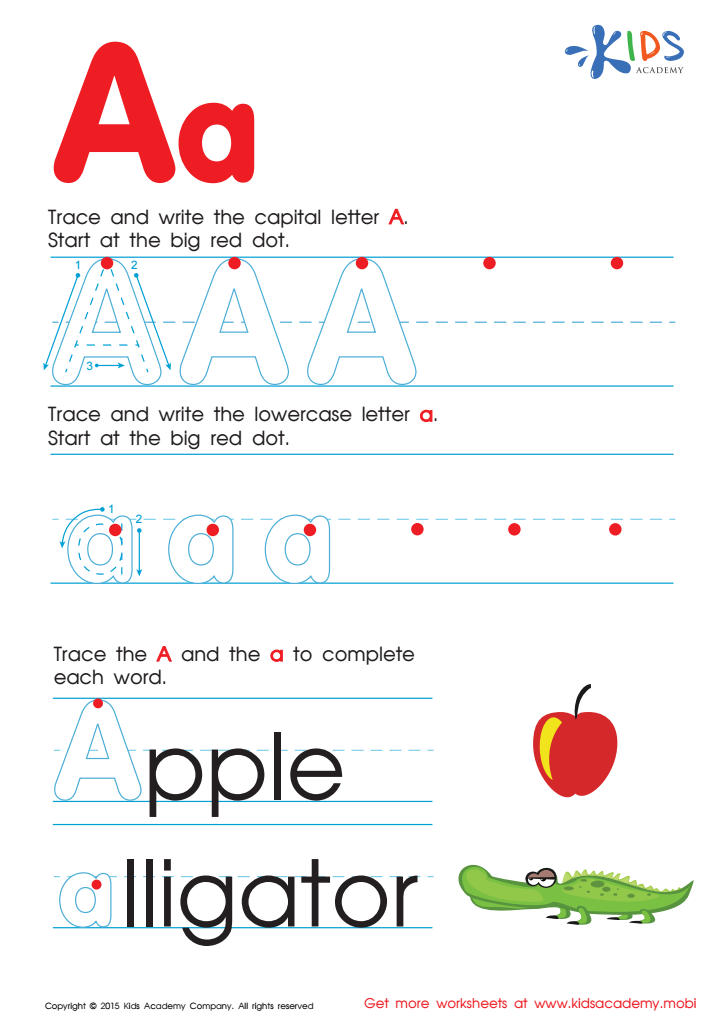
Letter A Tracing Page
Trace and write the letter "A"! Start with the big red dot, then do the capital and lowercase versions. Then write it again with two words - apple and alligator. Download more tracing worksheets at Kids Academy.
Letter A Tracing Page
Worksheet
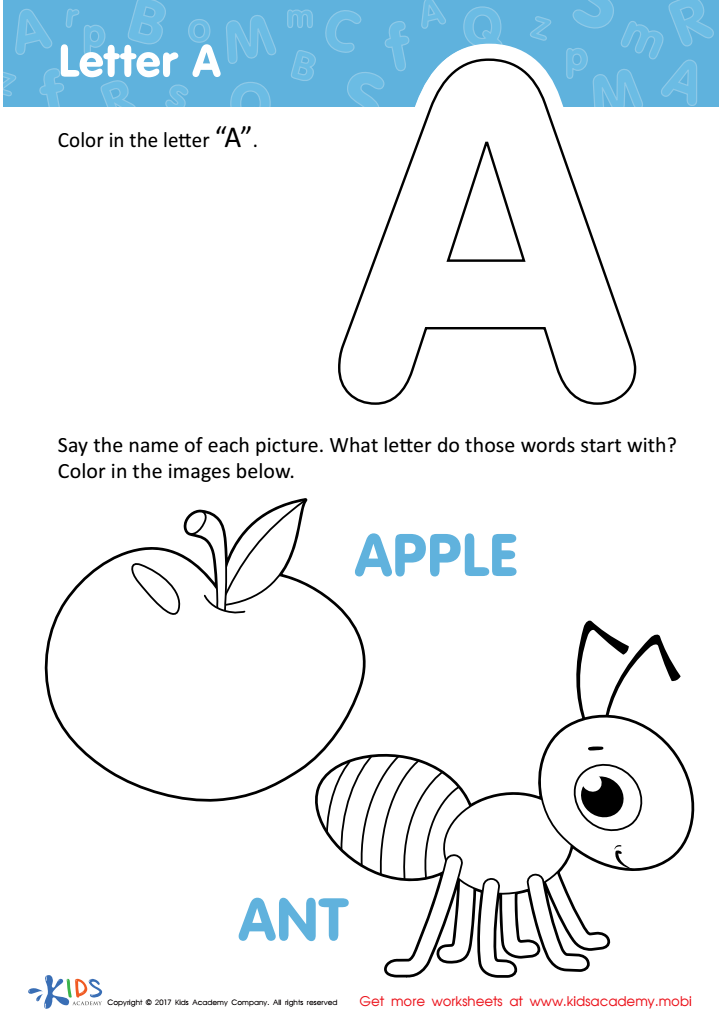
Letter A Coloring Sheet
This letter "A" coloring page is great for introducing kids to the alphabet! Let them exercise their creativity while they learn to recognize letters and sounds - it's a fun and easy way to help them get started.
Download (PDF)
 Assign to My Students
Assign to My Students
Letter A Coloring Sheet
Worksheet
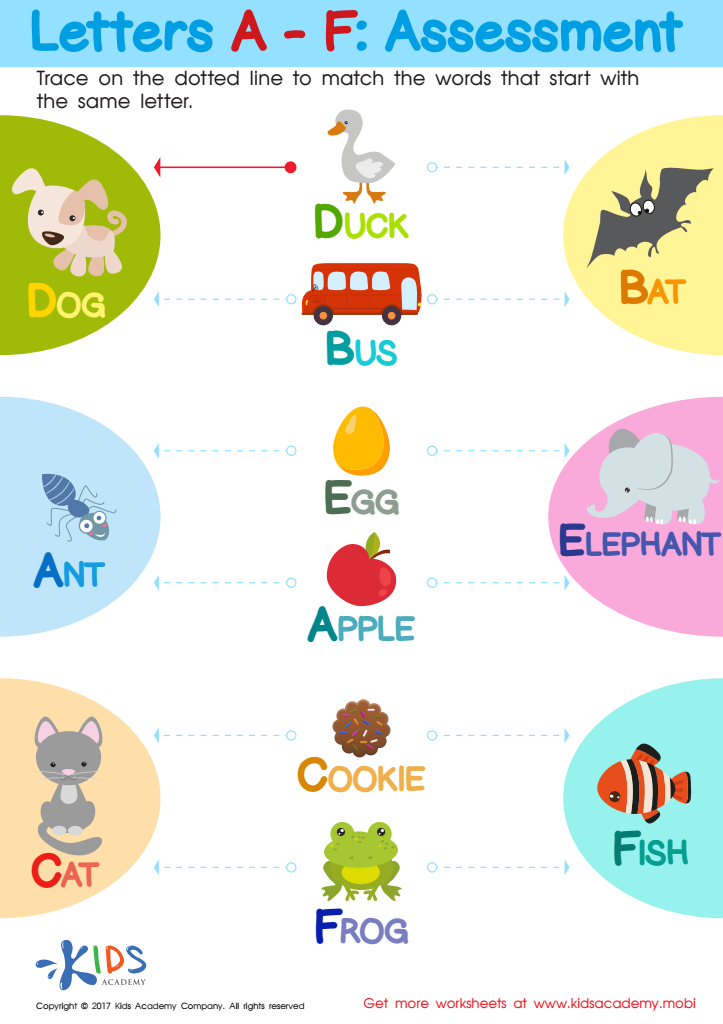
Letters A - F Worksheet
Help your child develop their reading skills with this fun phonics worksheet aimed at preschoolers. They can match letters A-F using colorful words and pictures. Assist your child by sounding out the letters and words - it's a great way to learn!
Letters A - F Worksheet
Worksheet
Join Kids Academy for Free
Who is primarily going to use this learning content?







Writing practice for the letter A is crucial for children aged 3-4 as it lays the foundation for early literacy skills, which are vital for lifelong learning. At this developmental stage, children are beginning to explore the world of letters and sounds, and practicing writing the letter A helps them in multiple ways.
Firstly, writing the letter A aids in fine motor skill development. Holding a pencil or crayon and learning to control it encourages hand-eye coordination and strengthens the small muscles in their hands, leading to better dexterity.
Secondly, it introduces the basics of letter recognition and phonics. Recognizing the letter A and associating it with its phonetic sound are key preliminary skills that support reading and writing development.
Thirdly, early literacy practice, like writing the letter A, builds a foundation for academic success. As children become comfortable with letters, they develop greater confidence and enthusiasm for learning. A positive early experience is shown to nurture better performance in future educational endeavors.
Parents and teachers who foster a child’s interest in writing at this age contribute to a constructive and engaging learning environment. Consistent practice not only supports children's literacy journey but also their overall cognitive and creative growth, establishing essential learning habits that benefit them throughout their educational journey.