Alphabet Recognition Letter I Worksheets for Ages 3-4
3 filtered results
Difficulty Level
Grade
Age
-
From - To
Subject
Activity
Standards
Enhance your child’s alphabet skills with our "Alphabet Recognition Letter I Worksheets for Ages 3-4." Perfectly tailored for preschoolers, these engaging and colorful worksheets will help your child effortlessly identify and pronounce the letter I. Featuring fun activities, tracing exercises, and interactive games, each sheet aims to boost early literacy skills while making learning enjoyable. Ideal for children aged 3–4, these worksheets lay a strong foundation in letter recognition, setting the stage for confident reading and writing. Start your child’s journey toward mastering the alphabet with our expertly crafted learning resources. Visit us today!
Favorites
With answer key
Interactive
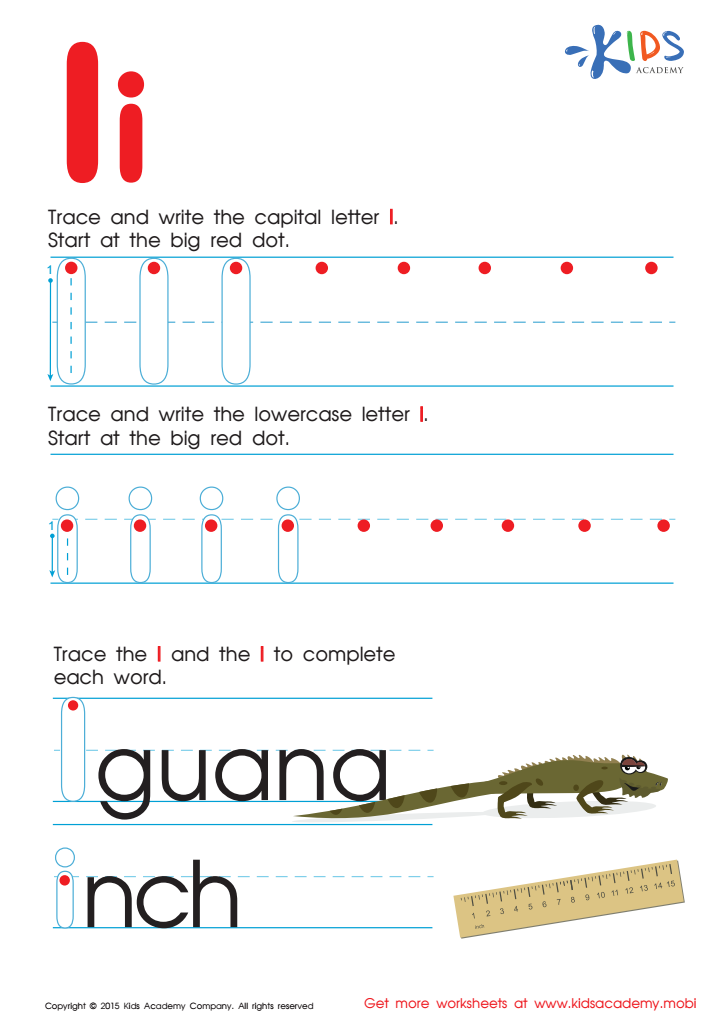
Letter I Tracing Page
Trace and write "I" uppercase and lowercase. An iguana's tail looks like the uppercase "I" and the lowercase "i" is as small as an inch. Make learning fun with Kids Academy worksheets.
 Assign to My Students
Letter I Tracing Page
Worksheet
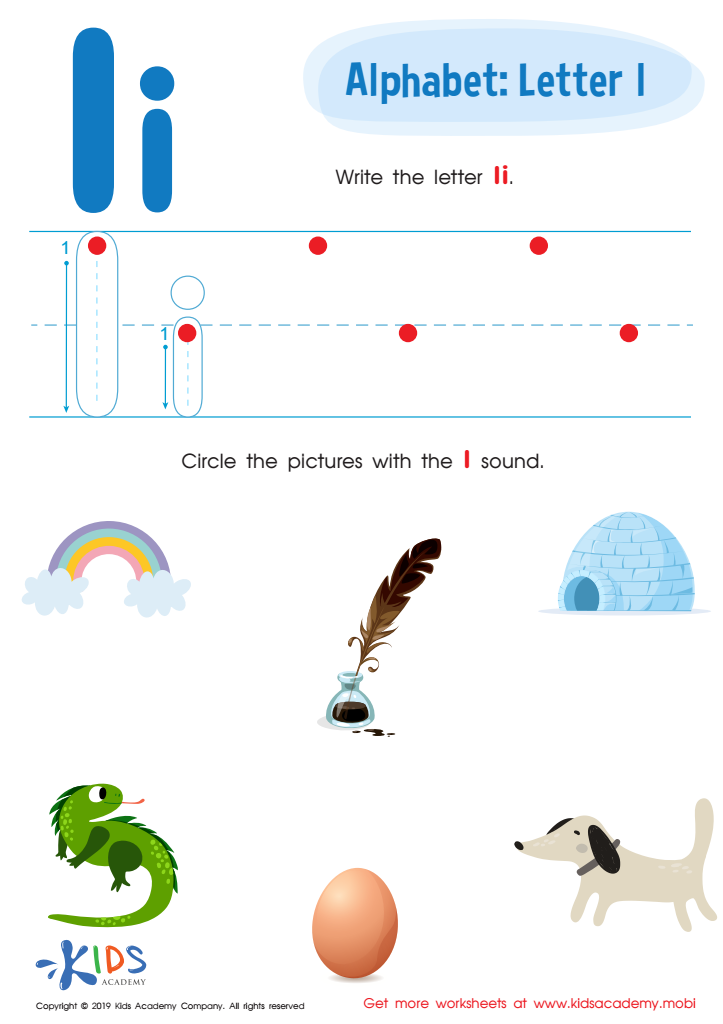
Letter I Tracing Worksheet
Kids can hone tracing, writing and identifying skills for the letter 'I' with this worksheet. Whether visual or reading/writing learners, every child can benefit from the tasks - tracing, writing and circling objects beginning with 'I'. This free sheet will soon get preschoolers confident with the 'I' letter!
Letter I Tracing Worksheet
Worksheet
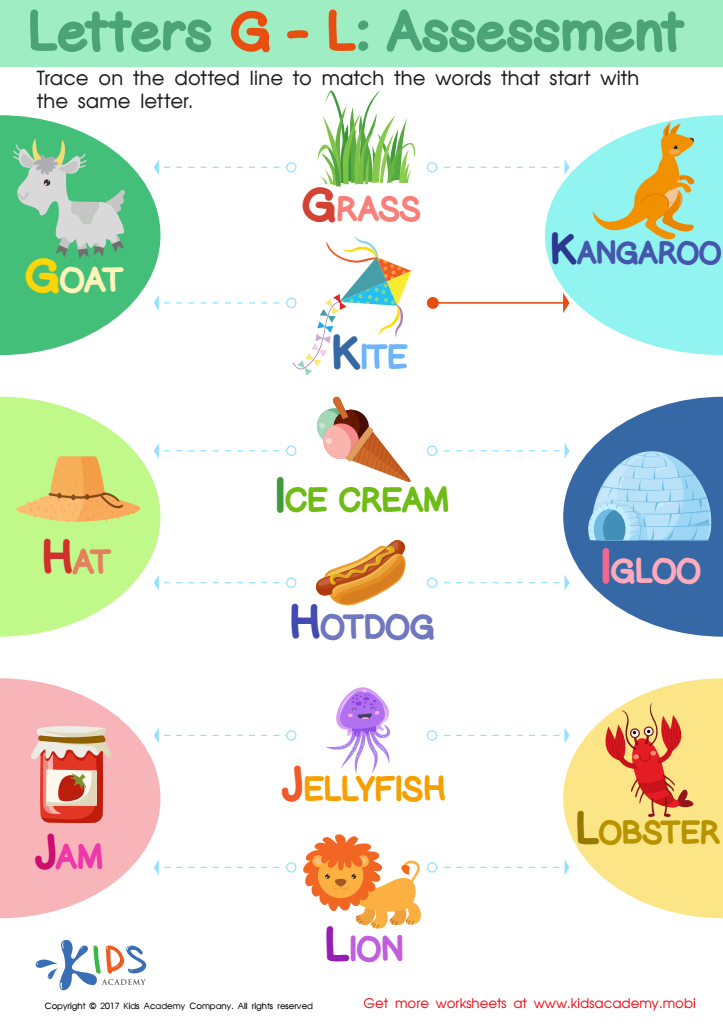
Letters G-L Worksheet
This fun worksheet helps preschoolers develop reading and phonics skills. It gets kids to match G-L words that start with the same letter, making it engaging and educational.
Letters G-L Worksheet
Worksheet
Join Kids Academy for Free
Who is primarily going to use this learning content?






Alphabet recognition, including the letter "I," is fundamental for children ages 3-4 as it establishes the foundation for literacy and communication skills. At this age, kids are primed for learning through play and exploration, making the introduction of letters a key developmental milestone. Recognizing the letter "I" helps children understand that letters symbolize sounds, which eventually combine to form words and sentences they will use daily.
By focusing on the letter "I," parents and teachers can enhance a child's visual discrimination skills, easing the process of distinguishing between different shapes and symbols. This familiarity reduces future frustration as the child begins to read and write.
Activities centered around the letter "I" can also aid in fine motor development. Tracing activities, for example, encourage proper pencil grip, coordination, and muscle control. The letter "I" is simply shaped, which makes it an excellent starting point for young learners.
Moreover, recognizing letters early on boosts a child's confidence and fosters a positive attitude toward learning. This early achievement generates enthusiasm and curiosity, essential ingredients for lifelong learning. Therefore, teaching the letter "I" helps build a strong educational foundation, shaping a child's cognitive and emergent literacy skills in a critically developmental stage.