Fine Motor Skills Letter W Worksheets for Ages 3-4
4 filtered results
-
From - To
Enhance your child's fine motor skills with our engaging Letter W worksheets, specifically designed for ages 3-4. These activities help little learners master the art of writing the letter W through tracing, drawing, and coloring exercises. Each worksheet aims to improve hand-eye coordination, control, and precision, making learning both fun and effective. Perfect for preschoolers, our resources support early alphabet recognition and pave the way for future writing success. Encourage your child’s development and prepare them for kindergarten with our expertly crafted fine motor skills worksheets focused on the letter W. Start their educational journey today!
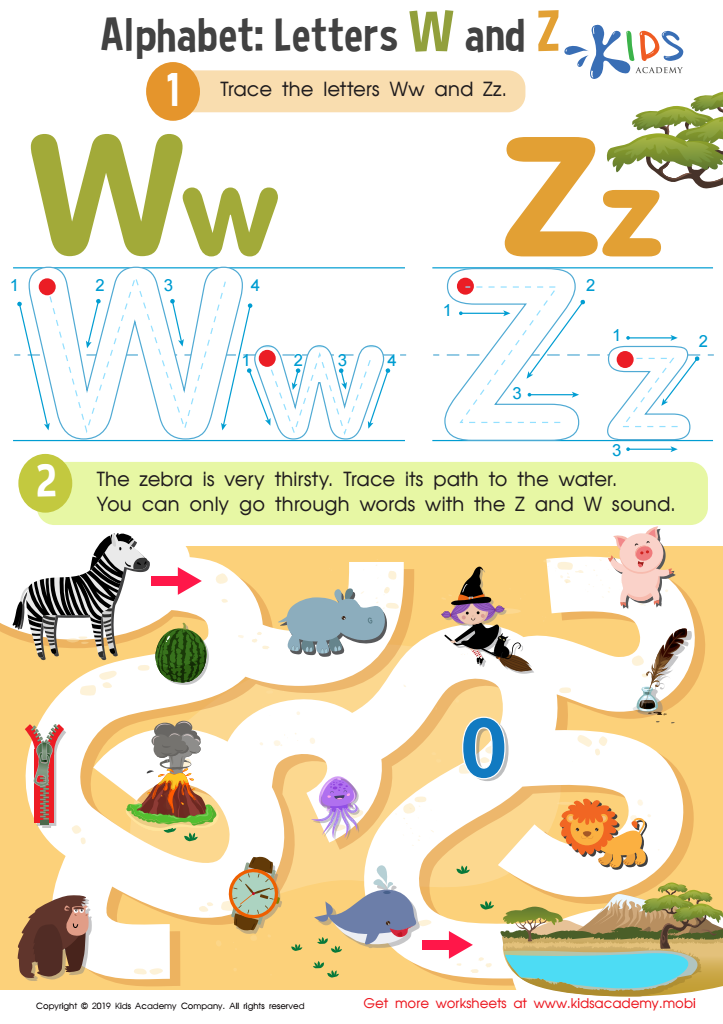
Letters W and Z Tracing Worksheet
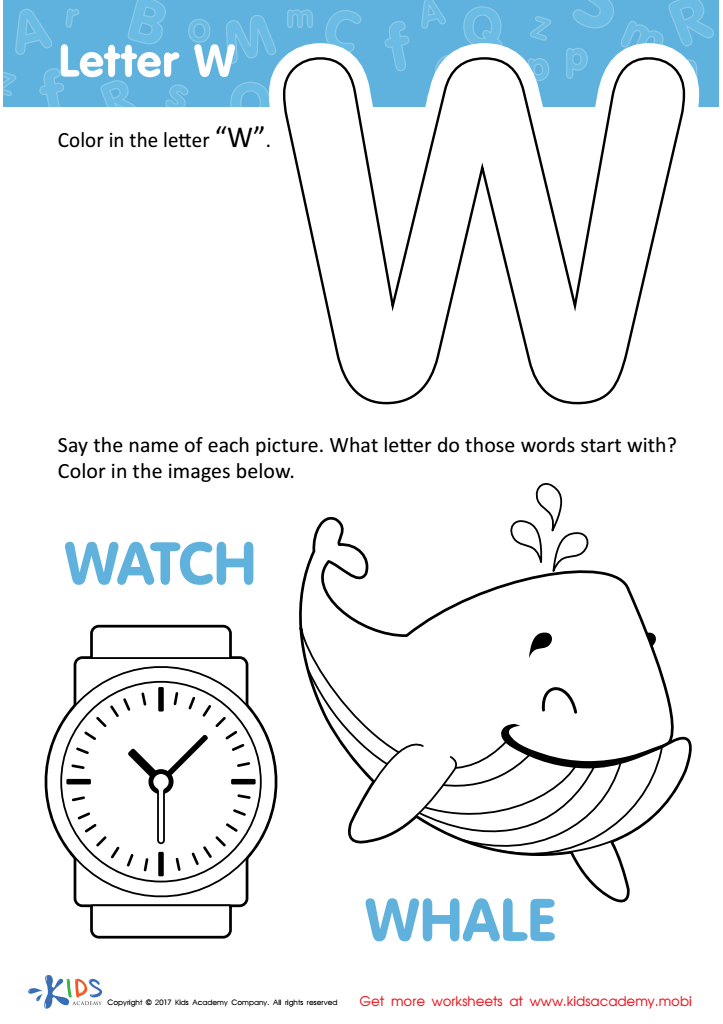
Letter W Coloring Sheet
 Assign to My Students
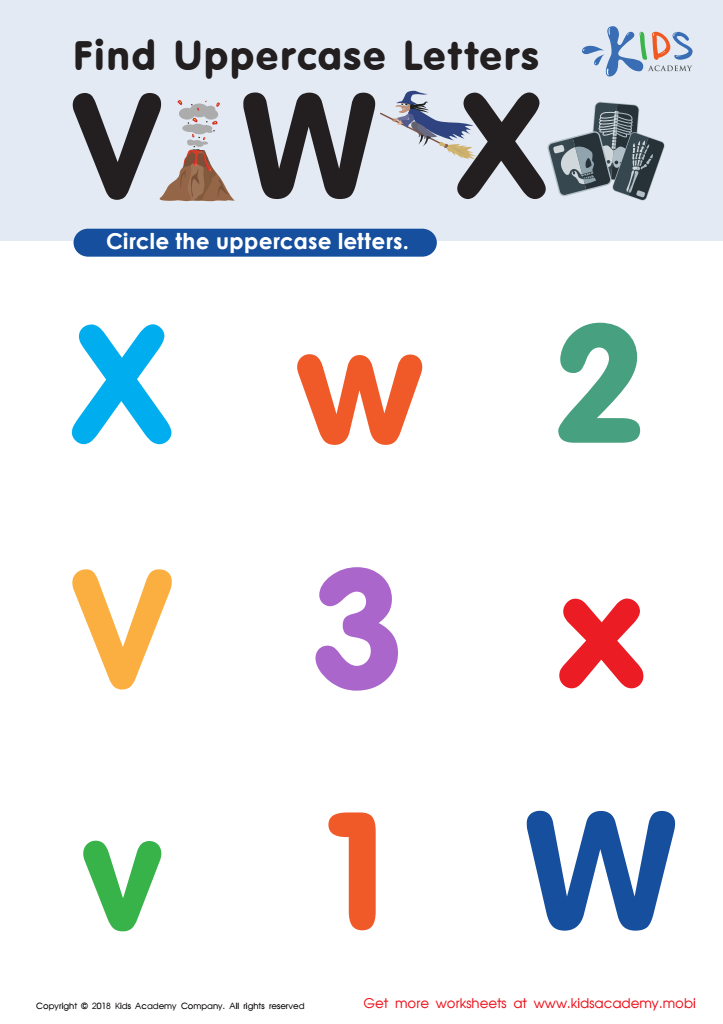
Find Uppercase Letters V, W, X Worksheet
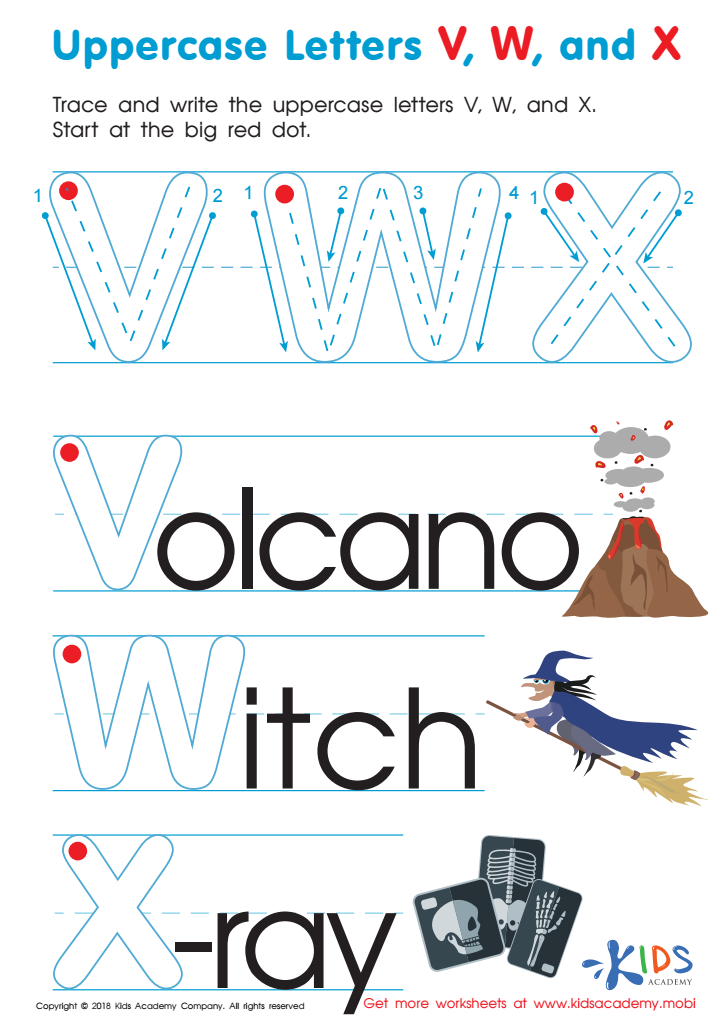
Uppercase Letters V, W, and X Worksheet




Fine motor skills are crucial for young children, and focusing on the letter "W" can provide a targeted way to enhance these abilities for ages 3-4. At this developmental stage, children are refining their hand-eye coordination, dexterity, and control over small movements. Practicing how to form the letter "W" can significantly enrich these skills since it requires precise finger movements and coordination.
First, tracing, drawing, and even crafting the letter "W" using various materials (like clay or string) can strengthen the small muscles in children's hands and fingers. This is essential for more advanced tasks they'll encounter later, such as writing, buttoning clothes, or tying shoelaces. Additionally, familiarizing with the letter "W" fosters early literacy skills, embedding crucial groundwork for reading and writing.
Moreover, working on making the letter "W" improves children's focus and hand-eye coordination, vital cognitive aspects that support overall learning. For parents and teachers, incorporating fun and engaging activities around the letter "W"—such as coloring pages, finger paints, or games—can make practicing these skills an enjoyable routine.
Therefore, prioritizing fine motor skills through activities centered on the letter "W" provides a multifaceted approach to nurturing a child’s physical, cognitive, and academic development. These skills form an essential foundation for their future educational journey.