Handwriting practice Letter Y Worksheets for Ages 3-4
3 filtered results
-
From - To
Discover our engaging "Handwriting Practice Letter Y Worksheets for Ages 3-4" at Kids Academy! Specially designed for preschoolers, these worksheets make learning the letter Y fun and interactive. Through playful activities and bright illustrations, your child will develop fine motor skills and letter recognition while perfecting their handwriting. These worksheets are tailored to keep young learners interested and motivated as they practice tracing and writing the letter Y. Ideal for both classroom and home use, our resources boast expert-approved content that nurtures early literacy skills. Visit Kids Academy today to download and unleash your child's writing potential!
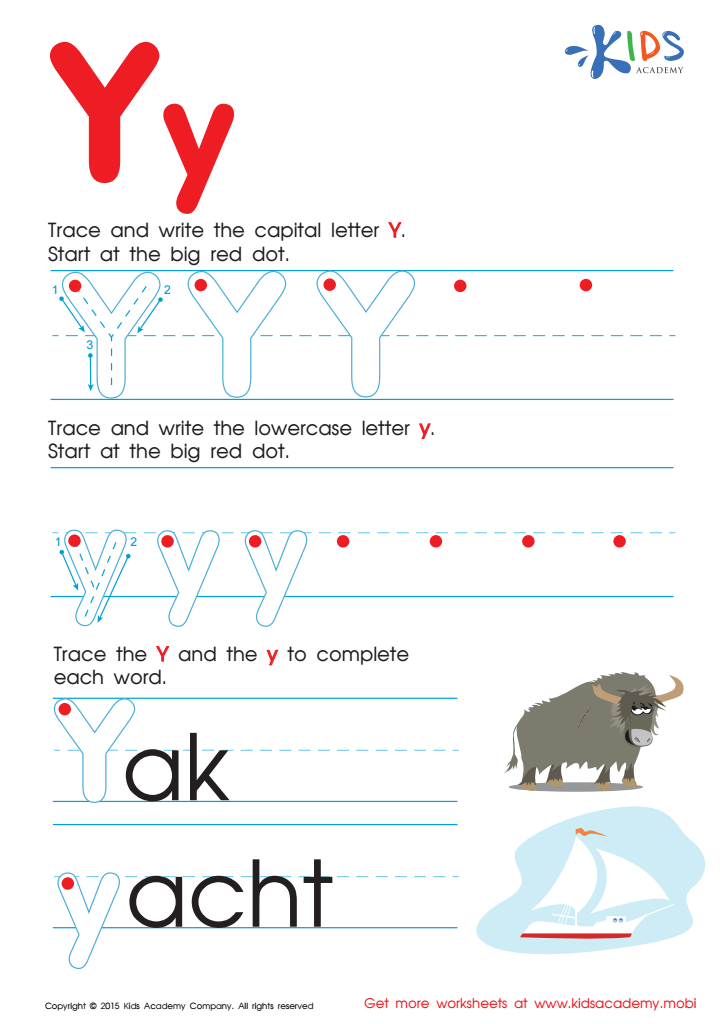
Letter Y Tracing Page
 Assign to My Students
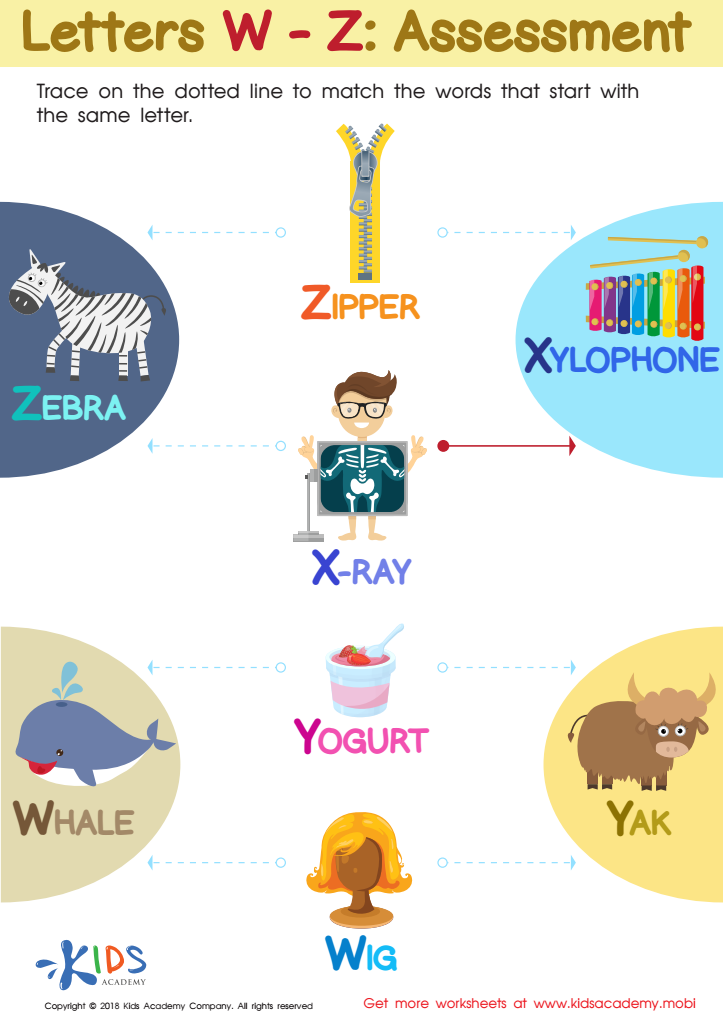
Letters W–Z Tracing Worksheet
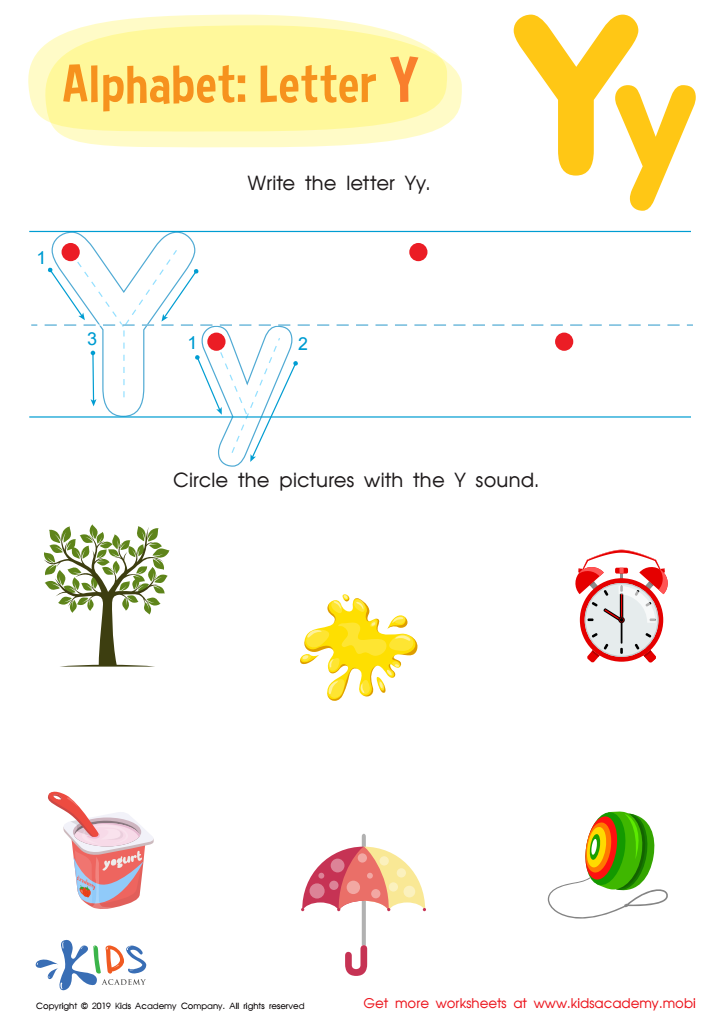
Letter Y Tracing Worksheet




Parents and teachers should care about handwriting practice for the letter Y for ages 3-4 because it lays the foundation for essential motor skills and cognitive development. At this crucial age, children are developing fine motor skills and hand-eye coordination, which are critical for tasks such as writing, drawing, and even daily activities like buttoning a shirt or using utensils. Practicing the letter Y specifically helps children become familiar with one of the more challenging strokes encountered in early writing—the diagonal line—thereby improving their overall ability to form letters.
Additionally, handwriting practice enhances children's focus and concentration. When kids work on forming the letter Y, they engage in a multi-sensory learning experience that involves seeing the letter, feeling the motion, and sometimes even saying the letter aloud. This not only reinforces letter recognition but also promotes cognitive skills like memory and attention to detail.
Moreover, the ability to write letters correctly can boost self-confidence. When children successfully trace or draw the letter Y, they often feel a sense of accomplishment, motivating them to continue practicing and improving. Early exposure to handwriting can eliminate future learning difficulties, making transitions to writing full words and sentences smoother and more enjoyable. Overall, caring about handwriting practice at this early stage supports holistic developmental growth and sets the stage for academic success.