Phonics Skills Long And Short Vowel Worksheets for Ages 3-4
4 filtered results
Difficulty Level
Grade
Age
-
From - To
Subject
Activity
Standards
Discover our "Phonics Skills Long and Short Vowel Worksheets" tailored for young learners ages 3-4. These fun and educational worksheets are designed to help your child differentiate between long and short vowel sounds through engaging activities and visuals. Our expert-crafted exercises make phonics practice enjoyable, laying a solid foundation for reading proficiency. Ideal for both classroom and home use, these worksheets support early literacy development and enhance your child's understanding of vowel sounds. Unlock your child's reading potential, one vowel at a time, with our interactive and printable worksheets. Start learning today!
Favorites
With answer key
Interactive
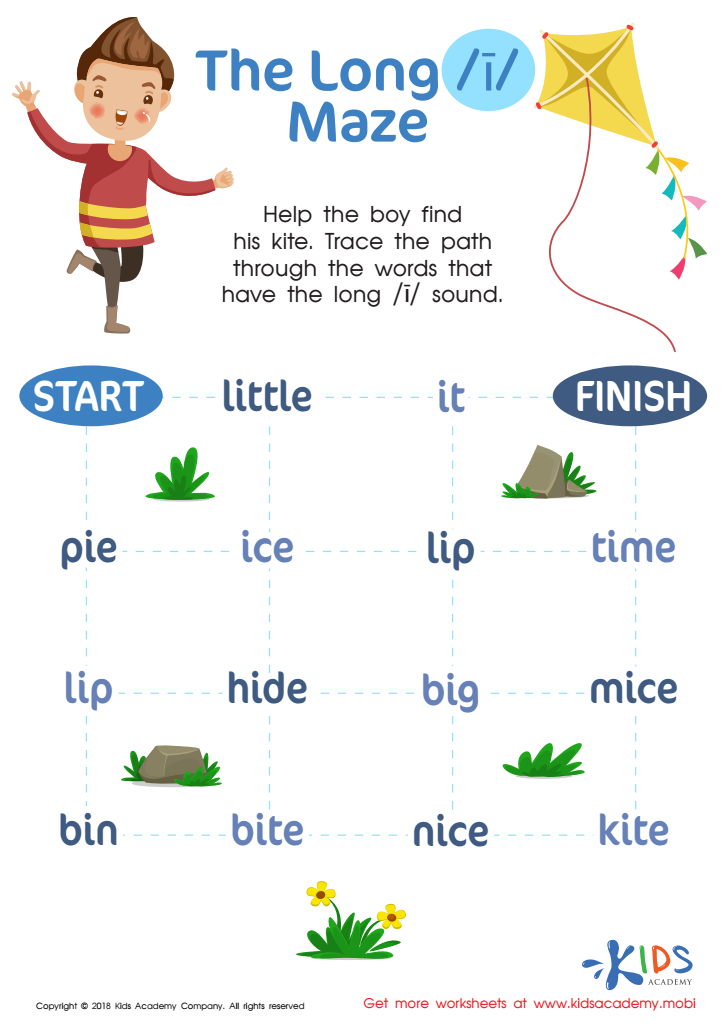
The Long I Maze Reading Worksheet
Help your child learn phonics to help them read. Show them the difference between long and short "i" sounds. Guide them as they use a pencil to trace words with the long "i:" sound in the "Help the Boy in the Picture" worksheet exercise. This will help them find the kite in the picture.
 Assign to My Students
The Long I Maze Reading Worksheet
Worksheet
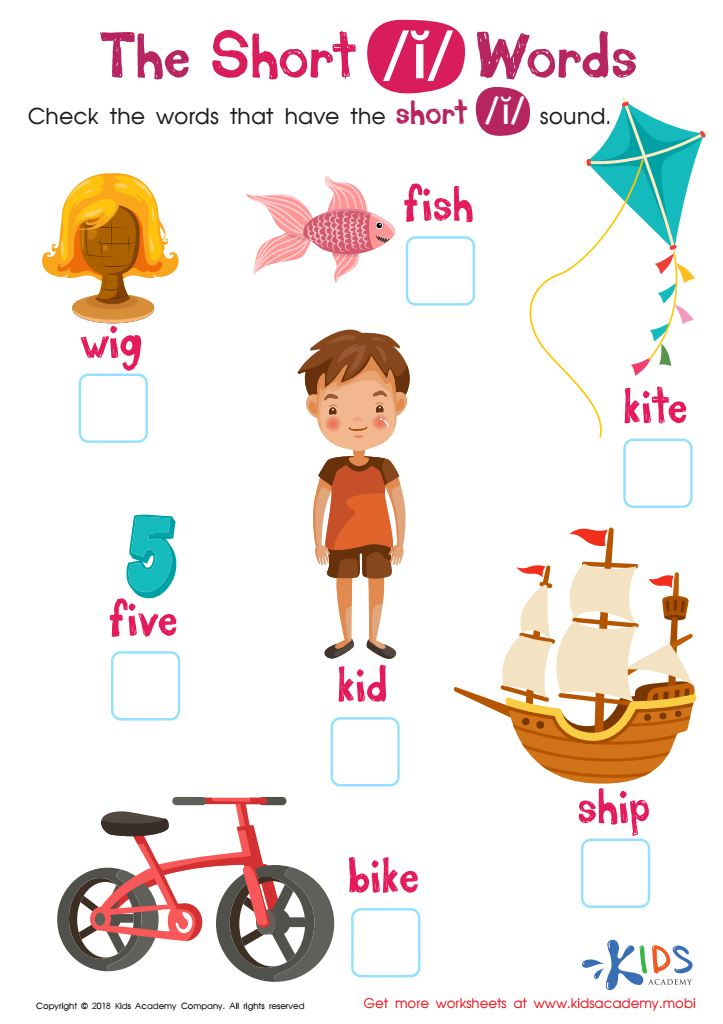
The Short I Words Reading Worksheet
Teach your kindergartner phonics with this printout worksheet! It introduces the short «i» sound and helps them differentiate and articulate sounds and letters of the alphabet. With practice, your child will soon find it easy to classify sounds into long and short vowels.
The Short I Words Reading Worksheet
Worksheet
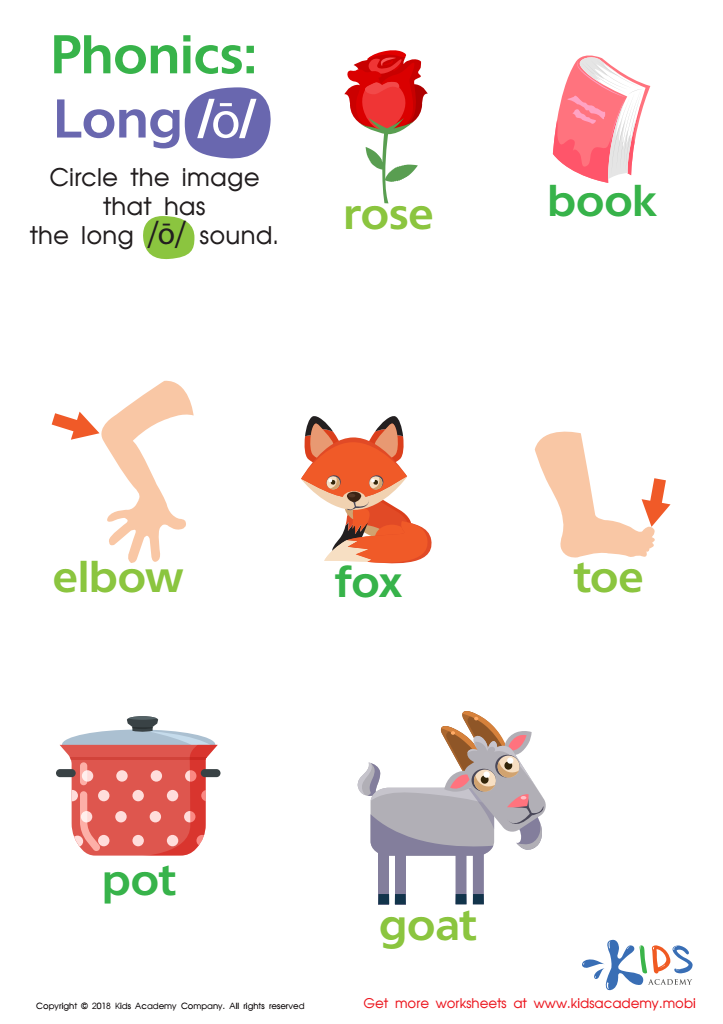
Phonics Long O Reading Worksheet
Are you ready to help your child learn the phonics long «o» sound? This worksheet is designed to aid them in getting familiar with the sound. After completing the exercise, your child should be able to differentiate letters, and recognize words with the long «o» sound. Encourage them to circle the images that have the sound.
Phonics Long O Reading Worksheet
Worksheet
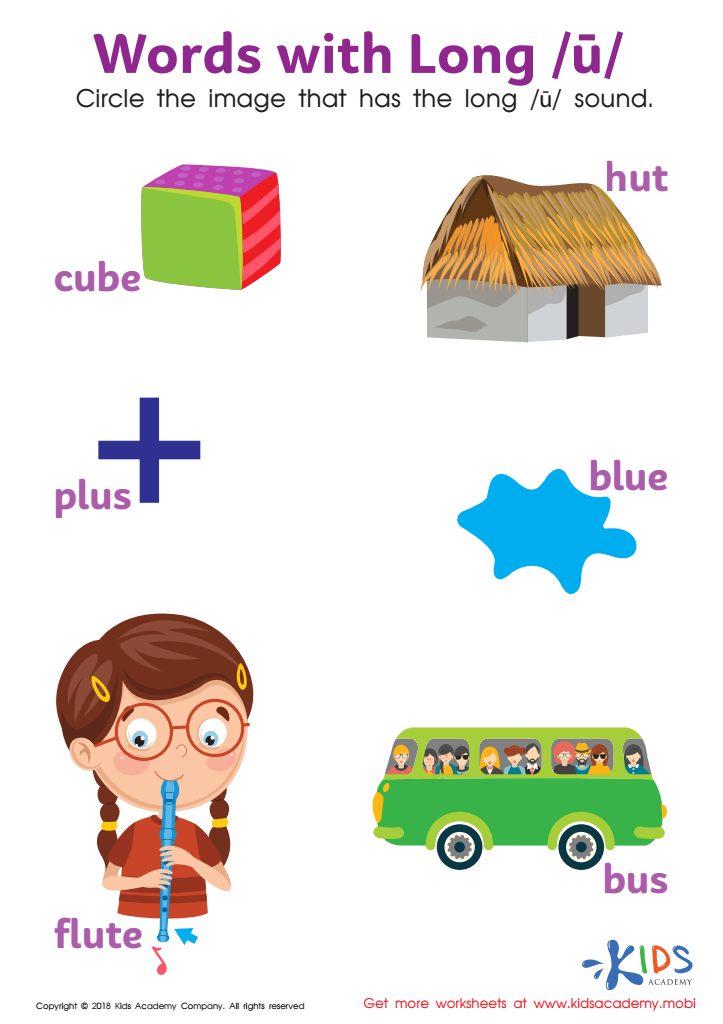
Words with Long U Reading Worksheet
Help your new reader master vowel recognition with this fun worksheet. By using picture clues and practicing fine motor skills, they'll learn to differentiate between words with the long and short «u» sound. Your learner will also get to practice vowel discrimination in high-frequency words. It's a great way to learn the importance of vowels in reading!
Words with Long U Reading Worksheet
Worksheet
Join Kids Academy for Free
Who is primarily going to use this learning content?




Phonics skills, particularly the understanding of long and short vowels, are crucial building blocks in early literacy for children aged 3-4. At this developmental stage, young learners are highly receptive to language acquisition. Mastering phonics skills lays the foundation for reading proficiency, an essential skill that can significantly impact a child’s academic growth.
One of the primary reasons to focus on vowel sounds is that they appear in every syllable of English words. Recognizing the difference between long and short vowels helps children decode words accurately, facilitating better reading comprehension. For instance, knowing that "a" in "cat" sounds different from "a" in "cake" enables children to understand and pronounce words correctly, avoiding misconceptions that can hinder future learning.
Additionally, learning vowels within phonics instruction supports spelling and writing skills. Familiarity with vowel sounds allows children to better predict and remember how words are spelled, which is especially important as they begin to express themselves through writing.
By engaging in phonics activities, parents and teachers ensure that children develop critical listening skills, phonemic awareness, and a love for learning. Investing in phonics education early on sets the stage for lifelong literacy and academic success, making it a key focus area for early childhood education.