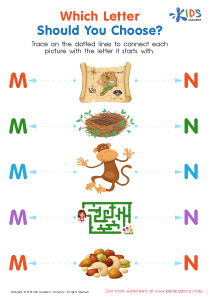
Lowercase identification Lowercase/Small Letters Worksheets for Ages 3-4
5 filtered results
-
From - To
Welcome to our "Lowercase Identification Worksheets" page, specially designed for children aged 3-4! These engaging resources focus on teaching kids to recognize and identify lowercase letters through fun and interactive activities. Our worksheets incorporate vibrant visuals, tracing exercises, and matching games that promote early literacy skills. Designed to captivate young learners, these worksheets help strengthen letter recognition while boosting confidence as children explore the fascinating world of letters. Encourage your child's creativity and learning by downloading our printable worksheets today, setting the foundation for their literacy journey in a playful and effective way! Start your adventure in learning now!
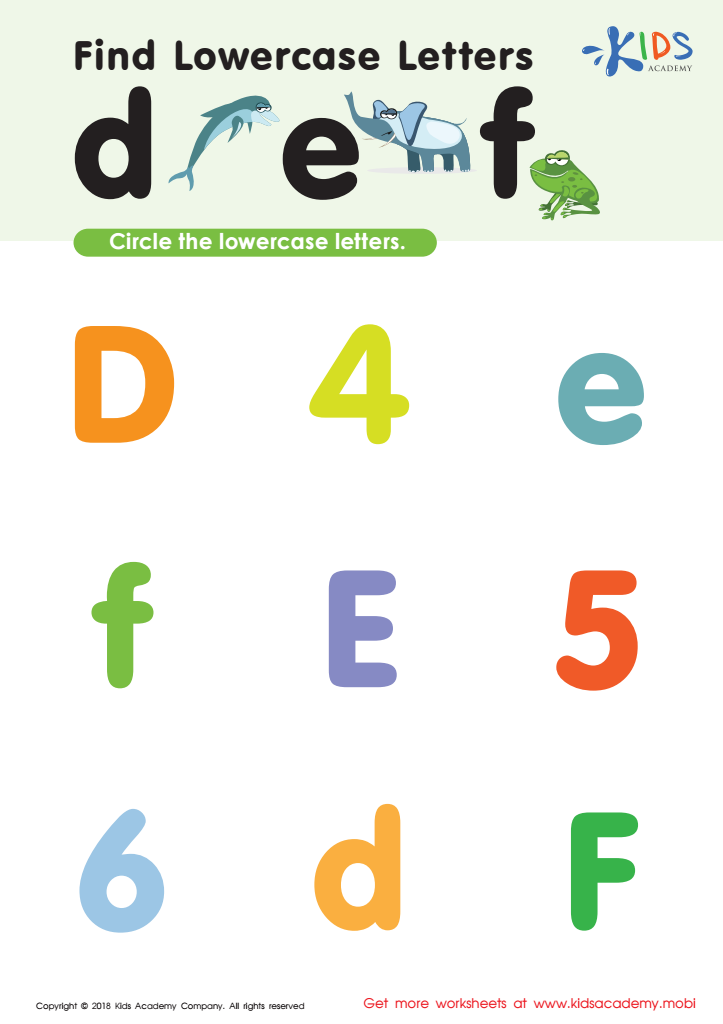
Find Lowercase Letters d e f Worksheet
 Assign to My Students
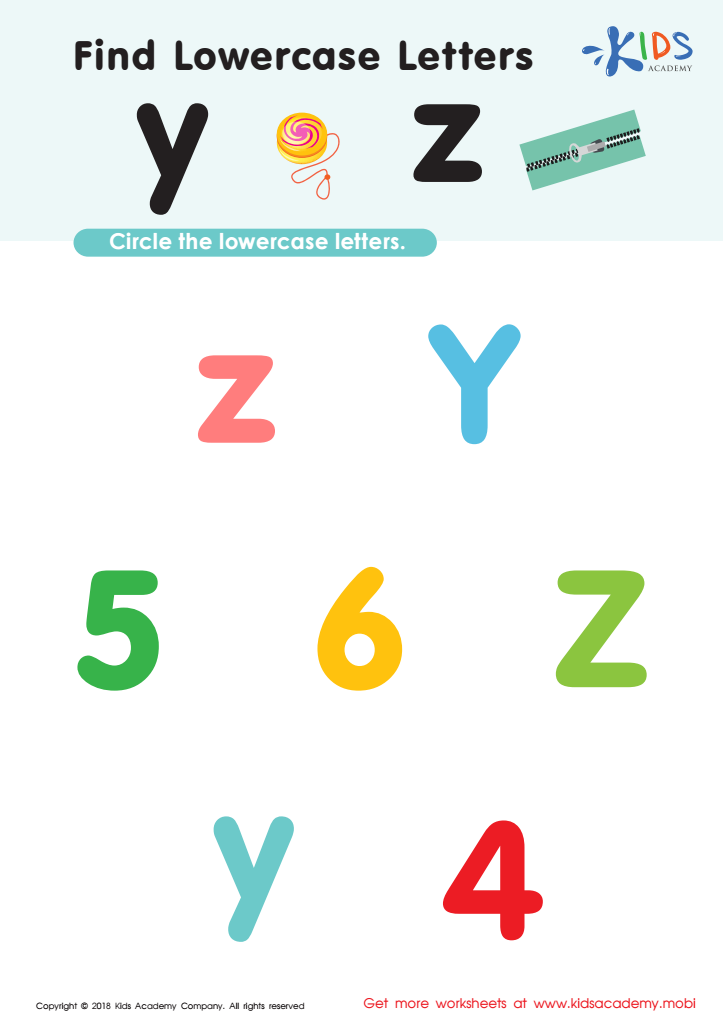
Find Lowercase Letters y z Worksheet
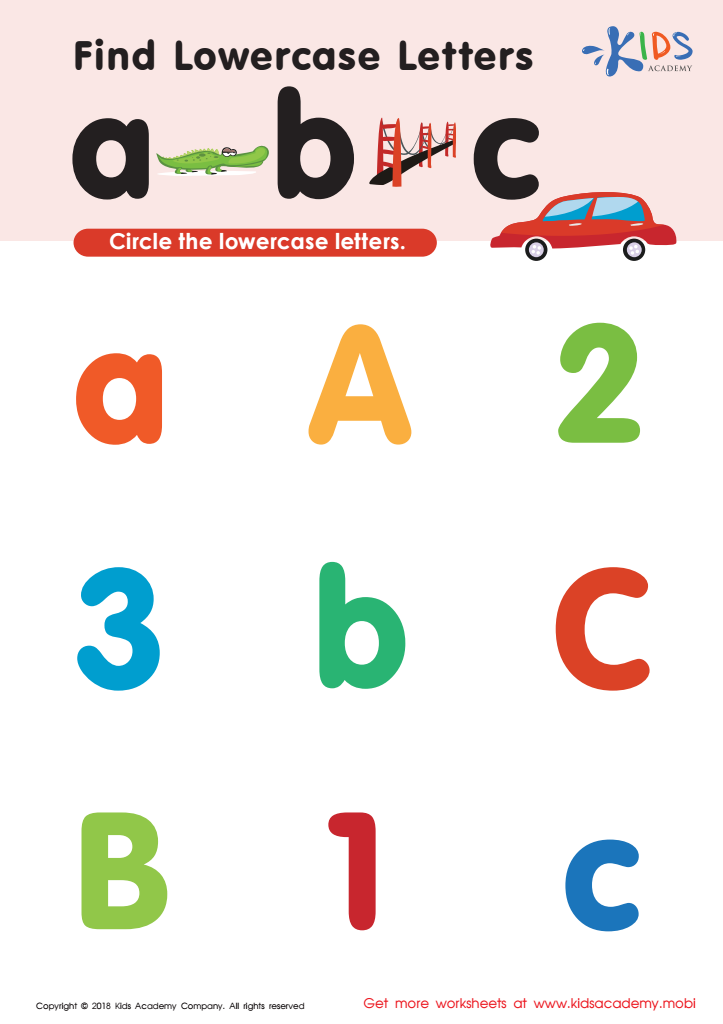
Find lowercase letters a b c Worksheet
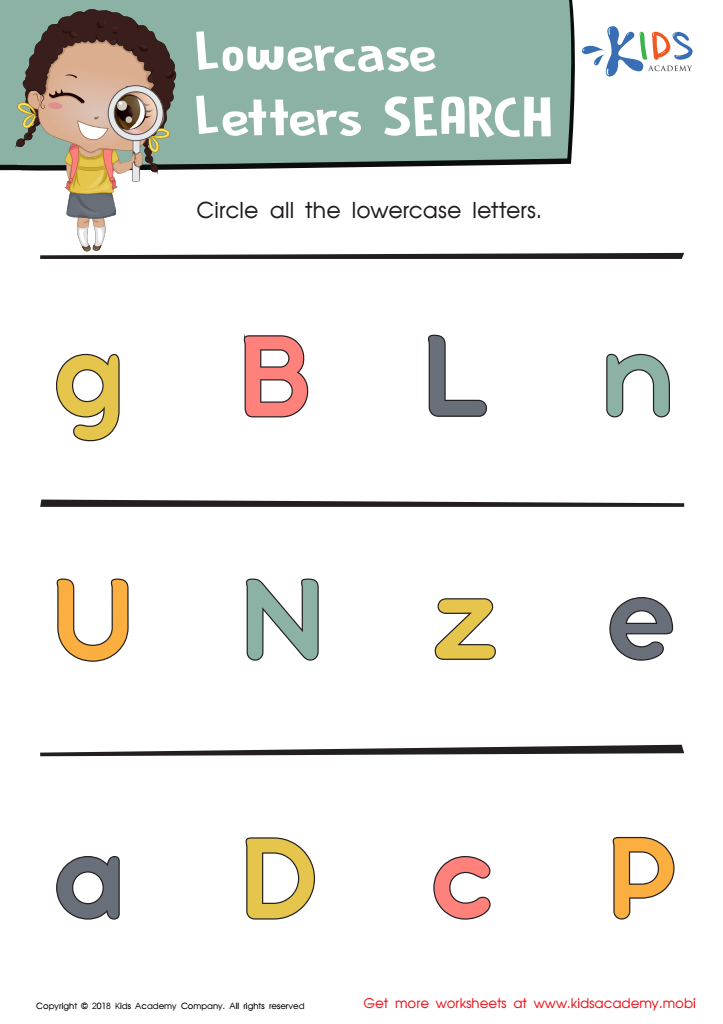
Lowercase Letters Search: Assessment Worksheet
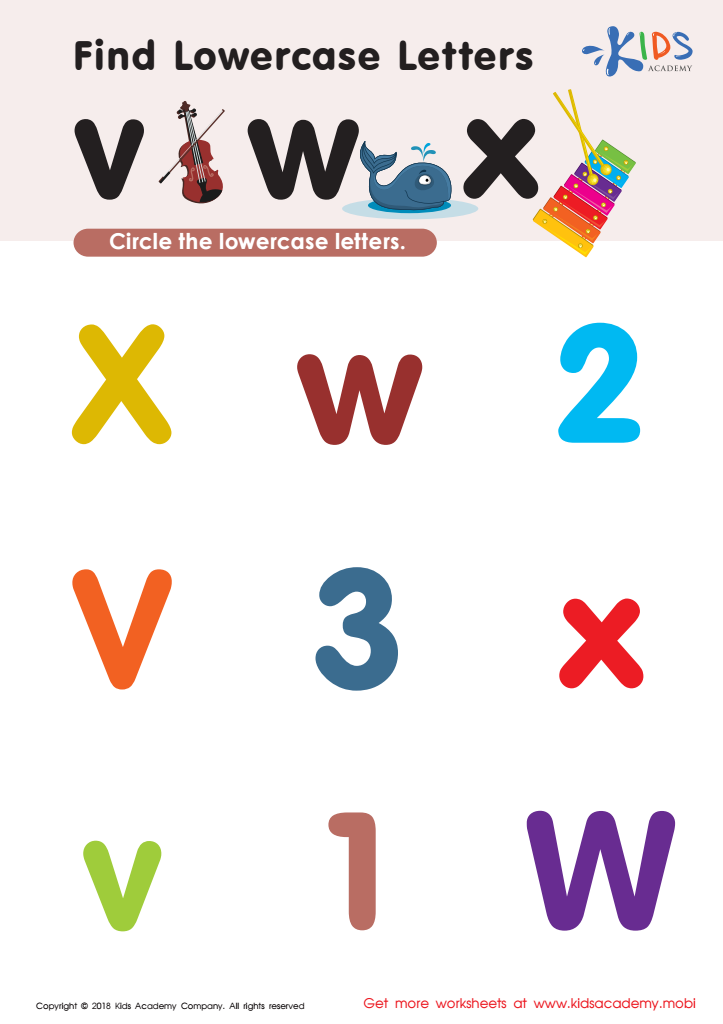
Find Lowercase Letters v w x Worksheet


Lowercase letter identification is a crucial foundational skill for children aged 3-4. Recognizing and distinguishing between lowercase letters lays the groundwork for future reading and writing abilities. Early exposure to lowercase letters helps children develop phonemic awareness, which is essential for understanding sounds and forming words. Unlike uppercase letters, lowercase letters often dominate in written text, making it vital for young learners to familiarize themselves with the format they will encounter most frequently.
Additionally, engaging with lowercase letters can enhance fine motor skills. Activities that encourage children to trace or write lowercase letters help build the small muscles in their hands, which is necessary for writing. Learning to recognize and use lowercase letters also fosters confidence and motivation in young learners, positioning them for a positive experience as they advance academically.
Furthermore, lowercase letter identification makes literacy development an interactive and enjoyable process. By incorporating games and playful learning methods, parents and teachers can create enjoyable experiences that promote retention and understanding. Ultimately, emphasizing lowercase letters during these early learning years not only supports literacy skills but also encourages a lifelong love of reading and writing. Parents and teachers should prioritize this element of literacy to help nurture future learners.