Letter identification Phonics Worksheets for Ages 3-4
3 filtered results
-
From - To
Unlock your toddler's reading potential with our Letter Identification Phonics Worksheets designed for ages 3-4. These engaging worksheets help young learners recognize and identify letters while building introductory phonics skills. Created by experienced educators, the activities offer a fun, interactive, and effective approach to early literacy. Each worksheet is designed to enhance learning through colorful illustrations, tracing, and matching exercises that captivate young minds. Perfect for home practice or preschool settings, our artisksheets promote letter recognition, sound association, and fine motor skills. Jumpstart your child's reading journey with these expertly crafted resources. Download now from Kids Academy!
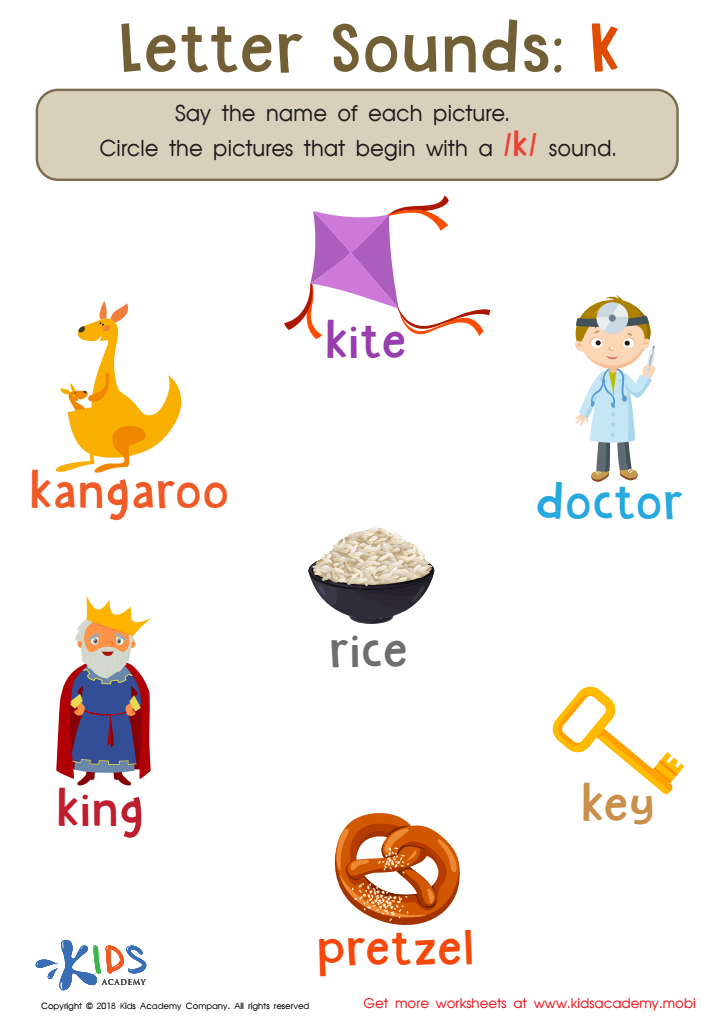
Letter K Sounds Worksheet
 Assign to My Students
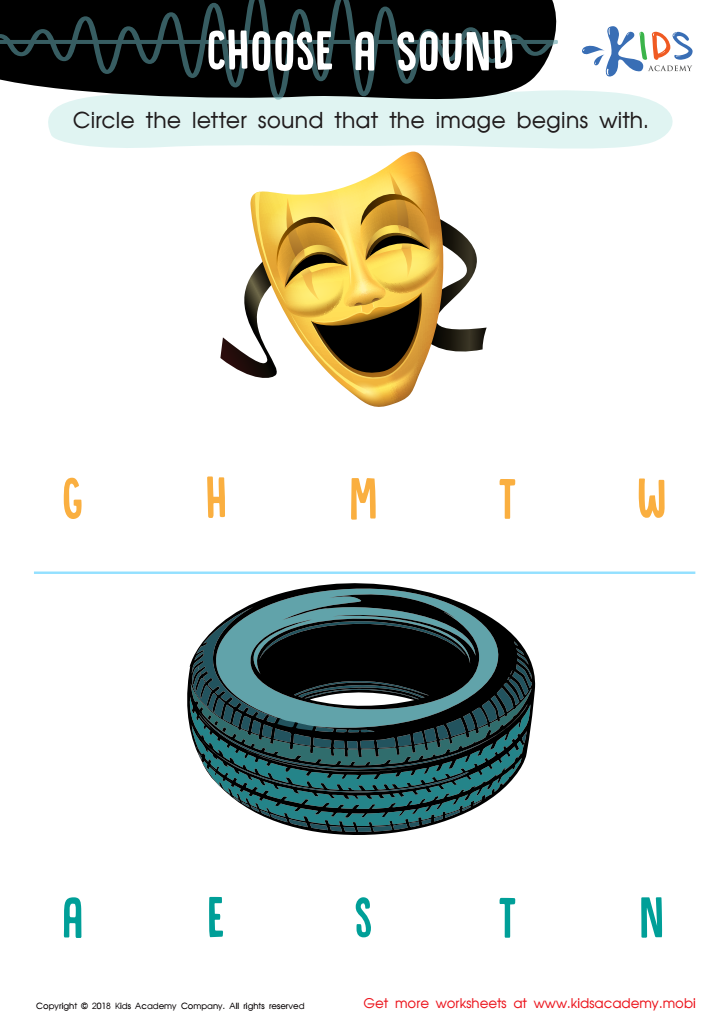
Choose a Sound Worksheet
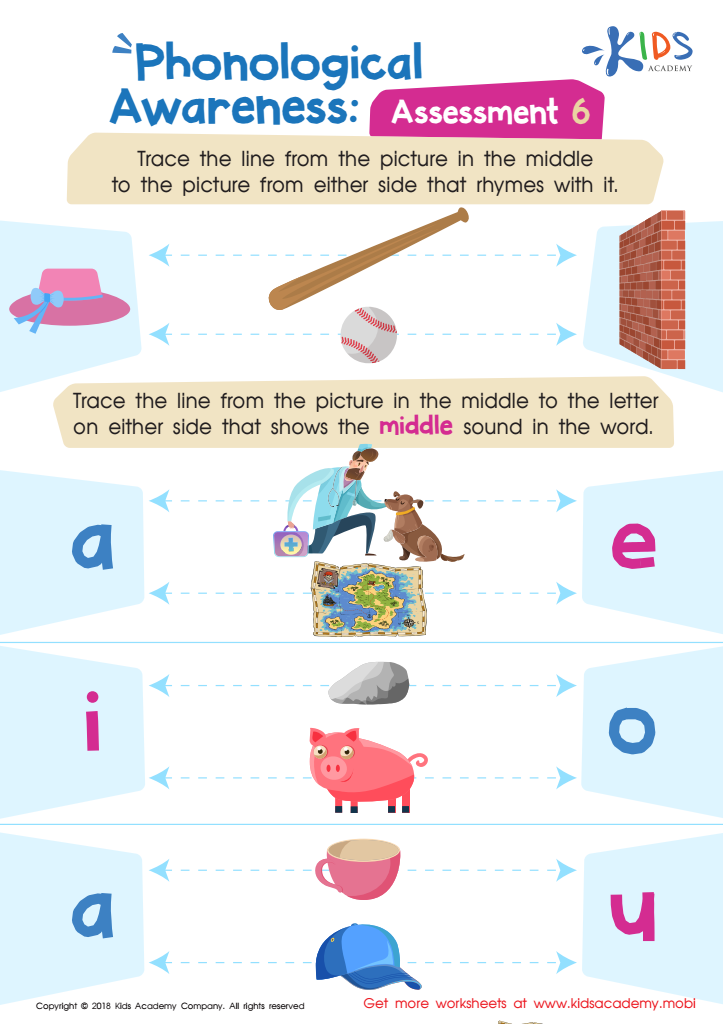
Phonological Awareness: Assessment 6 Worksheet








Letter identification and phonics are fundamental skills that serve as the building blocks for literacy, making them crucial for children aged 3-4. At this formative stage, children are highly receptive to learning new concepts, and early exposure to letter identification and phonics sets a strong foundation for future reading and writing abilities. Recognizing letters by name and sound enables children to start comprehending the relationship between written and spoken language.
Phonics instruction, which connects letters to their corresponding sounds, allows children to decode words independently. This skill becomes invaluable as they begin to encounter new words, contributing to increased confidence and a greater interest in reading. Furthermore, early literacy skills are closely linked to overall academic success, as strong readers tend to perform better across all subjects.
From a neurological perspective, engaging with letters and sounds stimulates cognitive development, enhancing memory, attention, and processing skills. Emotional and social benefits also abound; children who can read and express themselves through writing tend to have higher self-esteem and better communication skills.
For parents and teachers, investing time in letter identification and phonics activities, such as reading aloud, letter games, and phonics songs, not only makes the learning process fun but also creates an enriched learning environment. This foundational literacy ensures children are better prepared for school, setting them on a path toward lifelong learning and success.







