Phonics development Phonics Worksheets for Ages 3-4
5 filtered results
-
From - To
Support your child's early reading journey with our "Phonics Development Worksheets for Ages 3-4". These engaging and educational printable worksheets are designed to help young learners master the fundamental skills of phonics, enhancing their letter recognition, sound association, and early word formation. Through fun activities and games, children will develop confidence in distinguishing and producing the correct sounds essential for reading success. Perfect for preschoolers, these age-appropriate exercises make learning an enjoyable experience, laying a strong foundation for future literacy skills. Explore our collection to give your child the confidence they need to excel in reading.
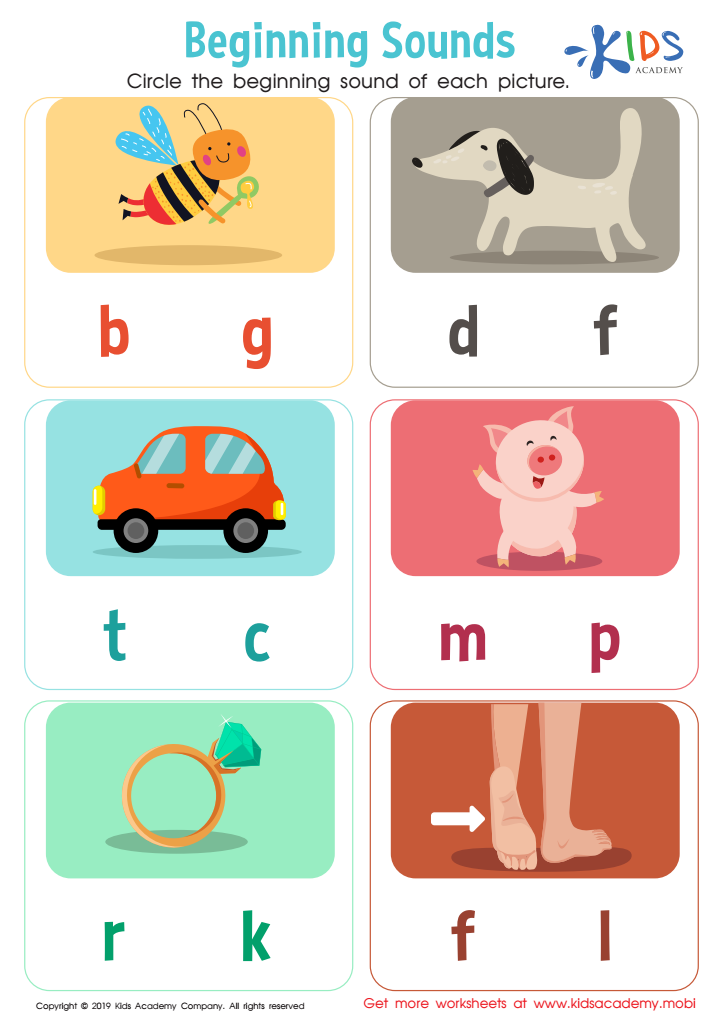
Beginning Sounds Worksheet
 Assign to My Students
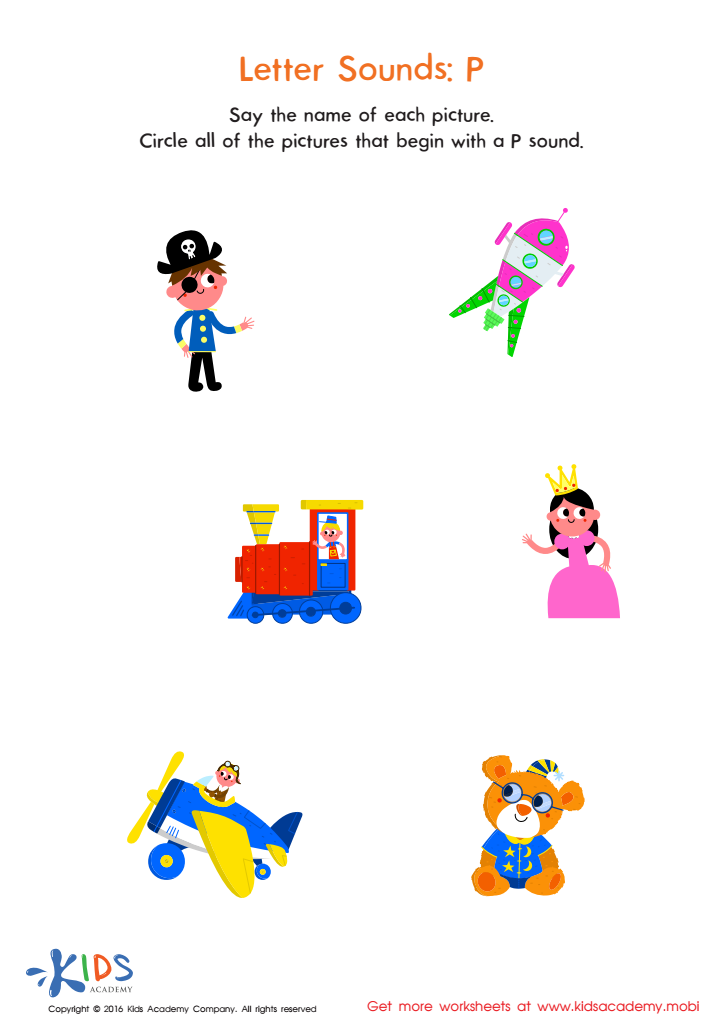
Letter P Sound Worksheet
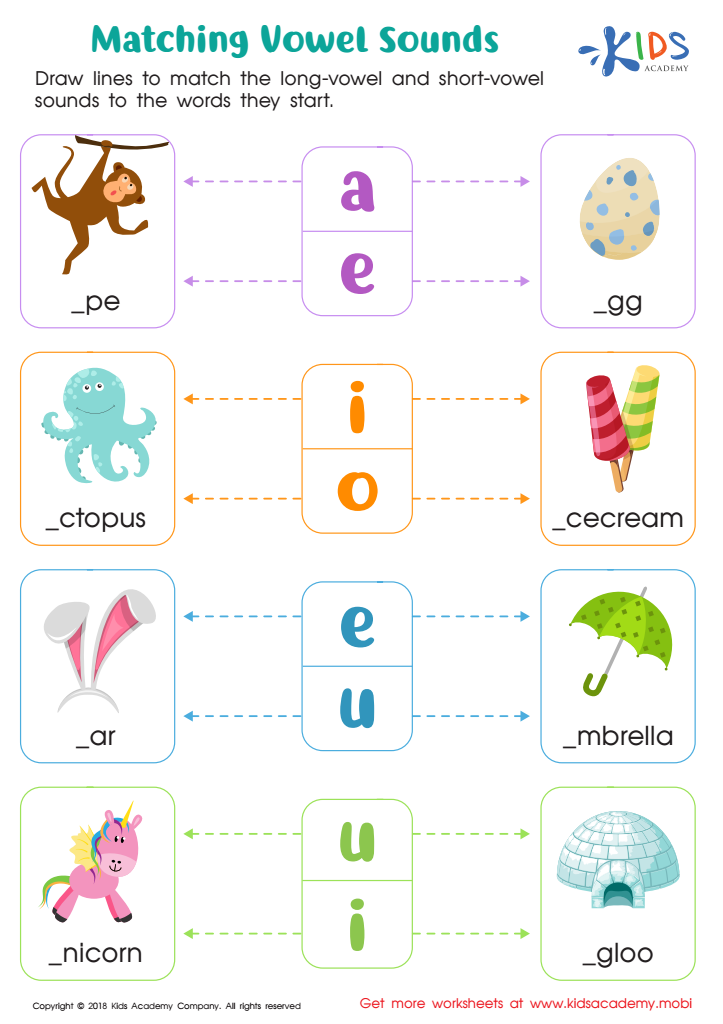
Matching Vowel Sounds Worksheet
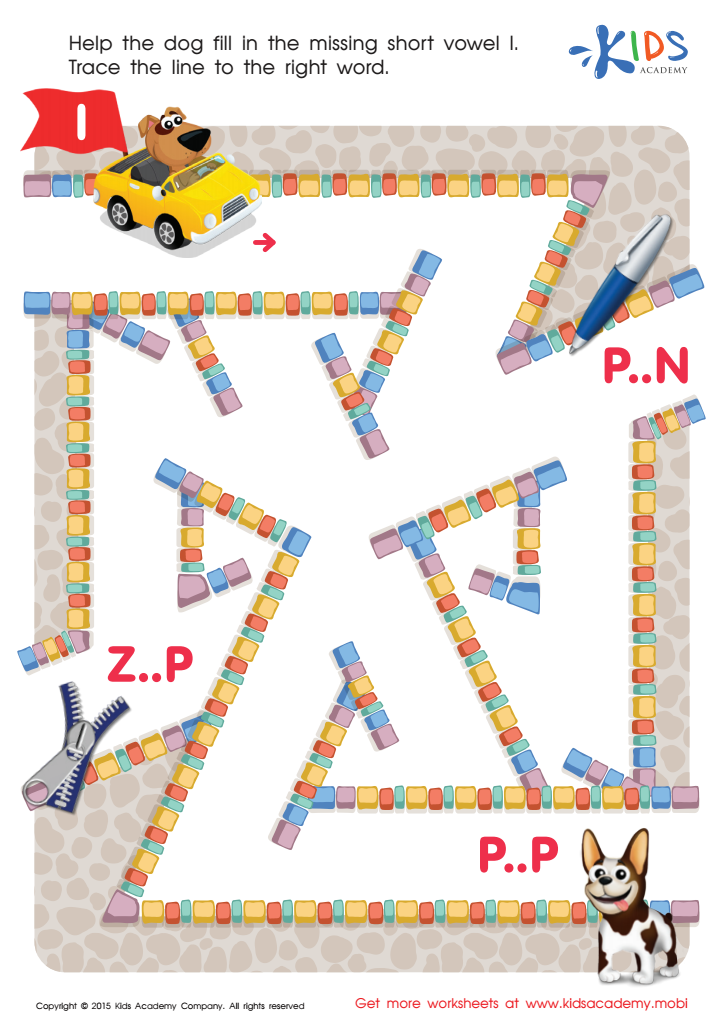
Short Vowel Sound I Worksheet
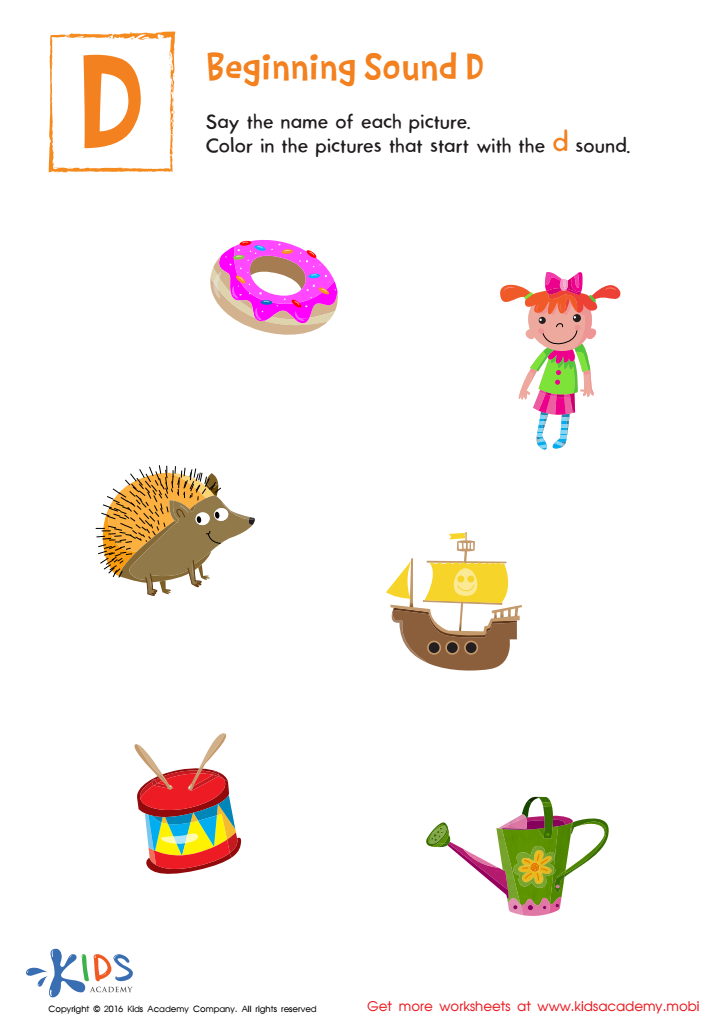
Beginning Sound D Worksheet








Phonics development for children aged 3-4 is critically important as it lays the foundation for early reading skills, setting the stage for future academic success. Phonics teaches the relationship between letters and sounds, enabling young learners to decode new words, which is crucial for reading fluently. At ages 3-4, children's brains are particularly malleable, making it an ideal time to introduce this foundational skill. As they become familiar with the sounds that letters and combinations of letters make, they gain confidence in reading and speaking.
For parents and teachers, investing time and effort in phonics development can lead to enhanced literacy skills and a lifelong love of reading. Phonics not only aids in reading but also strengthens spelling and writing abilities, as children learn to recognize and manipulate the sounds in spoken words. Early proficiency in reading fosters a positive feedback loop; children who enjoy reading read more, which further reinforces their skills.
Moreover, a strong foundation in phonics can help identify and provide early intervention for children who may struggle with reading, thereby preventing future academic challenges. In essence, prioritizing phonics development during these formative years provides children with critical tools for educational and personal growth.







