
Phonics recognition Phonics Worksheets for Ages 3-4
11 filtered results
Difficulty Level
Grade
Age
-
From - To
Subject
Activity
Standards
Introduce your little learner to the exciting world of phonics with our comprehensive Phonics Recognition Worksheets for ages 3-4. Specifically designed to develop early reading skills, these engaging worksheets help toddlers recognize and practice sound-letter associations. Our colorful and accessible activities foster phonemic awareness, providing a solid foundation for future reading success. With fun graphics and interactive exercises, children will eagerly enjoy improving their phonics skills. Ideal for parents and educators, these worksheets seamlessly blend education with playful learning, ensuring young minds stay motivated. Begin your child’s reading adventure today with our expertly crafted phonics materials!
Favorites
With answer key
Interactive
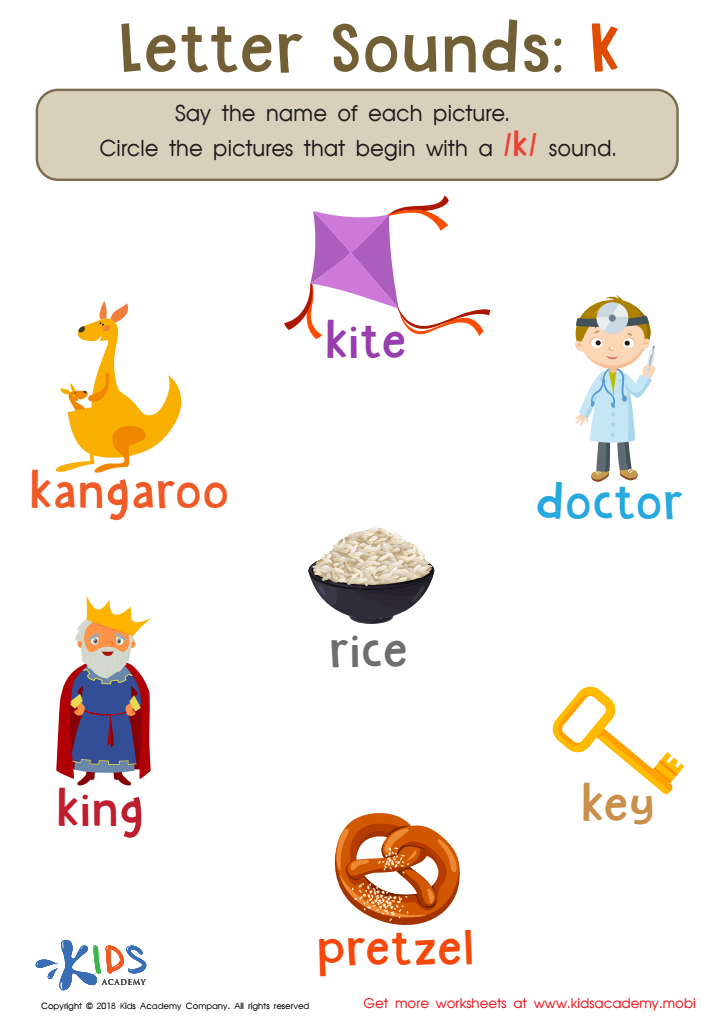
Letter K Sounds Worksheet
Help your child practice phonics with Kids Academy's illustrated worksheet! Have them look at the pictures, read the words and say them aloud. Only circle those that start with a hard 'K' sound. Perfect for preschoolers and kindergarteners! Plus, they'll learn the silent K used in a few words.
 Assign to My Students
Letter K Sounds Worksheet
Worksheet
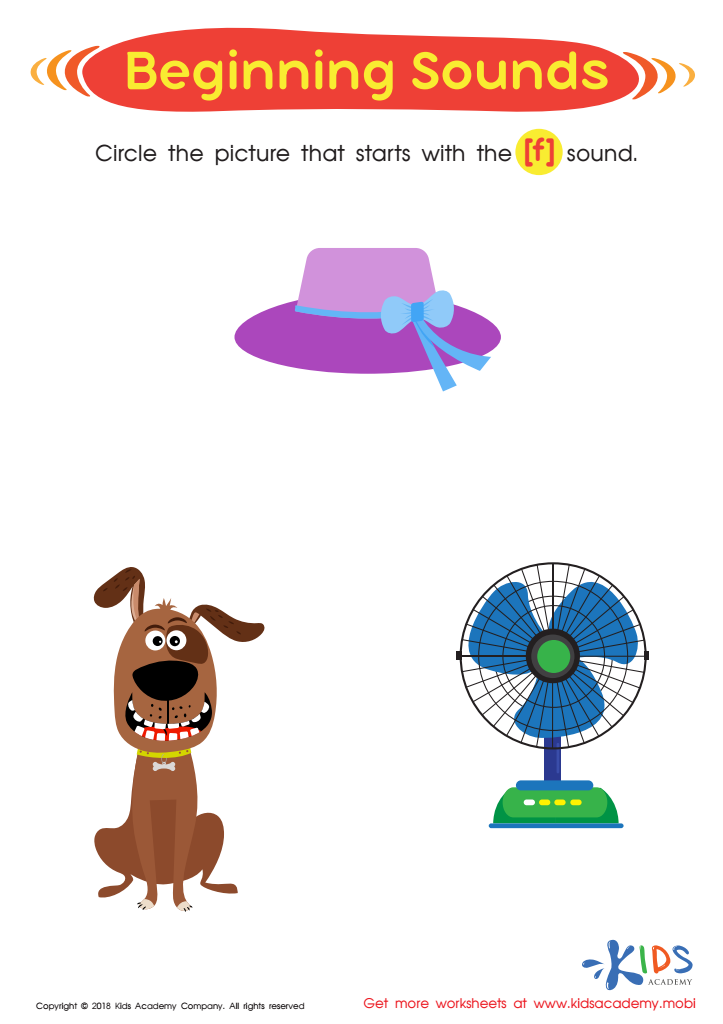
Beginning Sounds Assessment Printable
Test your child's knowledge of the alphabet. Ask them to recite the whole alphabet and the words for each letter. For example: A for apple, B for boy. Identify objects on this worksheet, then ask your child which one starts with the letter "f" and have them circle it.
Beginning Sounds Assessment Printable
Worksheet
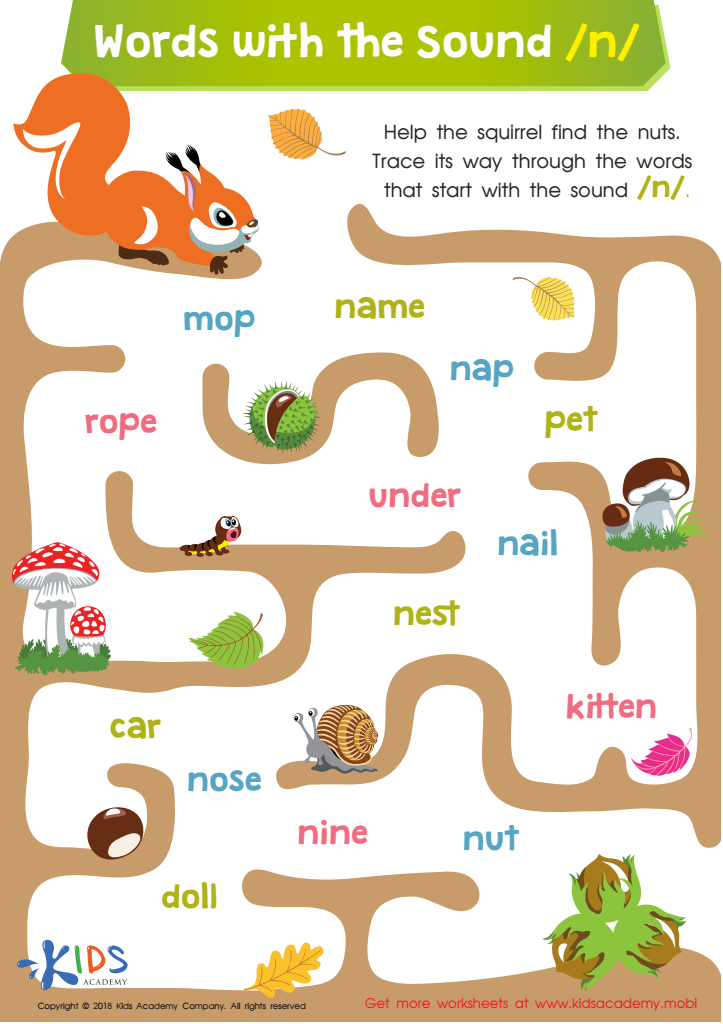
Words with Sound N Reading Worksheet
Young readers will love the colourful pictures and simple sight words on this download worksheet. They can trace their way through the maze as they help the cute squirrel reach his acorns, finding words with the sound "n" as they go. It's a fun way to work on reading skills - they won't even realise they're learning!
Words with Sound N Reading Worksheet
Worksheet
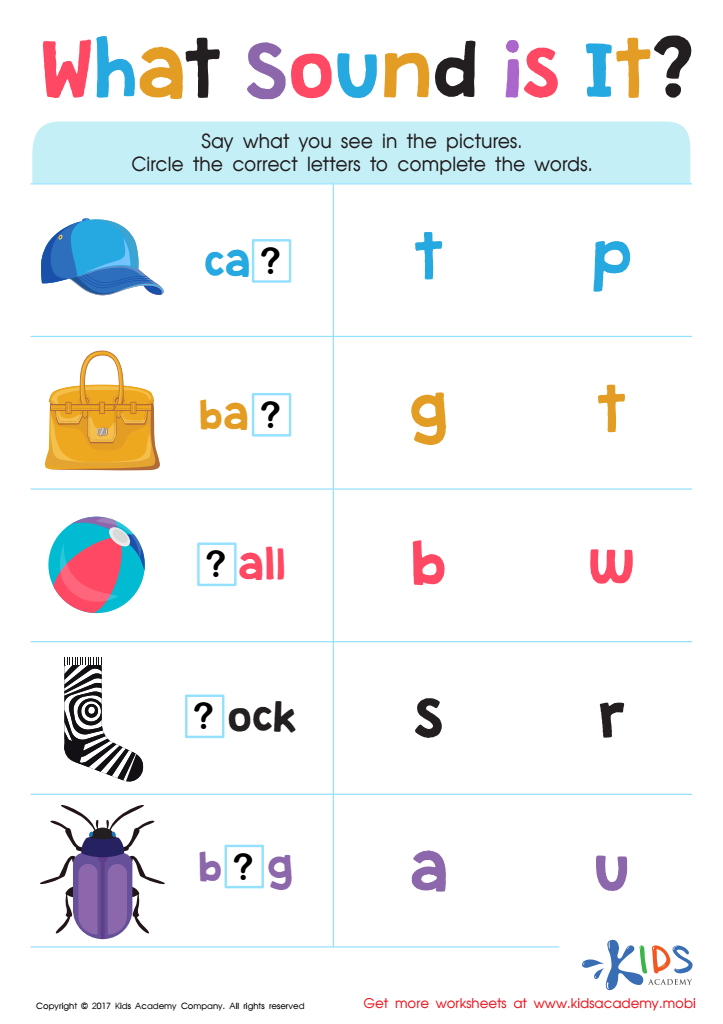
What Sound Is it? Worksheet
Have your child say the words for the pictures on this fun worksheet. As he or she sounds out the word, your child will use the provided letter choices to complete it, building reading and phonics skills. Visual cues make it easier to identify the correct beginning, middle, or end sound.
What Sound Is it? Worksheet
Worksheet
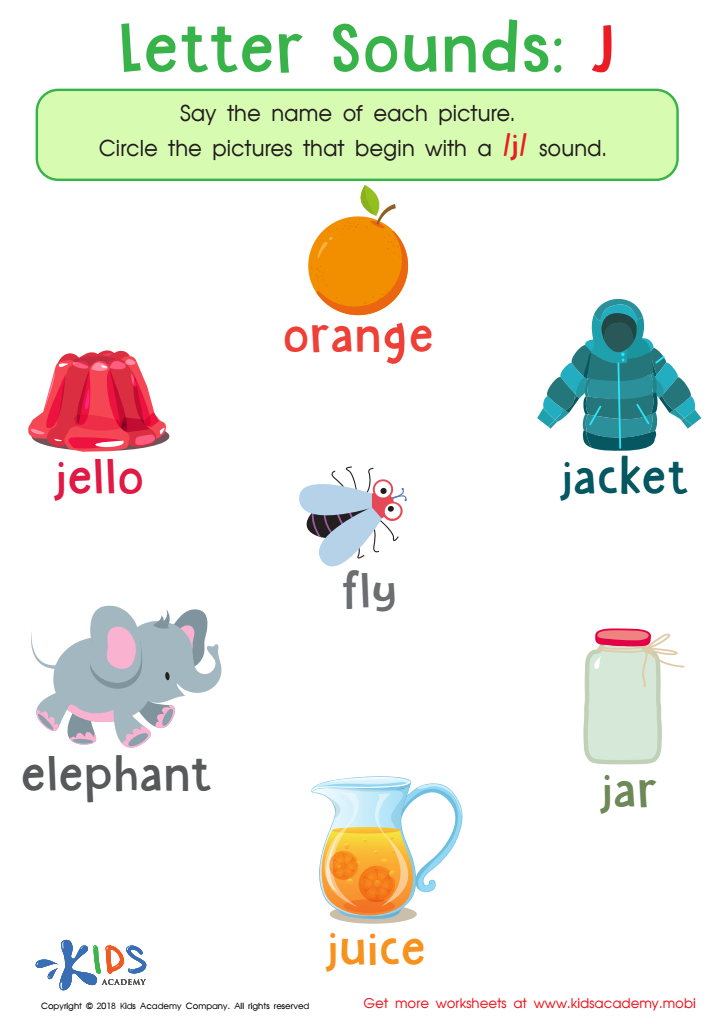
Letter Sounds: J Printable Worksheet
Preschoolers can learn to identify letter sounds by focusing on beginning sounds. This cute and colorful worksheet reviews the hard “j” sound. Kids can point it out by naming the words and circling only those starting with the “j” sound. Read the text out loud and listen closely!
Letter Sounds: J Printable Worksheet
Worksheet
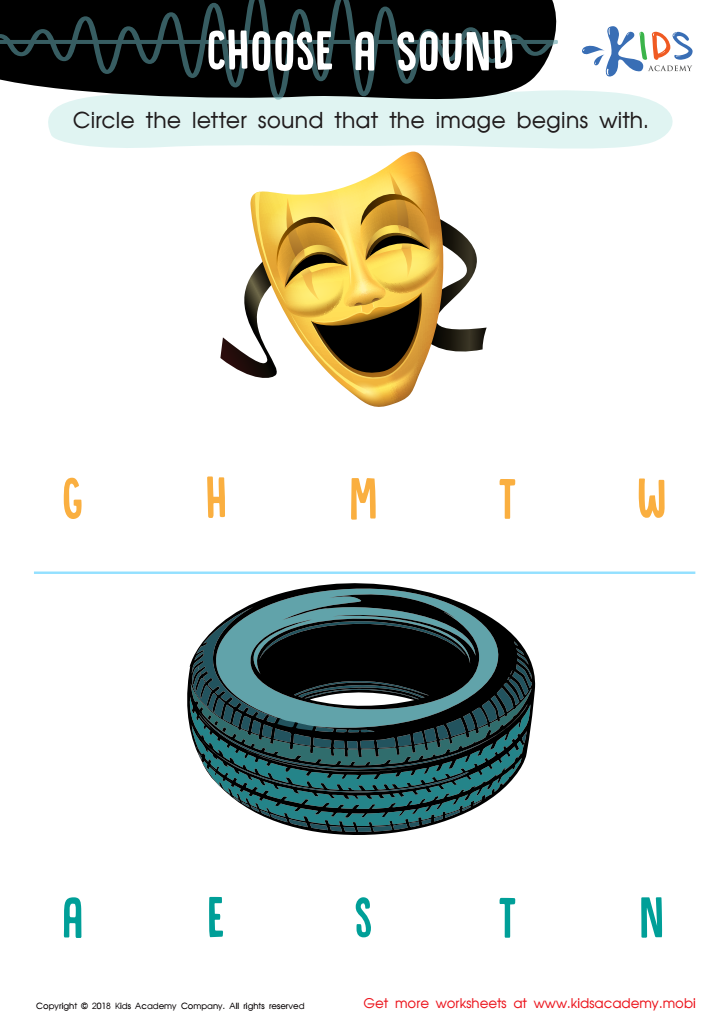
Choose a Sound Worksheet
Help your child hone pre-reading skills with this colorful worksheet! They'll practice tracing letter sounds, develop phoneme awareness, and gain confidence. Plus, it's a fun way to work on their fine motor skills.
Choose a Sound Worksheet
Worksheet
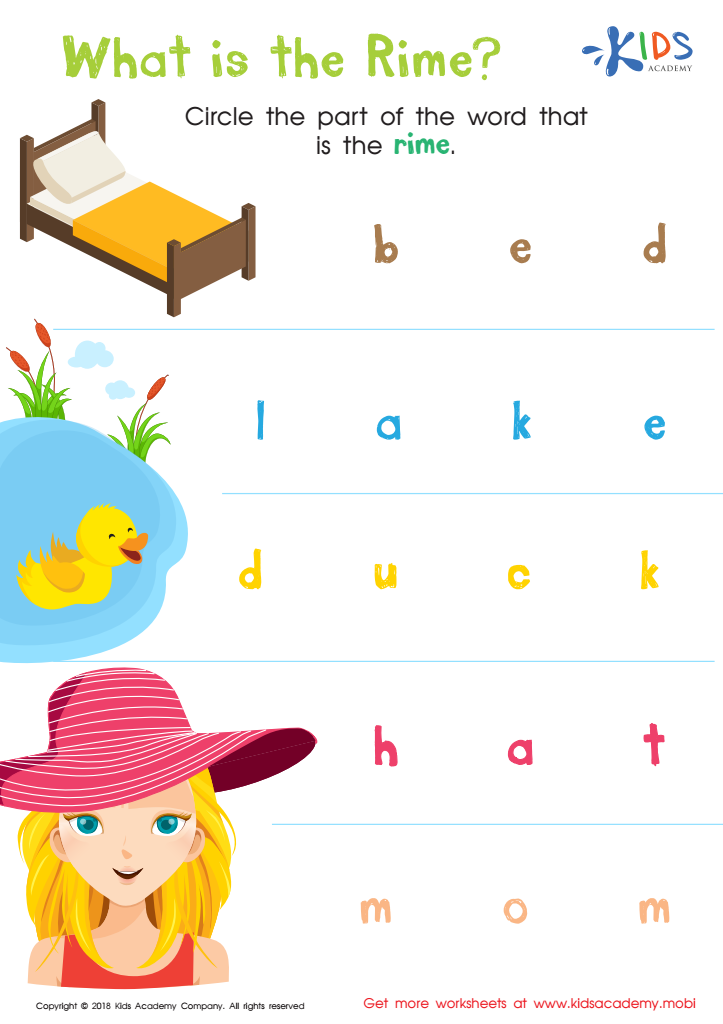
What Is the Rime? Worksheet
Kids will love this PDF worksheet that boosts their reading skills and fine motor skills as they trace the correct rimes for each picture. Knowing onset and rime is key to decoding and fluency, and this worksheet makes it fun! They won't even know they're learning and will be asking for more.
What Is the Rime? Worksheet
Worksheet
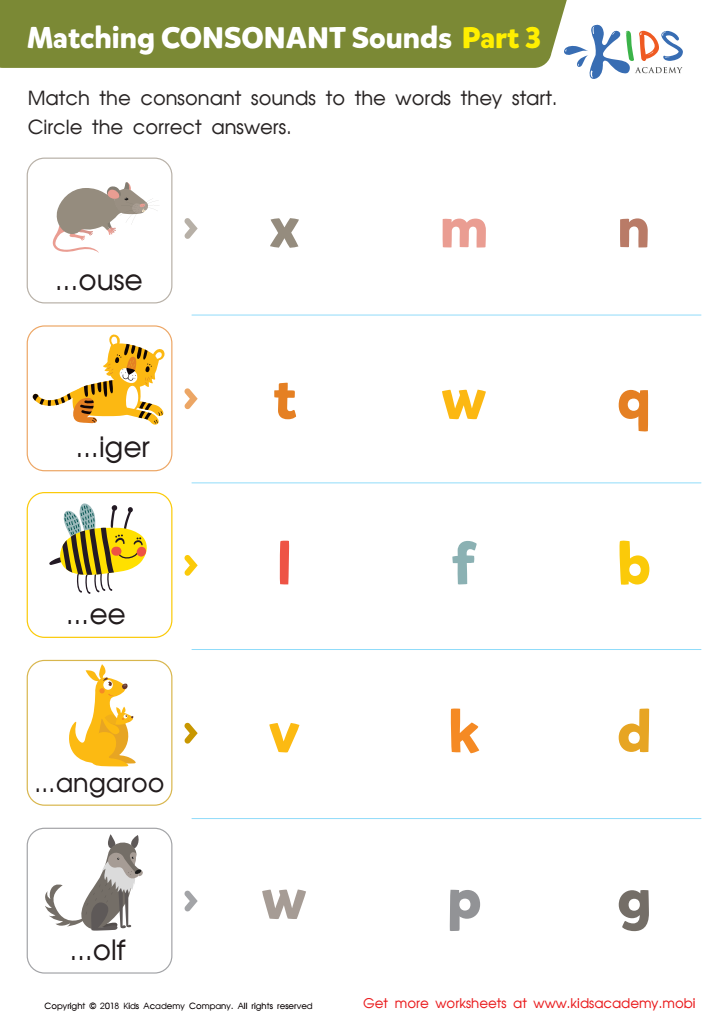
Matching Consonant Sounds: Part 3 Worksheet
Help your early learner match consonant sounds to words with this fun worksheet! Have them name the pictures and try out each letter in the corresponding column. When they hear the sound that matches, circle it. Have them write the letter in the box to complete the word. Work their way down the page until the critters' names all match with consonants!
Matching Consonant Sounds: Part 3 Worksheet
Worksheet
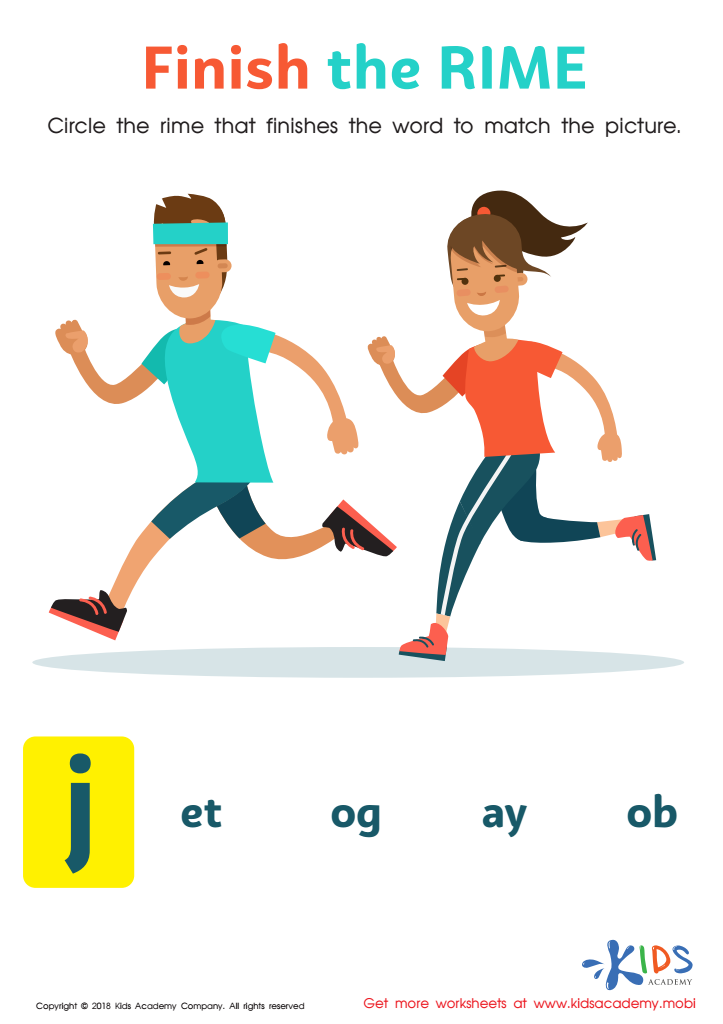
Finish the Rime Worksheet
Rimes help kids learn word families and spelling strategies. This PDF worksheet gives new readers practice with initial consonants, pictures, colors and motor skills. It's fun and cheery, and a great way to boost phonological awareness and rime identification.
Finish the Rime Worksheet
Worksheet
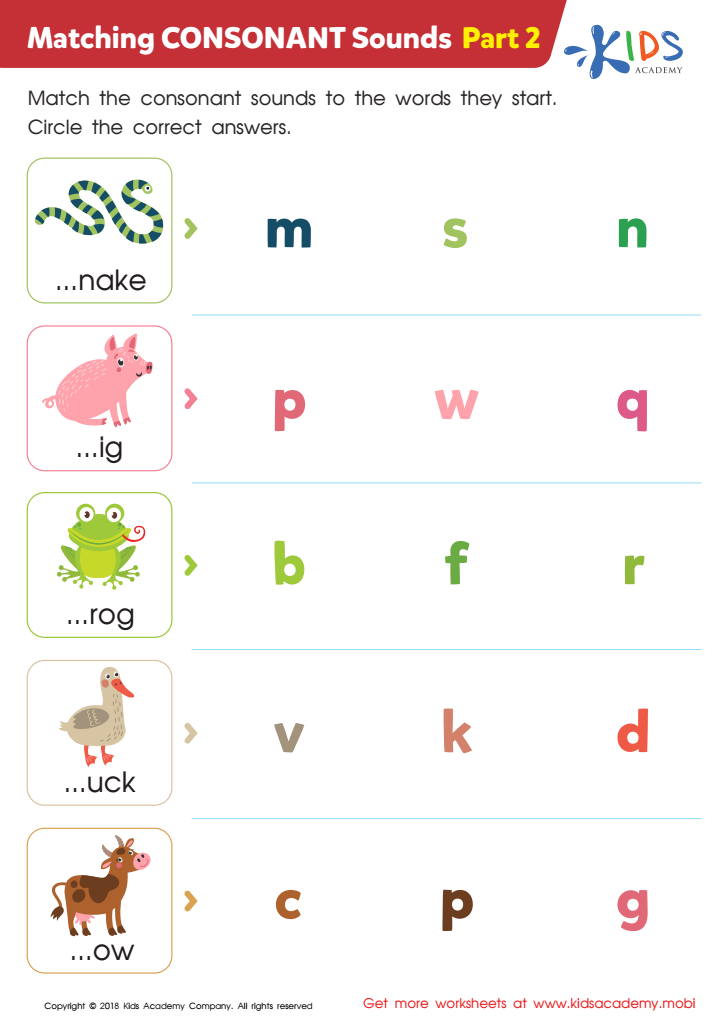
Matching Consonant Sounds: Part 2 Worksheet
Look at the picture, say the word and match the consonant sound with the letter. Coach your child to name the animal and complete the word. For extra challenge, write the missing letter in the box! This PDF worksheet helps kids learn to read words with familiar animal pictures.
Matching Consonant Sounds: Part 2 Worksheet
Worksheet
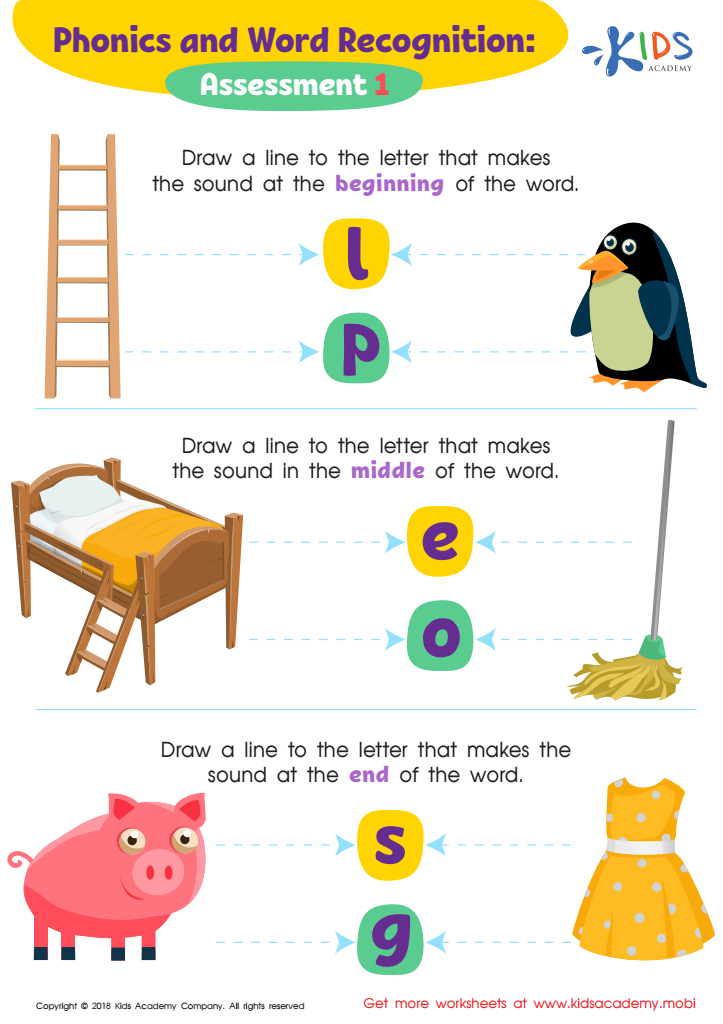
Phonics and Word Recognition: Assessment 1 ELA Worksheet
This fun worksheet tests your child's sound recognition skills for each part of a word. Ask your child to name each image and trace the line to match it with the corresponding letter. Listen for beginning sounds on 1st, middle sounds on 2nd, and ending sounds on 3rd. Encourage learning with this colorful and interactive activity!
Phonics and Word Recognition: Assessment 1 ELA Worksheet
Worksheet
Join Kids Academy for Free
Who is primarily going to use this learning content?








Phonics recognition is a fundamental step in early literacy development for children aged 3-4, and both parents and teachers should prioritize it for several reasons. Phonics involves understanding the relationship between sounds and their corresponding letters—a skill crucial for decoding words and building reading proficiency. Early exposure to phonics helps children grasp the basic building blocks of language, making it easier for them to read, write, and spell.
At ages 3-4, children's brains are highly receptive to language acquisition. Introducing phonics at this stage capitalizes on their natural learning capacity, laying a strong foundation for future academic success. Phonics instruction can also boost children's confidence as they begin to recognize letter sounds, blend them into words, and read independently.
Moreover, phonics can make learning to read fun and engaging through playful activities like songs, rhymes, and interactive games. This engagement fosters a positive attitude towards reading, making children more likely to enjoy books and continue developing their literacy skills.
Overall, prioritizing phonics recognition in early childhood sets the stage for lifelong learning. By investing in these early skills, parents and teachers can support children's intellectual growth and equip them with the tools they need for successful communication and academic achievement.







