Rhyme recognition Phonics Worksheets for Ages 3-4
3 filtered results
-
From - To
Discover our engaging Rhyme Recognition Phonics Worksheets designed specifically for children aged 3-4. These printable worksheets aim to enhance early literacy skills by introducing young learners to the fun of rhyming words. Through colorful illustrations and interactive activities, children will develop their phonemic awareness, improving their listening skills and vocabulary. Each worksheet encourages parents and educators to support learning at home or in the classroom. Perfect for creative storytelling and playful learning, these resources foster a love for language and help pave the way for successful reading experiences. Download now and watch your child’s linguistic confidence grow!
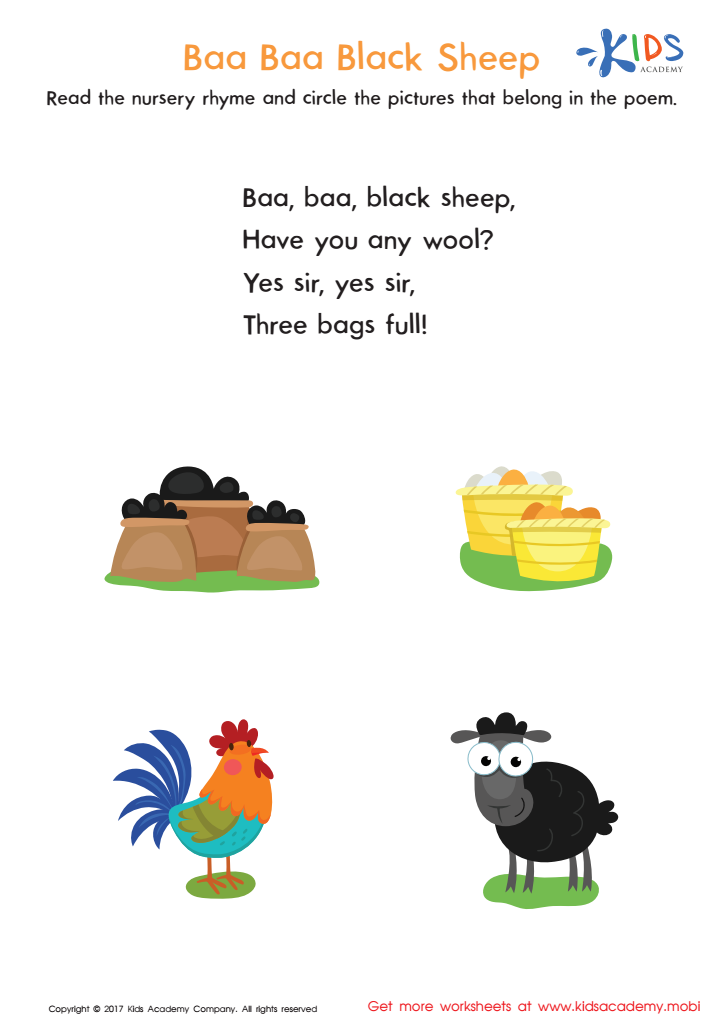
Baa Baa Black Sheep Printable
 Assign to My Students
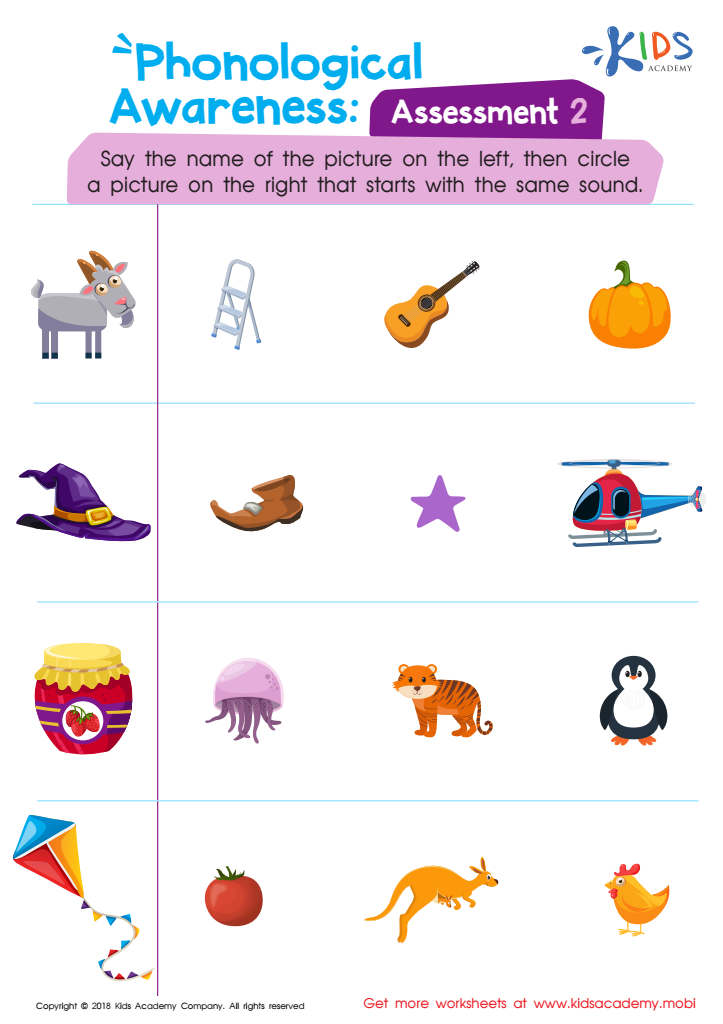
Phonological Awareness: Assessment 2 Worksheet
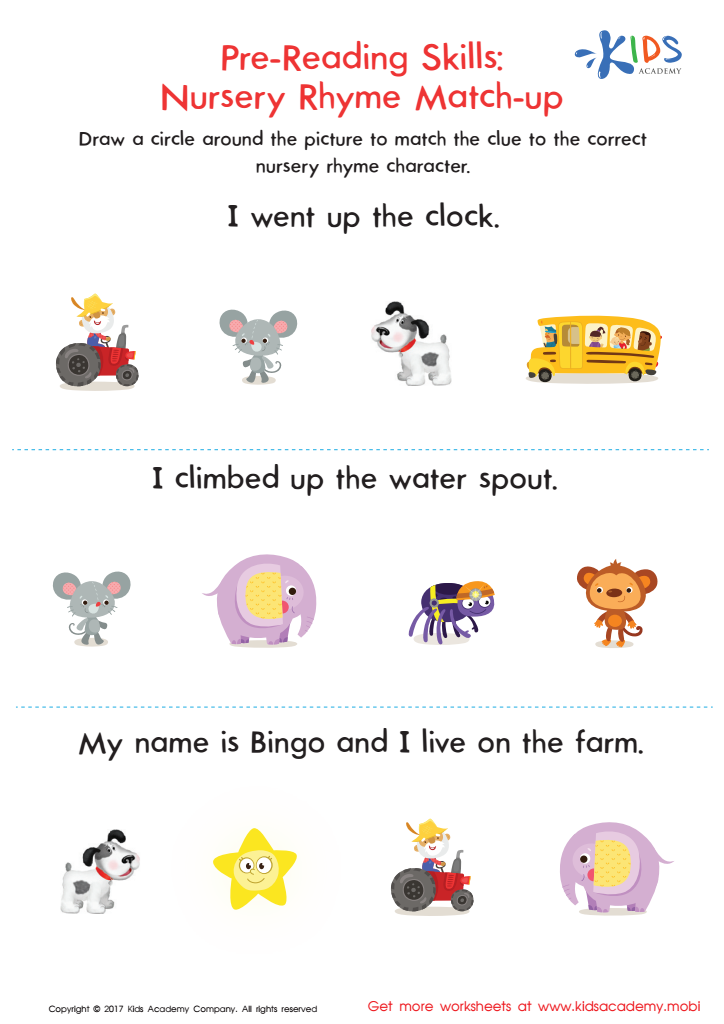
Nursery Rhyme Match–Up Worksheet








Rhyme recognition phonics is a crucial skill for children ages 3-4 as it lays the foundational building blocks for reading and literacy development. By engaging young learners with rhymes, parents and teachers can foster phonemic awareness, which is the ability to hear, identify, and manipulate sounds in spoken words. This skill is vital because it helps children understand the sound structure of language, making it easier for them to decipher and encode words when they begin reading.
Moreover, rhyme recognition enhances vocabulary development and can make learning more enjoyable through songs, nursery rhymes, and playful activities. When children recognize and produce rhymes, they develop auditory discrimination skills, which are essential not only for reading but also for spelling.
Incorporating rhyme recognition into daily activities cultivates an enthusiasm for language and literature. Additionally, it can promote social interaction, as children often learn rhymes in groups, enhancing their communication and cooperation skills. By nurturing rhyme recognition phonics at this early age, parents and teachers play a pivotal role in equipping children with essential literacy skills, ultimately setting them on a path for academic success and a lifelong love of reading.







