
Vocabulary Enrichment Phonics Worksheets for Ages 3-4
3 filtered results
Difficulty Level
Grade
Age
-
From - To
Subject
Activity
Standards
Discover our engaging Vocabulary Enrichment Phonics Worksheets designed specifically for children ages 3-4. These interactive resources help young learners enhance their vocabulary while developing essential phonics skills. Tailored to capture the imaginations of preschool children, our worksheets include colorful illustrations and fun activities that make learning enjoyable. Children will explore new words, practice letter sounds, and build a strong foundation for reading. With an emphasis on playful learning, these worksheets encourage curiosity and communication through diverse word themes and phonetic exercises. Ignite your child's love for language and support their educational journey with our thoughtfully crafted phonics resources today!
Favorites
With answer key
Interactive
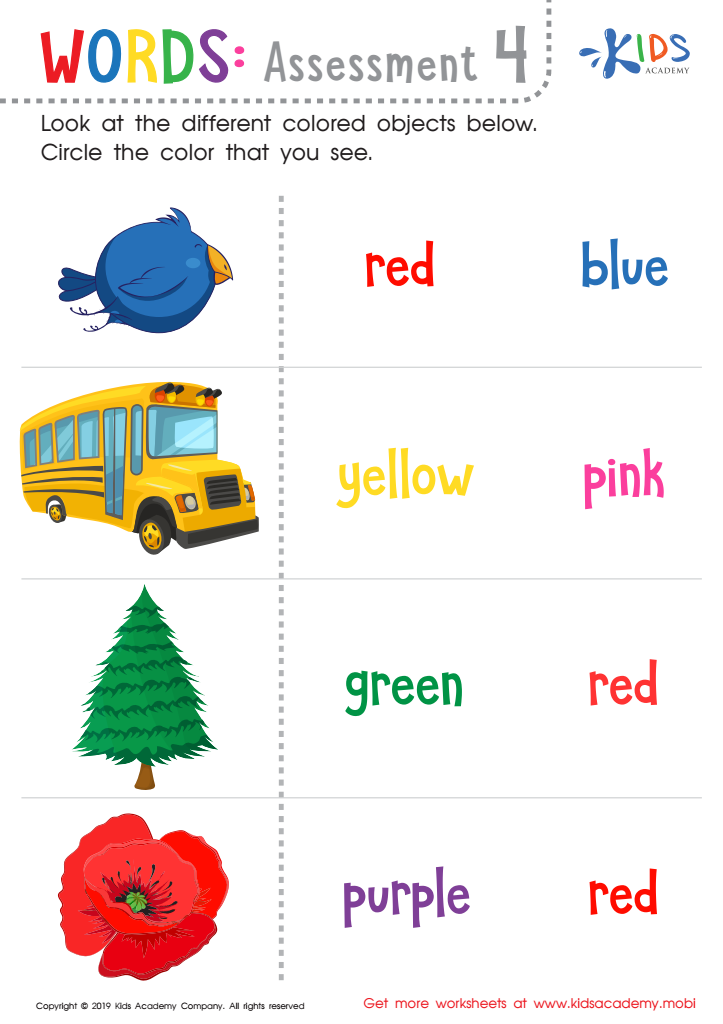
Words: Assessment 4 Worksheet
Look at the pictures and have your child circle the color they see. This free worksheet is great for assessing their knowledge of vocabulary words. It offers familiar images with words for kids to read and match with the colors. Help your child build their reading and understanding skills with this fun activity!
Words: Assessment 4 Worksheet
Worksheet
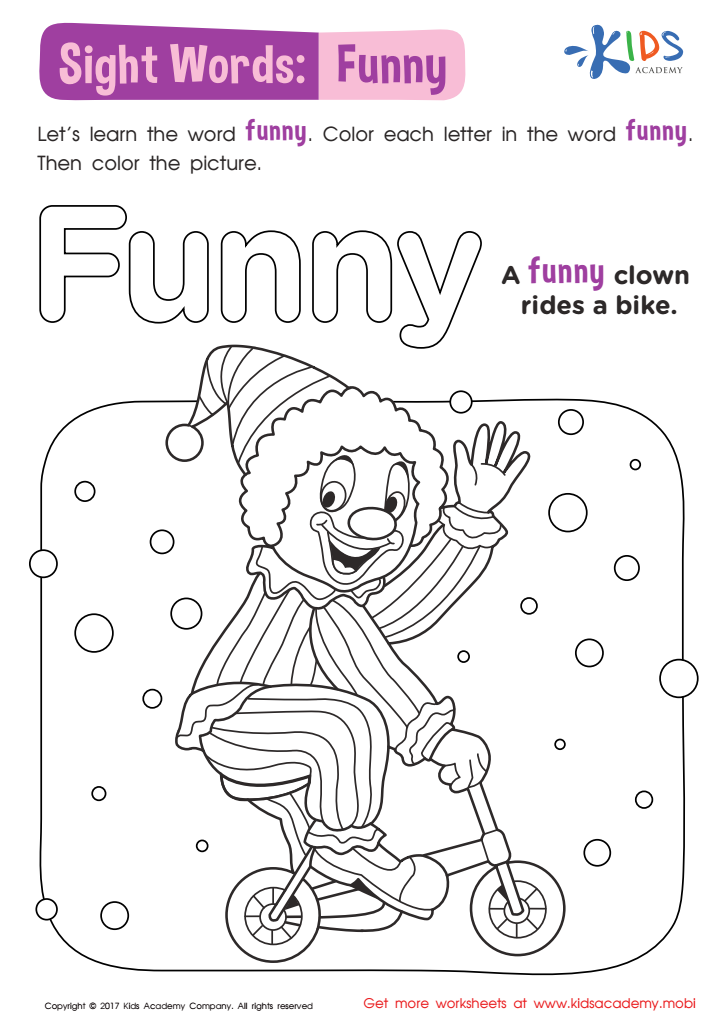
Funny Worksheet Sight Words Worksheet
Love humor? Introduce "funny" as a sight word with this fun worksheet! Have your child read the sentence then color the word in the center. Let them use their imagination to color the silly clown in any way they like!
Download (PDF)
 Assign to My Students
Assign to My Students
Funny Worksheet Sight Words Worksheet
Worksheet
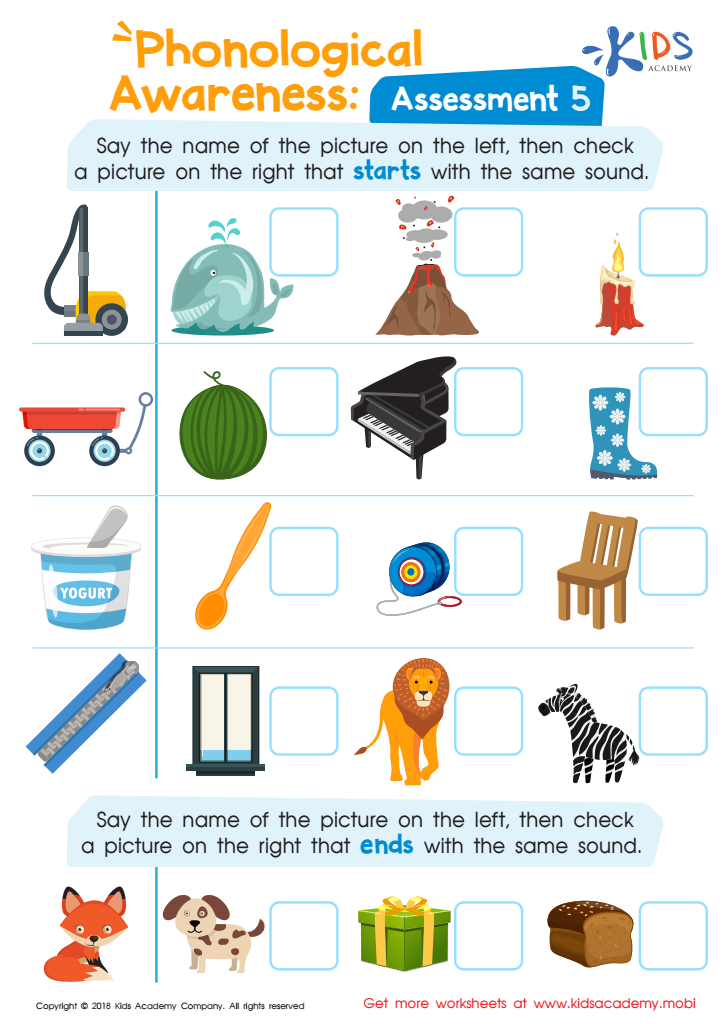
Phonological Awareness: Assessment 5 Worksheet
Repetition is key to success! This worksheet tests kids' ability to match beginning and ending sounds in words. Instruct them to say each word and listen closely to the sounds they make. Focus on the starting sounds for the first four pics, then the last one to hear ending sounds and find the right match!
Phonological Awareness: Assessment 5 Worksheet
Worksheet
Join Kids Academy for Free
Who is primarily going to use this learning content?








Vocabulary Enrichment Phonics for ages 3-4 is essential for fostering early language development, laying the groundwork for literacy skills crucial in later years. At this formative age, children are like sponges, rapidly absorbing information. Introducing a rich vocabulary helps them express their thoughts, feelings, and ideas more clearly, boosting their confidence in social interactions.
Phonics, which connects sounds to letters and words, enhances children’s ability to decode language, making reading less daunting as they progress. When parents and teachers focus on vocabulary enrichment and phonics early on, they create a multi-sensory learning environment that stimulates curiosity and an eagerness to learn. Research indicates that robust vocabulary knowledge in early childhood significantly correlates with reading comprehension and academic success in later stages.
Incorporating vocabulary enrichment through fun, interactive activities also nurtures critical thinking and problem-solving skills, promoting cognitive development. Furthermore, this preliminary focus on language provides a solid foundation for literacy practices, setting the stage for enjoyment in reading and learning. Ultimately, instilling a love for words and sounds in preschoolers cultivates lifelong learners prepared for the complexities of language and communication, making it a priority for parents and educators alike.







