Phonics skills development Short Vowels Worksheets for Ages 3-4
3 filtered results
Difficulty Level
Grade
Age
-
From - To
Subject
Activity
Standards
Enhance your child's phonics skills with our engaging Short Vowels Worksheets designed specifically for ages 3-4! These worksheets focus on developing crucial phonemic awareness, helping young learners recognize and differentiate short vowel sounds in a fun and interactive way. Each activity is crafted to capture their attention while reinforcing foundational reading skills. Through vibrant illustrations and simple exercises, children will gain confidence in identifying letters and their corresponding sounds. Perfect for both homeschooling and classroom settings, our worksheets ensure a strong phonics foundation that will benefit your child as they continue their literacy journey. Explore our collection today!
Favorites
With answer key
Interactive
Short Vowel Sound U Worksheet
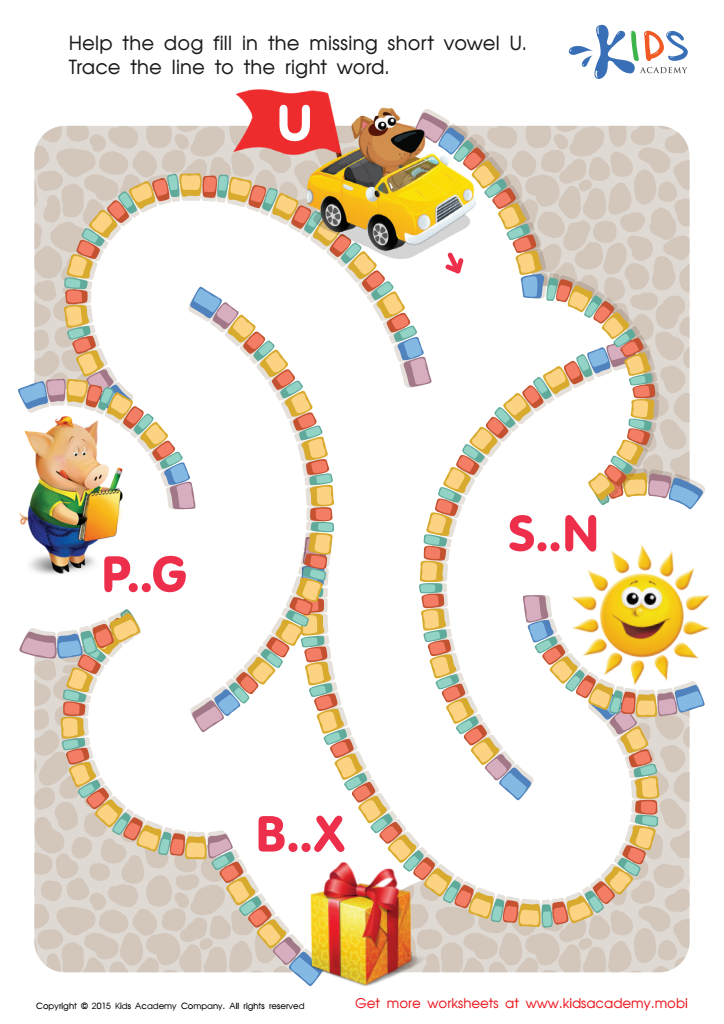
Practice abc phonics to help young learners link sounds to letters. This free printable phonics worksheet helps your kid learn the short vowel sound U. Guide them through the maze to help the dog complete the word "sun". Make sure they say the word out loud to emphasize the short U sound. Check out more phonics worksheets with mazes here.
Short Vowel Sound U Worksheet
Worksheet
Long and Short I Worksheet
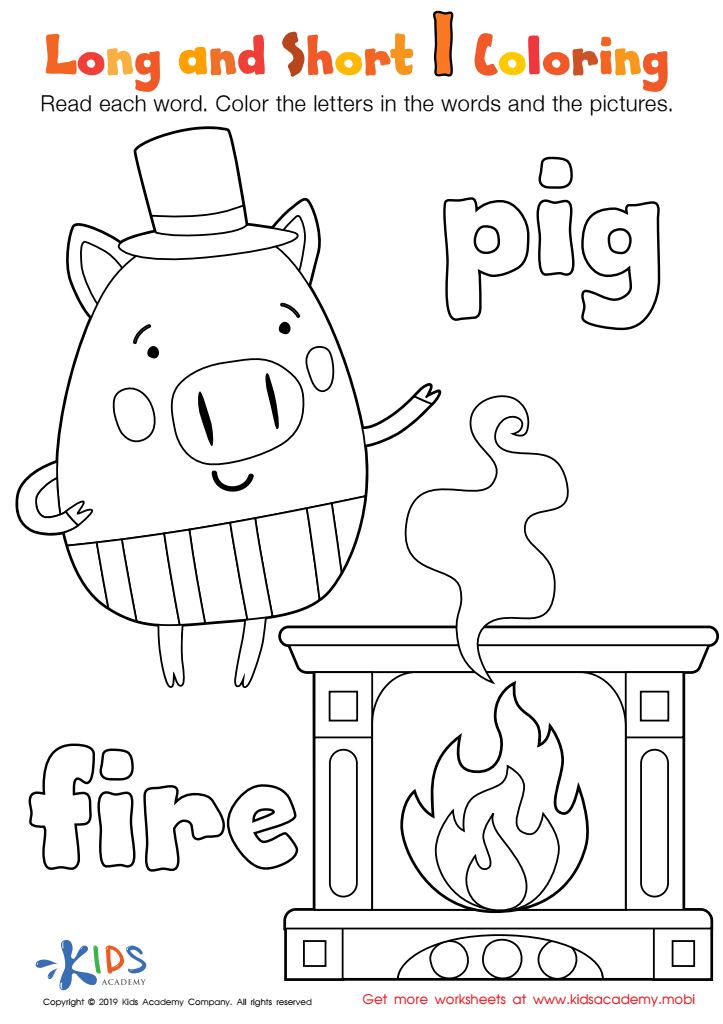
Print the worksheet and have the students read "pig" and "fire". Check for understanding the difference between long and short vowels. Color in words and pictures to make learning phonics fun! This exercise is perfect for introducing the topic to your students.
Download (PDF)
 Assign to My Students
Assign to My Students
Long and Short I Worksheet
Worksheet
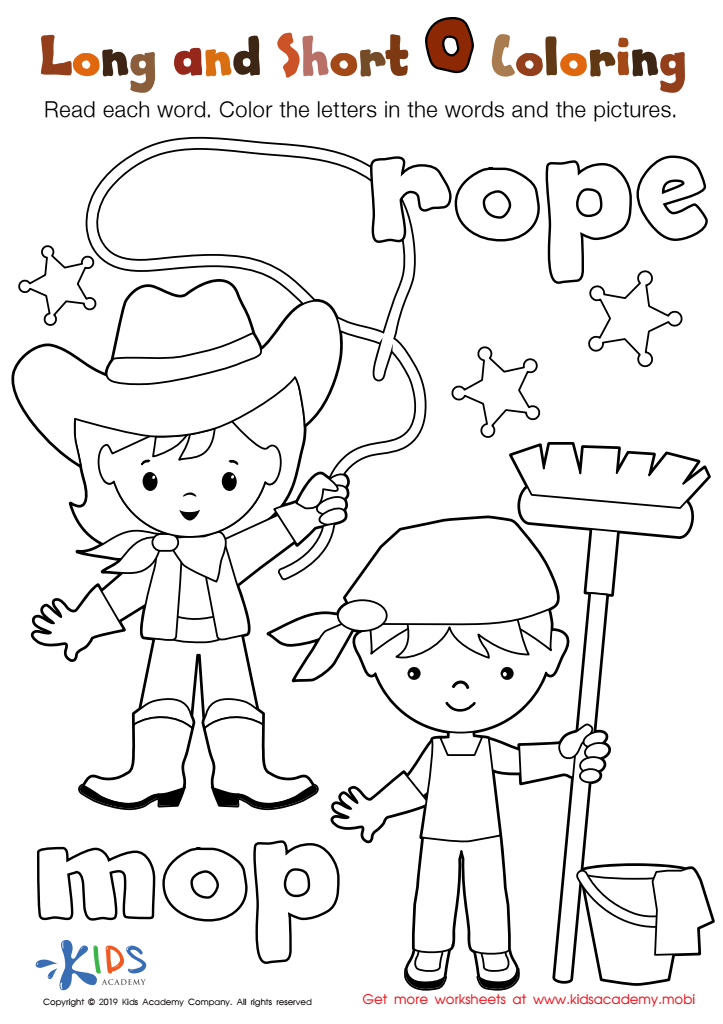
Long and Short O Worksheet
Help your students recognize the difference between long and short «Os» with this fun printout. Let them read and color-in "rope" and "mop" simultaneously. Listen to the different sounds, then color the words and pictures. Great for classes, it'll make your phonics lesson memorable and enjoyable.
Download (PDF)
Assign to My Students
Assign to My Students
Long and Short O Worksheet
Worksheet
Join Kids Academy for Free
Who is primarily going to use this learning content?



Phonics skills development, particularly with short vowels, is crucial for children aged 3-4. During these formative years, children are forming the foundational elements of reading, which plays a significant role in their overall academic success. Short vowels (a, e, i, o, u) are among the first sounds that young learners encounter, and mastering these sounds helps them recognize and decode simple words early on.
Understanding phonics fosters early literacy skills, enabling children to listen carefully and distinguish between various sounds. This auditory discrimination is vital for spelling and pronunciation later in life. When parents and teachers prioritize short vowel sounds, they equip children with strategies to tackle more complex words and texts as they progress.
Beyond academic benefits, phonics development boosts a child’s confidence. Successfully sounding out words can encourage a love for reading and learning, leading to a joy that lasts a lifetime. Additionally, strong phonics skills can significantly reduce future literacy challenges, setting the stage for better comprehension and communication abilities. Engaging in phonics activities—like rhymes, songs, and games—can also foster positive interactions between adults and children, enhancing their relationship through shared learning experiences.