Fine motor skills development Tracing Letters Worksheets for Ages 3-4
3 filtered results
-
From - To
Enhance your child's fine motor skills with our Tracing Letters Worksheets designed for ages 3-4! These engaging activities help young learners develop the essential hand-eye coordination and dexterity needed for writing. Our beautifully crafted worksheets feature a variety of letter tracing exercises, guiding children as they practice proper letter formation. As they trace, children improve their grip and control, setting a strong foundation for their future writing abilities. Perfect for preschool or at-home learning, these worksheets provide a fun and educational way for little ones to gain confidence in their skills while exploring the exciting world of letters and literacy.
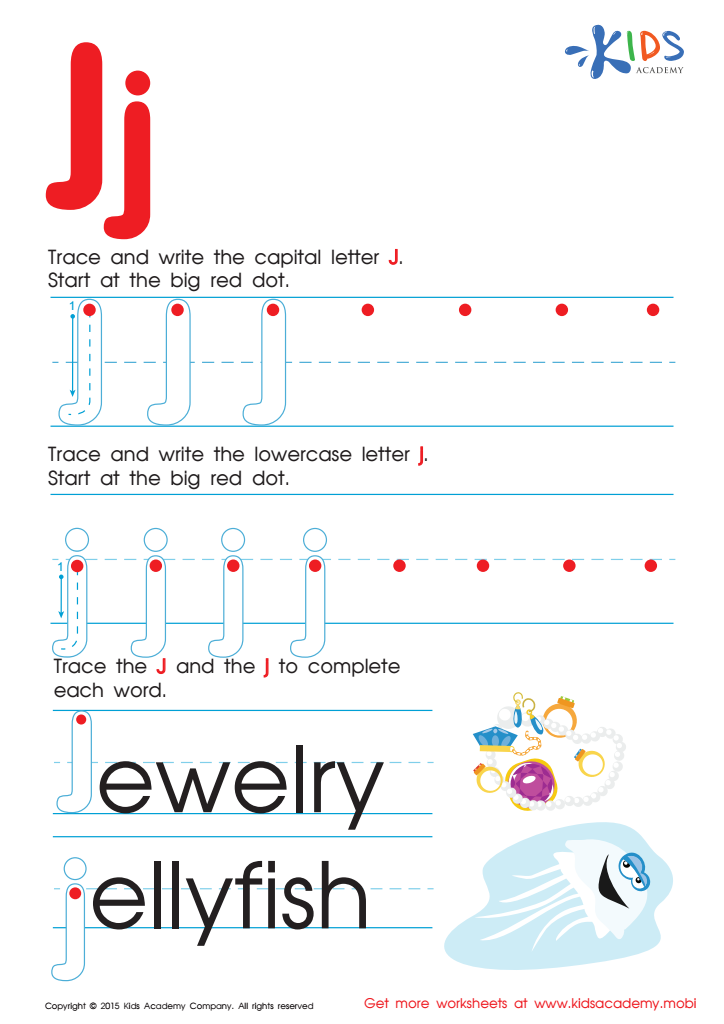
Letter J Tracing Page
 Assign to My Students
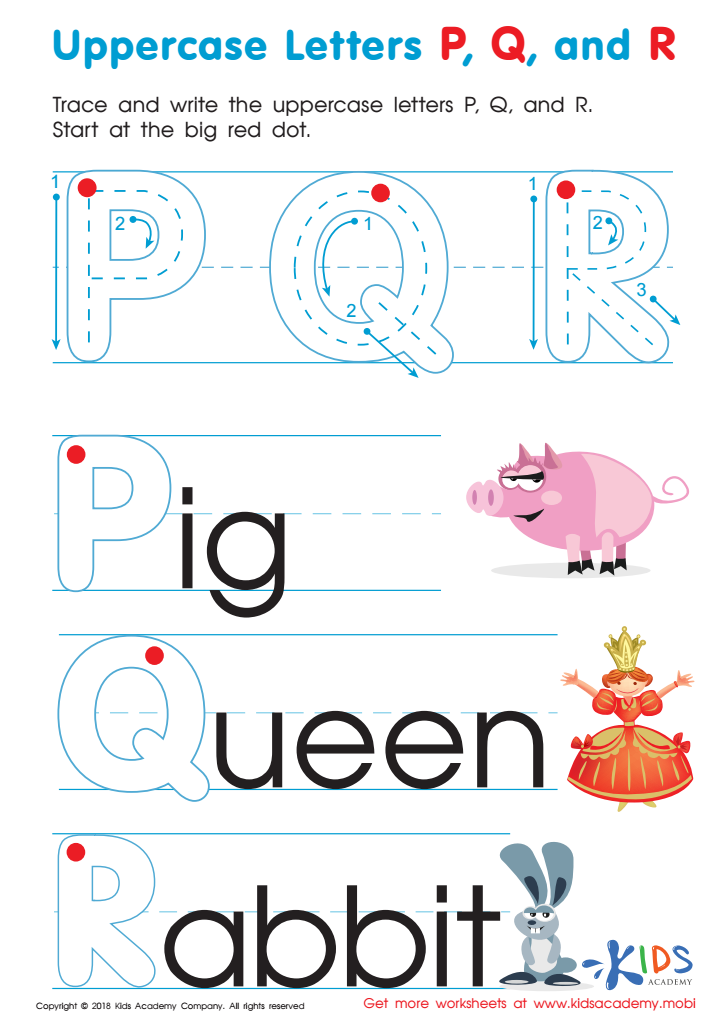
Uppercase Letters P, Q, and R Worksheet
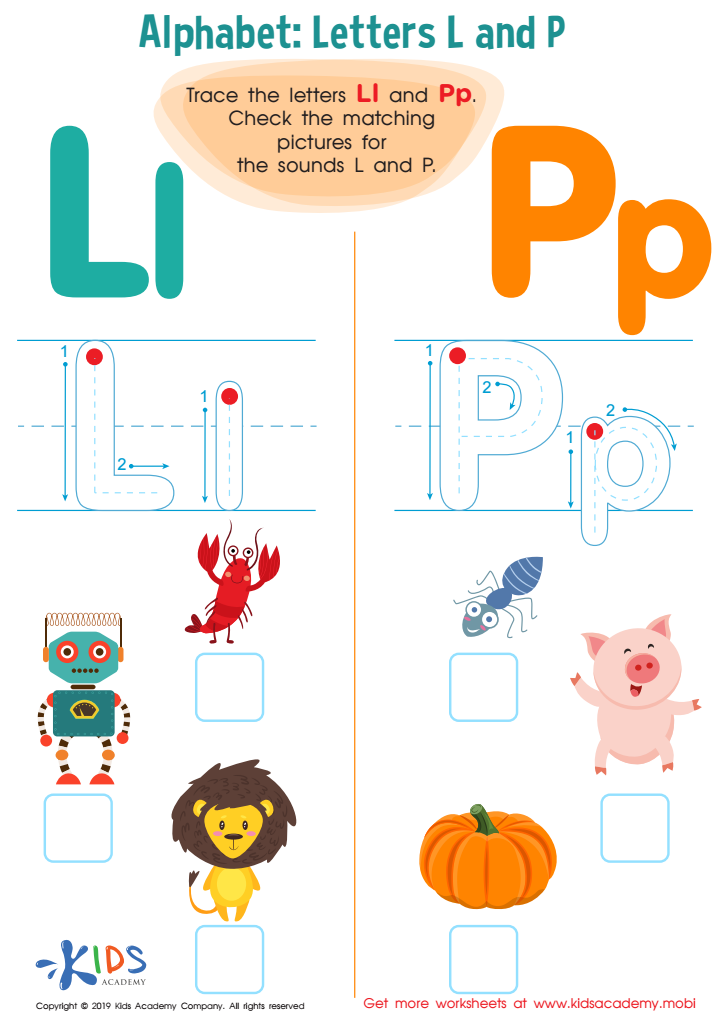
Letter L and P Tracing Worksheet







Fine motor skills development, particularly through tracing letters, is crucial for children ages 3-4 as it lays the foundation for a variety of essential skills. Firstly, fine motor skills are vital for hand-eye coordination, enabling young children to engage in everyday tasks such as buttoning clothes, using utensils, and eventually writing without frustration. Tracing letters specifically helps improve dexterity and precision, as kids learn to control their hand movements.
Moreover, early letter tracing contributes to literacy development. Recognizing and writing letters enhances a child's familiarity with the alphabet, which is essential for future reading and writing. Parents and teachers should care because reinforcing these skills at this stage can foster a love for learning and boost self-esteem. Proficiency in fine motor skills can lead to more proficient writing traits which are necessary as children progress through school.
Additionally, developing fine motor skills while tracing letters engages children in a fun, creative process that can be tailored to their interests, making learning enjoyable. This promotes positive associations with educational activities and encourages continued engagement. Therefore, investing time in fine motor skill activities at this age can have lasting benefits in both academic and everyday life.








