Handwriting improvement Tracing Letters Worksheets for Ages 3-4
5 filtered results
-
From - To
Discover our "Handwriting Improvement Tracing Letters Worksheets" specially designed for kids aged 3-4. These engaging worksheets provide young learners with fun, interactive activities to enhance their handwriting skills. Through tracing letters, children can improve their fine motor skills, gain confidence in their writing abilities, and lay a strong foundation for future literacy. Each worksheet is tailored to be visually appealing and age-appropriate, making learning exciting and enjoyable. Parents and educators can easily access and print these resources, ensuring that children receive the support they need for handwriting excellence. Start your child's handwriting journey today with our easy-to-use tracing worksheets!
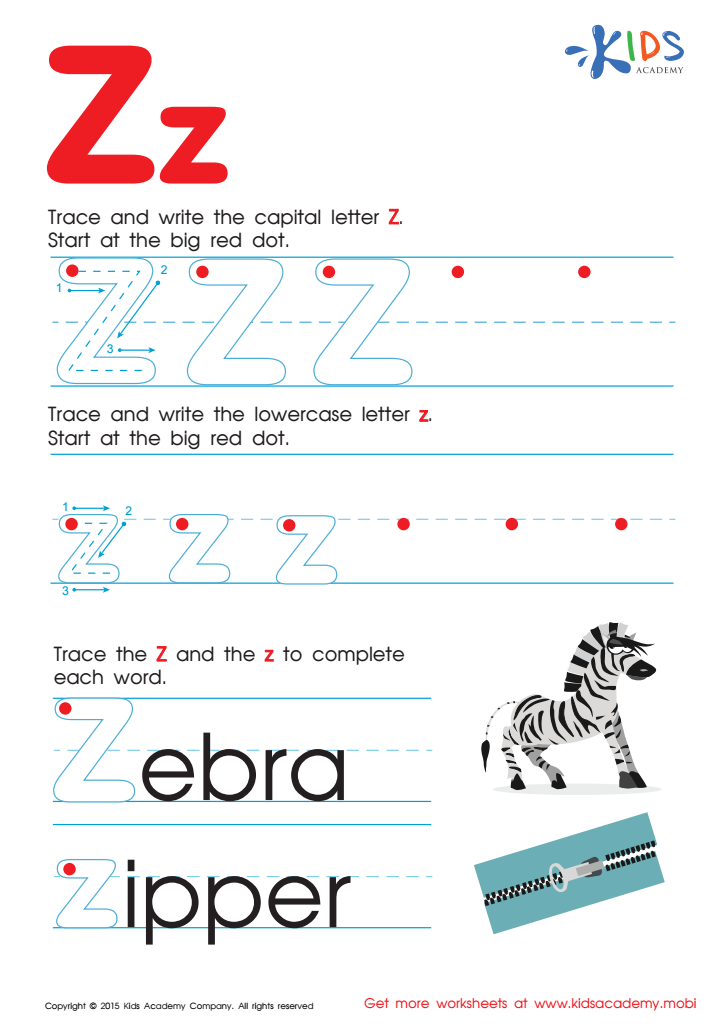
Letter Z Tracing Page
 Assign to My Students
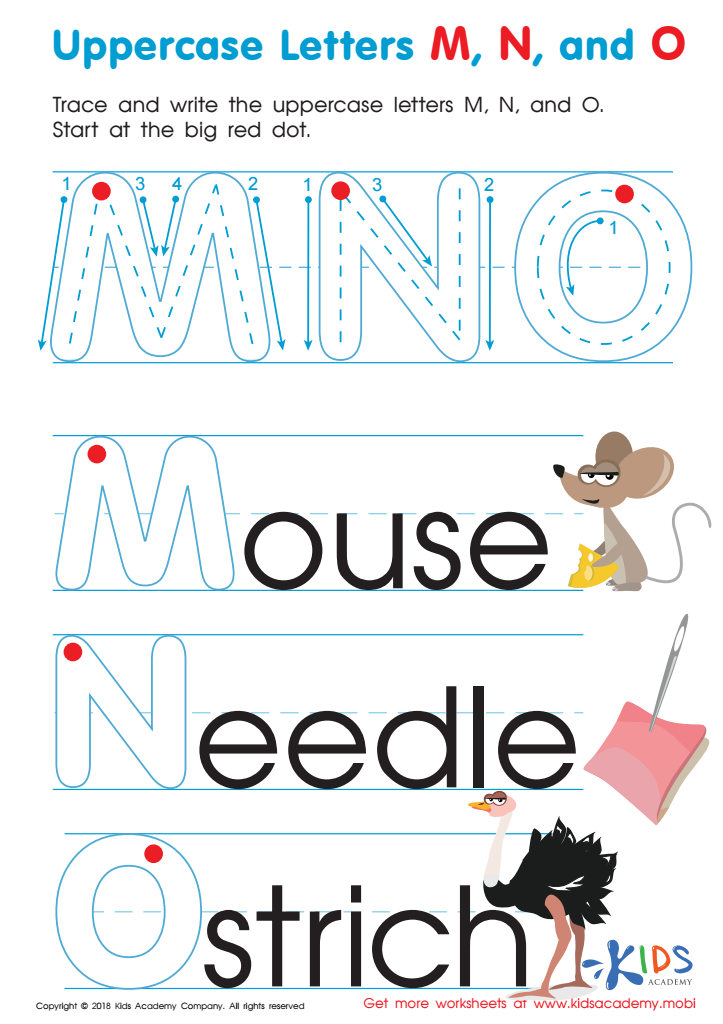
Uppercase Letters M, N, and O Worksheet
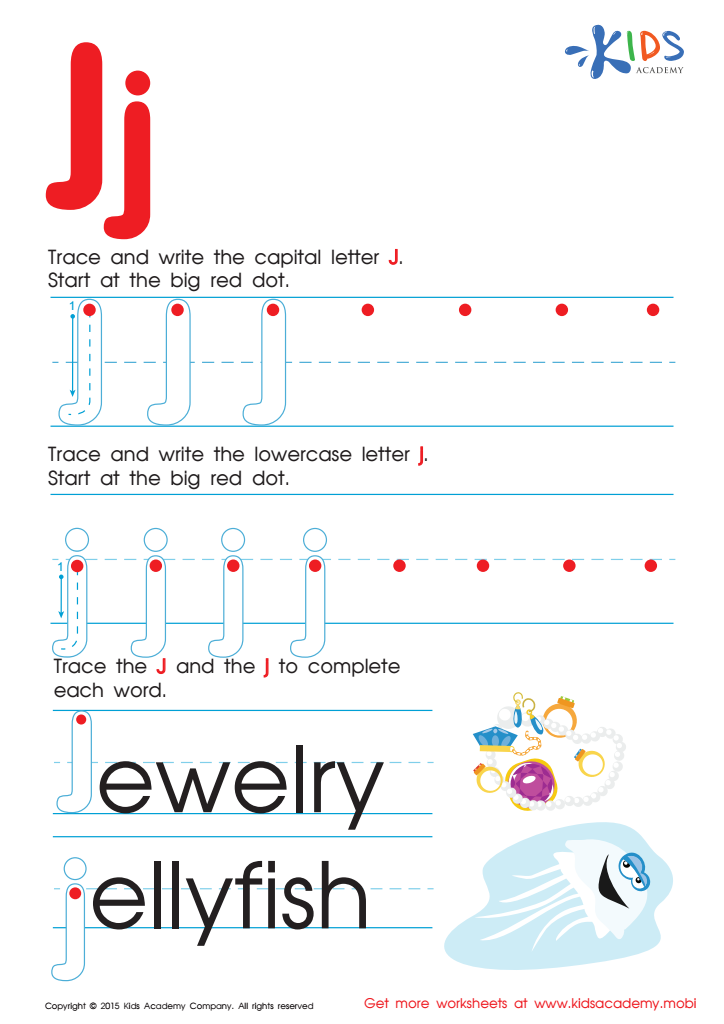
Letter J Tracing Page
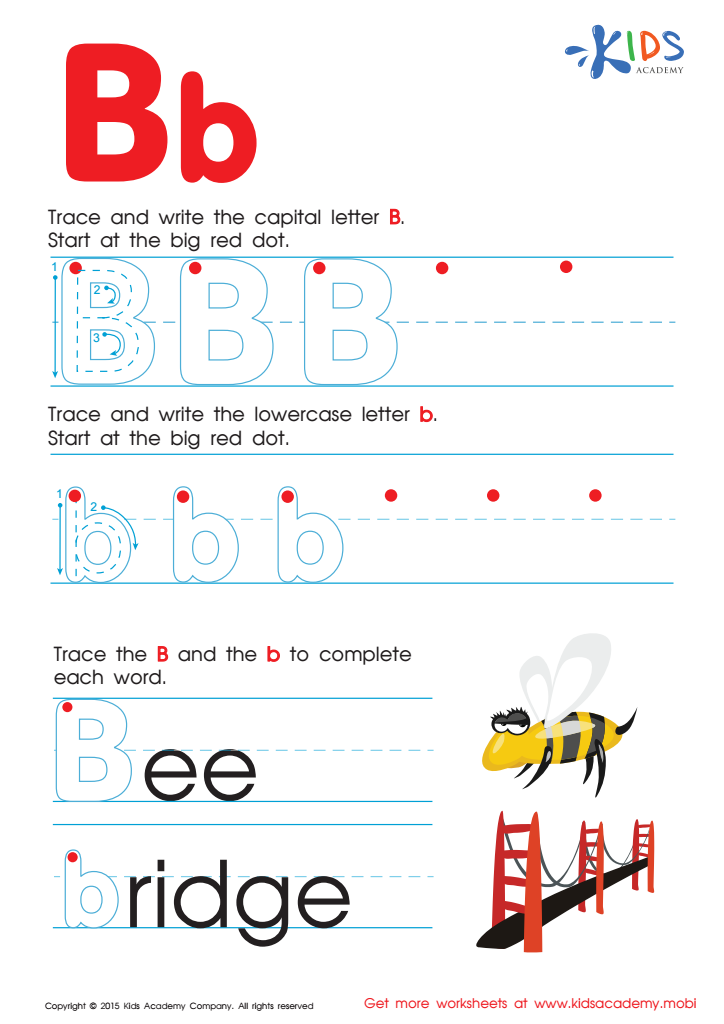
Letter B Tracing Page
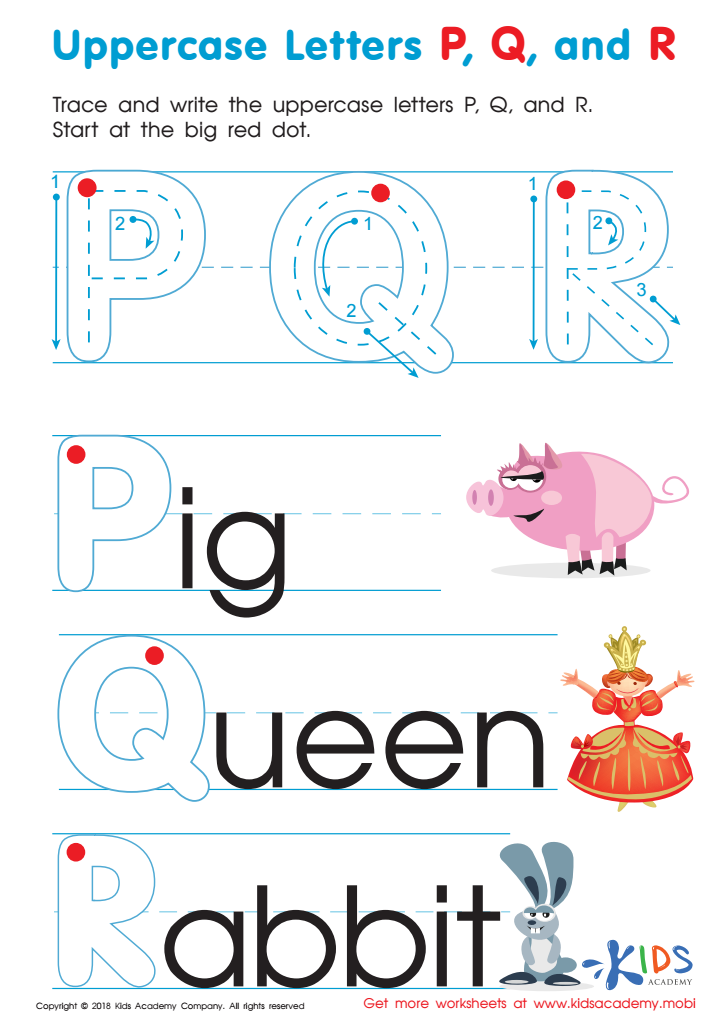
Uppercase Letters P, Q, and R Worksheet








Handwriting improvement through tracing letters is crucial for children aged 3-4 as it lays a strong foundation for their future writing skills. At this developmental stage, young children are refining their fine motor skills, which are essential for many tasks beyond writing, such as performing arts, playing sports, and crafting. Tracing letters helps enhance hand-eye coordination, as it requires children to focus on both their hands and visual stimuli simultaneously.
Additionally, engaging in letter tracing fosters cognitive development by introducing children to the alphabet and promoting letter recognition. This early exposure is linked to later literacy skills, including reading and spelling. As kids repeatedly trace letters, they also develop muscle memory, aiding in smoother and more controlled writing techniques as they progress.
Furthermore, the act of tracing is not only educational but also enjoyable for young learners, transforming a potentially daunting task into a fun activity. Students often gain confidence as they notice their improvement, nurturing a positive attitude toward learning.
In essence, handwriting improvement through letter tracing is a vital practice that supports overall development—motor, cognitive, and emotional—while setting the stage for academic success in the years to come. Encouraging this practice at home and in the classroom can make a significant difference.








