
Motor skills development Tracing Letters Worksheets for Ages 3-4
4 filtered results
Difficulty Level
Grade
Age
-
From - To
Subject
Activity
Standards
Enhance your child's motor skills with our engaging Tracing Letters Worksheets designed for ages 3-4! These worksheets provide a fun and interactive way for young learners to practice letter formation while improving their hand-eye coordination and fine motor skills. Each worksheet features traceable letters, allowing children to build confidence as they learn the alphabet. Our easy-to-follow activities make letter tracing enjoyable, fostering creativity and focus. With diverse, colorful illustrations, these printable worksheets encourage early literacy development and prepare your child for a successful learning journey. Start cultivating essential motor skills and support early handwriting practice today!
Favorites
With answer key
Interactive

Letter H Tracing Page
Trace the letter "H", then practice writing its lowercase form. Finally, choose your favorite form of transport and ride away! Get our worksheets to make learning fun and easy.
 Assign to My Students
Letter H Tracing Page
Worksheet
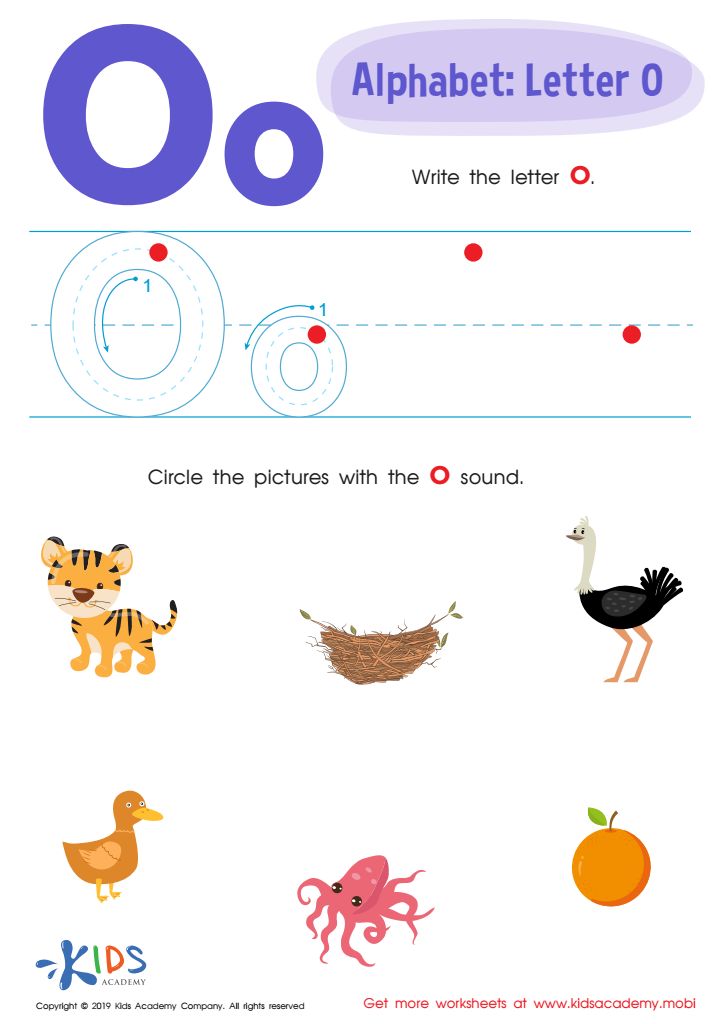
Letter O Tracing Worksheet
This worksheet gives kids the chance to trace the letter "O" while also circling pictures that have the "O" sound. Visual and hands-on learners will benefit from the visuals and tracing, helping them learn the letter "O" with ease. It's the perfect way to learn what "octopus" and "ostrich" start with!
Letter O Tracing Worksheet
Worksheet
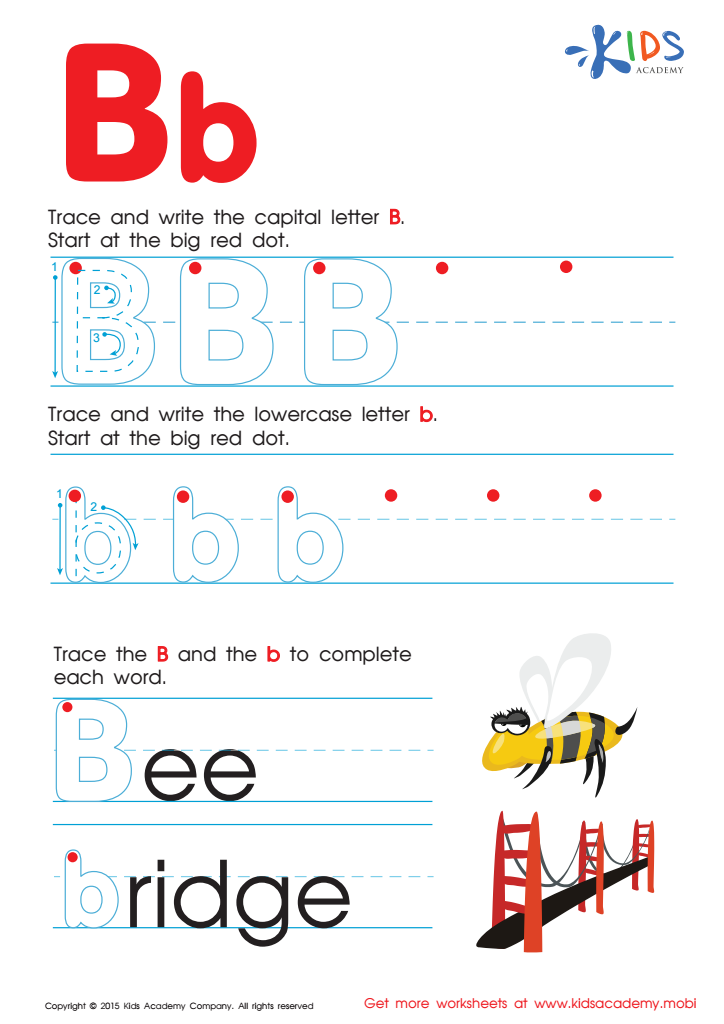
Letter B Tracing Page
Ready to learn the Alphabet? Put your pencil on the red dot and trace & write both capital & lowercase "B". Then have a look at the pictures. Catch the bee, cross the bridge & write the letters to complete the words. More ABC worksheets for kindergarten available!
Letter B Tracing Page
Worksheet
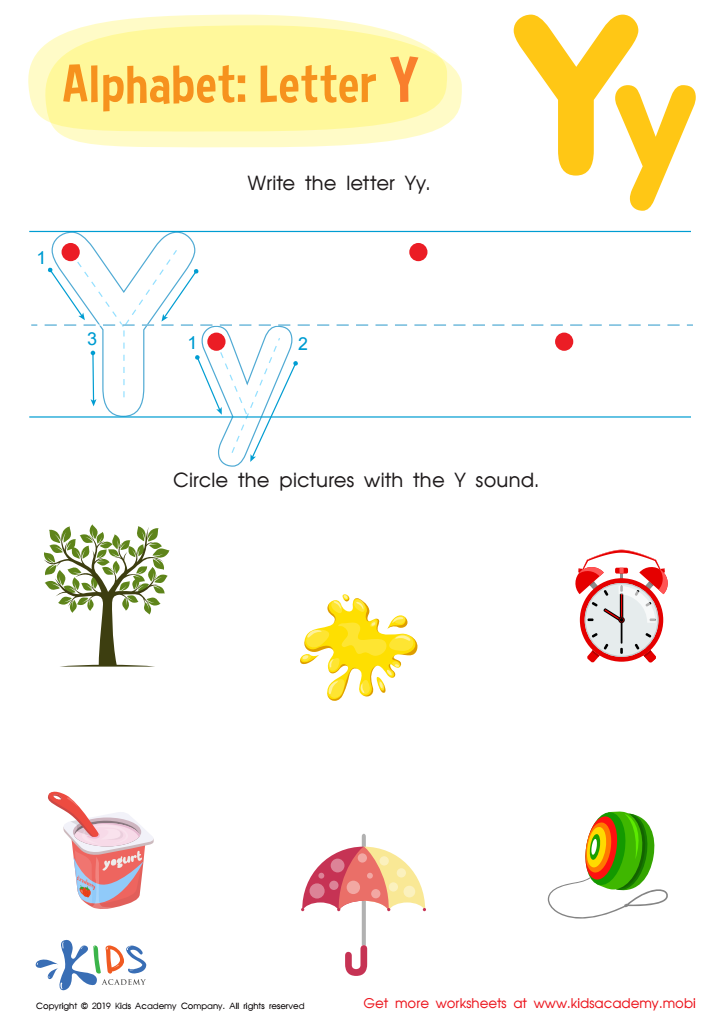
Letter Y Tracing Worksheet
Does your child need help with learning the final letters of the alphabet? This PDF worksheet is perfect then! Kids can practice tracing the letter «Y» and circle pictures that start with the same sound. Options include «yellow» and «yogurt». It's a great way of honing their letter-learning skills.
Letter Y Tracing Worksheet
Worksheet
Join Kids Academy for Free
Who is primarily going to use this learning content?







Motor skills development, particularly tracing letters for children aged 3-4, is essential for several reasons. Firstly, it lays the groundwork for effective writing skills. At this early stage, children are honing their fine motor skills, which involve the small muscles in their hands and fingers. Tracing letters helps strengthen these muscles, fostering better hand-eye coordination and dexterity.
Secondly, tracing promotes cognitive development. As children associate each letter with its shape and sound, they begin to build foundational literacy skills. This activity encourages focus, attention to detail, and improves memory retention, as children recall letter formations and sounds.
Moreover, motor skills development through tracing letters nurtures critical thinking and problem-solving capabilities. When children work to follow the lines and complete the letters, they learn to navigate challenges and enhance their perseverance.
Finally, fostering these skills early on sets the stage for future academic success. Children who have strong motor skills tend to adapt more easily to classroom writing tasks. Investing in motor skills development during these formative years is crucial, providing children with the tools they need for effective communication and learning throughout their educational journey. Parents and teachers play a vital role in facilitating this developmental process.








