Alphabet familiarity Upper & Lowercase Letters Worksheets for Ages 3-4
7 filtered results
-
From - To
Our "Alphabet Familiarity Upper & Lowercase Letters Worksheets" for ages 3-4 are designed to lay a strong foundation in letter recognition. These engaging, printable worksheets help young learners easily differentiate between uppercase and lowercase letters. Through a variety of activities, children will enhance their ability to recognize and match letters, setting the stage for successful reading and writing experiences. Perfect for preschool and pre-K, these carefully crafted worksheets encourage early alphabet familiarity in a fun and interactive way. Empower your child's early learning with our expert-designed resources. Download now and support their educational journey!
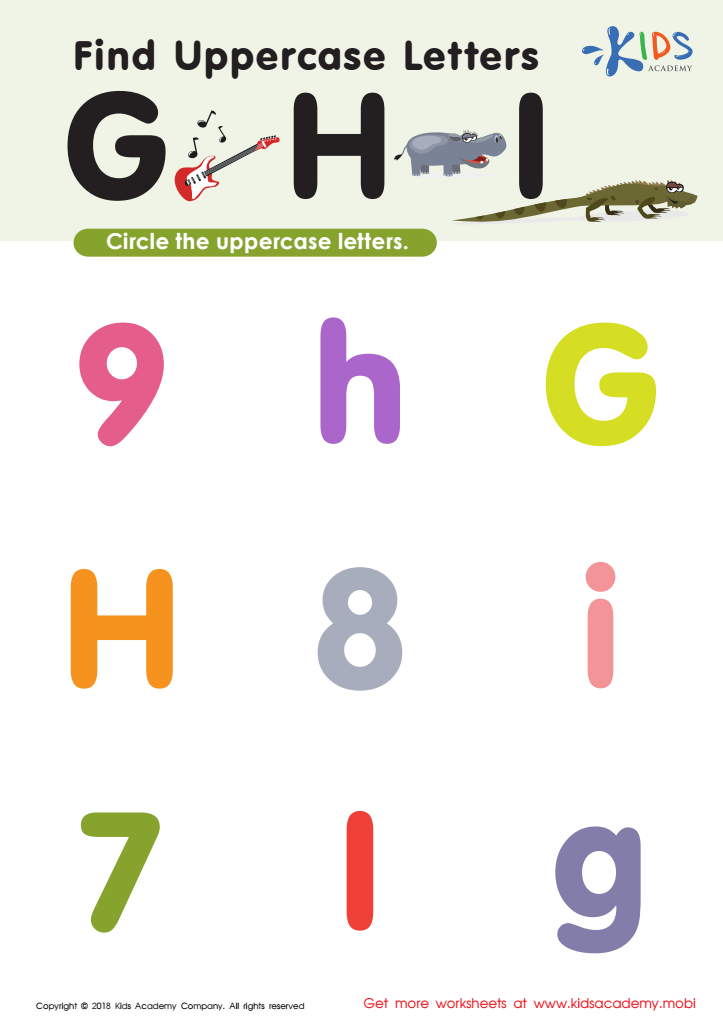
Find Uppercase Letters G, H, and I Worksheet
 Assign to My Students

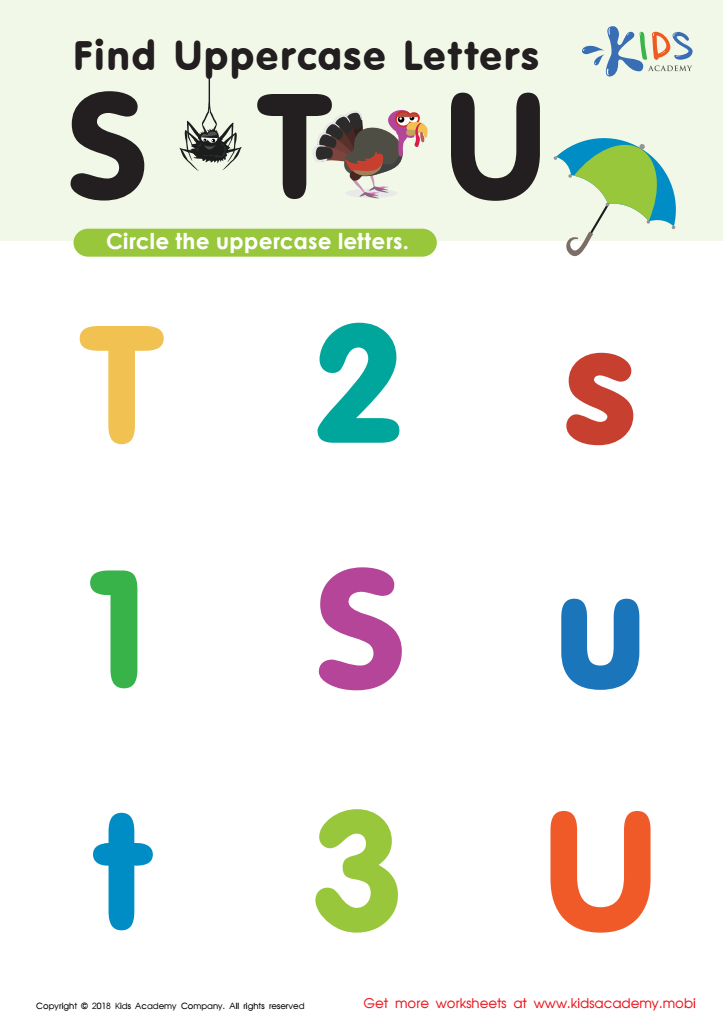
Find Uppercase Letters Worksheet
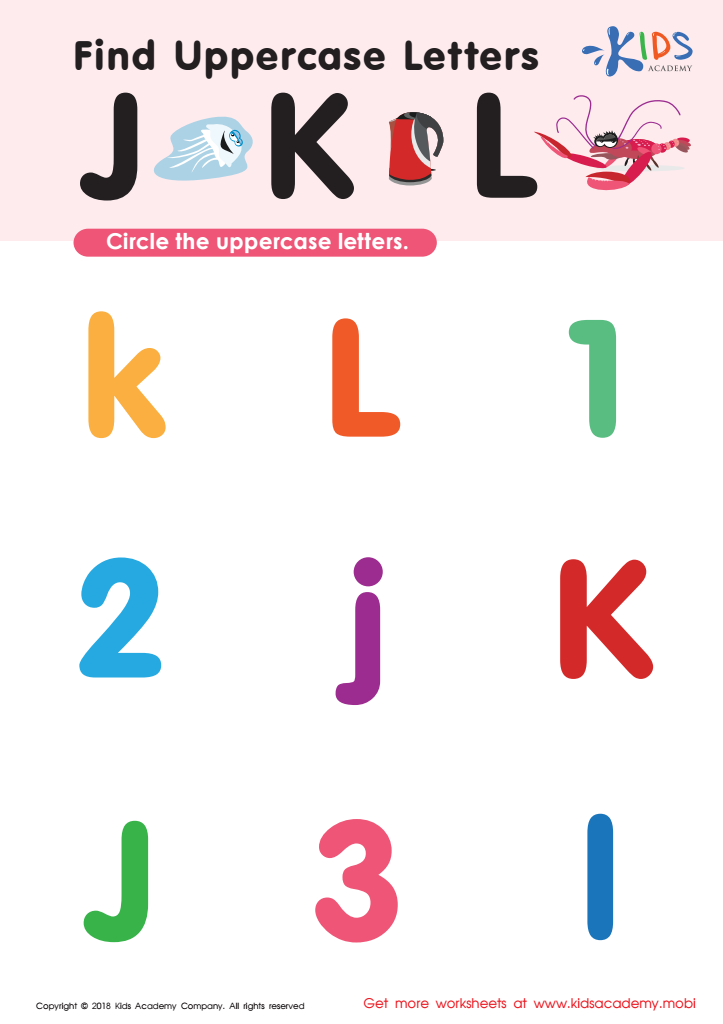
Find Uppercase Letters J, K, and L Worksheet
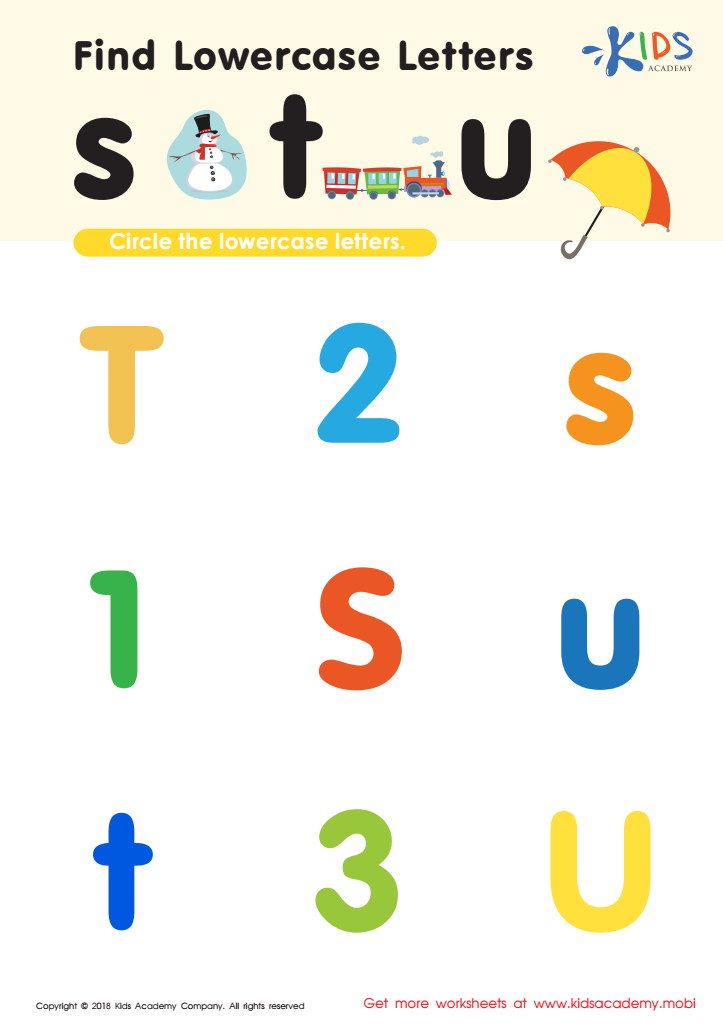
Find lowercase Letters s t u Worksheet
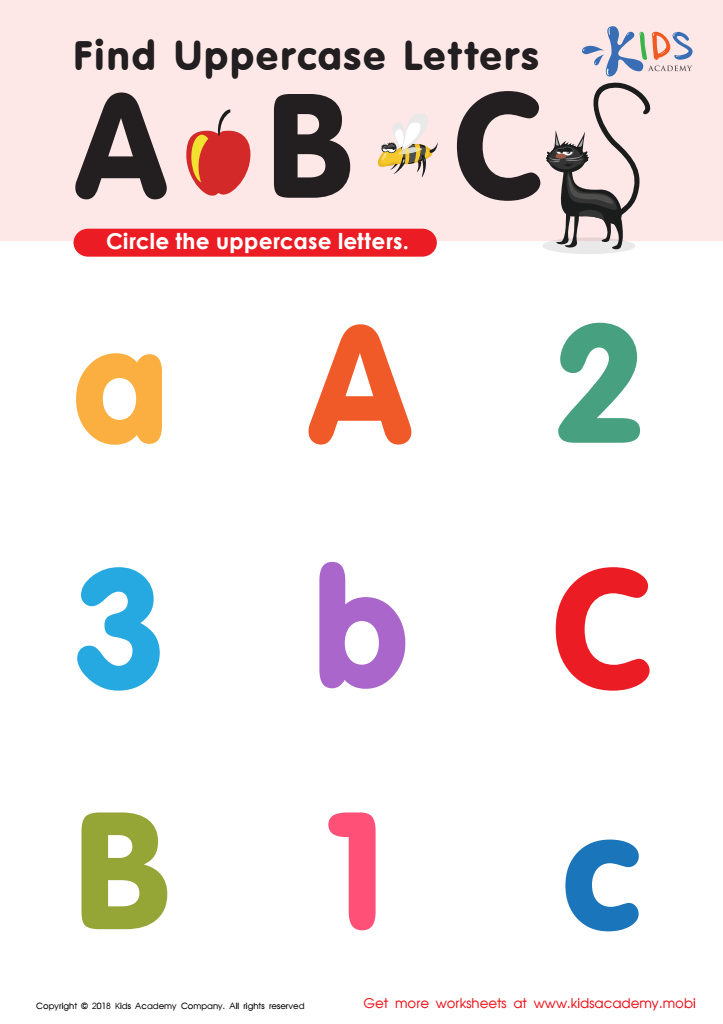
Find Uppercase Letters A, B, and C Worksheet
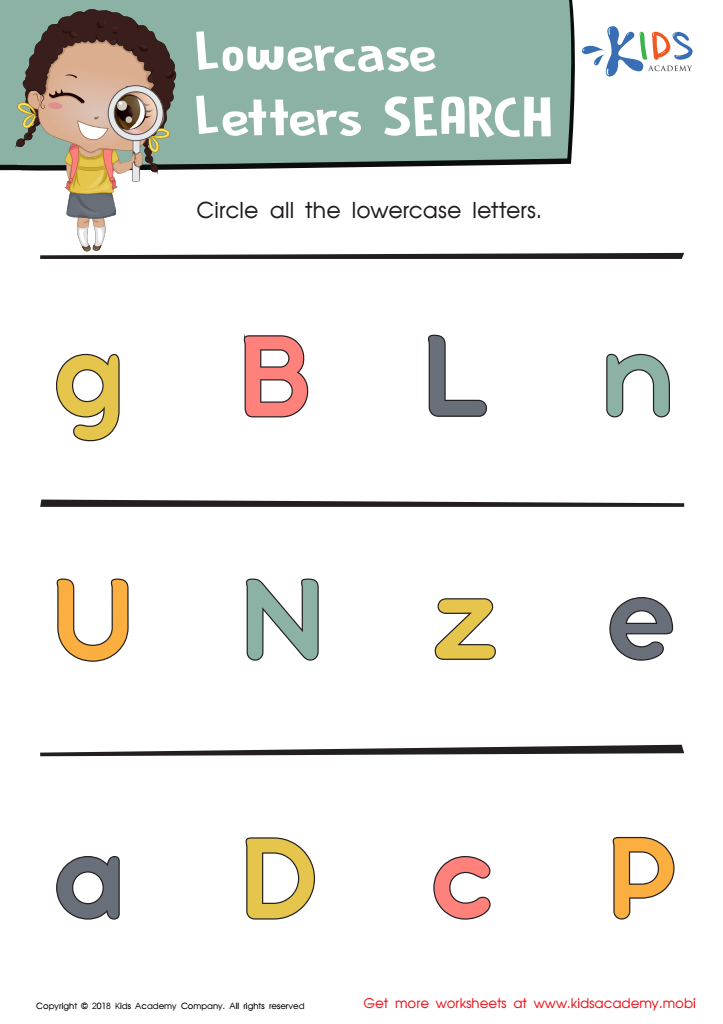
Lowercase Letters Search: Assessment Worksheet
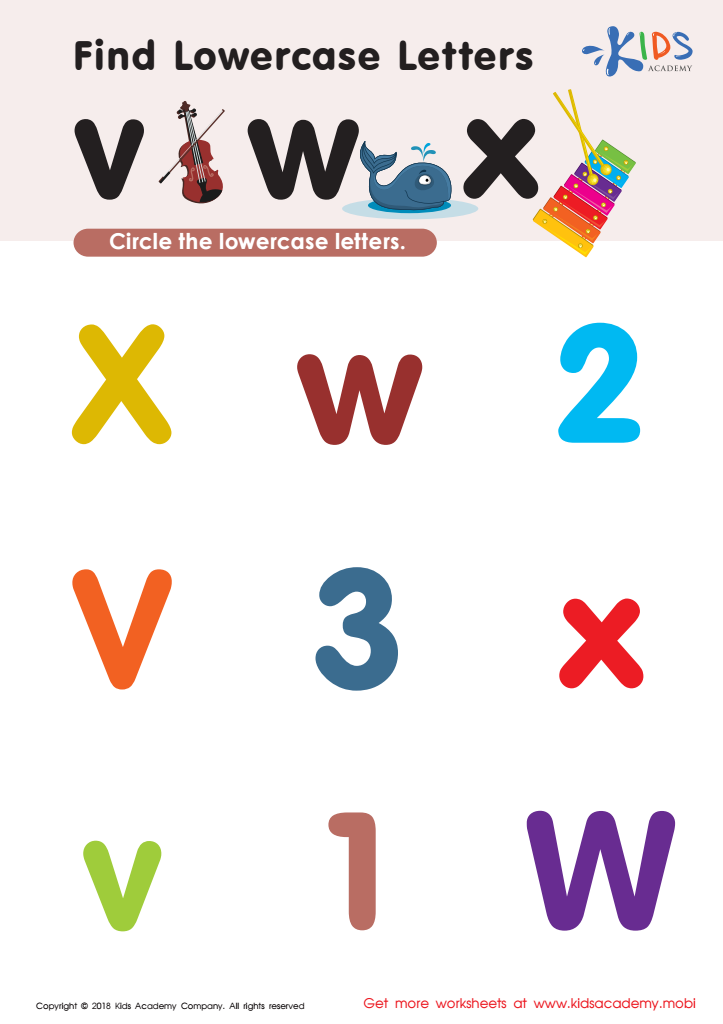
Find Lowercase Letters v w x Worksheet






Alphabet familiarity with both uppercase and lowercase letters for children ages 3-4 is crucial for several reasons. At this formative stage, their brains are highly adaptable and primed for acquiring foundational skills that will set the stage for lifelong learning. Recognizing and understanding both cases of letters serves as a vital stepping stone towards literacy.
First, the early introduction helps children distinguish between the different letter forms, which they will encounter frequently in reading and writing. This distinction supports their visual discrimination skills, which are essential for decoding words and understanding different contexts in which letters appear.
Secondly, being familiar with upper and lowercase letters aids in developing their fine motor skills. Tracing, writing, and identifying these letters involves precise hand-eye coordination, laying the groundwork for more complex tasks like writing sentences or learning cursive in later years.
Thirdly, a strong grasp of the alphabet enhances phonemic awareness. Recognizing letters in various forms helps children understand associated sounds more quickly, which accelerates their ability to blend these sounds into words, a key literacy milestone.
Therefore, investing time in alphabet familiarity at a young age offers multiple developmental benefits, including visual discrimination, fine motor skills, and phonemic awareness, equipping children with the essential tools for academic success.







