Visual discrimination skills Upper & Lowercase Letters Worksheets for Ages 3-4
4 filtered results
-
From - To
Enhance your child's visual discrimination skills with our Upper & Lowercase Letters Worksheets, specially designed for ages 3-4. These engaging and educational printables help young learners distinguish between uppercase and lowercase letters, fostering early literacy and alphabet mastery. Fun activities, vibrant illustrations, and interactive tasks make learning enjoyable, while gradually building essential reading foundations. Perfect for both classroom and home use, our worksheets ensure kids develop a keen eye for letter differences, setting the stage for successful reading and writing. Give your child the tools they need to excel with our expertly crafted resources.
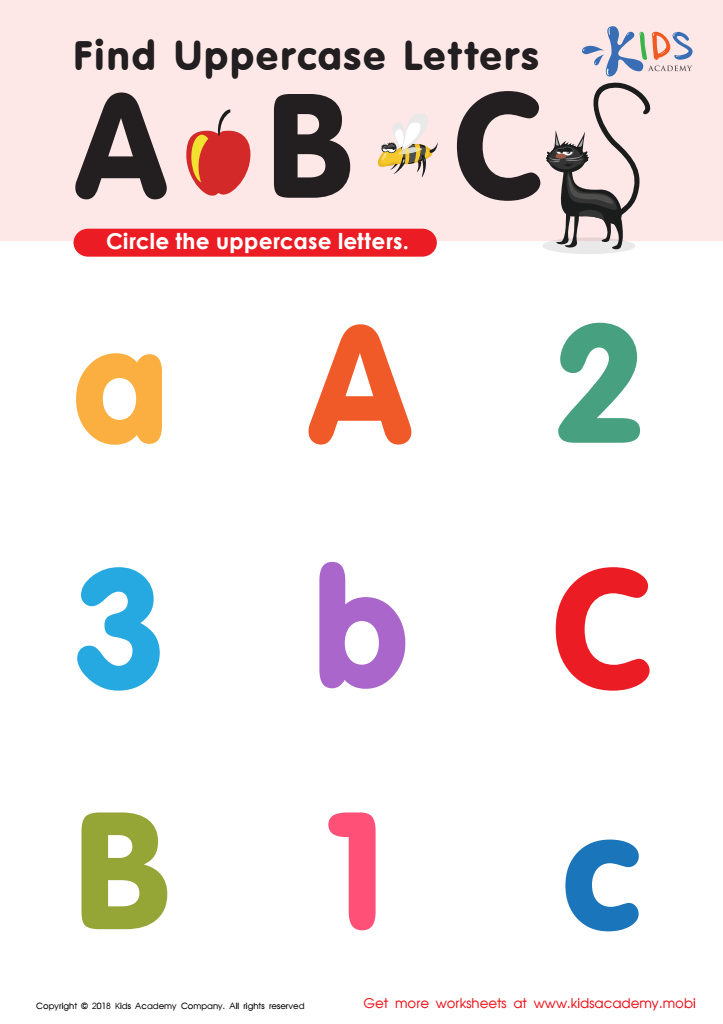
Find Uppercase Letters A, B, and C Worksheet
 Assign to My Students

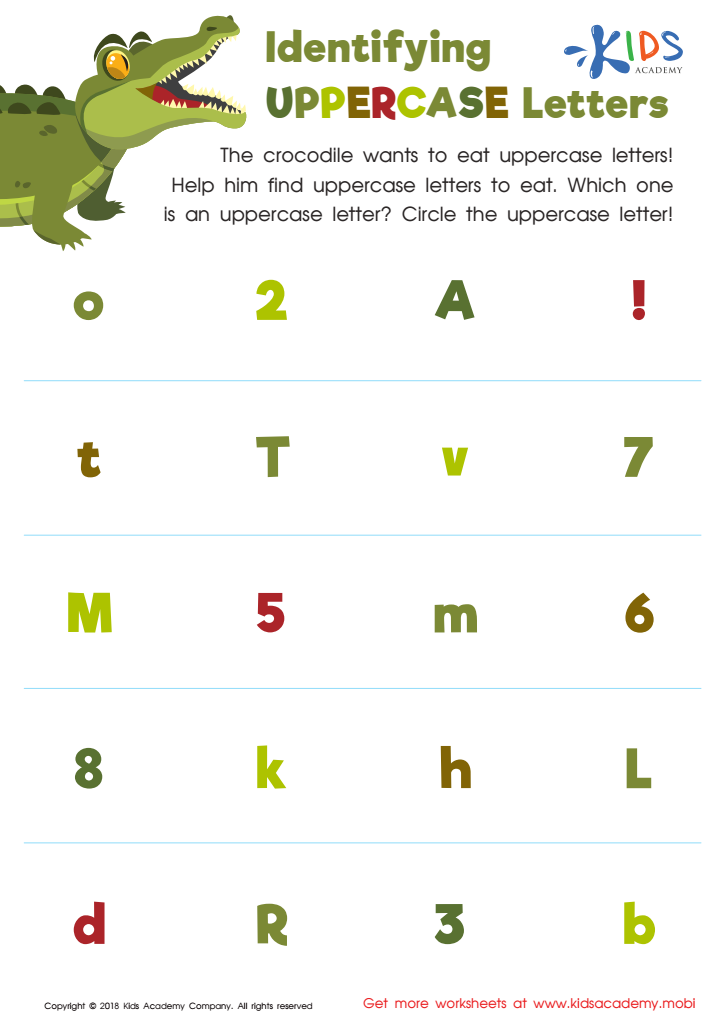
Identifying Uppercase Letters Worksheet

Find lowercase letters a b c Worksheet
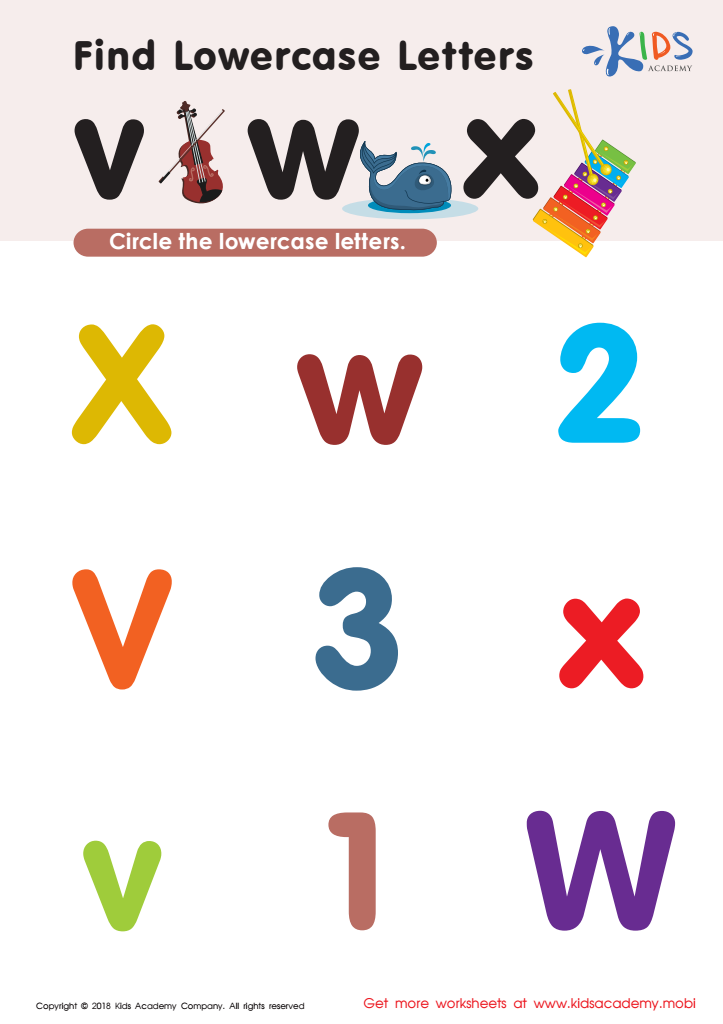
Find Lowercase Letters v w x Worksheet






Visual discrimination skills, particularly in differentiating upper and lowercase letters, are essential developmental stepping stones for children aged 3-4, as they lay the foundations for effective literacy and cognitive growth. These skills empower children to distinguish visually between different letters, which is paramount for reading and writing. At this early age, children are forming their alphabetic knowledge, and the ability to recognize the minute differences between, say, 'B' and 'b' or 'C' and 'c,' fortifies their understanding of the written language.
For parents and teachers, fostering visual discrimination skills means supporting their child or student in identifying, naming, and correctly using letters across different cases, which is crucial for literacy development. It's not just about knowing the alphabet; it's about visual memory, attention to detail, and pattern recognition. When children can confidently differentiate letters, they are better prepared to spell, read, and decode new words, making learning more enjoyable and less frustrating.
Promoting these skills through engaging activities such as matching games, sorting tasks, and letter-based crafts can make learning fun while enhancing cognitive abilities. Parents and teachers who focus on developing these abilities are setting the stage for academic success, ensuring children gain a strong, early start in their educational journey.







