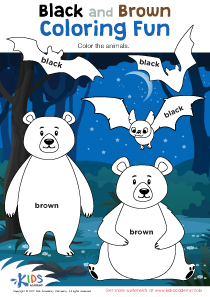
Vocabulary expansion English for Beginners Worksheets for Ages 3-4
7 filtered results
-
From - To
Enhance your child's language skills with our engaging Vocabulary Expansion Worksheets for English beginners aged 3-4! Designed to make learning fun and interactive, these worksheets introduce essential vocabulary in colorful and appealing formats. Young learners will enjoy tracing letters, matching images to words, and participating in simple activities that promote retention and understanding. Our age-appropriate exercises foster curiosity and language development, providing a strong foundation in English. Perfect for parents and educators, these worksheets are an excellent resource for incorporating language learning into daily play. Start enriching your child's vocabulary today and watch them thrive in their English language journey!

Long and Short U Worksheet
 Assign to My Students
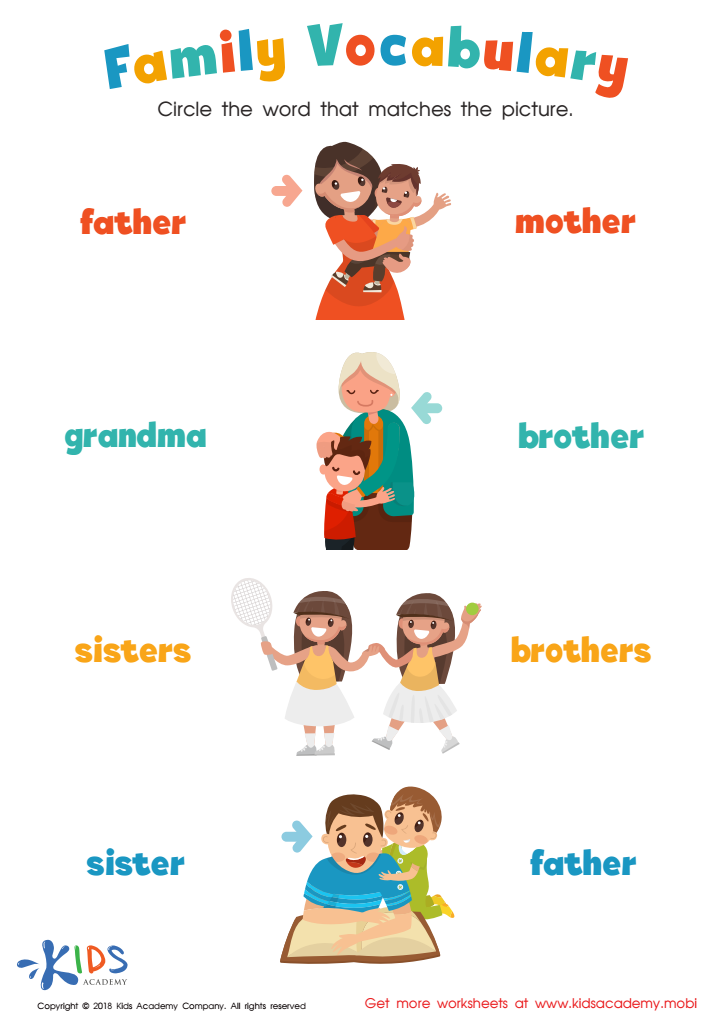
Family Vocabulary Worksheet
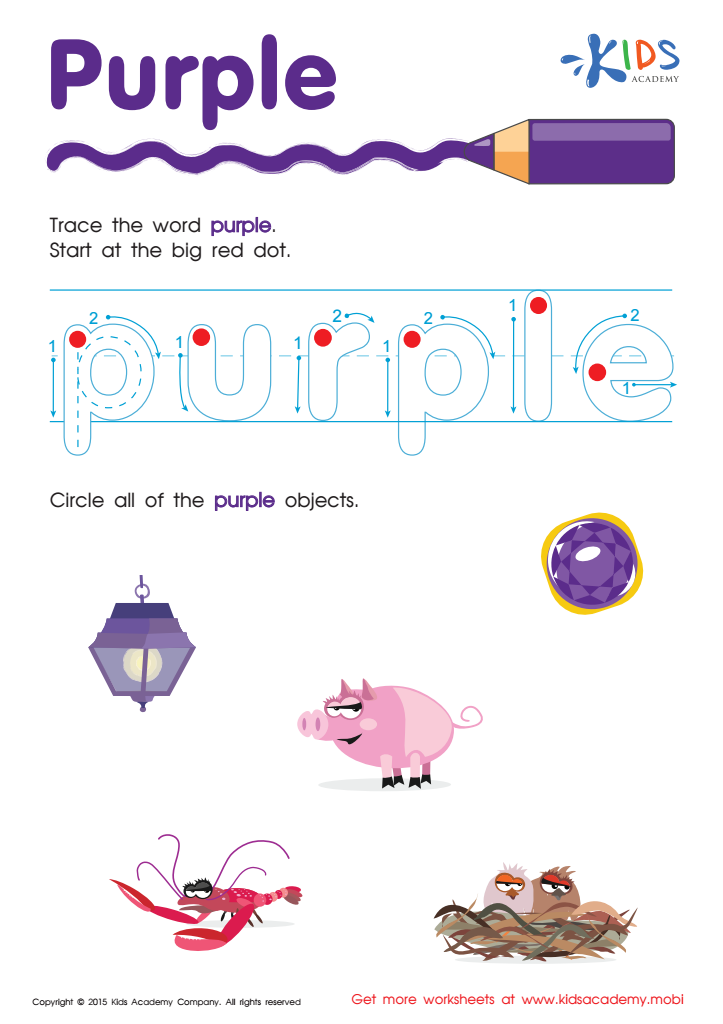
Purple Tracing Color Words Worksheet
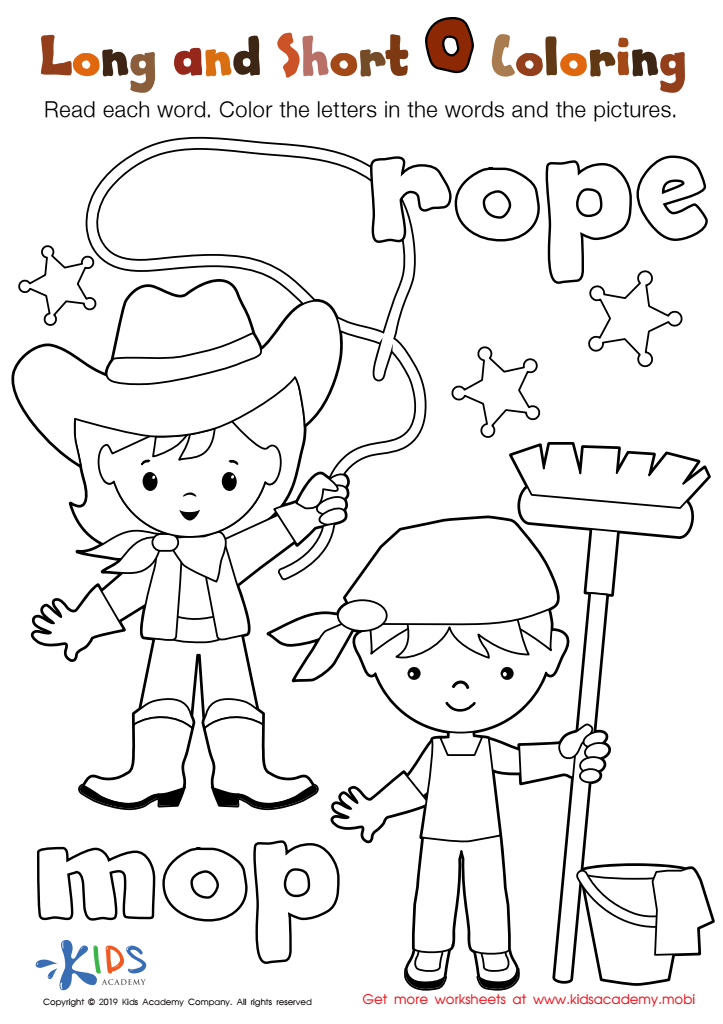
Long and Short O Worksheet
Assign to My Students
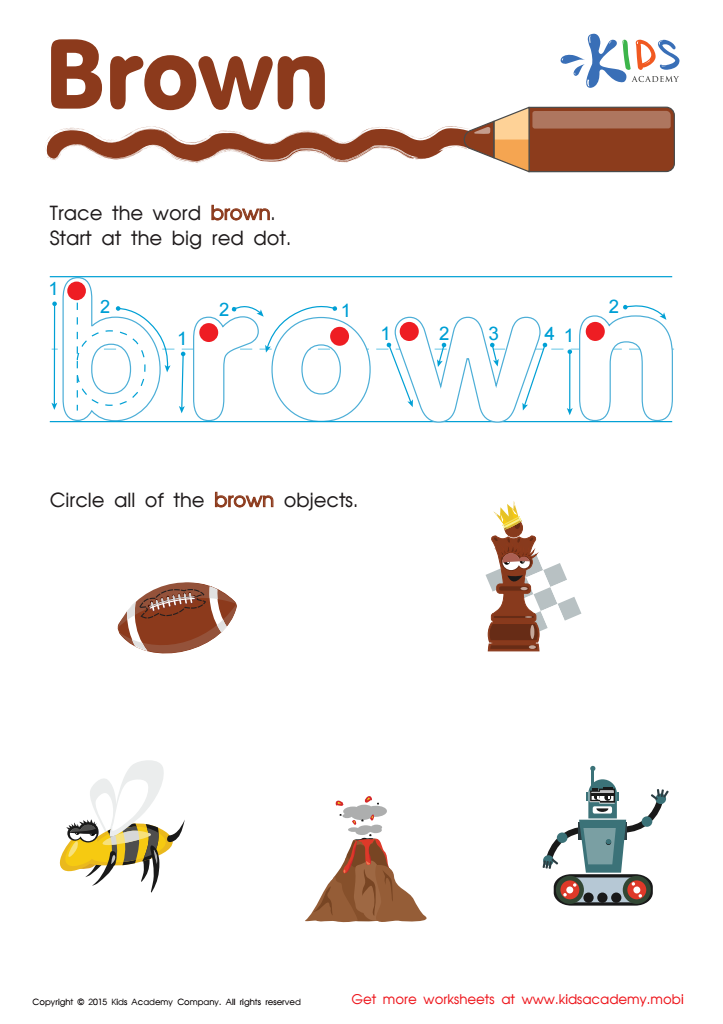
Brown Tracing Color Words Worksheet
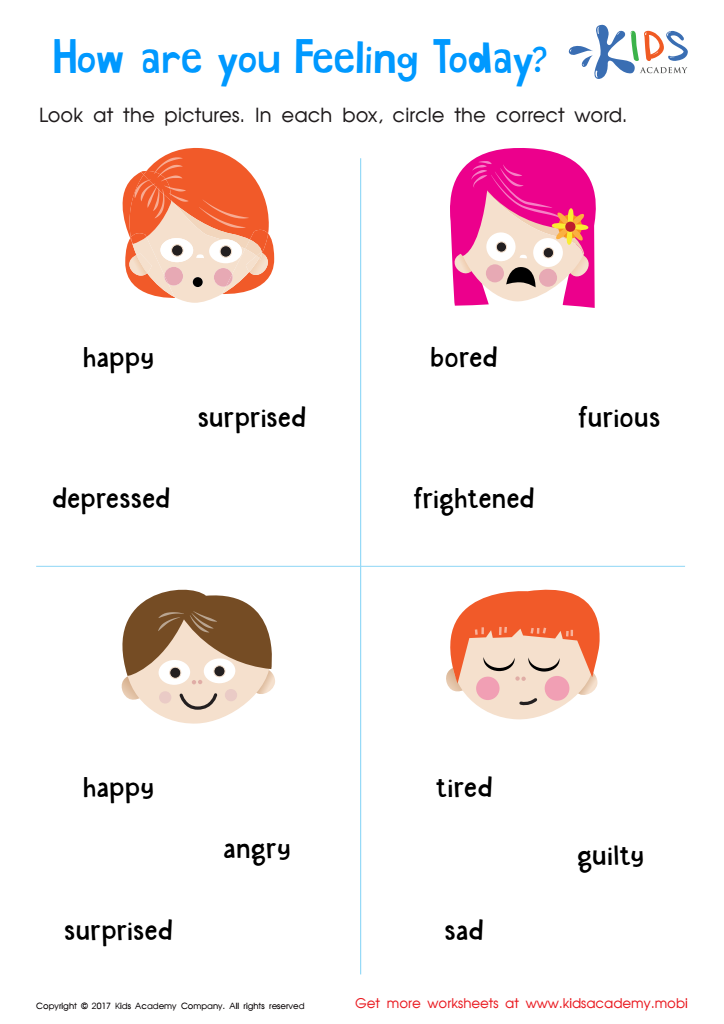
Understanding Feelings Worksheet

Family Coloring Page
Assign to My Students




Vocabulary expansion for English learners aged 3-4 is crucial for several reasons. First, this age range is a critical period for language acquisition. Children absorb new words rapidly, laying the foundation for their communication skills. By introducing a rich vocabulary early on, parents and teachers can enhance children's ability to express themselves clearly and help them articulate their thoughts and feelings.
Furthermore, a robust vocabulary supports cognitive development. Children learn to categorize ideas and make connections, promoting critical thinking skills. This foundation aids future learning in all areas, including reading comprehension and writing abilities.
Fostering vocabulary growth also contributes to social and emotional development. The ability to communicate effectively helps children build relationships, express emotions, and navigate social intricacies. This skill is invaluable in developing confidence and self-esteem.
Lastly, vocabulary is interconnected with school readiness. Children equipped with a rich vocabulary are better prepared for the structured learning environment of preschool and beyond, improving their chances of academic success. In conclusion, by prioritizing vocabulary expansion from a young age, parents and teachers can significantly influence children's overall development and future educational achievements.