Animal recognition Worksheets for Ages 3-4 - Page 5
116 filtered results
-
From - To
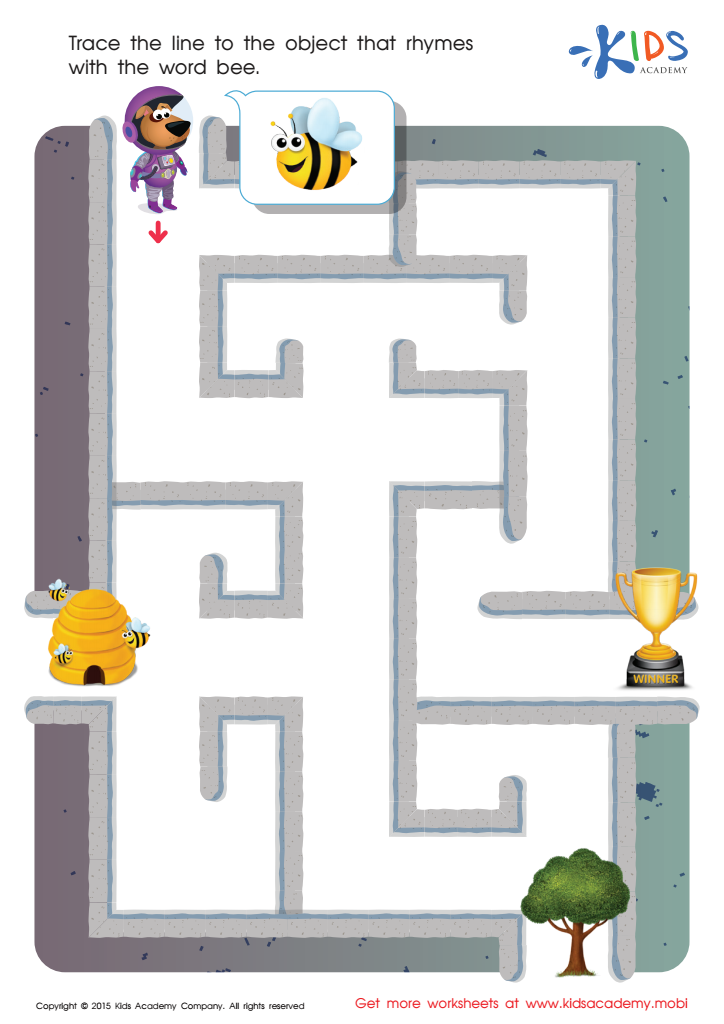
Bee Rhyming Words Worksheet
 Assign to My Students
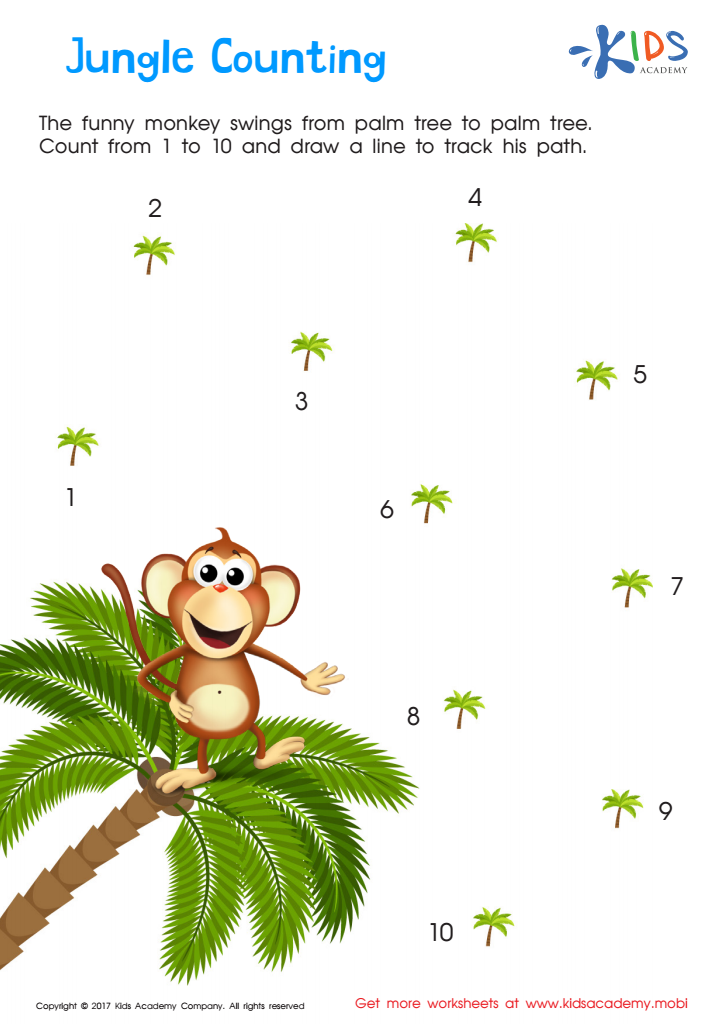
Jungle Counting Connect Dots Worksheet
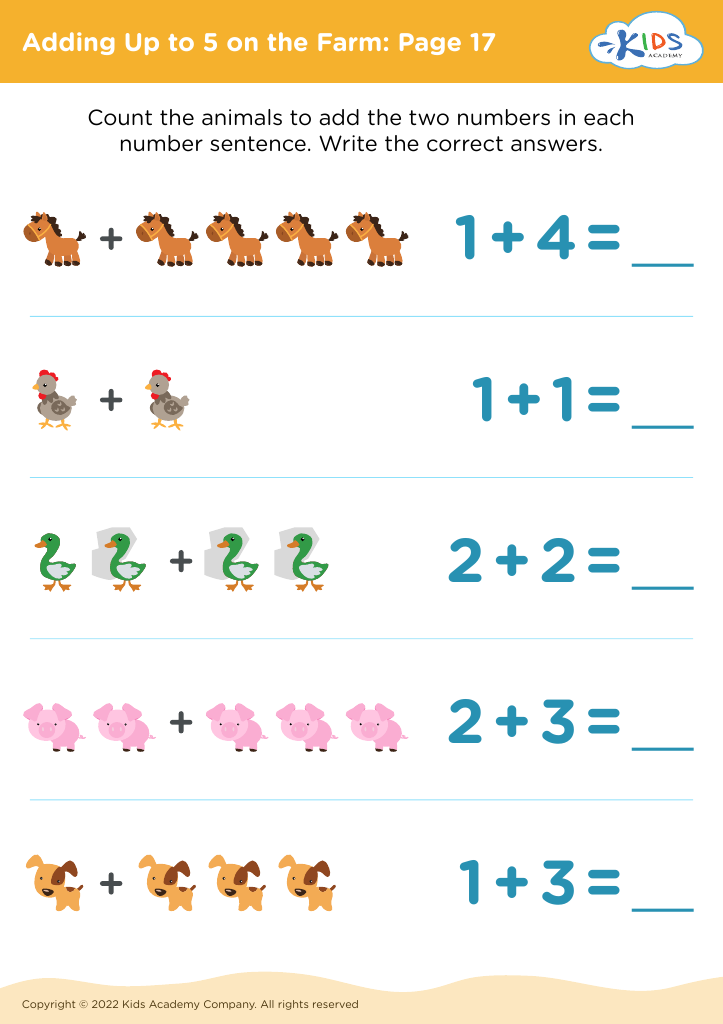
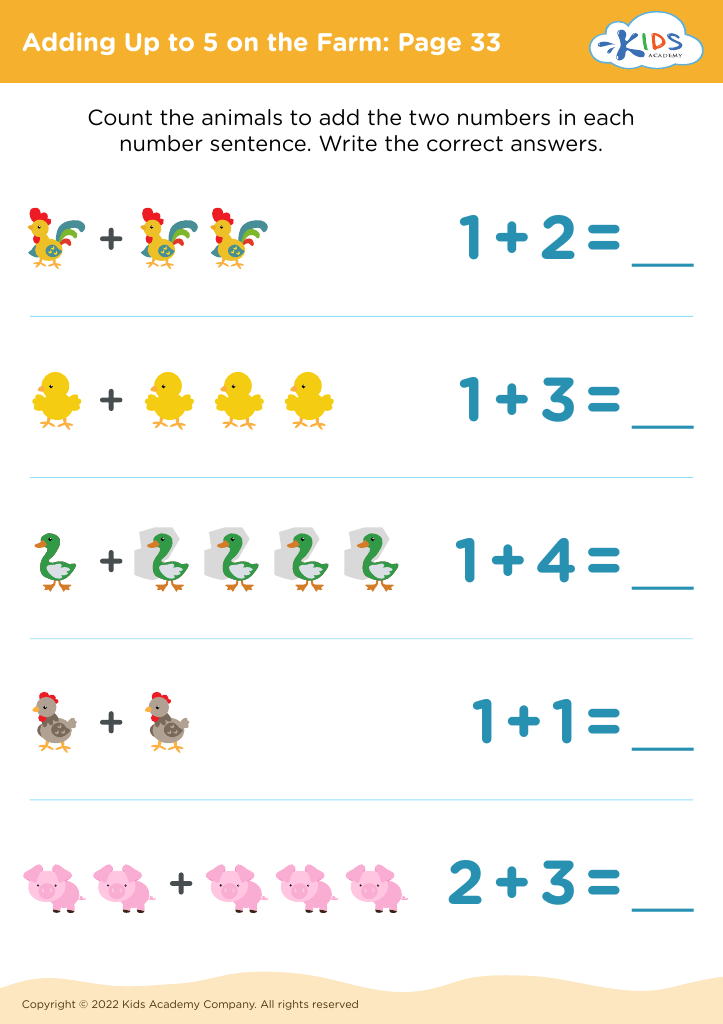
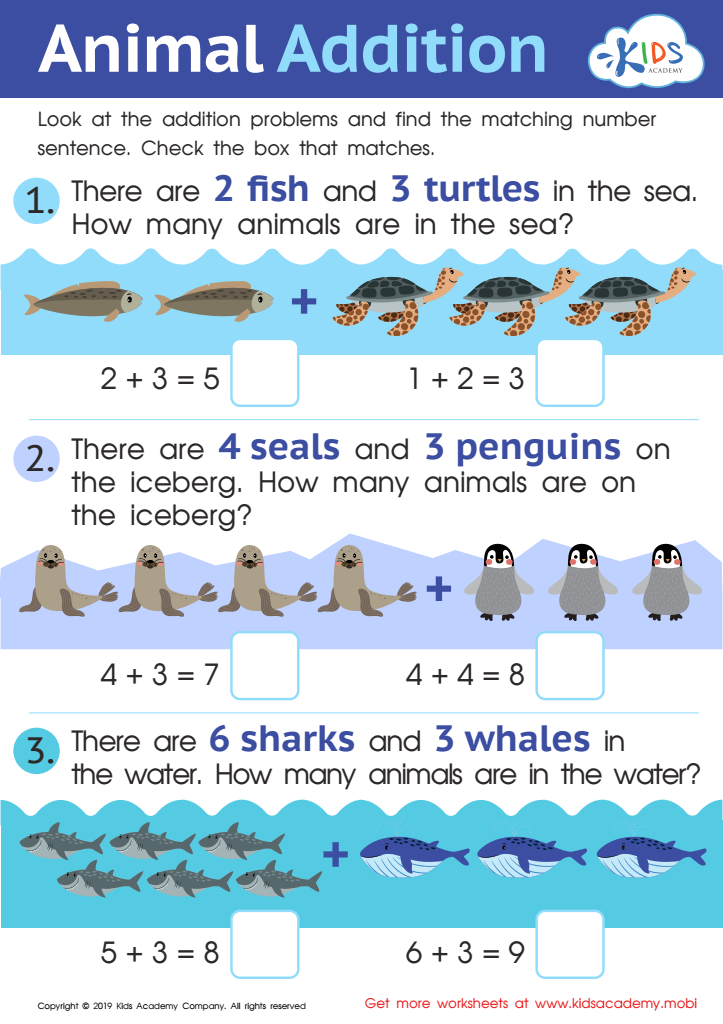
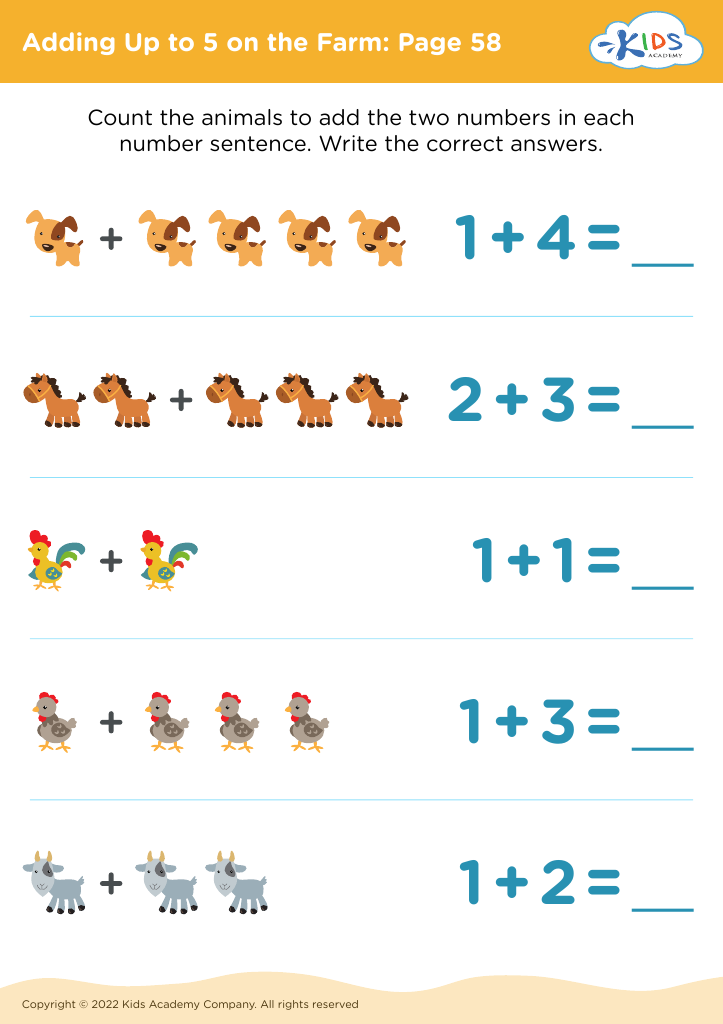
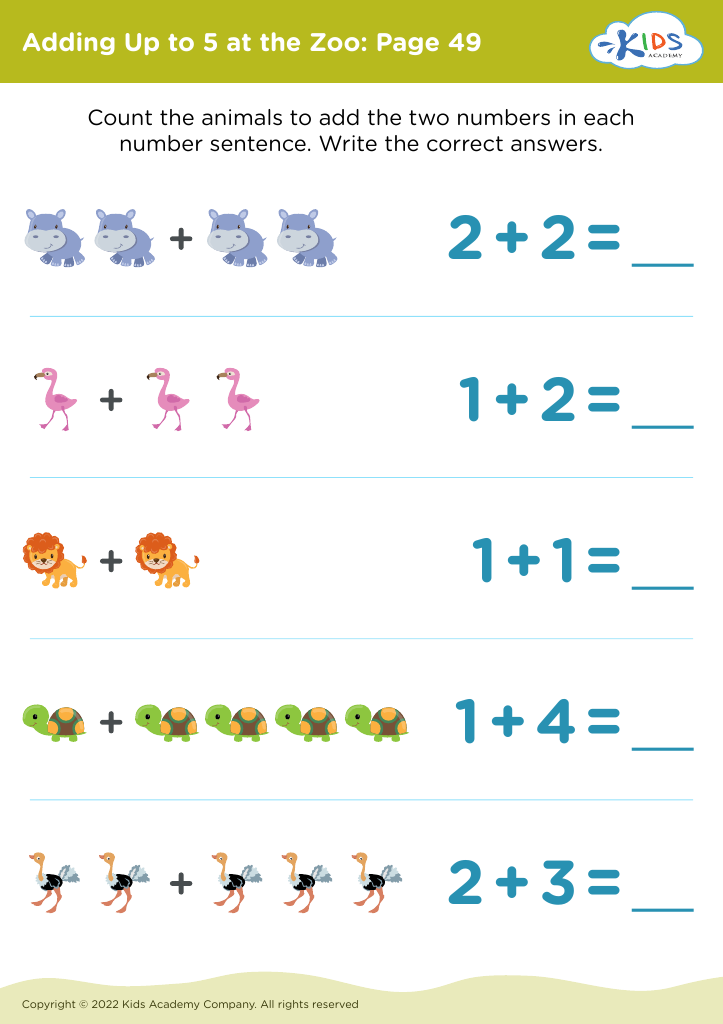
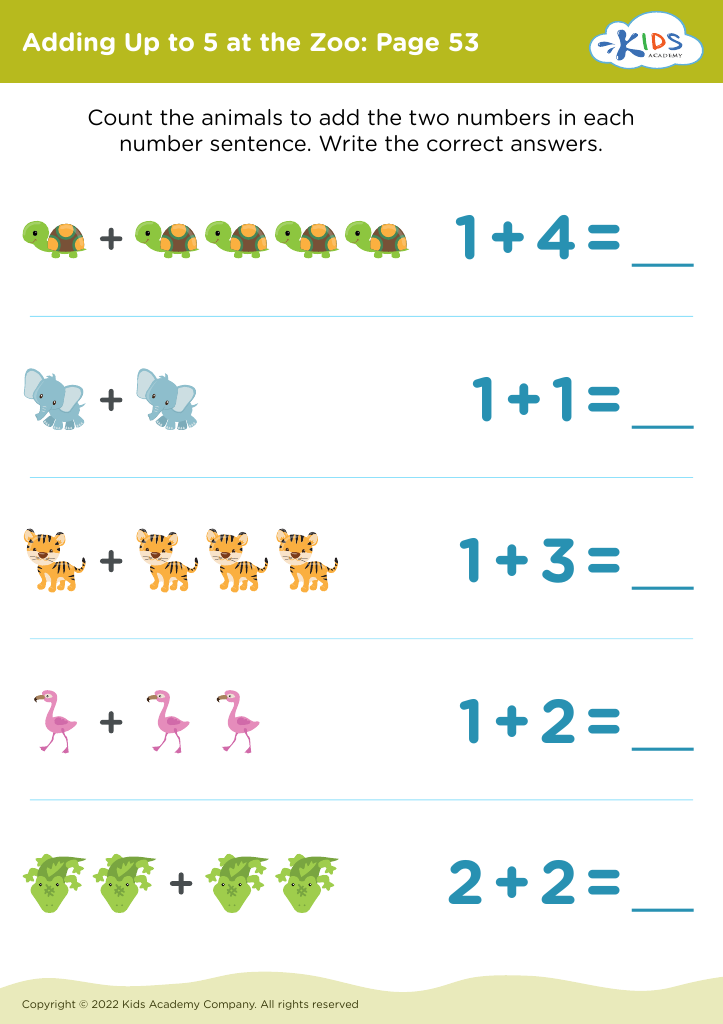
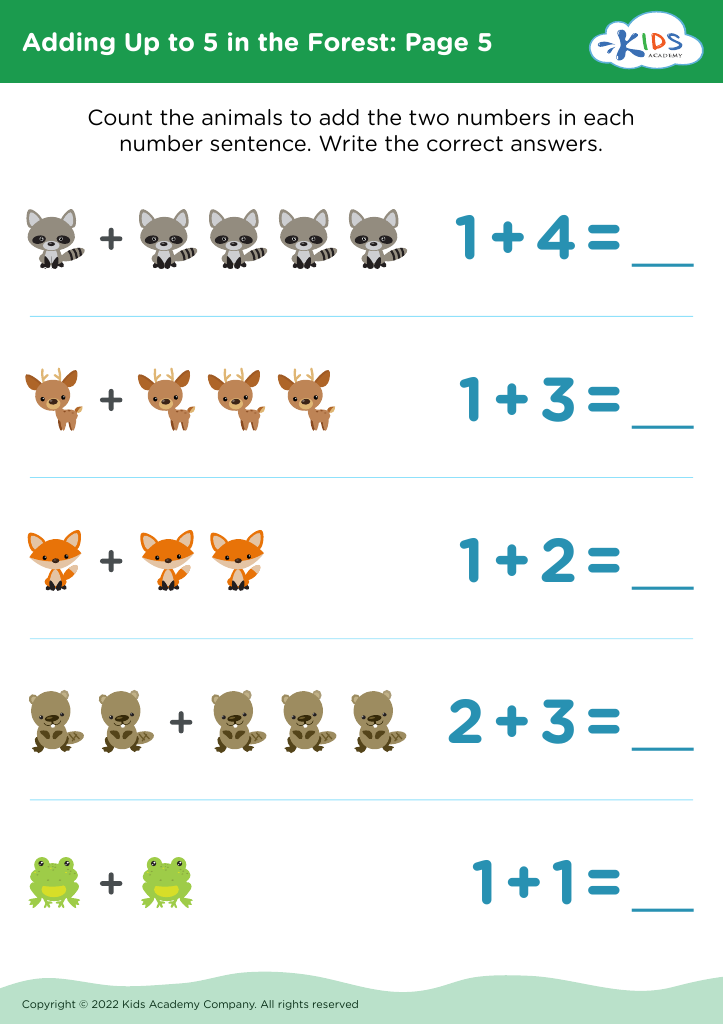
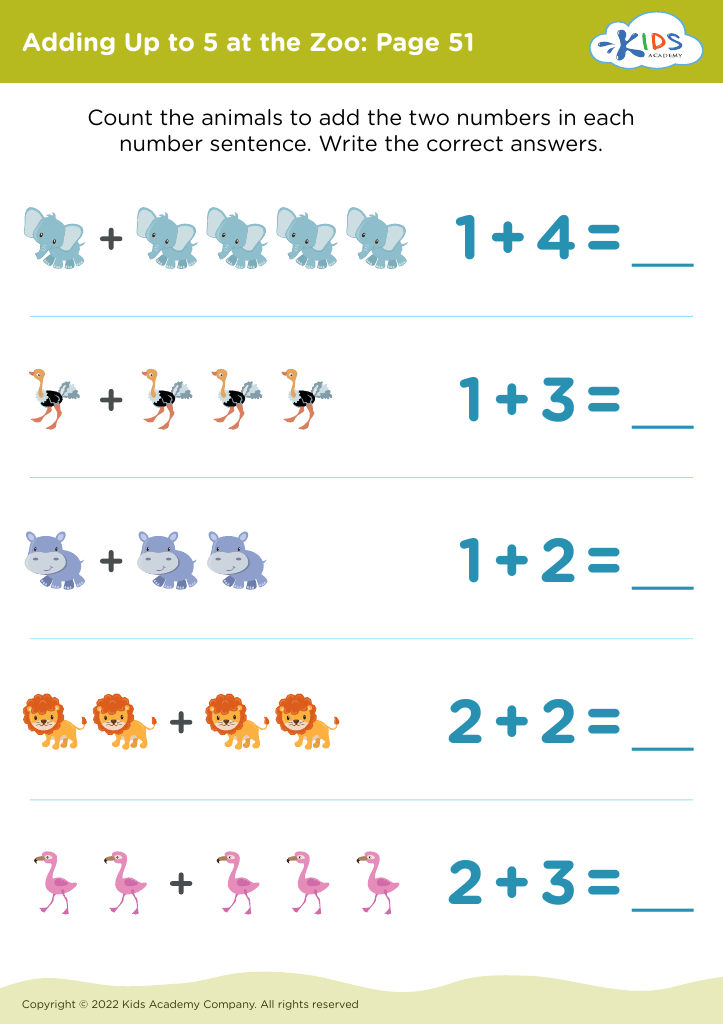
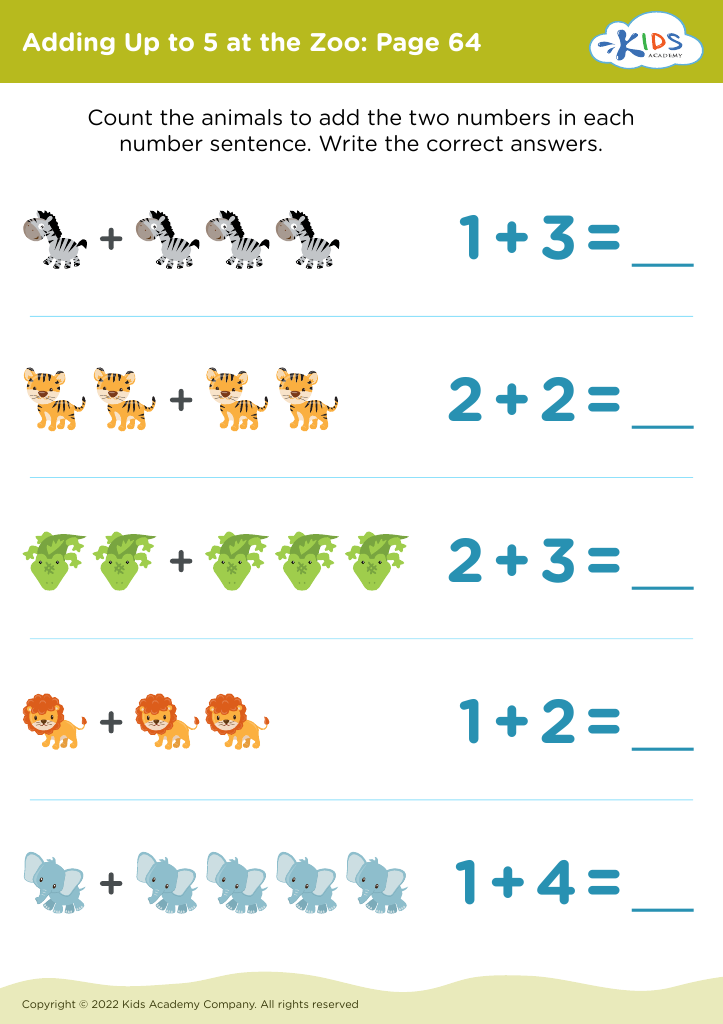
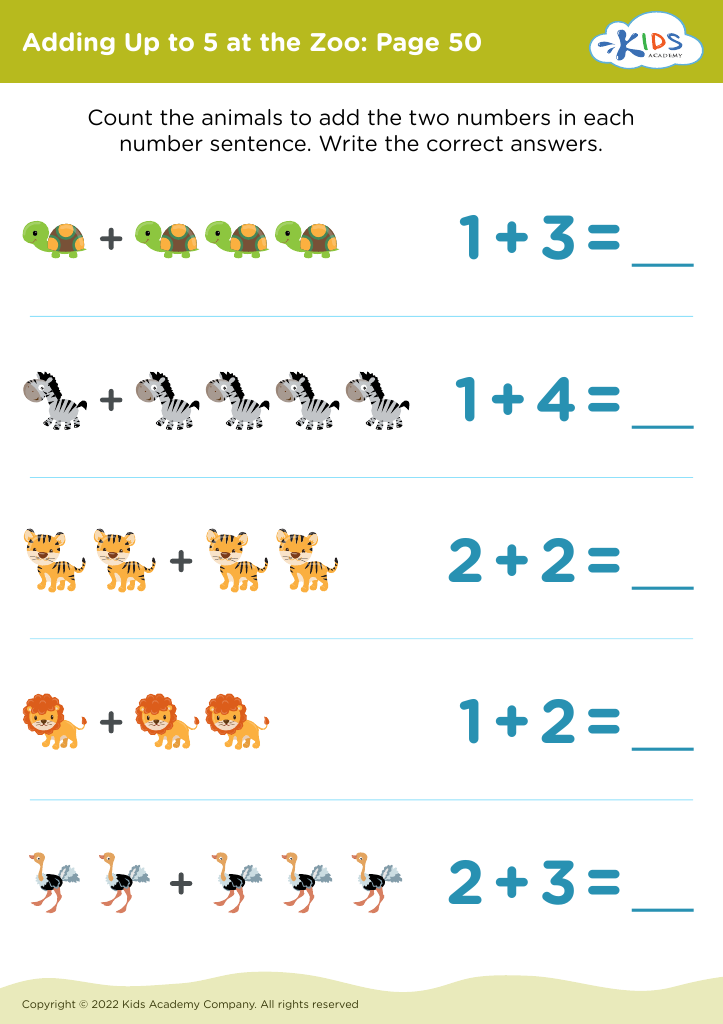
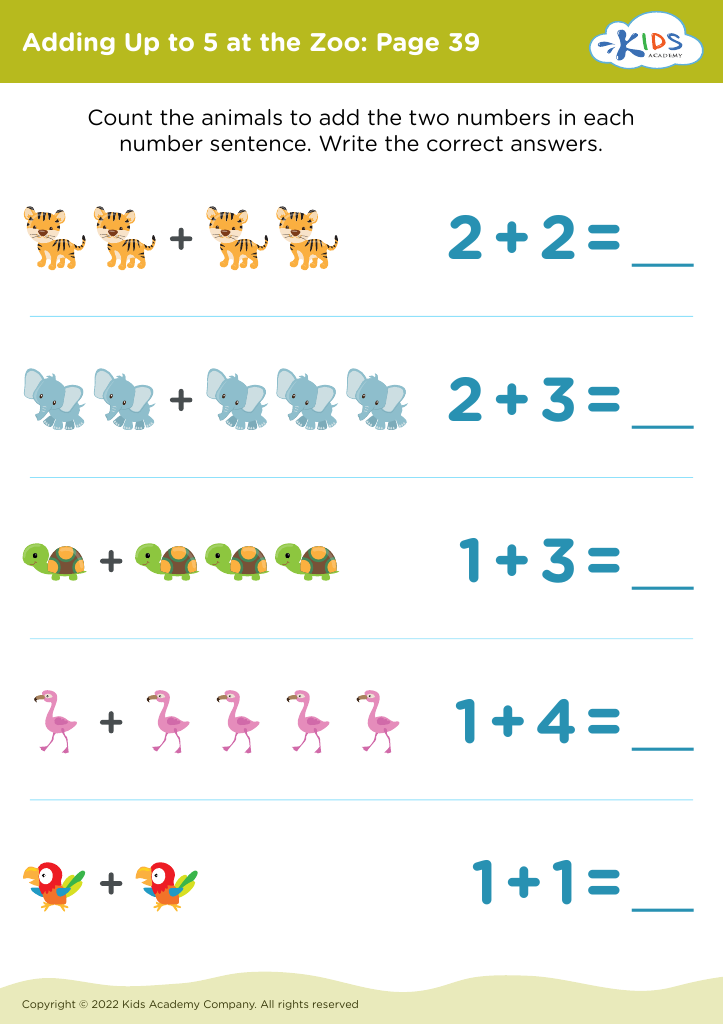
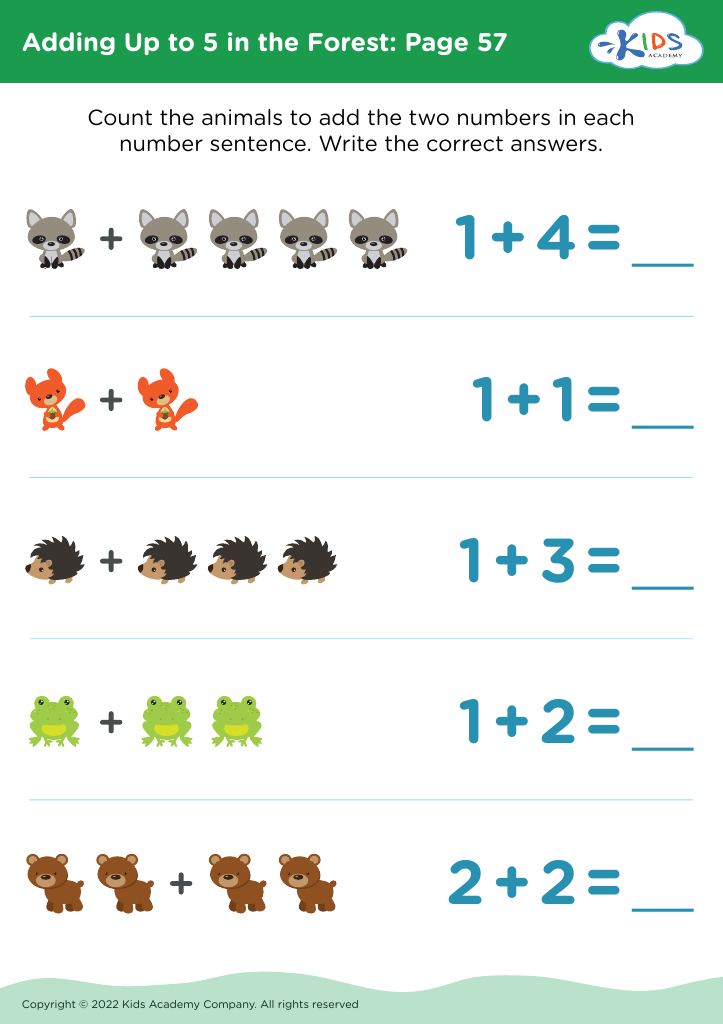
Animal Addition Worksheet
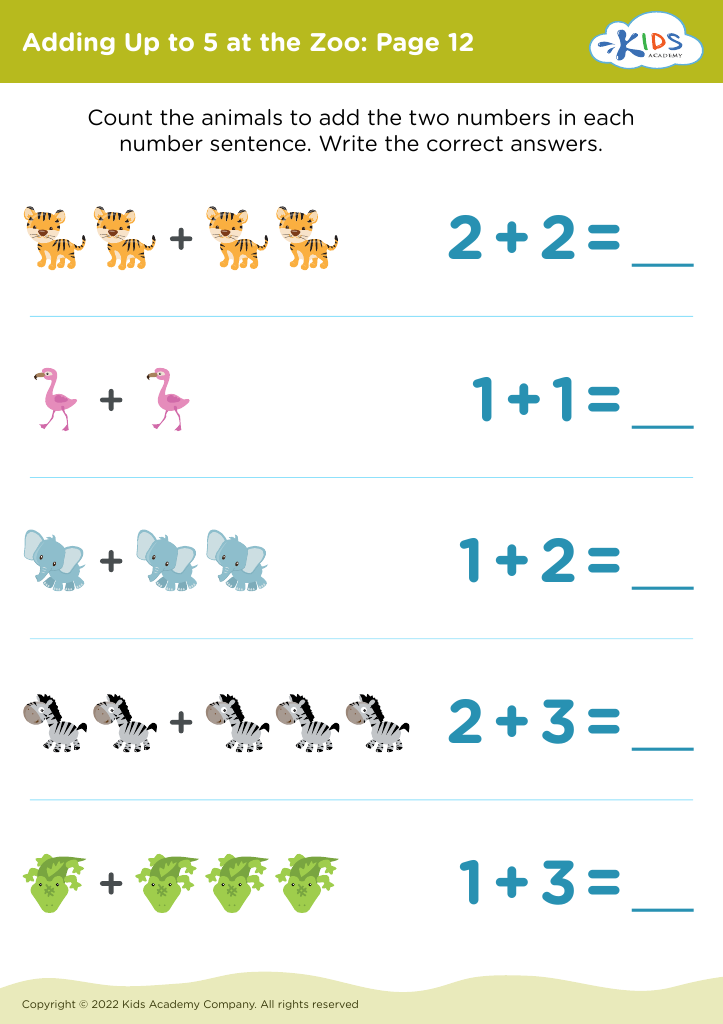
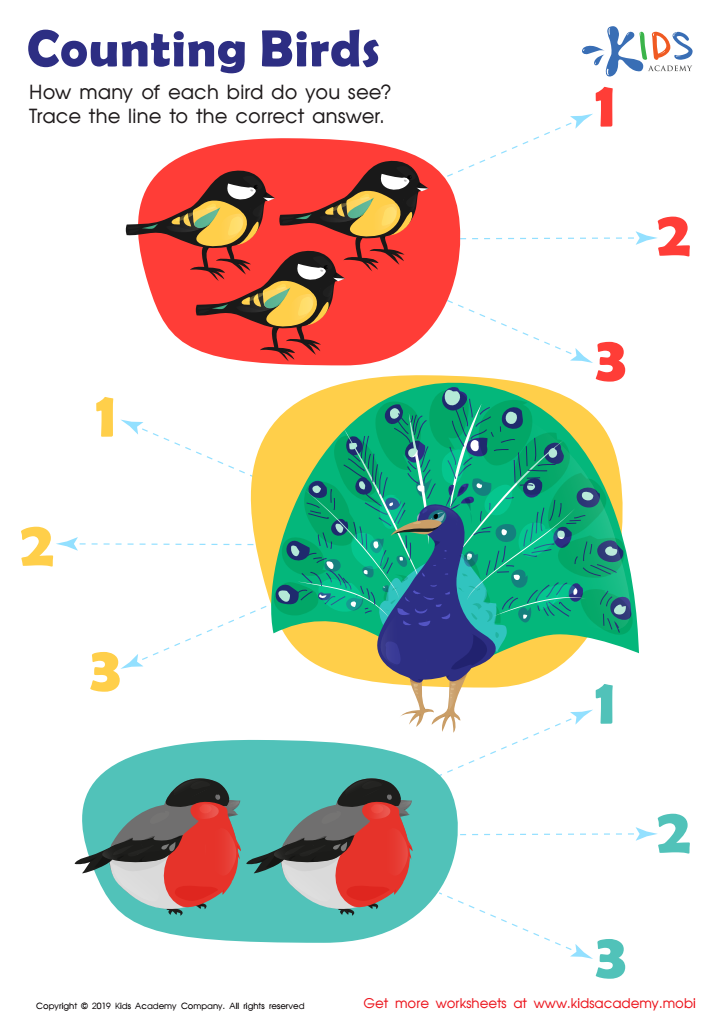
Counting Birds Worksheet
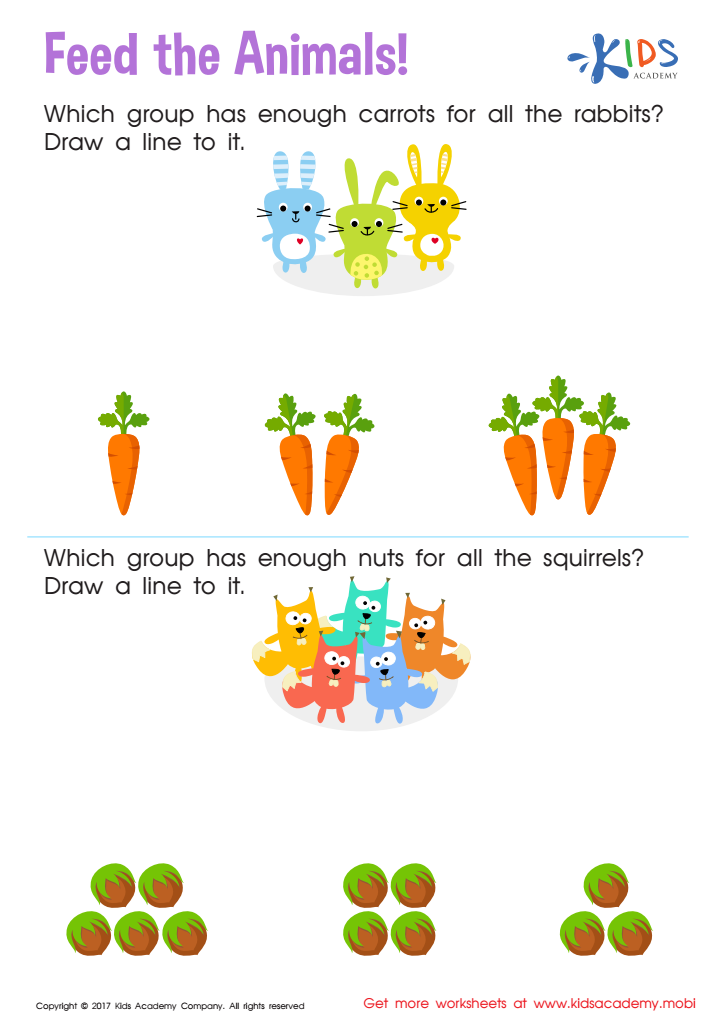
Count and Match: Feed the Animals Worksheet
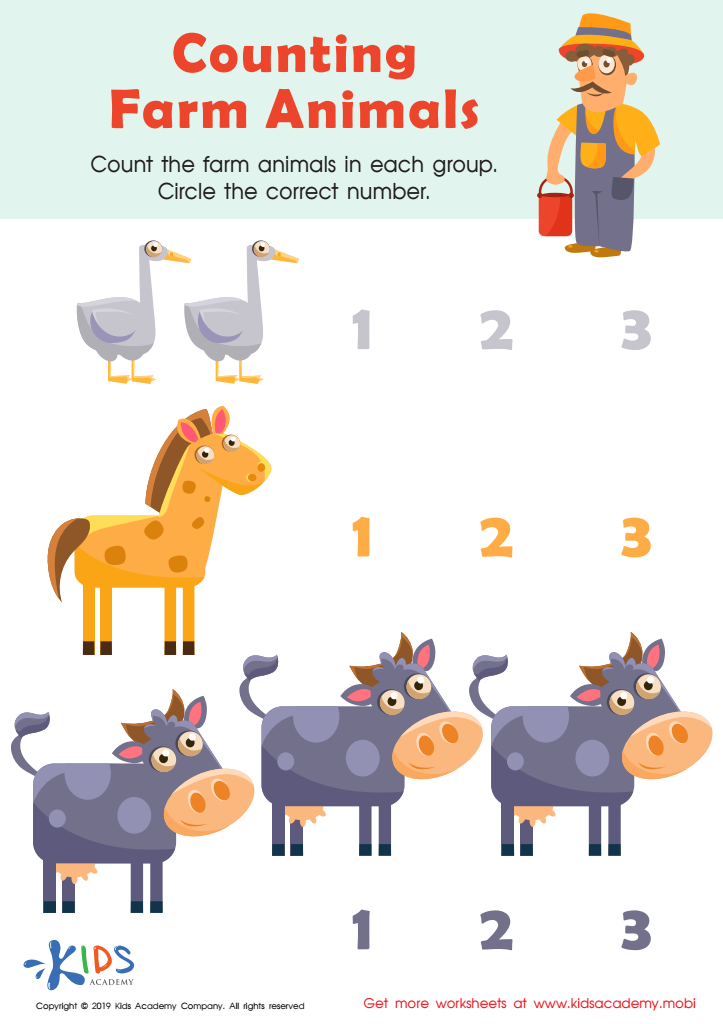
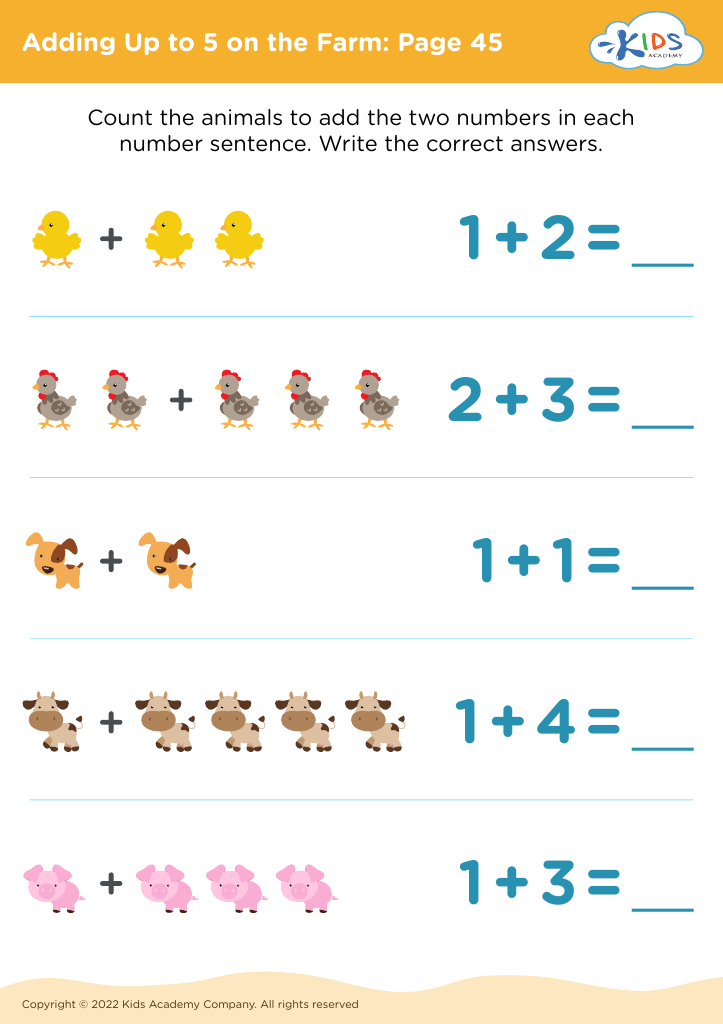
Counting Farm Animals Worksheet








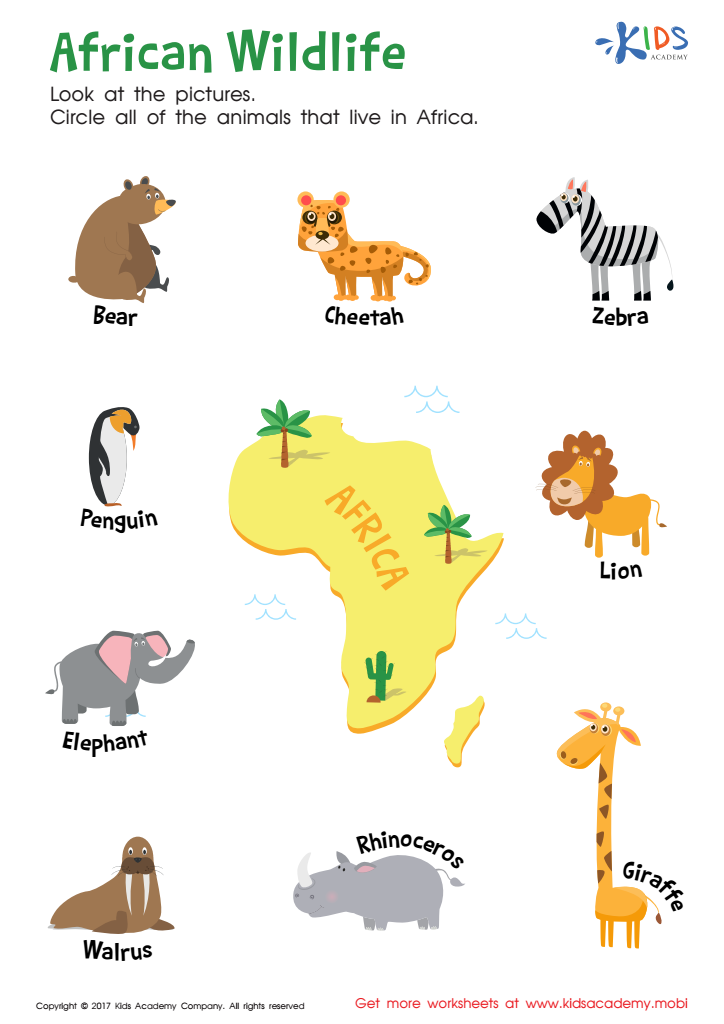
Animal recognition is a fundamental aspect of early childhood development, particularly for children aged 3-4. During this crucial phase, young learners are naturally curious about the world around them, and animals often captivate their interest. Recognizing different animals helps children develop essential cognitive skills such as observation, categorization, and memory. Through animal recognition, children enhance their vocabulary as they learn the names of various animals, aiding language skills and communication.
Moreover, learning about animals fosters empathy and respect for living beings, instilling a foundational understanding of the ecosystem and the significance of biodiversity. This early exposure can nurture a lifelong interest in wildlife and nature, promoting environmental stewardship.
Additionally, animal recognition activities—like sorting games or matching cards—encourage social interaction and collaborative play, further developing essential social skills. By incorporating animal recognition into educational settings, teachers and parents create engaging, interactive learning experiences that also support emotional and intellectual growth. Ultimately, recognizing animals opens the door to a myriad of learning opportunities, laying the groundwork for curiosity and inquiry as children grow. In summary, promoting animal recognition in early childhood enriches cognitive, social, and emotional aspects of development, making it vital for educators and parents alike.








