
Basic math comprehension Worksheets for Ages 3-4
4 filtered results
Difficulty Level
Grade
Age
-
From - To
Subject
Activity
Standards
Nurture your child's mathematical curiosity with our Basic Math Comprehension Worksheets for ages 3-4. These engaging and vibrant worksheets build foundational skills through fun activities tailored for young learners. Designed to introduce basic concepts like counting, shape recognition, and number patterns, each worksheet encourages exploration and confidence in early math. Perfectly suited for preschoolers, our resources foster a positive learning environment and prepare children for future academic success. Download now from Kids Academy to start your child's mathematical journey with activities that make learning enjoyable!
Favorites
With answer key
Interactive
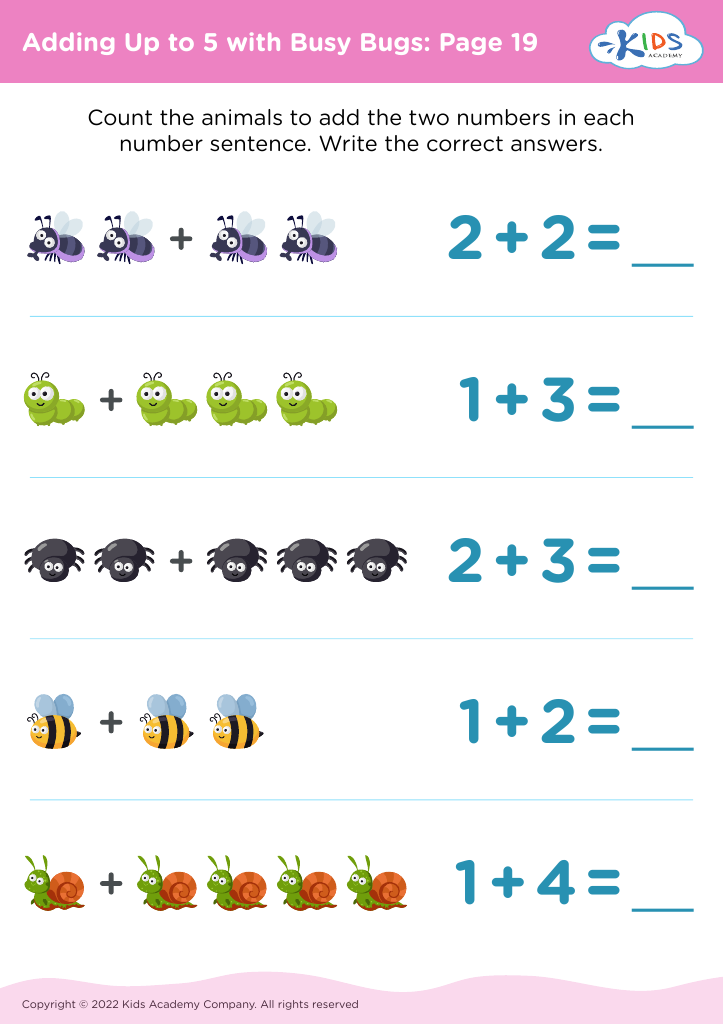
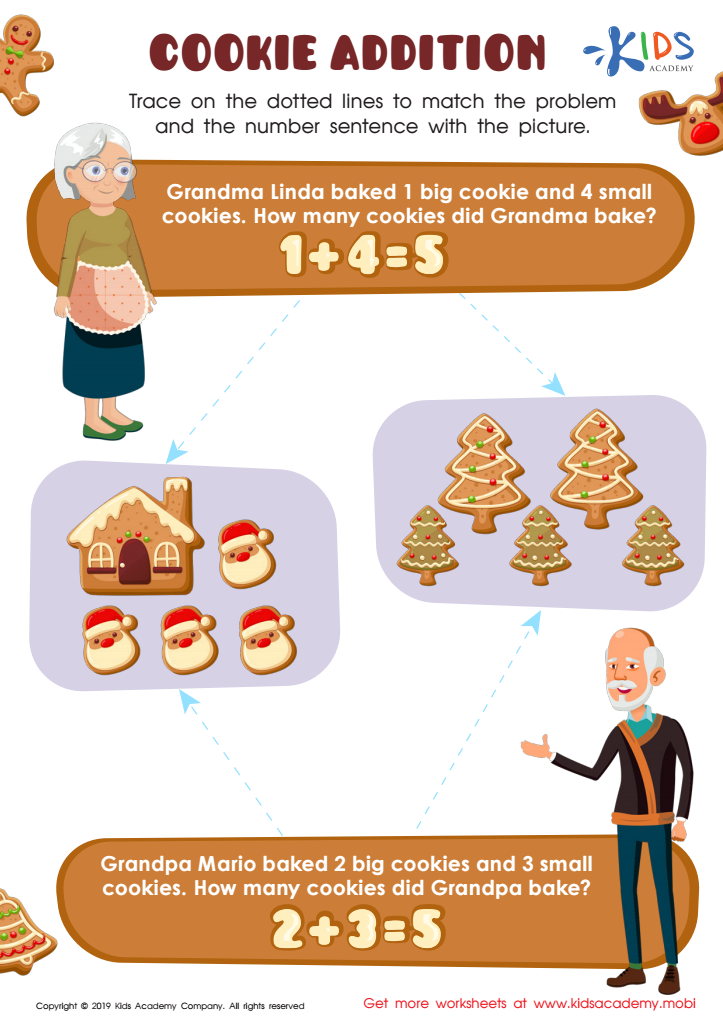
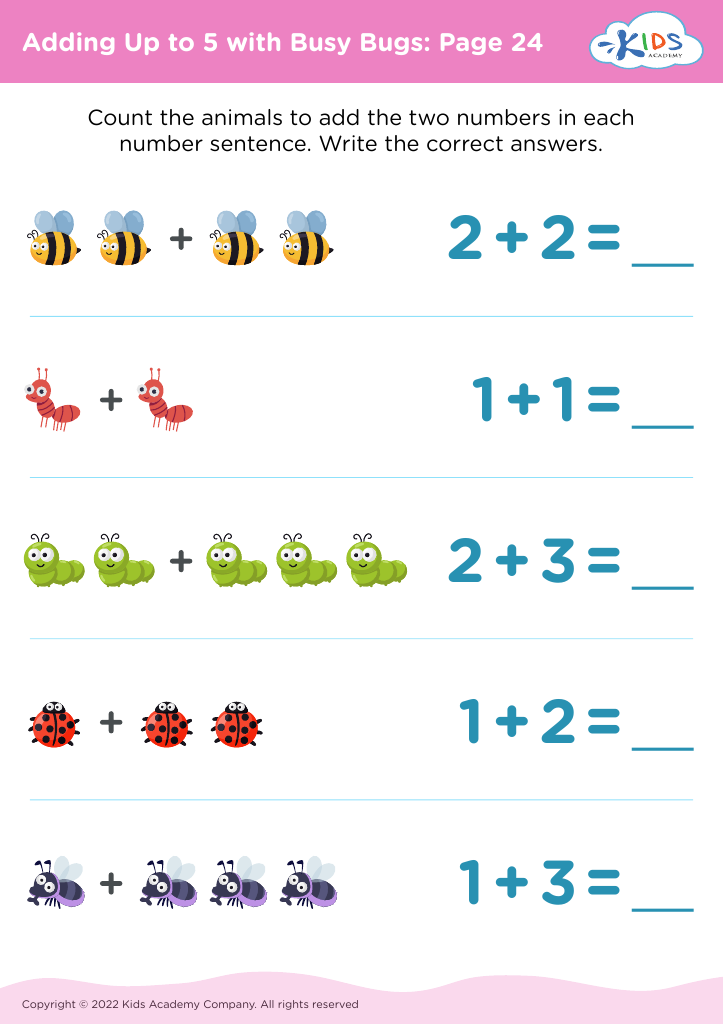
Cookie Addition Worksheet
Let your kids have fun identifying pictures in their worksheet. Read word sentences to them and help them turn them into number problems. Then, get them to trace the lines to match the problem and the number sentence with the picture. They’ll love it, especially if they love cookies!
 Assign to My Students
Cookie Addition Worksheet
Worksheet
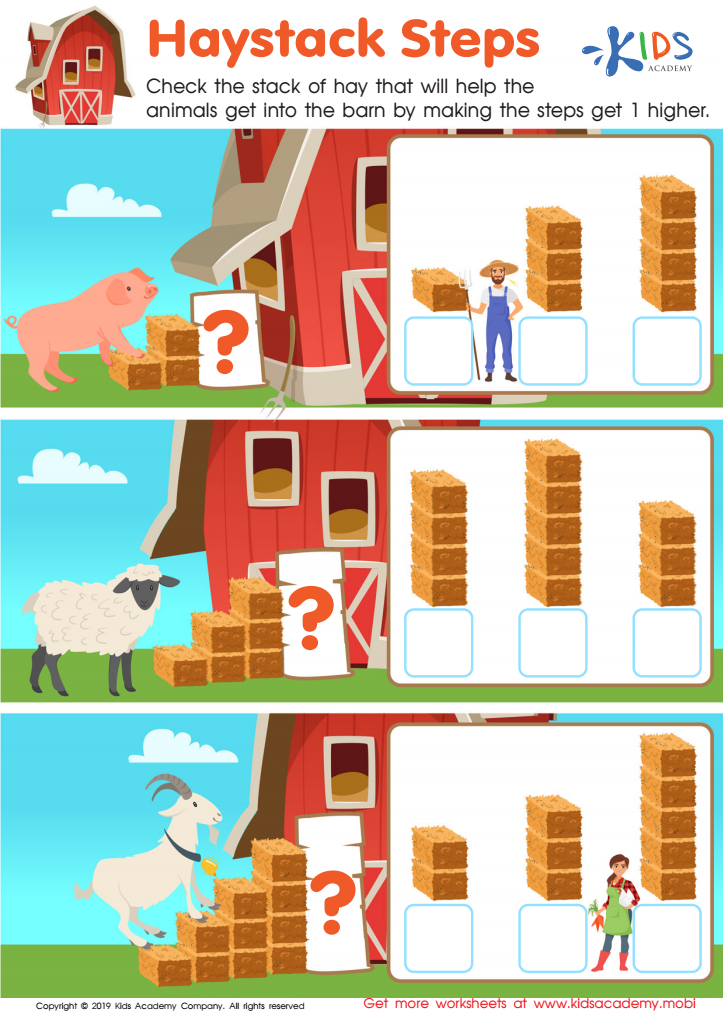
Haystack Steps Worksheet
Have your kids ever visited a farm? What activities and sights did they enjoy? Farmers are essential to our lives, growing food and providing us with dairy and eggs. In this worksheet, a farmer has made a haystack for his animals to climb into the barn. Ask your kids to add an extra layer to the stack to make the climb easier.
Haystack Steps Worksheet
Worksheet
Join Kids Academy for Free
Who is primarily going to use this learning content?







Basic math comprehension for ages 3-4 is crucial because it forms the foundation for future academic success and everyday problem-solving skills. During these early years, young minds are extraordinarily receptive and capable of absorbing new concepts. Parents and teachers who focus on developing basic math skills—such as counting, recognizing numbers, and understanding simple patterns—give children a head start that benefits them in more complex areas of math later on.
Early math skills are also closely linked to better cognitive development. Numbers and patterns help children improve their memory, attention span, and even language skills. When kids comprehend math early, they build confidence and enthusiasm for learning, which transcends into other subjects like reading and science.
Moreover, math comprehension assists in developing life skills. Understanding quantities, spatial awareness, and basic problem-solving are essential for everyday tasks, like sharing toys or following a bedtime routine.
In a broader context, early math comprehension is correlated with better academic performance through elementary school and beyond. Thus, investing time in teaching basic math at ages 3-4 supports a child’s overall educational trajectory and equips them for future societal participation and employment. By engaging children with fun and interactive math activities, parents and teachers lay a vital groundwork for lifelong learning and success.








