Community awareness Worksheets for Ages 3-4
3 filtered results
-
From - To
Discover our engaging Community Awareness Worksheets designed specifically for children aged 3-4. These resources aim to help young learners understand their surroundings, consisting of visually appealing activities that introduce basic concepts of community, safety, and social interactions. Through fun exercises, kids will explore important topics such as places in their neighborhood, the roles of common community helpers, and essential safety rules. Perfect for early childhood educators and parents, these worksheets foster awareness while promoting collaboration, creativity, and critical thinking. Equip your child with the foundational knowledge to navigate their community confidently with our thoughtfully crafted worksheets!
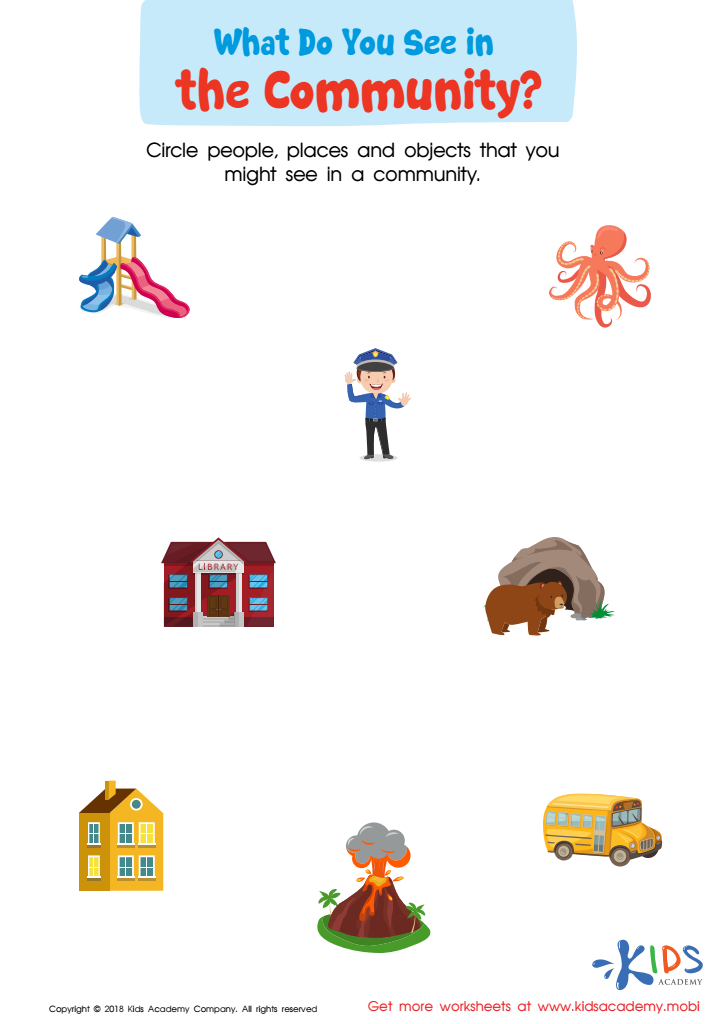
What Do You See in the Community Worksheet
 Assign to My Students
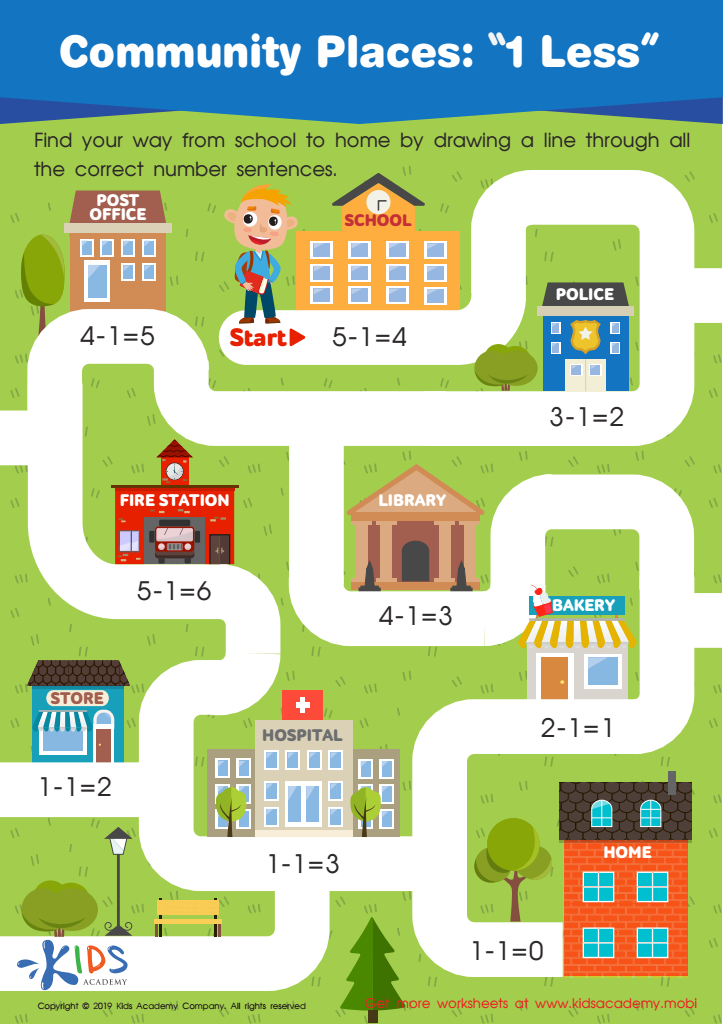
Community Places: 1 Less Worksheet
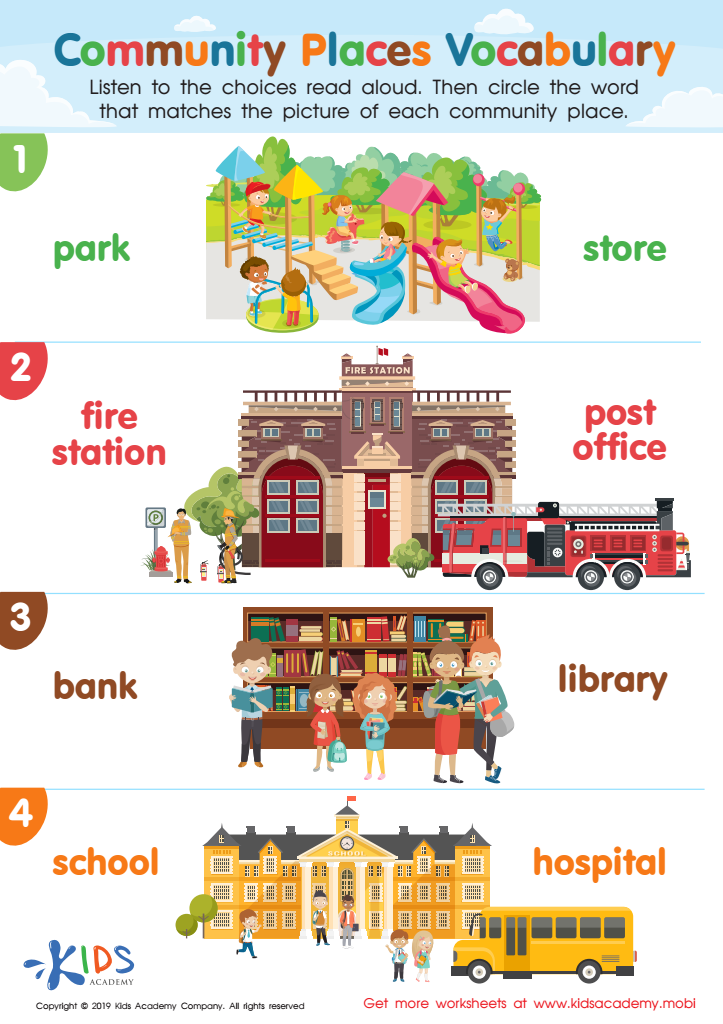
Community Places Vocabulary Worksheet








Community awareness for children ages 3-4 is crucial as it lays the foundation for their social development and understanding of the world around them. At this young age, children are inherently curious and observe the environment. By fostering community awareness, parents and teachers can help children recognize their role in their neighborhoods, promoting empathy, kindness, and cooperation.
Engaging in community activities, such as local festivals, volunteer events, or visits to local parks and libraries, encourages children to connect with diverse individuals and stories. This exposure can help them appreciate differences and develop important social skills, such as communication and teamwork.
Additionally, community awareness instills a sense of belonging and security in young children. They learn that their contributions matter, encouraging responsibility and awareness of their surroundings.
Moreover, involving children in discussions about community roles, such as firefighters, teachers, and shopkeepers, sparks their imagination and critical thinking. When parents and teachers prioritize community awareness, they are nurturing socially conscious individuals who grow up to engage positively with their communities. In essence, investing in this awareness at a young age fosters resilience, inclusivity, and a solid foundation for informed, compassionate citizenship in the future.








