Comparing quantities Worksheets for Ages 3-4
5 filtered results
-
From - To
Discover our "Comparing Quantities Worksheets for Ages 3-4" designed to introduce preschoolers to foundational math skills in a fun and engaging way. Through colorful, interactive activities, young learners will practice recognizing more, less, and equal amounts, developing essential comparison skills. Ideal for early childhood education, these worksheets enhance critical thinking and early numeracy. Perfect for homeschool or classroom settings, they encourage independent learning while preparing children for advanced mathematical concepts. Download now to help your little ones build a strong mathematical foundation with our expertly crafted resources!
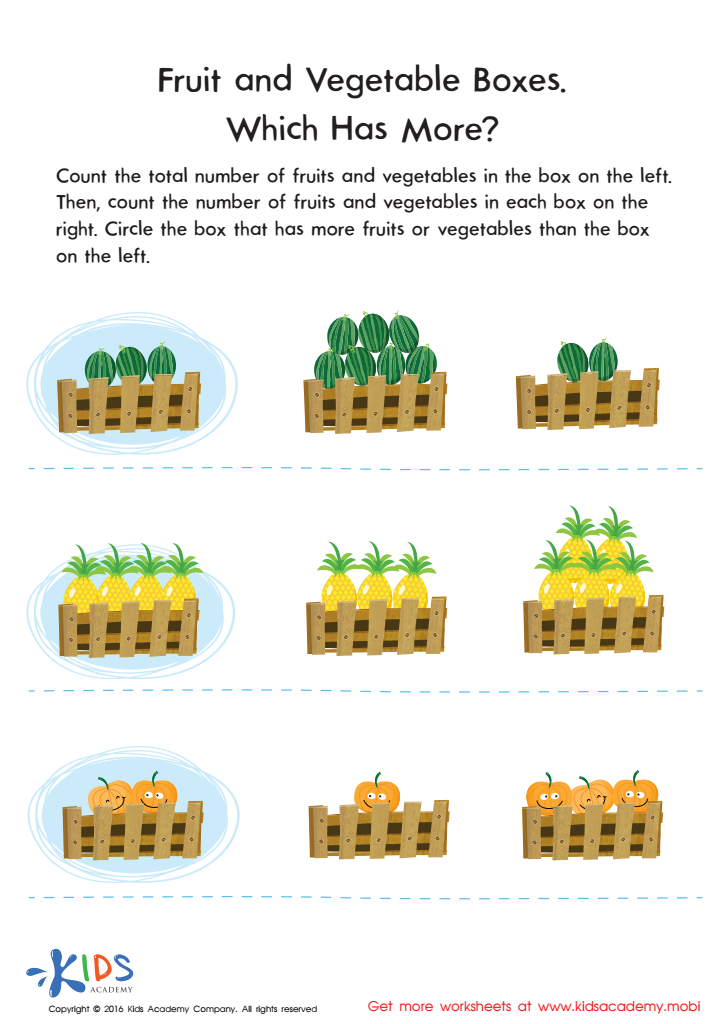
Which Has More? Size Worksheet
 Assign to My Students
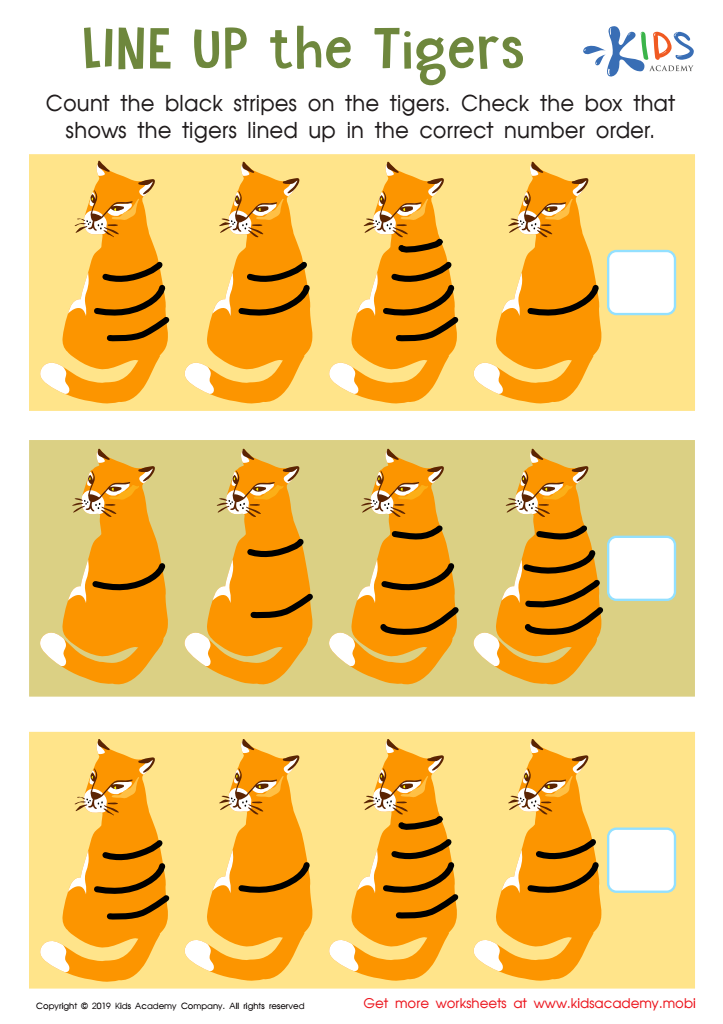
Line up the Tigers Worksheet
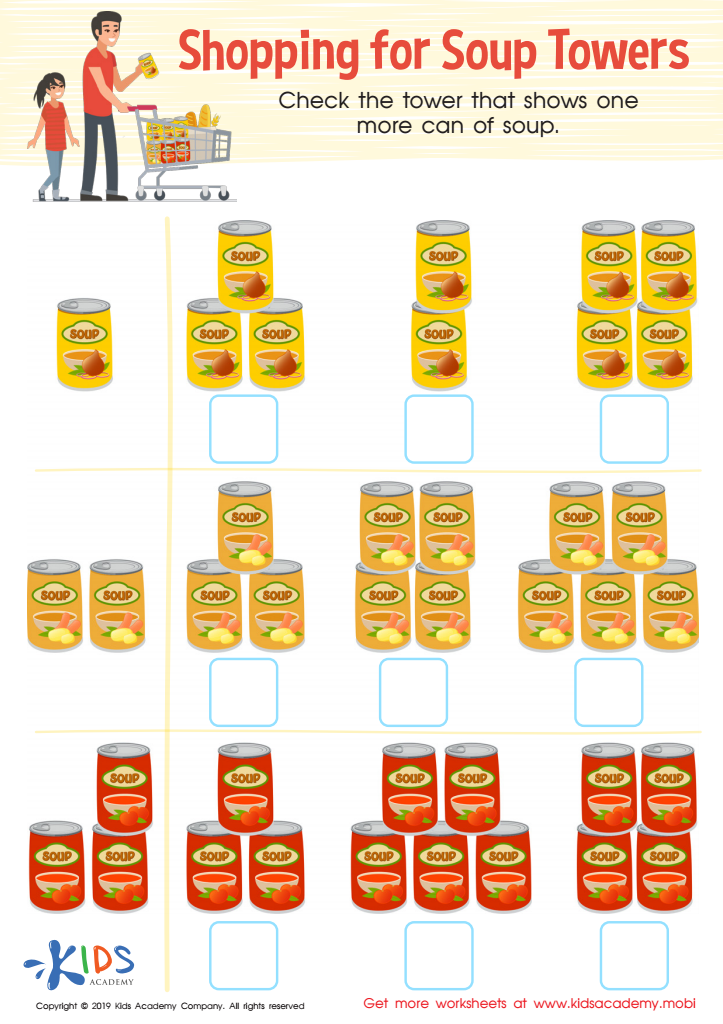
Soup Towers Worksheet
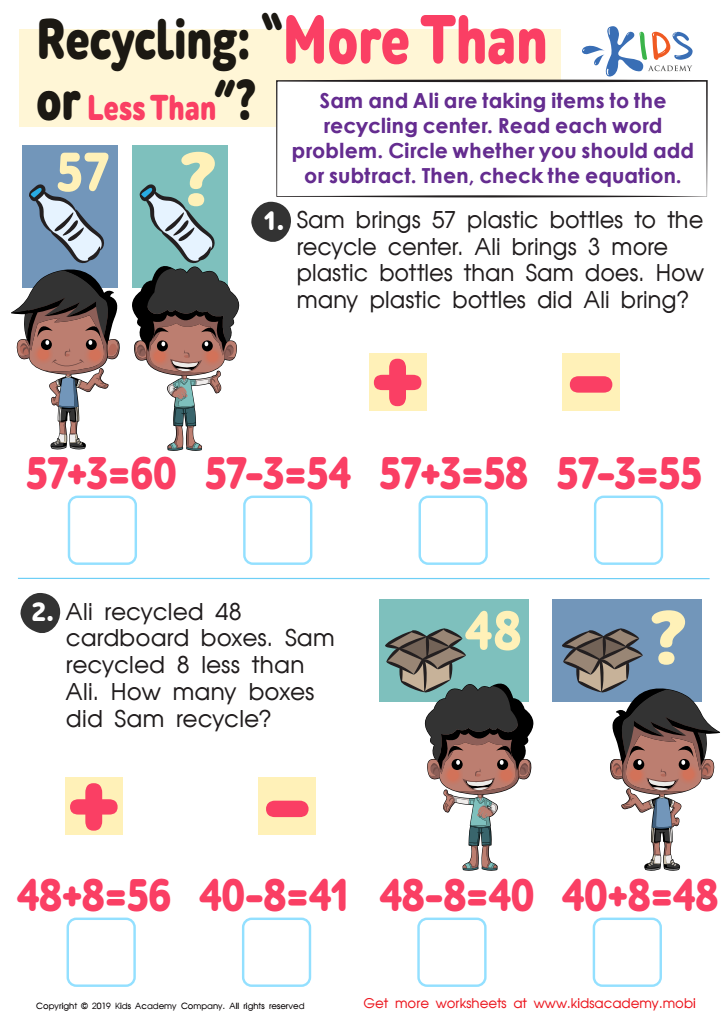
Recycling - More or Less Worksheet
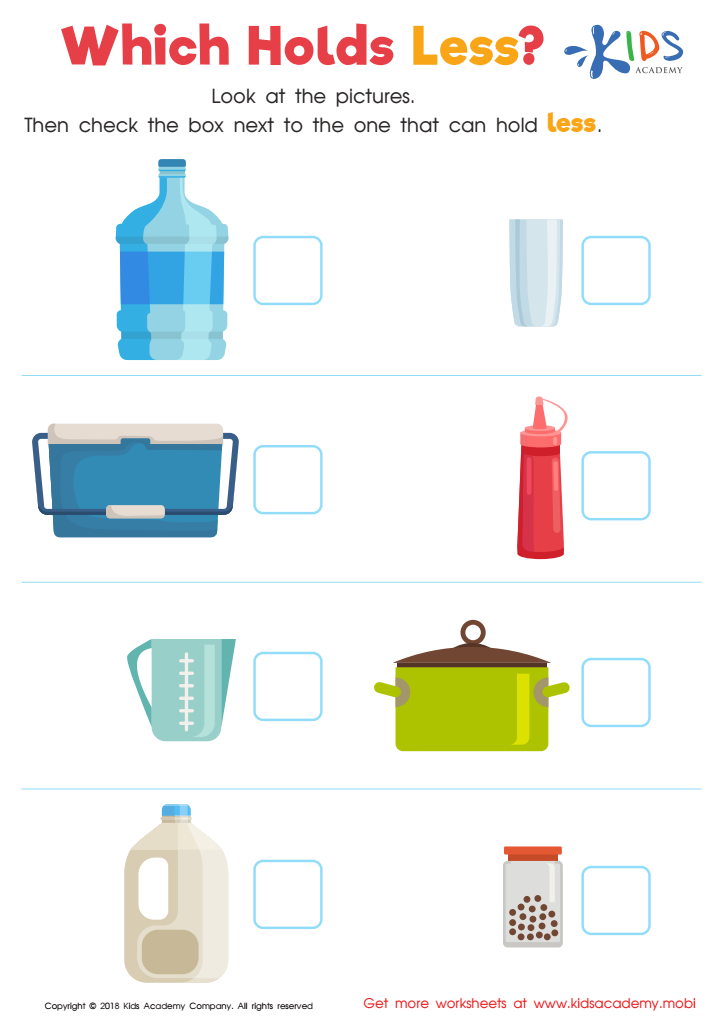
Which Holds Less? Worksheet








Comparing quantities is an essential foundational skill in early childhood development, particularly for children aged 3-4. By developing the ability to compare quantities, children begin to understand the concepts of more, less, and equal, which are critical to early mathematical thinking. This not only aids them in numerical literacy but also fosters logical thinking and problem-solving skills.
Parents and teachers should care about these skills because they form the building blocks for more complex mathematical concepts that children will encounter as they progress in their education. For example, recognizing that one group of objects is larger or smaller than another prepares a child for counting, addition, and subtraction. Moreover, these skills are transferable, helping children in everyday scenarios like sharing toys or snacks, understanding routines, and making fair choices.
Furthermore, comparing quantities inherently supports cognitive development. It encourages analytical thinking and the ability to categorize and organize information. Teachers and parents witnessing young children become excited about sorting and comparing recognize the opportunity to nurture curiosity and a love of learning from a very young age.
Integrating comparison activities into daily routines in an engaging, playful manner will create a positive and rich learning environment, setting the stage for future academic success and life skills.








