
Critical thinking development Worksheets for Ages 3-4
9 filtered results
Difficulty Level
Grade
Age
-
From - To
Subject
Activity
Standards
Enhance your child's cognitive growth with our engaging Critical Thinking Development Worksheets for Ages 3-4. Designed to spark curiosity and creativity, these thoughtfully crafted resources encourage children to think independently and solve problems. Each worksheet includes fun activities that promote reasoning, decision-making, and pattern recognition, making learning both enjoyable and educational. Perfect for parents and educators alike, our worksheets support a foundational skill set that children can build upon as they grow. Help your little ones develop essential thinking skills early on with our vibrant and interactive worksheets, paving the way for future academic success and lifelong learning!
Favorites
With answer key
Interactive
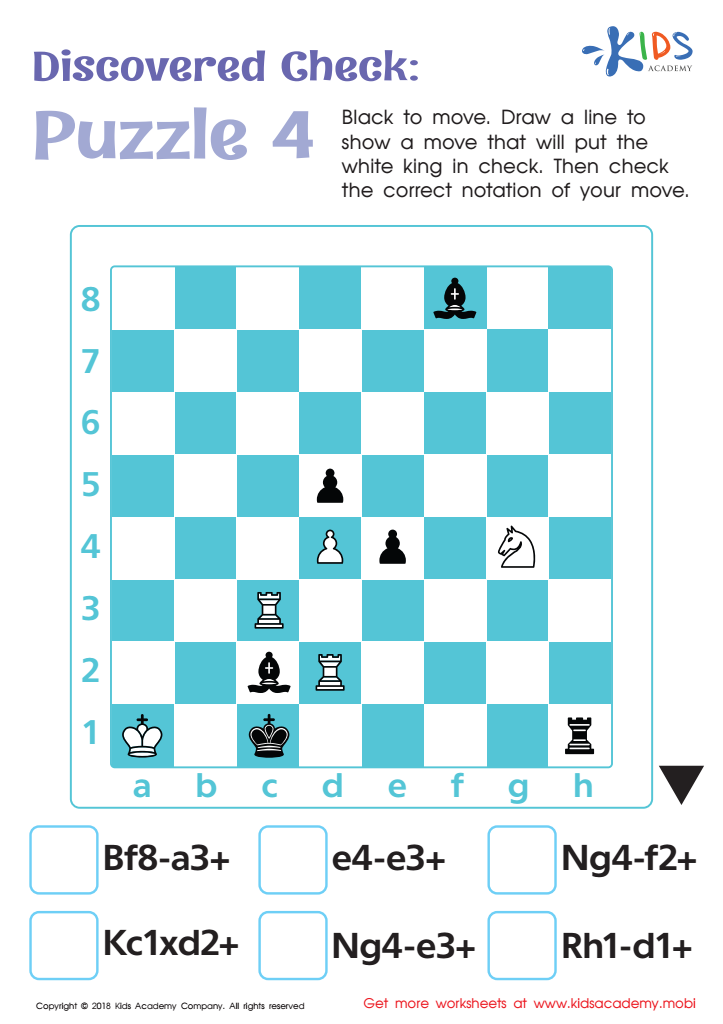
Discovered Check: Puzzle 4 Worksheet
Let your child test their chess skills with this easy worksheet. Have them take control of the black pieces and try to put the white king in checkmate. Ask them to draw a line from their chess piece to the white king, showing the move they'll make, then check the correct answer.
Discovered Check: Puzzle 4 Worksheet
Worksheet
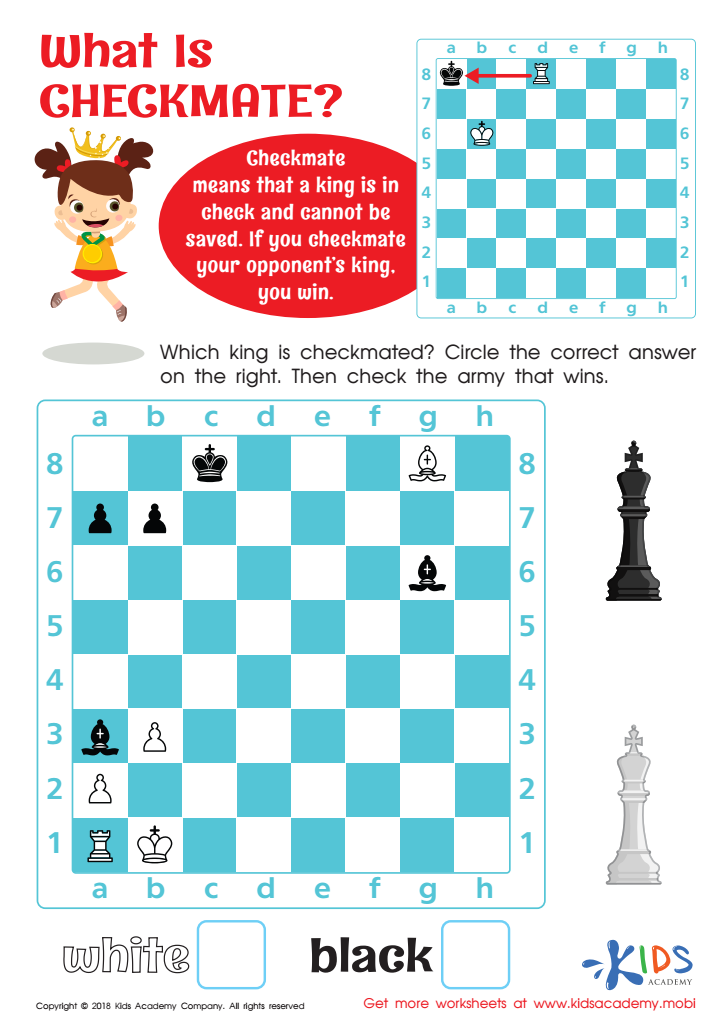
What is Checkmate? Worksheet
This downloadable PDF worksheet lets your child practice identifying when a king is checkmated and how it looks on a chessboard. Checkmate is the best move and with this colorful worksheet, they'll learn that it means their opponent's king is in check and cannot be saved, so they can win!
 Assign to My Students
What is Checkmate? Worksheet
Worksheet
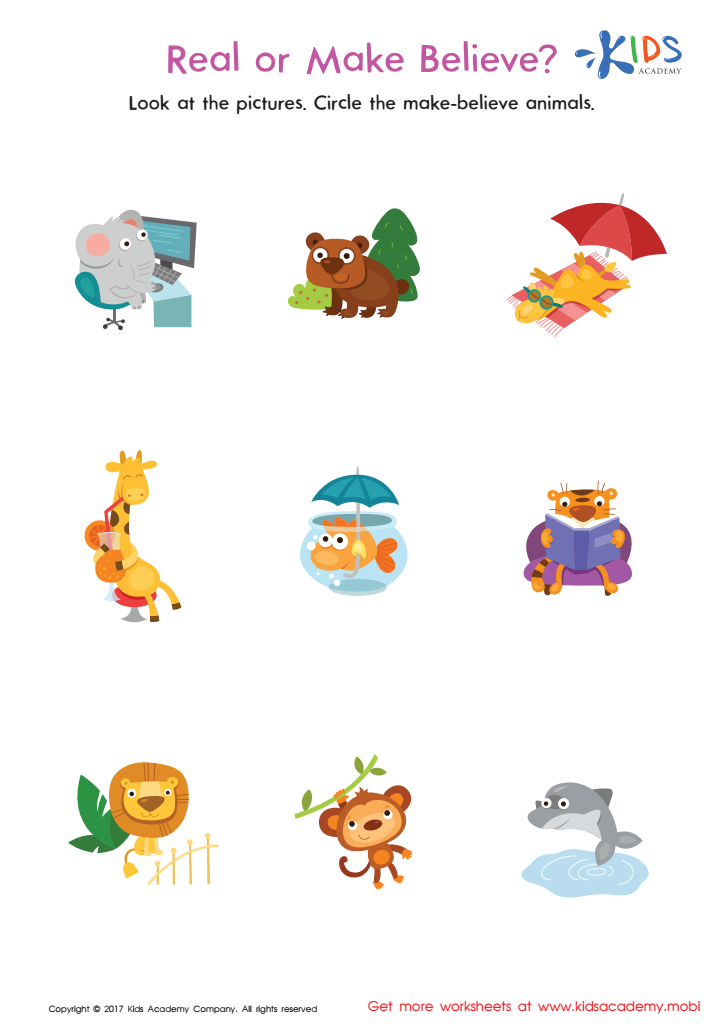
Fact or Make Believe Worksheet
This fun and funny worksheet challenges your child to decide if each animal can do the activity listed. Can a camel go sunbathing? Separating fact from fiction can be entertaining! Motivate your child while they complete this PDF worksheet.
Fact or Make Believe Worksheet
Worksheet
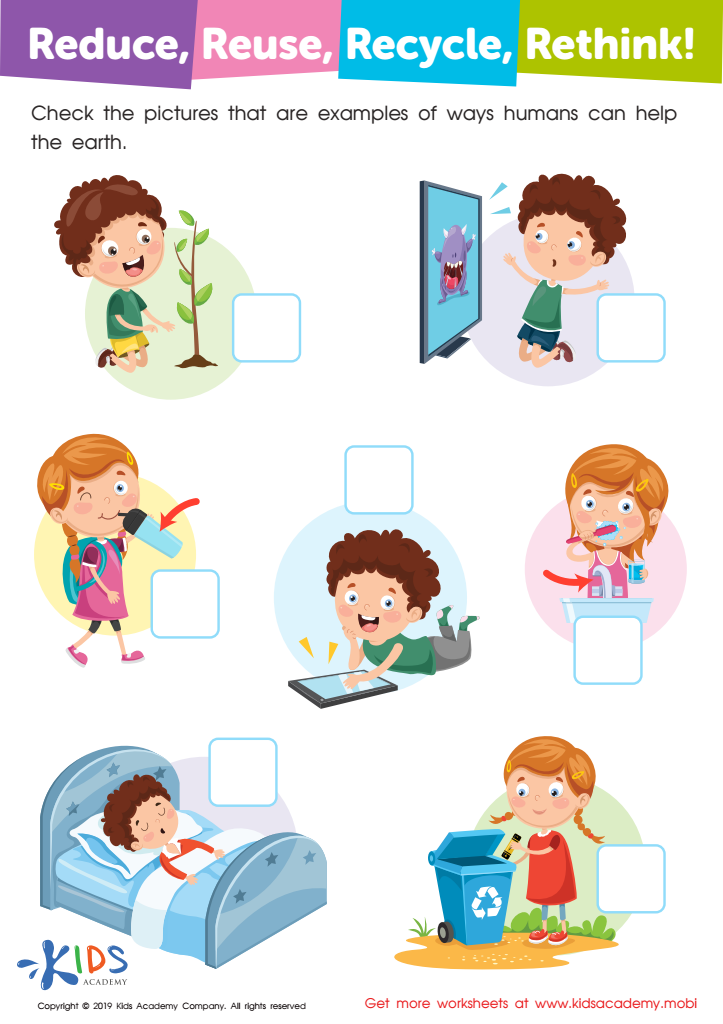
Reduce, Reuse, Recycle, Rethink Worksheet
Recycling is a great way to reduce waste and help our planet — instead of throwing away a can of soda, recycle it! Look at the pictures in the worksheet — what are the kids doing? They're learning about ways to help the environment. Check the pictures for examples of how to help the earth.
Reduce, Reuse, Recycle, Rethink Worksheet
Worksheet
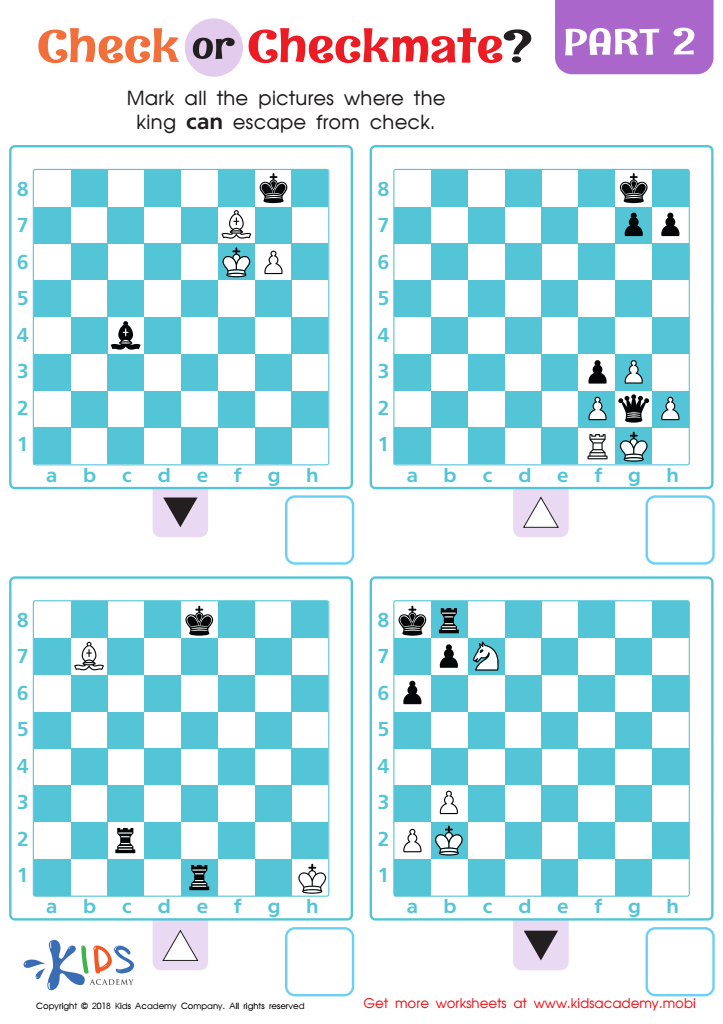
Check or Checkmate: Part 2 Worksheet
Chess is a fun and competitive way for your child to practice strategic thinking, problem-solving and critical reasoning. This free PDF will help them sharpen their skills, by analyzing boards and marking ones where the king can escape check. An invaluable skill when playing on real boards.
Check or Checkmate: Part 2 Worksheet
Worksheet
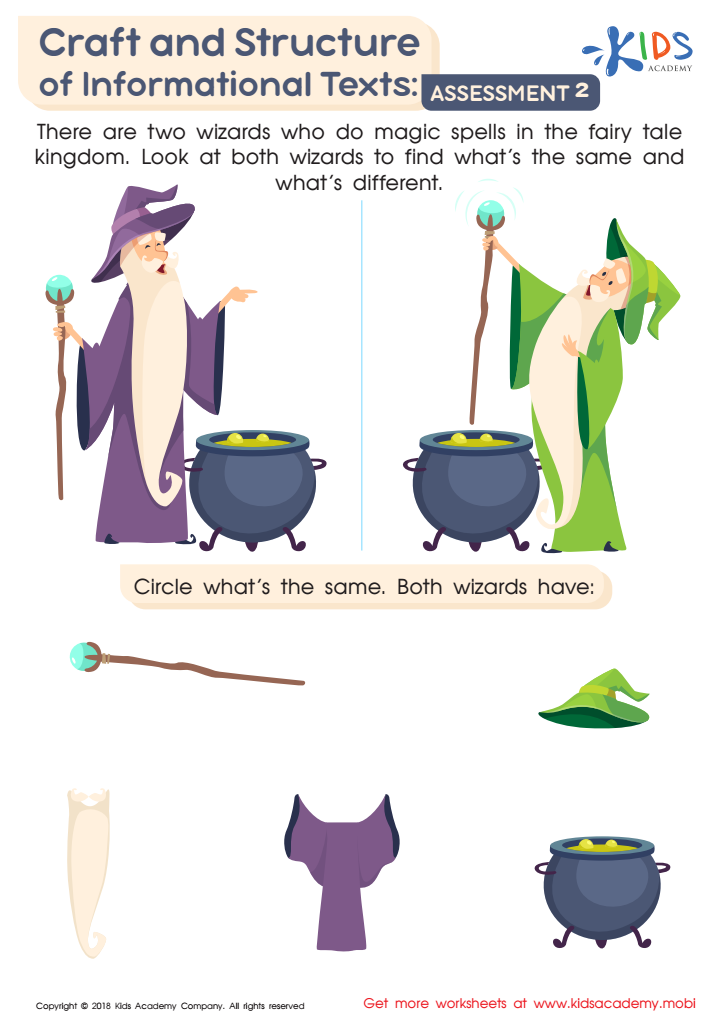
Craft and Structure of Informational Texts: Assessment 2 Worksheet
This assessment has kids looking at two similar fairy tale wizards, focusing on their visuals to find the similarities and differences. Then, they'll circle the things they both have. It's a great way to help children hone their detail-oriented comprehension skills, which is essential when using informational texts.
Craft and Structure of Informational Texts: Assessment 2 Worksheet
Worksheet
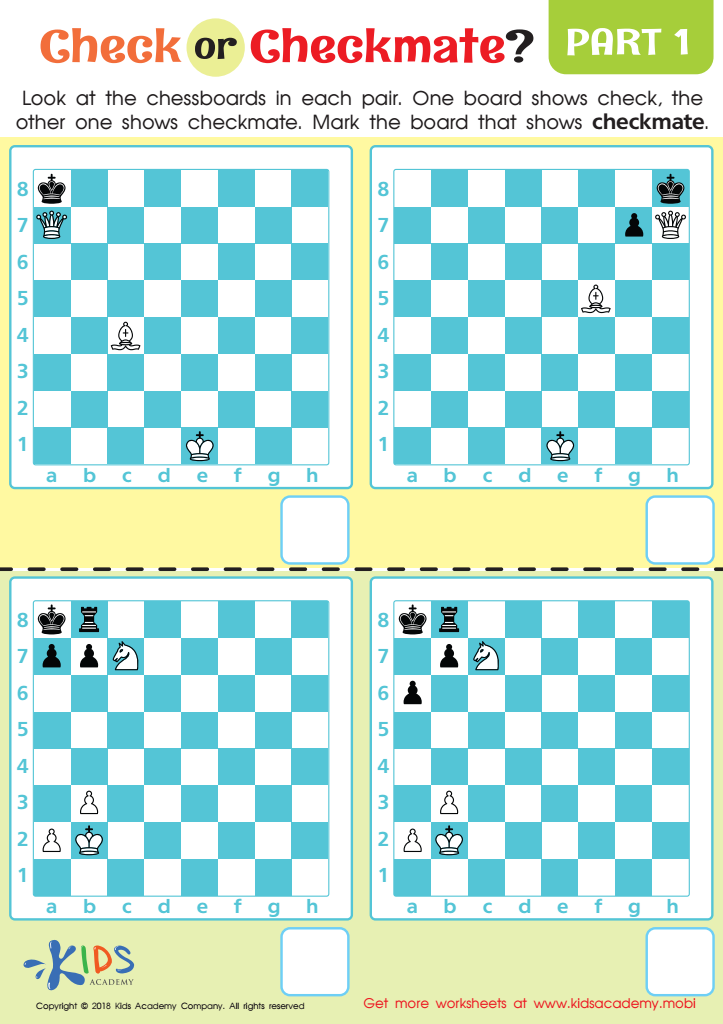
Check or Checkmate: Part 1 Worksheet
Kids can learn and strengthen problem-solving and strategic thinking skills with this free chess worksheet. They'll have fun as they look at the pair of chessboards and decide which is check and which is checkmate. It's the perfect way to get them playing the game and making checkmates without even realising they're exercising their brains!
Check or Checkmate: Part 1 Worksheet
Worksheet
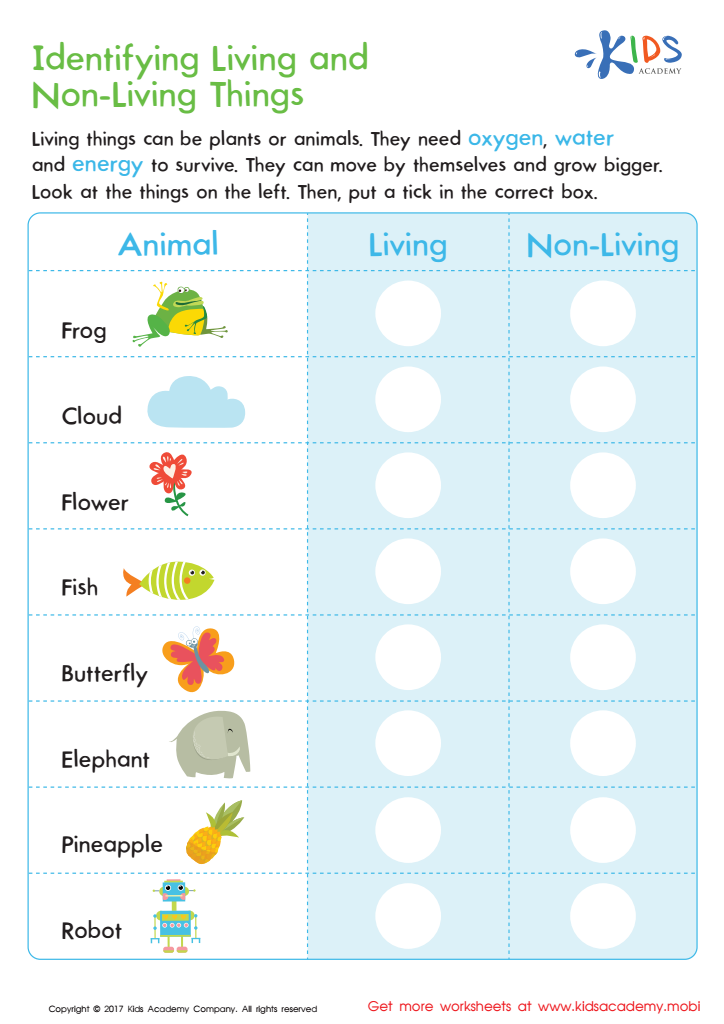
Identifying Living or Non–living Worksheet
Help your child learn to sort and categorize in a new way! Teach them to classify things as living or non-living using this worksheet. It's the perfect way to build their scientific understanding, and to have some learning fun! Print this worksheet and watch them discover the world of science!
Identifying Living or Non–living Worksheet
Worksheet
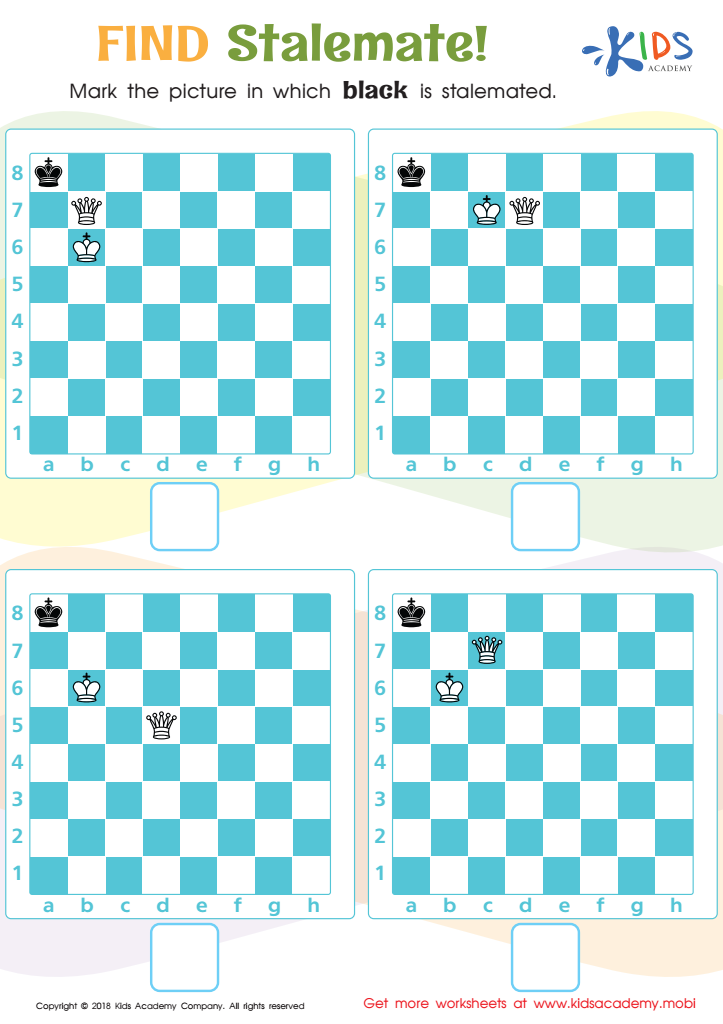
Find Stalemate! Worksheet
Teach your kids Chess and give them more than a hobby - equip them with critical thinking, rationale and problem-solving skills! This free worksheet helps them understand stalemates by examining various sample boards. By providing visual discernment and the joy of the game, your child's logical skills will soar!
Find Stalemate! Worksheet
Worksheet
Join Kids Academy for Free
Who is primarily going to use this learning content?







Critical thinking development in children aged 3-4 is essential because it lays the foundation for lifelong learning and problem-solving abilities. At this stage, children are naturally curious, and fostering their critical thinking skills enables them to make sense of the world around them. Engaging in activities that promote questioning, exploration, and discovery helps young learners develop their reasoning skills.
Parents and teachers should care about this development because critical thinking fuels creativity and innovation. By encouraging young children to ask questions, make choices, and explore different perspectives, we instill a mindset of inquiry that is vital for later academic achievement and confidence. Moreover, critical thinking cultivates resilience; children learn to approach challenges with a problem-solving attitude rather than feeling defeated by obstacles.
Additionally, in today's fast-paced, information-rich environment, teaching critical thinking equips children with the skills to assess information, distinguish between fact and opinion, and make informed decisions. Investing time and resources in nurturing these skills during early childhood creates self-driven, independent learners who are better prepared for future educational endeavors and real-world challenges. Therefore, parents and teachers play a crucial role in shaping a generation adept at critical thinking and effective problem-solving.








