Develop problem-solving skills Worksheets for Ages 3-4
3 filtered results
-
From - To
Enhance your child's cognitive development with our engaging "Develop Problem-Solving Skills Worksheets" for ages 3-4. Tailored to foster critical thinking, these worksheets are designed to encourage young learners to tackle challenges creatively. Through exciting activities such as puzzles, matching games, and simple logic problems, children will build essential problem-solving abilities while having fun. Our worksheets align with early learning standards, ensuring your child’s skills progress in a structured manner. Perfect for parents and educators alike, these resources serve as an invaluable tool for supporting your child's early educational journey. Explore our collection and watch your little one thrive as a budding thinker!
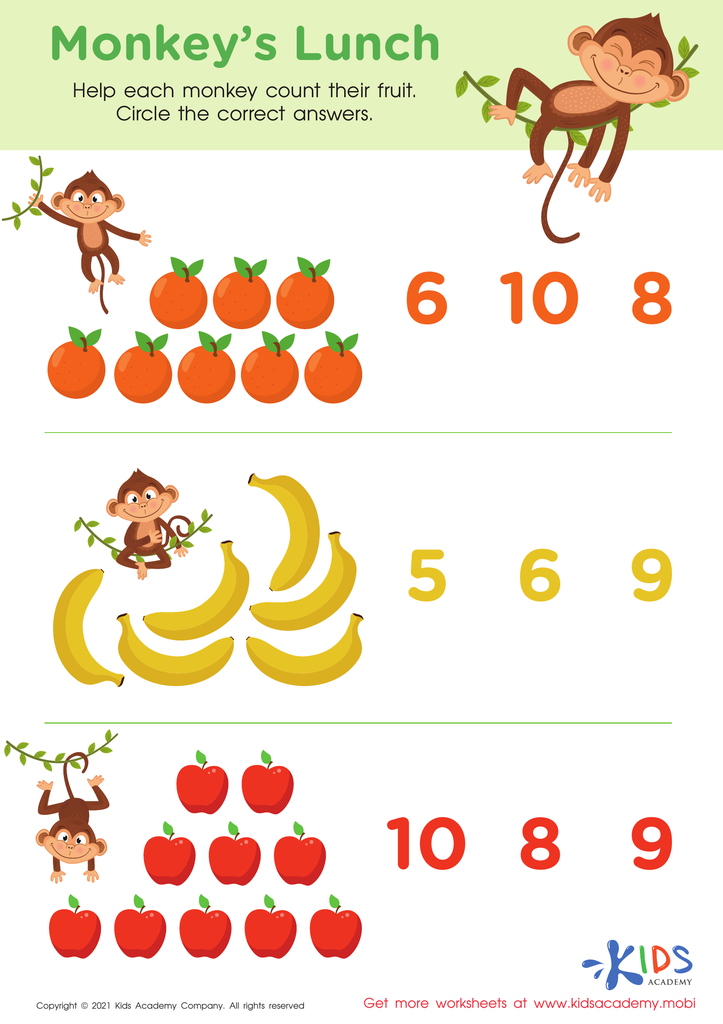
Monkey’s Lunch Worksheet
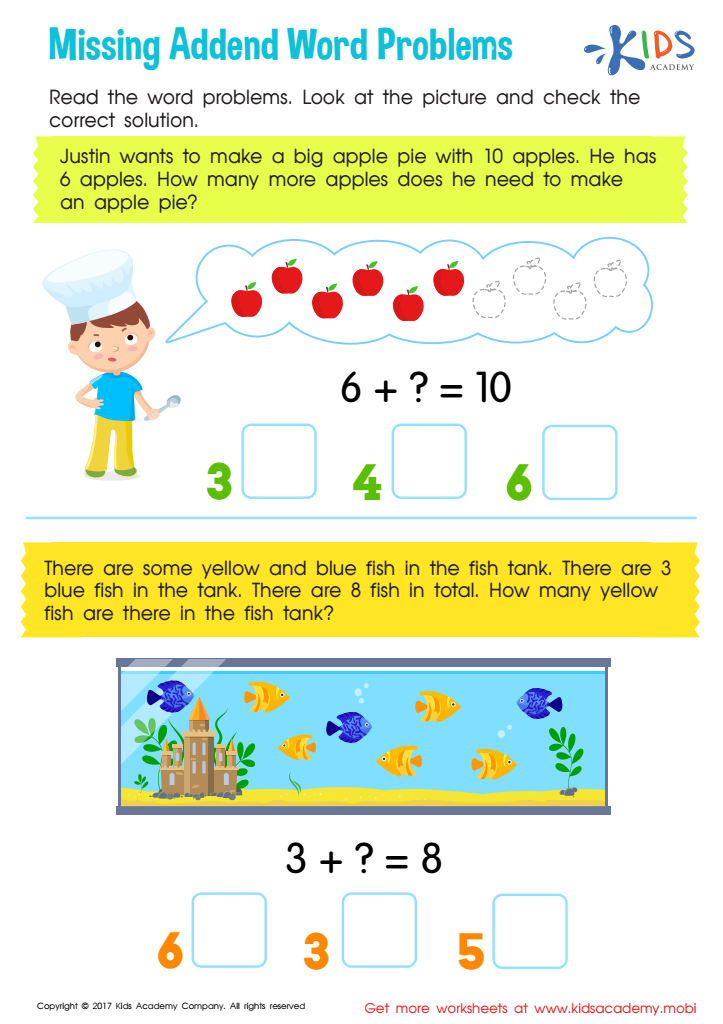
Missing Addend Word Problems Worksheet
 Assign to My Students
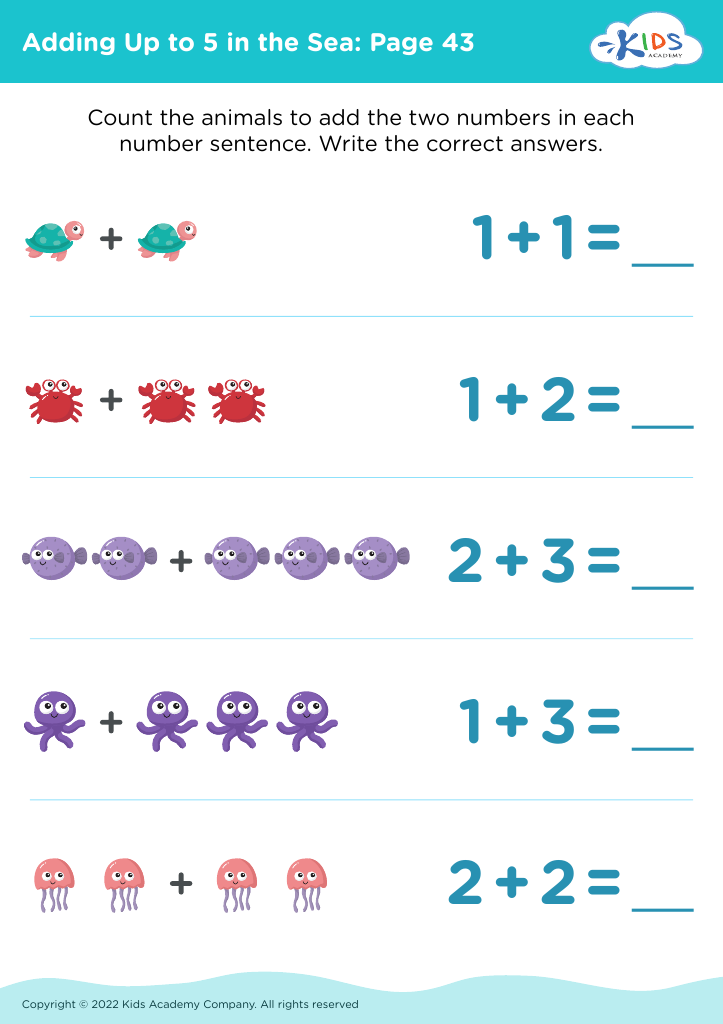


.jpg)





Developing problem-solving skills in children aged 3 to 4 is crucial, as this stage lays the foundation for cognitive and social development. Parents and teachers should care about fostering these skills because effective problem-solving enhances critical thinking, creativity, and independence. At this age, children are naturally curious and eager to explore their environment, making it an ideal time to guide them through challenges.
Engaging children in problem-solving activities helps them learn how to approach obstacles systematically. Whether it's figuring out how to fit shapes into a puzzle or resolving a conflict with peers over a toy, these experiences teach children to analyze situations, weigh options, and make decisions. This not only enhances their academic readiness but also prepares them for real-life situations they will encounter as they grow.
Moreover, by encouraging problem-solving, adults cultivate resilience in young children, showing them that mistakes are valuable learning opportunities rather than failures. This mindset fosters confidence and reduces frustration when facing challenges. In a collaborative setting with peers, problem-solving also reinforces social skills, teaching children the importance of communication, teamwork, and empathy. Therefore, investing in problem-solving skill development at this young age yields long-term benefits for children's overall growth and well-being.








