Division practice Worksheets for Ages 3-4
5 filtered results
-
From - To
Discover our engaging Division Practice Worksheets specially designed for children ages 3-4! These worksheets simplify early math concepts, making learning division fun and interactive. Featuring colorful illustrations and playful exercises, they help little learners grasp the basics of sharing and grouping. Each worksheet encourages number recognition, critical thinking, and fine motor skills, providing a strong foundation for future mathematical success. Ideal for home or classroom use, our Division Practice Worksheets cater to young minds, igniting a love for math in a playful, pressure-free setting. Download today and watch your child enjoy learning while building their confidence in mathematics!
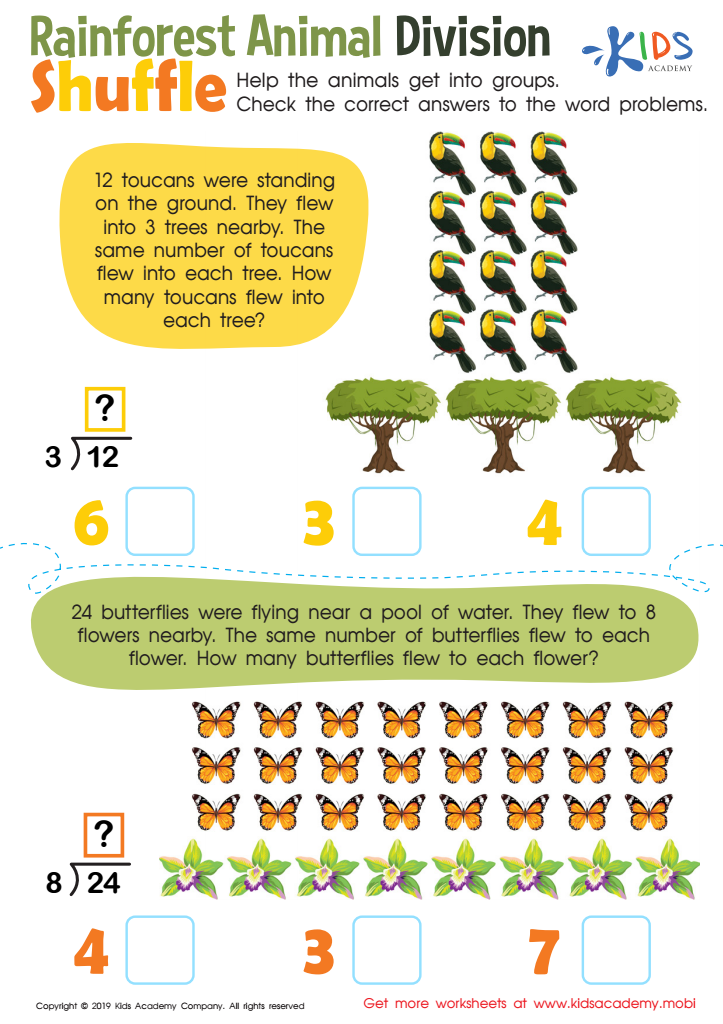
Rainforest Animal Division Worksheet
 Assign to My Students
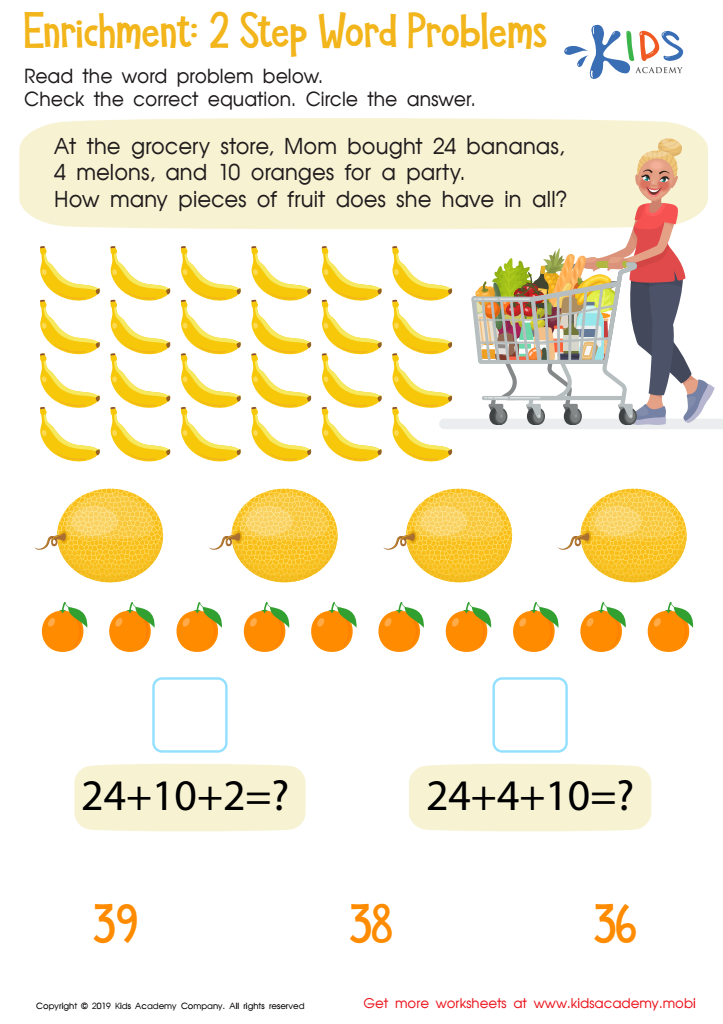
Enrichment -2 Step Word Problems Worksheet
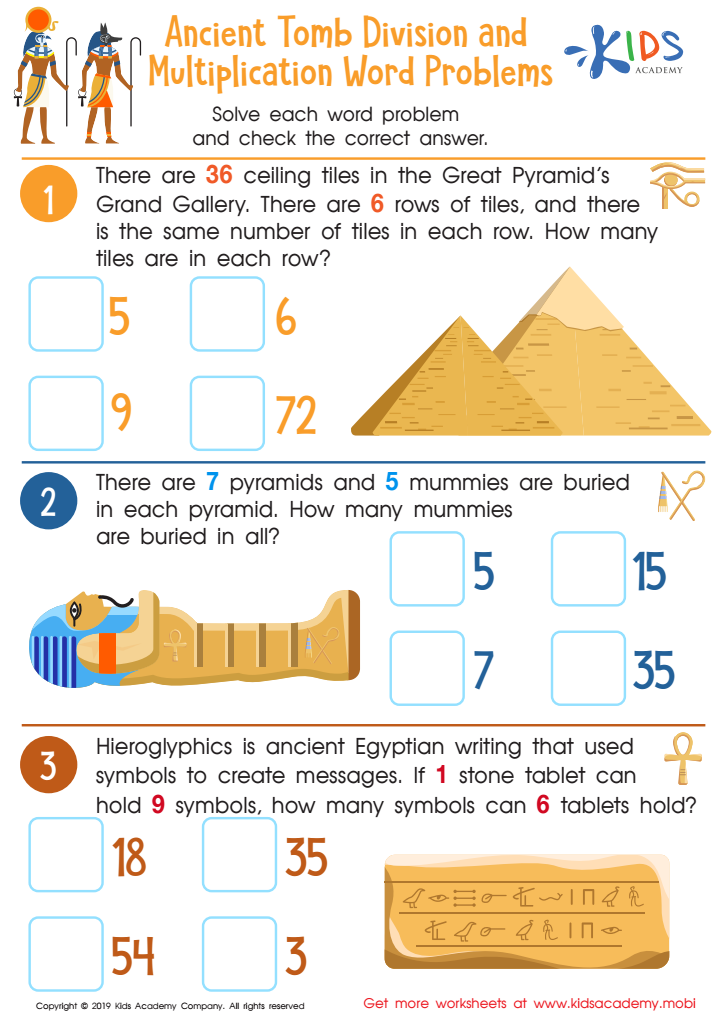
Ancient Tomb Division and Multiplication Word Problems Worksheet
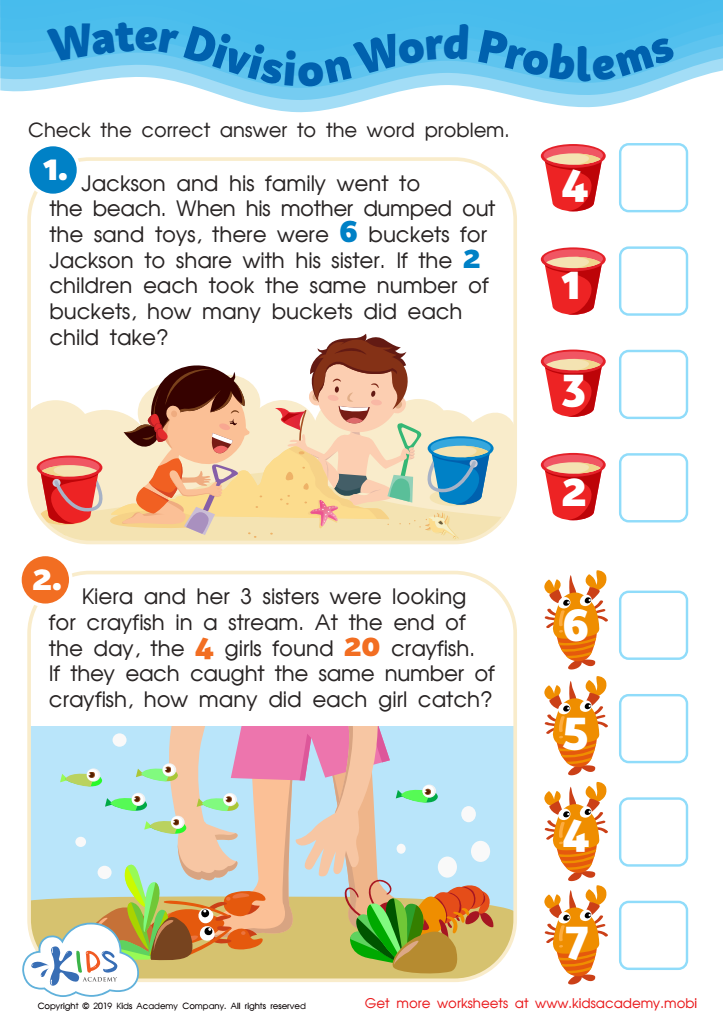
Water Division Word Problems Worksheet
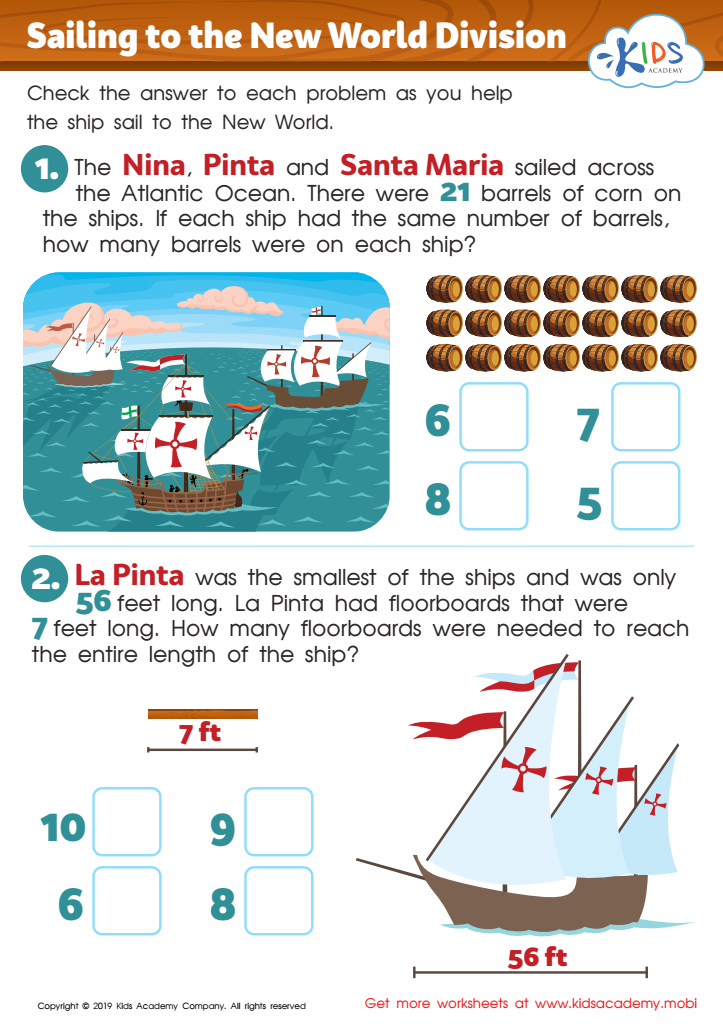
Sailing to the New World Division Worksheet








Division practice for ages 3-4 may seem premature; however, laying a foundational understanding of division concepts at this early stage can immensely benefit children's cognitive development. At this age, children are naturally curious and eager to explore numbers and relationships between them. Introducing simple division concepts through engaging activities such as sharing cookies, toys, or blocks helps develop their social skills and a sense of fairness, laying the groundwork for mathematical reasoning.
Moreover, early exposure to division sets the stage for future mathematical learning. By understanding the idea of dividing a group into smaller equal parts, children begin to grasp essential math skills, making higher concepts like fractions and division easier in later years. Fun and interactive games promote a positive view of math, helping to ensure children approach it with confidence rather than fear as they progress.
Teachers and parents play a crucial role in developing this mathematical mindset. Encouraging exploratory play and incorporating division concepts into everyday scenarios fosters a joyful learning environment, supporting early numeracy skills. Caring about division practice at this early stage primes children for a successful academic career and nurtures their love of learning. Thus, parents and teachers should prioritize these foundational experiences intentionally.








