
Enhance fine motor skills Worksheets for Ages 3-4
3 filtered results
Difficulty Level
Grade
Age
-
From - To
Subject
Activity
Standards
Unlock your child’s potential with our “Enhance Fine Motor Skills Worksheets” designed specifically for ages 3-4! These engaging, age-appropriate worksheets provide exciting activities that promote dexterity, coordination, and strength in young children. From tracing and cutting exercises to fun coloring tasks, each worksheet is expertly crafted to make fine motor skill development enjoyable. Our resources not only captivate young learners but also foster creativity and confidence. Perfect for both home and classroom environments, these worksheets aid in preparing your little ones for future learning challenges. Start your journey towards nurturing foundational skills with our printable worksheets today!
Favorites
With answer key
Interactive
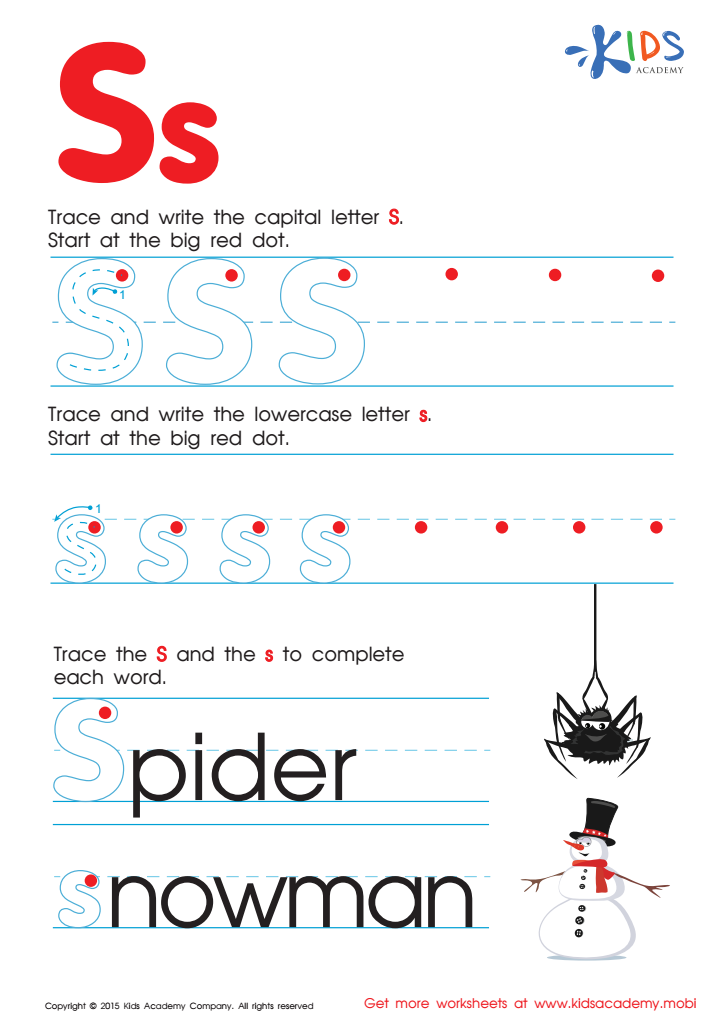
Letter S Tracing Page
Trace and write the capital and lowercase "S" on this ABC worksheet for kindergarten. Start with the big red dot and be careful. When you finish, help the spider and snowman in the pictures restore their words with the capital and lowercase letters. Continue learning the alphabet with Kids Academy.
 Assign to My Students
Letter S Tracing Page
Worksheet

Join Kids Academy for Free
Who is primarily going to use this learning content?








Enhancing fine motor skills in children aged 3-4 is crucial for their overall development and future learning experiences. Fine motor skills are the small movements that involve coordination between the hands and fingers, which are essential for everyday tasks, such as writing, buttoning, and using utensils.
Parents and teachers should care about developing these skills because they serve as the foundation for a child's academic success. Mastering fine motor skills can improve a child’s ability to engage in activities that require precision, such as drawing letters and numbers, which directly impacts their literacy and numeracy development.
Additionally, fine motor development contributes to cognitive growth. Activities that promote these skills enhance problem-solving abilities, hand-eye coordination, and concentration. They also provide opportunities for children to express themselves creatively through art and craft, fostering emotional development and self-confidence.
Moreover, enhanced fine motor skills can foster a sense of independence in young children, as they learn to navigate tasks on their own. Therefore, incorporating activities that promote fine motor development through play, exploration, and practice is vital for parents and teachers, influencing both immediate learning outcomes and long-term educational success.








