
Enhancing fine motor skills Worksheets for Ages 3-4
4 filtered results
Difficulty Level
Grade
Age
-
From - To
Subject
Activity
Standards
Enhance your child's fine motor skills with our engaging worksheets designed specifically for ages 3-4! Our carefully crafted activities promote hand strength, coordination, and dexterity through fun and interactive exercises. Children will enjoy tracing, coloring, cutting, and pasting, all while developing crucial skills necessary for everyday tasks and future learning. These worksheets support early childhood development and make learning enjoyable for both kids and parents. Designed with bright visuals and age-appropriate challenges, they are perfect for homeschooling or supplementary classroom activities. Explore our collection today and give your preschooler a head start on their fine motor development!
Favorites
With answer key
Interactive
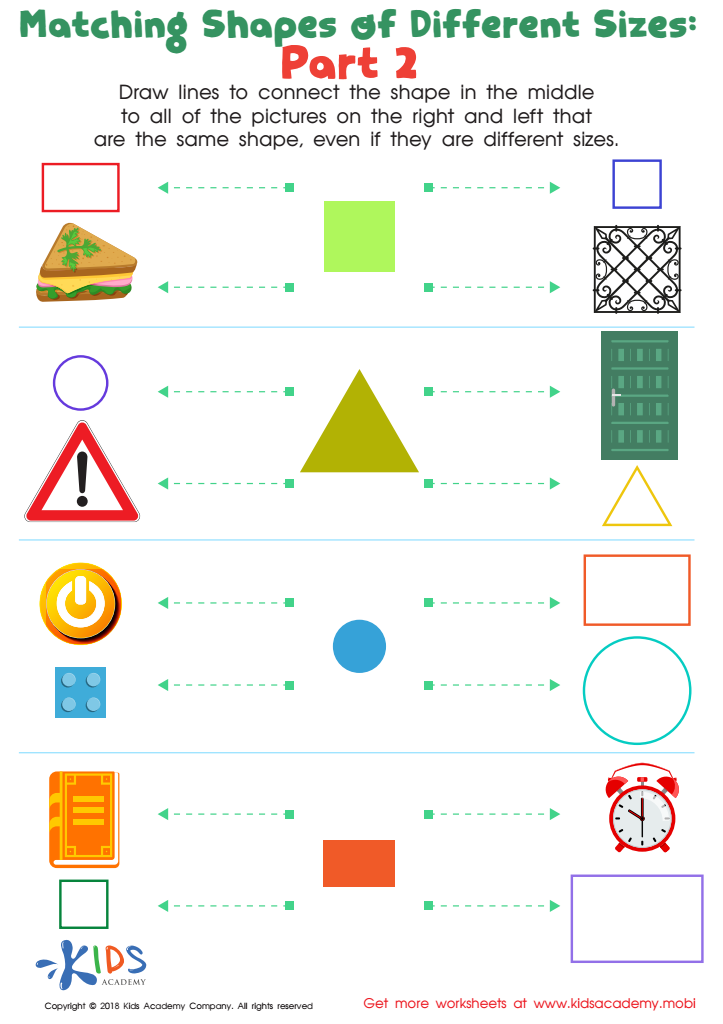
Geometry: Part 2 Worksheet
Third grade geometry gets a challenge with this free worksheet. Kids match shapes to everyday objects like sandwiches, alarm clocks and books for a better understanding of geometry in their lives. Printable pdf is included.
 Assign to My Students
Geometry: Part 2 Worksheet
Worksheet
Join Kids Academy for Free
Who is primarily going to use this learning content?








Enhancing fine motor skills in children aged 3-4 is crucial for their overall development and readiness for future learning. Fine motor skills involve the use of small muscles in the hands and fingers, which are essential for tasks like writing, cutting with scissors, and buttoning clothing. At this age, children are rapidly developing their coordination and dexterity, laying the foundation for academic and self-care activities.
Parents and teachers should care about enhancing fine motor skills because these abilities are closely linked to cognitive development and academic success. Engaging in activities like drawing, threading beads, or playing with playdough helps children improve their hand-eye coordination and finger strength. These skills not only boost confidence but also encourage independence, as children learn to manage everyday tasks on their own.
Moreover, strong fine motor skills contribute to better concentration and focus, helping children in various learning environments. Teachers and parents can create a supportive atmosphere by providing tools and materials for hands-on learning. This not only fosters creativity and problem-solving abilities but also builds social skills as children engage in cooperative play. Ultimately, prioritizing fine motor skill development is an investment in a child’s holistic growth and future success.








